Zinc Is the Thread Running Through Three Malamute Diseases
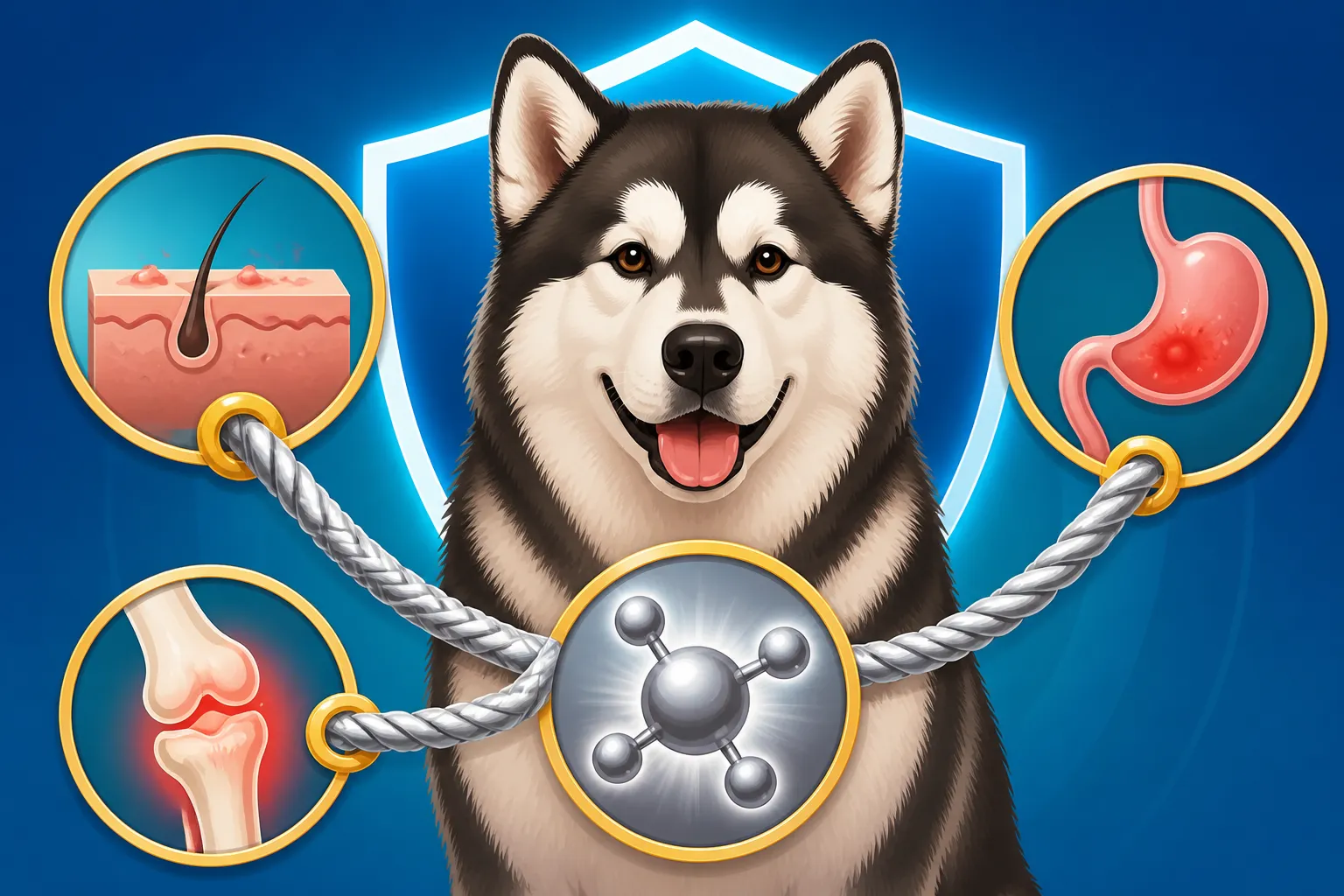
It’s a heartbreaking reality for many Alaskan Malamute owners: your majestic, powerful companion isn't thriving, and you're left searching for answers. Perhaps you've noticed strange skin issues, or maybe a young puppy isn't growing quite right, or an otherwise healthy adult starts to stumble. It can feel like these problems are unrelated, disparate challenges to overcome, but for our beloved Mals, a common thread often connects these seemingly distinct health woes: zinc. This comprehensive guide will unravel how compromised zinc absorption in Alaskan Malamutes can manifest in three significant, often confusing, conditions: Zinc Responsive Dermatosis, Chondrodysplasia, and Inherited Polyneuropathy.
Zinc: The Unsung Hero in Malamute Health
Zinc, often overshadowed by more commonly discussed vitamins and minerals, is an absolutely essential trace element that plays a critical role in literally hundreds of metabolic processes throughout a dog's body. It’s involved in immune function, wound healing, protein and carbohydrate metabolism, proper thyroid function, and even the sense of taste and smell. Without adequate zinc, a dog simply cannot maintain optimal health. It's not just a minor player; it's a foundational element for everything from cell division to the creation of DNA. Imagine a symphony orchestra where a single, vital instrument is consistently out of tune or missing entirely—the whole performance suffers. That’s what happens at a cellular level when zinc levels are off.
Why Zinc is Critical for All Dogs
For any canine companion, ensuring sufficient zinc intake and absorption is vital. Zinc helps maintain a healthy coat and skin, supports eye health, and is crucial for proper growth and development in puppies. It acts as a co-factor for various enzymes, meaning it’s like the key that unlocks many biological processes, allowing them to function correctly. A truly balanced diet for any dog needs to provide bioavailable zinc, ensuring their systems have what they need to thrive. Think about how important antioxidants are for fighting free radicals; zinc serves a similar protective and facilitative role across multiple bodily systems, acting as a crucial component in maintaining overall cellular integrity and function.
The Malamute's Unique Zinc Challenge
Here’s where it gets complicated for us Malamute lovers. While all dogs need zinc, Alaskan Malamutes, along with a few other northern breeds like Siberian Huskies and Samoyeds, have a particular genetic predisposition that can severely impair their ability to absorb zinc from their diet, regardless of how much zinc is actually present in their food. This isn't usually a problem of dietary deficiency – meaning, their food might have plenty of zinc – but rather an issue of malabsorption. Their bodies just don't process it correctly. This genetic quirk means that even on a premium kibble designed for large breeds, a Malamute can still suffer from the effects of insufficient usable zinc. It’s a bit like having a leaky bucket: no matter how much water you pour in, you can’t keep it full. This explains why a Malamute needs more dietary zinc than other breeds, as their system is inherently less efficient at utilizing it.
Zinc Responsive Dermatosis: Skin Deep Troubles
When most people think of zinc deficiency in dogs, Zinc Responsive Dermatosis (ZRD) is usually the first condition that comes to mind, and for good reason. It’s often the most visible and frustrating manifestation of a Malamute’s zinc absorption struggles. This skin condition can range from mildly irritating to severely debilitating, leaving owners feeling helpless as they watch their dog suffer from persistent skin problems that don't respond to typical treatments like antibiotics or allergy medications. The skin, being the body's largest organ, requires a steady supply of zinc for healthy cell turnover and immune defense, so when that supply is compromised, it shows.
Identifying the Distinctive Skin Lesions
The signs of ZRD typically involve crusting, scaling, and hair loss, particularly around specific areas of the body. You’ll often see these lesions first around the eyes, muzzle, ears, and chin. It's not uncommon for the paw pads to become thickened and cracked, making walking uncomfortable for your Malamute. In some severe cases, these lesions can appear on the elbows and hocks as well. These areas can become red, inflamed, and incredibly itchy, leading to secondary bacterial or yeast infections due to constant scratching and irritation. If you see your Malamute's muzzle crusts first, it's a strong indicator. It can be easily mistaken for allergies or other skin conditions, which is why proper diagnosis is so crucial. The classic appearance is often described as a "punched-out" look, with distinct edges to the crusty, hairless patches. Many owners report a distinctive, unpleasant smell, which is often a result of these secondary infections taking hold.
Lifelong Management Strategies
Once diagnosed, the primary treatment for ZRD involves high doses of oral zinc supplementation. It’s not just about adding a little extra zinc; it often requires carefully calibrated, higher-than-normal therapeutic doses to overcome the malabsorption issue. This often becomes a lifelong commitment, as the underlying genetic problem doesn't go away. Owners will need to work closely with their veterinarian to find the right type and dosage of zinc supplement, as too much zinc can also be harmful. While zinc is the core solution, managing secondary infections with appropriate antibiotics or antifungals is also critical. Your vet might prescribe medicated shampoos to help soothe the skin and remove crusts, providing immediate relief for your suffering Malamute. Ongoing monitoring, often with regular blood tests to check zinc levels, ensures that the treatment remains effective. This dedication to care is why knowing how a Malamute's zinc deficiency is treated is so important for long-term health. Many pet insurance providers, like Healthy Paws, recognize the need for ongoing management of chronic conditions, highlighting the financial commitment involved in maintaining your Malamute’s health over their lifespan.
Chondrodysplasia: More Than Just Dwarfism
Beyond the visible skin issues, zinc's influence extends into the very bones of our Malamutes, particularly in a condition known as chondrodysplasia, often referred to as "dwarfism." This isn't just about a smaller stature; it's a serious skeletal abnormality that can profoundly impact a dog's quality of life. It’s a poignant example of how a seemingly minor element can have such widespread and fundamental effects on development. When you see a Malamute puppy that isn't keeping up in growth, especially in its legs, it's easy to dismiss it as just being the "runt," but for Malamutes, it could be a sign of something much more complex and systemic.
The Genetic Basis of Short Limbs
Chondrodysplasia in Alaskan Malamutes is an inherited condition, meaning it's passed down through genetics. It's typically a recessive trait, which means a puppy must inherit a copy of the faulty gene from both parents to be affected. Dogs that only carry one copy of the gene are considered carriers and won't show symptoms themselves but can pass the trait on to their offspring. This makes responsible breeding practices incredibly important. The condition is characterized by abnormal development of cartilage and bone, leading to disproportionately short limbs. While a dwarf Malamute puppy looks normal at birth, the signs usually become apparent between 4 and 6 weeks of age, when the legs begin to fall behind in growth. Understanding whether Malamute chondrodysplasia is recessive is key for breeders trying to eliminate it from their lines.
How Zinc Impairs Bone and Cartilage Development
The direct link between zinc malabsorption and chondrodysplasia in Malamutes is still being researched, but it's understood that zinc plays a crucial role in the synthesis of proteins, collagen, and enzymes vital for normal bone and cartilage formation. When the body struggles to absorb and utilize zinc, these critical developmental processes are disrupted. This leads to the characteristic shortened, often bowed, front legs and overall stunted growth seen in affected puppies. The impact on bone health is significant, as zinc is essential for proper bone mineralization and remodeling. Essentially, the building blocks for healthy bones and cartilage are compromised right from the start of the puppy's development, resulting in the skeletal deformities that define the condition. This highlights how much zinc a chondrodysplastic Malamute absorbs, or rather, fails to absorb, impacting its entire skeletal structure.
Living with Chondrodysplasia
While chondrodysplasia itself isn't typically fatal, it can lead to a host of secondary health issues. The abnormal limb structure can put undue stress on joints, increasing the risk of arthritis and other orthopedic problems as the dog ages. Owners might notice their Malamute puppy's legs fall behind in growth, leading to an awkward gait. Some affected dogs may also experience anemia due to the broader metabolic impact of poor zinc absorption. The good news is that with proper care and management, including appropriate zinc supplementation, affected Malamutes can often lead fulfilling lives. It’s a commitment to special care, focusing on joint health, weight management to reduce stress on limbs, and ensuring a comfortable environment. Many owners wonder whether a dwarf Malamute lives a normal span, and while they might face specific challenges, a dedicated owner can help them thrive. For a deeper dive into the condition, you can read more about what chondrodysplasia does to an Alaskan Malamute.
Inherited Polyneuropathy: The Stumbling Mystery
Perhaps the most perplexing and heartbreaking of the zinc-linked conditions in Alaskan Malamutes is Inherited Polyneuropathy. This neurological disorder primarily affects the peripheral nerves, leading to a progressive loss of muscle control and coordination. It’s a diagnosis that can be incredibly challenging for owners to hear, as it often impacts active, otherwise healthy young Mals, gradually stealing their ability to move and function normally. The frustration comes from watching a dog that once bounded with joy slowly lose its agility and strength.
Unraveling the Neurological Symptoms
The symptoms of Inherited Polyneuropathy typically emerge in young adult Malamutes, often between 1 and 3 years of age. Owners might first notice a subtle change in gait, perhaps a slight clumsiness or a high-stepping walk as the dog tries to compensate for nerve deficits. As the disease progresses, this can escalate to weakness, stumbling, and difficulty rising. The muscles may begin to atrophy, particularly in the hind limbs, leading to a noticeable loss of mass and strength. A tell-tale sign that many owners report is a change in the dog’s bark—it may become hoarse or weak, indicating laryngeal nerve involvement. In advanced stages, breathing difficulties can arise as the nerves controlling the diaphragm and respiratory muscles are affected. This makes understanding what inherited polyneuropathy does to a Malamute incredibly important for early detection.
The Potential Role of Zinc in Nerve Function
While the exact mechanisms linking zinc malabsorption directly to Inherited Polyneuropathy are still under investigation, it’s understood that zinc is vital for maintaining the integrity and function of the nervous system. Zinc plays a role in nerve signal transmission, myelin sheath formation (the protective coating around nerves), and overall neuronal health. A chronic, systemic deficit in usable zinc due to malabsorption could compromise these functions over time, leading to the degeneration observed in polyneuropathy. It’s not necessarily a direct cause-and-effect in the same way it is with ZRD, but rather a contributing factor that exacerbates or predisposes Malamutes to the condition when their system is already struggling with zinc metabolism. Research continues to explore these complex interactions, but the underlying zinc connection remains a significant area of focus for understanding and managing this devastating disease. Given the seriousness, it’s worth exploring whether a polyneuropathy Malamute gets worse over time without intervention.
Pinpointing the Problem: Diagnosis and Genetic Testing
The insidious nature of these zinc-related conditions in Alaskan Malamutes lies in their varied symptoms and the underlying genetic predisposition. It's not always as simple as feeding more zinc. Proper diagnosis requires a multi-pronged approach, differentiating between a true dietary deficiency (rarely the case for genetically predisposed Malamutes) and the more common issue of malabsorption. This can be a frustrating journey for owners, involving multiple vet visits and tests, but it's essential for effective management.
Differentiating Genetic Malabsorption from Dietary Deficiency
For most dogs, if they show symptoms of zinc deficiency, increasing dietary zinc or switching to a higher-quality food might resolve the issue. However, with Alaskan Malamutes, it's rarely that straightforward. Their genetic makeup means their bodies struggle to absorb zinc even when it's plentiful in their food. Therefore, simply changing kibble is unlikely to fix the problem. The key is recognizing that it's an inherent biological hurdle, not a flaw in the owner's feeding practices. This distinction is paramount because it dictates the treatment approach—which almost always involves therapeutic zinc supplementation rather than just a dietary overhaul. Sometimes owners blame themselves for feeding the wrong food, when in reality, the issue runs much deeper than diet. This is why it's so important to understand whether a Malamute's zinc problem is diet or genetics.
Crucial Diagnostic Tools
Diagnosing these conditions accurately requires a partnership with your veterinarian. For Zinc Responsive Dermatosis, a skin biopsy can often confirm the diagnosis, showing characteristic changes in the skin cells. Blood tests to measure serum zinc levels are also helpful, though they don't always directly correlate with the severity of the problem due to the complexities of absorption. For Chondrodysplasia, physical examination revealing the disproportionate growth, combined with X-rays to assess bone development, are key diagnostic steps. Genetic testing is now available for both chondrodysplasia and Inherited Polyneuropathy, offering definitive answers. For example, The DNA Test That Finds Malamute Polyneuropathy is readily available, allowing breeders and owners to confirm carrier status or diagnose affected dogs. These tests are invaluable, not only for confirming a diagnosis but also for informing breeding decisions to reduce the incidence of these diseases in future generations.
| Condition | Primary Symptoms | Diagnostic Tools | Zinc Role (Malamute Specific) |
|---|---|---|---|
| Zinc Responsive Dermatosis | Crusting, scaling, hair loss (muzzle, eyes, ears) | Skin biopsy, serum zinc levels | Malabsorption leads to skin cell dysfunction |
| Chondrodysplasia | Disproportionately short limbs, stunted growth | Physical exam, X-rays, genetic testing | Impairs bone/cartilage development, collagen synthesis |
| Inherited Polyneuropathy | Progressive weakness, stumbling, bark change, atrophy | Neurological exam, genetic testing, nerve biopsy | May compromise nerve integrity and function |
Navigating Treatment and Ongoing Care
Living with a Malamute affected by these zinc-linked conditions means embracing a journey of ongoing management. There's no magic bullet that permanently "cures" the genetic predisposition, but with consistent and thoughtful care, these dogs can lead comfortable and happy lives. The cornerstone of this care often revolves around carefully managed zinc supplementation, but it's crucial to understand that more isn't always better, and the right approach needs veterinary guidance.
Effective Zinc Supplementation Protocols
Once your Malamute is diagnosed with a zinc-responsive condition, your vet will likely prescribe a specific zinc supplement. Common forms include zinc sulfate, zinc methionine, or zinc picolinate. The dosage will be tailored to your dog's specific needs and the severity of their condition. It's incredibly important to follow your vet's instructions precisely, as excessive zinc can actually be toxic and lead to other health problems, such as copper deficiency or gastrointestinal upset. Many owners, after seeing initial improvement, might wonder whether a Malamute needs zinc for life, and the answer is almost universally yes. It's a chronic condition that requires lifelong management. Regular follow-up appointments and blood work will be necessary to monitor zinc levels and adjust dosages as needed, ensuring your Malamute maintains a stable and healthy balance. These supplements are not just a temporary fix; they are a vital part of their daily routine for the rest of their lives.
Dietary Considerations to Maximize Absorption
Beyond direct supplementation, certain dietary adjustments can also help optimize zinc absorption in Malamutes. It's known that high levels of calcium and phytates (compounds found in some plant-based foods, especially grains) can interfere with zinc absorption in the gut. While not a replacement for medical zinc, minimizing these blockers in their diet can be beneficial. Discuss with your vet whether a particular food formulation or avoiding certain high-calcium treats might support your Malamute's zinc management. Some vets might recommend foods specifically formulated for dogs with sensitive skin or digestive issues, which might coincidentally have better zinc bioavailability. However, never make drastic dietary changes without consulting your vet, as balance is key, and disrupting other nutrient levels can create new problems. Fresh food diets are sometimes explored, but it's critical to ensure they are nutritionally complete and zinc-rich, as not all raw or fresh food delivers a Malamute enough zinc to counteract a genetic malabsorption issue.
A Future of Healthier Malamutes: The Breeder's Role
The profound impact of genetic conditions like chondrodysplasia and inherited polyneuropathy, both linked by the Malamute's unique zinc absorption issues, underscores the critical responsibility of breeders. While individual owners can manage affected dogs, the long-term solution lies in preventing these conditions from being passed down through generations. This requires a commitment to ethical breeding practices, transparency, and utilizing the genetic tools now available. It’s about building a healthier future for the breed we all love so dearly.
The Imperative of Pre-Breeding Screening
Responsible breeders understand that their role extends far beyond producing adorable puppies. They have a moral and ethical obligation to ensure the health and well-being of the breed. This means rigorously screening all potential breeding dogs for known inherited conditions, especially those that can be linked to zinc malabsorption. For Alaskan Malamutes, this absolutely includes genetic tests for chondrodysplasia and inherited polyneuropathy, as well as being aware of the predisposition to zinc responsive dermatosis. The health tests both Alaskan Malamute parents should have are not just suggestions; they are vital safeguards. By testing breeding stock, carriers can be identified, and breeding pairs can be chosen strategically to avoid producing affected puppies. This proactive approach significantly reduces the suffering of individual dogs and helps to strengthen the overall gene pool of the breed.
Responsible Breeding Practices
Transparency is another cornerstone of responsible breeding. Breeders should openly share the health test results of their breeding dogs with prospective puppy buyers. This empowers buyers to make informed decisions and helps reduce the demand for puppies from untested lines, which inadvertently perpetuates these health issues. It's also about careful selection and understanding pedigrees. If a dog comes from lines known to produce these conditions, even if it tests clear itself, breeders must weigh the risks and consider outcrossing to improve genetic diversity where appropriate. The goal isn't necessarily to eliminate all carriers, but to ensure that no two carriers are bred together, which would result in affected puppies. This thoughtful approach ensures that while we appreciate the unique characteristics of the Malamute, we also strive for their genetic health. Many breed clubs actively work to share health data openly, fostering a community dedicated to healthier Mals.
Supporting Malamutes and Their Families
For those who already share their lives with a Malamute affected by one of these conditions, or even one that is a carrier, support and resources are invaluable. Connecting with other Malamute owners, breed clubs, and experienced veterinarians can provide a wealth of knowledge and emotional support. Managing a chronic health issue like these zinc-linked diseases can be demanding, both emotionally and financially. Knowing that pet insurance, such as through providers like Healthy Paws, can help with the costs of ongoing veterinary care, medications, and specialist consultations, can provide immense peace of mind. Ultimately, understanding that these conditions are often intertwined by the thread of zinc malabsorption empowers owners to advocate for their Malamutes, ensuring they receive the specialized care they need to live their best, happiest lives. It's a testament to the resilience of these magnificent dogs and the dedication of their human companions.
Disclaimer
The information provided in this article is for general informational purposes only and is not intended as a substitute for professional veterinary advice, diagnosis, or treatment. Always seek the advice of your veterinarian or other qualified health provider with any questions you may have regarding a medical condition.