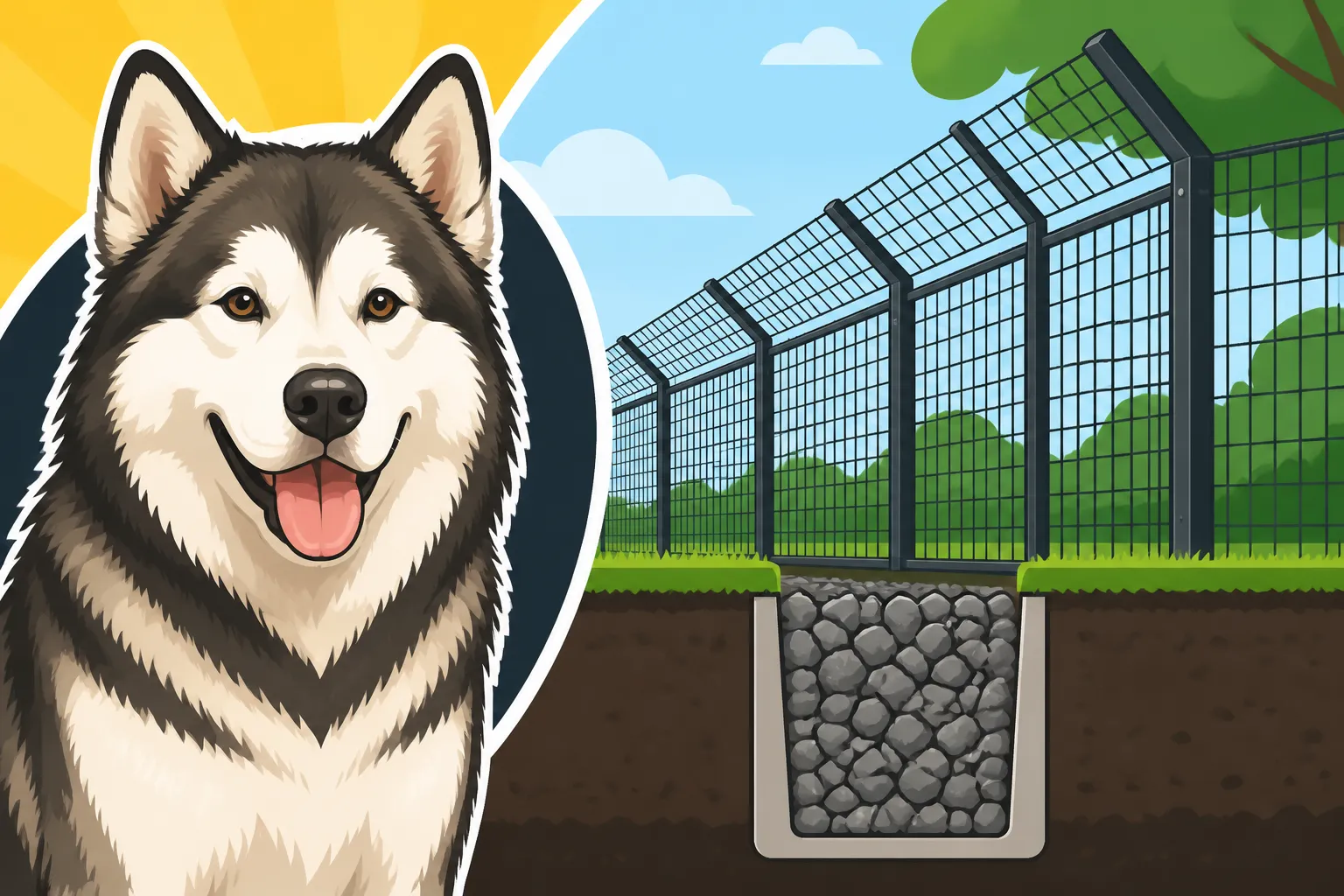
What a Dig Proof Perimeter Costs a Malamute Owner
Ah, the Alaskan Malamute. Majestic, powerful, intelligent… and often, a dedicated excavation expert. If you're a Malamute owner, or dreaming of becoming one, you've likely already grappled with or at least considered the monumental challenge of keeping your canine companion inside your yard. It's not just about an adventurous spirit; it's a deep-seated instinct, and it means that a standard fence, no matter how tall, often isn't enough. This guide is going to walk you through the realistic costs and practical considerations of building a truly dig-proof perimeter, so you can stop playing "catch the Malamute" and start enjoying your beautiful, albeit dirt-loving, dog.
Understanding the Malamute's Innate Drive to Dig
Let's be real: your Malamute isn't digging out of malice. They're not doing it to spite your perfectly manicured lawn or that freshly planted rose bush. They're doing it because it's woven into their very DNA. These magnificent dogs were bred for specific purposes in harsh Arctic environments, and digging was a survival skill. Understanding this fundamental truth is the first step toward managing the behavior and creating a secure environment.
Why Your Malamute Sees Your Yard as a Construction Site
Imagine a dog bred for centuries to seek out small prey hiding under snow, to create shelter from biting winds, or to bury valuable food caches. That's your Malamute. Their ancestors used their powerful paws and keen noses to dig dens for warmth, to find rodents, and to secure their provisions. This isn't just a quirky habit; it’s an instinct as strong as their drive to pull. When you look at your yard, you see grass, fences, and maybe a few flowerbeds. When your Malamute looks at it, they see potential. They see a puzzle to solve, a cooler spot to lie in on a warm day, or a path to explore the wider world. It's important to remember that digging is a self-rewarding behavior for them, meaning the act itself provides satisfaction, making it incredibly hard to stop without intervention. You might find yourself asking, why an Alaskan Malamute digs, and the answer is usually rooted in these ancestral behaviors and genetic predispositions.
This powerful instinct means that simply telling them "no" or filling in a hole is a temporary fix at best. They don't understand the concept of property lines in the human sense. Their understanding is much more primal: "Can I get under this? Is there something interesting on the other side? Is it cooler down there?" This drive can intensify if they're bored, under-exercised, or if they catch a scent of something exciting just beyond the fence line. It's not a sign of disobedience as much as it is a testament to their deep-seated genetic programming.
The Impact of Instinct on Your Fencing Budget
Because digging is so ingrained, you can't rely on typical fencing solutions. A standard four-foot picket fence, or even a six-foot privacy fence, is merely a suggestion for a determined Malamute. They will test every boundary, and often, the path of least resistance is under the fence. This means your fencing budget needs to account for far more than just height and material; it needs to include a robust, secure, and often invisible, underground barrier. This isn't just about initial installation costs; it's about the ongoing peace of mind and the avoidance of potential liabilities if your Malamute does escape. The consequences of a loose Malamute, especially one with a strong prey drive, can be severe, ranging from damaged property to encounters with wildlife or even other pets. Thinking about a truly dig-proof fence from the outset can save you significant headaches and expenses down the line, as well as protect your beloved pet.
The cost isn't just financial, either. It's the cost of your time, your stress levels, and the potential emotional toll of a runaway dog. Many owners underestimate this cost until they're frantically searching for their Malamute who decided the grass was literally greener on the other side. This is why investing in a secure perimeter isn't a luxury; it's a necessity for responsible Malamute ownership, and it forms a crucial part of the overall Cost & Ownership for a Malamute.
Assessing Your Current Fencing and Its Vulnerabilities
Before you dive into new construction or extensive renovations, take a brutally honest look at your existing fence. Where are the weak spots? What materials are used? What kind of soil do you have? Many owners make the mistake of assuming their current setup is "good enough" until their Malamute proves them spectacularly wrong.
Identifying Weak Points in Standard Fences
Most standard fences, whether wood, vinyl, or chain link, are designed to keep dogs in by providing a vertical barrier. However, they rarely address the horizontal plane below ground. A fence post might be buried a foot or two, but the gaps between posts, or the areas where the fence meets the ground, are often where a Malamute will start their project. These areas typically have loose soil or simply aren't reinforced. They're just sitting there, waiting for those powerful paws to get to work.
Consider the material itself. While chain link can be sturdy, the bottom edge is often easily lifted or bent, creating an inviting tunnel entrance. Wooden fences, over time, can rot at the base, making them easier to push through or dig under. Even solid masonry walls, while robust above ground, often lack a substantial underground footing that would deter a determined Malamute. Think about your gate, too. Is there a gap at the bottom? Is the latch secure enough to withstand a nudge or a clever paw? These seemingly minor details are major vulnerabilities when you have a dog that considers breaking out an Olympic sport.
The Illusion of "Good Enough" Fencing
Many new Malamute owners (and even experienced ones who've been lucky so far) operate under the illusion that their current fence is sufficient. Perhaps their previous dog wasn't a digger, or their Malamute puppy hasn't quite realized their full digging potential yet. This can lead to a false sense of security. The truth is, that "good enough" fence can quickly become a "not good enough" escape route the moment your Malamute gets bored, catches a tantalizing scent, or decides the temperature underground is more appealing.
This illusion can be incredibly costly, not just financially, but emotionally. I've known people who've spent thousands replacing landscaping, dealing with neighbor complaints, or, heartbreakingly, searching for a lost dog. Never underestimate a Malamute's intelligence and persistence. They will methodically test every inch of your perimeter. If you haven't specifically engineered your fence to be dig-proof, assume it isn't. The Age an Alaskan Malamute tests its owner often coincides with these escape attempts, as they reach adolescence and become more independent and resourceful.
DIY Solutions for Dig-Proofing Your Perimeter
If you're handy and on a tighter budget, there are several effective DIY strategies you can employ to make your yard more secure. These methods often require significant labor but can save you a bundle on professional installation.
Burying Hardware Cloth or Chicken Wire
One of the most common and effective DIY methods is to create an underground barrier using hardware cloth or heavy-gauge chicken wire. This involves trenching along the entire fence line, placing the wire, and then backfilling.
- The Process: You'll need to dig a trench along the inside perimeter of your fence. This trench should be at least 18-24 inches deep and wide enough to comfortably work in. The goal is to embed a barrier that your Malamute can't dig through. Once the trench is dug, unroll heavy-gauge hardware cloth (not chicken wire, which is too flimsy for a Malamute) or sturdy welded wire mesh. Position it vertically down into the trench, ensuring it extends slightly above ground level and is securely fastened to the bottom of your existing fence. Some owners opt for an "L-footer" extension (more on that next) along the bottom inside edge of the fence, bending the wire horizontally into the yard for about 12-18 inches before burying it. This creates a deterrent that catches their paws and makes them think twice about continuing.
- Material Costs: The main expense here will be the hardware cloth or welded wire mesh. Prices vary depending on gauge, height, and length. You might spend a few hundred dollars to upwards of a thousand for a large yard, especially if you opt for the more robust, thicker gauge wire that will stand up to a Malamute's powerful digging. You'll also need zip ties, hog rings, or wire to secure it to your existing fence, and potentially some basic tools like a shovel, work gloves, and wire cutters. Stores like Chewy or your local hardware store will carry many of these supplies.
- Labor Investment: This is where the real "cost" comes in for DIY. Digging a trench 18-24 inches deep around an entire yard is incredibly labor-intensive. It can take days, or even weeks, depending on the size of your property and the type of soil you have. If your soil is rocky or compacted, it will be even more challenging. However, if you have the time, physical ability, and patience, this method can save you significant professional labor costs. This is essentially what is meant by how deep a Malamute fence must be buried.
L-Footers: A Simple Yet Effective Barrier
L-footers are a variation on the buried wire concept, specifically designed to deter digging by creating a horizontal barrier. Instead of just burying wire vertically, you create an "L" shape at the bottom of the fence that extends into the yard.
- How They Work: Imagine taking a roll of heavy-gauge wire mesh or hardware cloth. You run it vertically down from the bottom of your fence, say 12 inches deep, and then bend the bottom 12-18 inches horizontally, extending inward into your yard. This creates an "L" shape. When your Malamute starts to dig right next to the fence, their paws quickly hit the horizontal part of the "L-footer." They can't get past it, and this discourages them from continuing their excavation project in that spot. The key is that the horizontal part is inside the yard, so they encounter it when digging to escape. This effectively increases how far down a Malamute will dig before hitting an impenetrable barrier.
- Advantages and Disadvantages: The primary advantage is its effectiveness. It directly targets the Malamute's digging pattern. It’s also relatively less labor-intensive than burying a fully vertical wall of concrete or deeper wire, as you're only going 12-18 inches down for the vertical part. The main disadvantage is that it still requires significant trenching and careful installation to ensure there are no gaps. It also uses more material than a purely vertical barrier.
- Cost Considerations: Material costs are similar to burying vertical wire, perhaps a bit more since you're extending the wire horizontally. The labor is still substantial for digging the trench, but the depth is often a bit less than a full vertical wall, which can be a small relief. This method is often recommended for Malamute owners because it plays directly into their digging behavior.
Gravel or Concrete Trenches: A More Permanent Answer
For those seeking a more permanent and robust solution, gravel or concrete trenches offer superior protection against even the most dedicated diggers. These methods are more expensive and labor-intensive but provide almost impenetrable security.
- Gravel Trenches: This involves digging a trench similar to the wire method (18-24 inches deep, 12-18 inches wide) and then filling it with heavy, angular gravel, often mixed with a bit of concrete or cement to bind it. Malamutes hate digging through large, sharp gravel because it's uncomfortable on their paws and offers no purchase. The sheer weight and friction make it incredibly difficult to move. This also helps with drainage, which is a nice bonus.
- Concrete Footings: The ultimate dig-proof solution. This involves pouring a continuous concrete footing along the entire fence line, extending 18-24 inches below ground. This is essentially creating a subterranean wall. What concrete footings for a Malamute fence cost will be significantly higher than wire or gravel, but it offers unparalleled security.
- Material and Labor Intensity: Both gravel and concrete methods are much more material-intensive than wire. Gravel requires many cubic yards of material, which can be costly to purchase and transport. Concrete requires concrete mix, rebar for reinforcement, and specialized tools. For both, the digging is still a major undertaking, but the installation of the barrier itself is simpler than carefully fastening wire. For concrete, you might need forms, and the pouring process can be messy and requires swift action. These options dramatically increase the cost of repairing a fence a Malamute dug out, but they also prevent the initial problem from occurring.
- Benefits: These solutions are incredibly durable and long-lasting. Once installed correctly, they offer peace of mind that wire might not, especially against a truly relentless Malamute. The gravel option can be slightly more permeable for drainage, while concrete is solid. Both are virtually impossible for a Malamute to dig through.
Professional Dig-Proofing Services and Their Investment
Sometimes, the scale of the project, the type of soil, or simply a lack of time and physical ability make DIY solutions impractical. That's when you call in the professionals. Expect a significantly higher cost, but also expect expertise, efficiency, and a potentially longer-lasting solution.
When to Call in the Experts
There are several scenarios where professional help becomes not just an option, but a necessity. If you have a very large yard, a property with extremely rocky or difficult soil, or an existing fence that requires significant modification beyond simply adding an underground barrier, a pro can be invaluable. Likewise, if you work long hours, have physical limitations, or simply value your weekends more than the savings of DIY, professional installation is the way to go.
Professionals also bring specialized equipment that can make quick work of trenching, especially in challenging terrain. They can accurately assess your specific situation, recommend the most effective materials, and ensure proper installation that meets local codes (if applicable). They might even offer specialized solutions like concrete pumping for footings, which is far beyond the scope of most DIYers. This peace of mind often justifies the higher upfront investment.
Understanding the Scope of Professional Installation
When you hire a professional, you're not just paying for labor; you're paying for their experience, their tools, and their ability to guarantee their work. The scope of their installation can vary widely based on your needs:
- Trenching and Barrier Installation: Most will dig the trench (often with machinery, speeding up the process significantly), install the chosen barrier (hardware cloth, L-footers, concrete footings), and backfill. They'll ensure it's securely attached to your existing fence or forms a solid, continuous barrier.
- Fence Repair/Enhancement: They might also recommend and perform repairs to your existing fence, reinforcing weak sections, or installing new gates or hardware to ensure the entire perimeter is escape-proof.
- Site Preparation and Cleanup: A good contractor will also handle any necessary site preparation, like clearing vegetation along the fence line, and will ensure thorough cleanup once the project is complete, leaving your yard tidy. They understand what a Malamute does to a yard and how to prevent it.
Costs Associated with Specialized Contractors
The cost of professional dig-proofing varies widely based on geographic location, the length of your fence line, the chosen method, and the complexity of your terrain.
- Per Linear Foot Pricing: Many contractors will quote per linear foot. This rate will encompass labor, materials, and equipment. For basic buried wire, you might expect a certain cost per foot. For concrete footings, the cost will be substantially higher.
- Material Choice: As discussed, concrete will always be the most expensive option, followed by heavy gravel, and then robust wire mesh. A professional will often have access to higher quality, more durable materials than what you might easily find at a local hardware store.
- Site Conditions: If your property has difficult access, very rocky soil, or significant slopes, expect the costs to increase due to the extra labor and specialized equipment required.
- Geographic Location: Costs of labor and materials fluctuate significantly by region. A project in a high cost of living area will naturally be more expensive.
- Permits: Depending on the extent of the work, especially with concrete footings or new fence construction, you might need local permits, which adds another layer to the cost and timeline.
A rough estimate for professional installation of a robust dig-proof barrier could range from several thousand dollars for a smaller yard with wire, up to tens of thousands for a large property requiring concrete footings. It's crucial to get multiple bids from reputable local contractors, ask for references, and ensure they understand the specific challenges of containing an Alaskan Malamute. When considering the overall expense of what a dig proof perimeter costs a Malamute owner, these professional services are at the higher end, but often provide the best long-term solution.
Long-Term Considerations and Maintenance for a Dig-Proof Perimeter
Building a dig-proof perimeter isn't a "set it and forget it" task. Alaskan Malamutes are notoriously persistent, and over time, even the best systems can wear down or be outsmarted. Ongoing vigilance and maintenance are key to keeping your furry escape artist safely contained.
The Ongoing Battle Against an Ingenious Digger
Your Malamute, bless their determined heart, will continue to test boundaries. They are highly intelligent and incredibly resourceful. Just because you've installed a fantastic dig barrier doesn't mean they'll stop trying. They might shift their focus to climbing (if your fence isn't tall enough or has easy footholds), or they might look for weaknesses in gate latches or fence corners. The battle against a Malamute's ingenuity is truly ongoing.
This means you need to be observant. Regularly walk your fence line, checking for new attempts at digging, signs of rust or wear on buried wire, or cracks in concrete. Look for areas where erosion might be exposing your buried barrier. If your Malamute is suddenly spending a lot of time in a particular spot along the fence, it's worth investigating. They might have found a new weak point or are simply trying out a fresh approach. Remember, they're not malicious; they're just doing what their instincts tell them to do.
Protecting Your Investment from Weather and Wear
Even the most robust dig-proof solutions are subject to the elements and the relentless force of a Malamute. Over time, materials can degrade, and the effectiveness of your barrier can diminish.
- Rust and Corrosion: If you've used hardware cloth or wire mesh, rust is a primary concern, especially in damp climates. Rust weakens the metal, making it easier for a determined Malamute to bend or break through. Regular inspections are vital.
- Erosion: Heavy rains or poor drainage can erode the soil around and over your buried barrier, potentially exposing it or creating new weak spots. Ensure your yard has adequate drainage to protect your investment.
- Ground Movement: Frost heave in cold climates or general ground shifting can put stress on concrete footings, potentially causing cracks. While these might not immediately compromise security, they can indicate areas to watch.
- Malamute-Specific Wear: Beyond general environmental factors, your Malamute itself contributes to wear and tear. Their constant pawing, sniffing, and sometimes even leaning or chewing on the fence can accelerate damage. Consider reinforced materials around frequently tested areas. This constant interaction is why what a Malamute does to a yard requires such robust solutions.
Table: Comparison of Dig-Proofing Methods
| Method | Initial Cost (Materials) | Labor (DIY) | Durability | Effectiveness | Maintenance Needs |
|---|---|---|---|---|---|
| Buried Hardware Cloth/Wire | Moderate | High (Trenching) | Moderate | Good | Check for rust, re-secure to fence, monitor for gaps |
| L-Footers (Wire) | Moderate-High | High (Trenching) | Moderate | Very Good | Check for rust, ensure buried sections remain covered |
| Gravel Trench | High | High (Trenching & hauling) | High | Very Good | Replenish gravel if erosion occurs, check for settling |
| Concrete Footing | Very High | Very High (Trenching, pour) | Excellent | Excellent | Inspect for cracks, address erosion at base |
| Professional Installation (any) | Variable (includes labor) | Low (for owner) | Variable | Variable | Similar to DIY, but often higher quality initial build |
Beyond the Fence: Complementary Strategies to Deter Digging
While a physically dig-proof perimeter is paramount, it's not the only tool in your Malamute management arsenal. Addressing the why behind the digging can significantly reduce the pressure on your fence and contribute to a happier, better-behaved dog.
Providing Alternative Digging Outlets
Since digging is an innate behavior, simply trying to stop it entirely can lead to frustration for your Malamute and potentially redirect the behavior to more destructive outlets inside your home. A much more effective strategy is to provide an acceptable place for them to indulge their natural urges.
- Designated Digging Pits: This is a fantastic solution. Choose a corner of your yard, perhaps an area that's out of the main view or already somewhat damaged. Outline an area (say, 4×4 or 5×5 feet) and loosen the soil, possibly mixing in some sand to make it appealing. You can even bury "treasure" like their favorite toys, chew bones, or even some yummy treats (like those from Ollie, perhaps, for a high-value find!) to encourage them to use this spot. Every time you see them start to dig elsewhere, gently redirect them to their pit. Reward them enthusiastically when they dig there. This teaches them, "It's okay to dig, just do it here!" This strategy is covered in more detail in giving an Alaskan Malamute its own digging pit.
- Sandboxes or Wood Chips: Some owners use an old sandbox or build a raised bed and fill it with sand or fine wood chips. These materials are easy to dig in and appealing to Malamutes. Just ensure the materials are safe for dogs and won't splinter or be ingested in large quantities. This controlled environment satisfies their instinct without destroying your entire yard.
- Supervision and Redirection: Especially during the adolescent phase, constant supervision is crucial. When your Malamute starts to dig where they shouldn't, interrupt them with a cheerful "oops!" or a light clap, then immediately lead them to their digging pit and encourage them to dig there, rewarding success. It takes consistency, but it works.
Enrichment and Exercise as Deterrents
Often, excessive digging is a symptom of boredom or insufficient exercise. An under-stimulated Malamute will find ways to entertain themselves, and digging is a readily available, self-rewarding activity.
- Adequate Exercise: Alaskan Malamutes are working dogs. They need a lot of physical activity to be truly content. This isn't just a quick walk around the block. They need strenuous activity like long hikes, running, or sledding/carting. If you're wondering whether an Alaskan Malamute needs a job every day, the answer is a resounding yes, even if that job is just rigorous exercise. A tired Malamute is less likely to have the energy or inclination to mount an elaborate escape attempt via digging.
- Mental Stimulation: Beyond physical exercise, Malamutes need to engage their intelligent minds. Puzzle toys, training sessions, and interactive games can help. Consider hiding treats around the yard for them to "hunt," or using feeder balls that dispense kibble as they roll. You can find a wide range of these enrichment toys on sites like Chewy. Mental work can be just as tiring as physical exercise for these smart dogs.
- Training and Boundaries: Consistent training, while sometimes challenging with an independent Malamute, is essential. Teach them "leave it" and "come" reliably (or as reliably as a Malamute can be!). Even if their recall won't be perfect, having a strong foundation helps with redirection. Understanding a Malamute's temperament, particularly during the adolescent phase where they tend to test boundaries, is crucial for effective training.
- Consider a Companion: Sometimes, two Malamutes are better than one! If you have the resources and space, a second Malamute can provide companionship and play, reducing boredom and the likelihood of destructive behaviors like excessive digging. Just be mindful of same sex aggression in a pack bred Alaskan Malamute, and ensure proper introductions.
By combining a physically impenetrable dig-proof perimeter with proactive management strategies, you can create a safe, stimulating, and escape-proof environment for your beloved Alaskan Malamute. It's an investment, both in time and money, but the peace of mind knowing your furry family member is secure is truly priceless.
Disclaimer
This article is for general informational purposes only and does not constitute professional advice. Laws, prices and regulations vary by location and change over time. Consult a qualified professional for guidance on your specific situation.