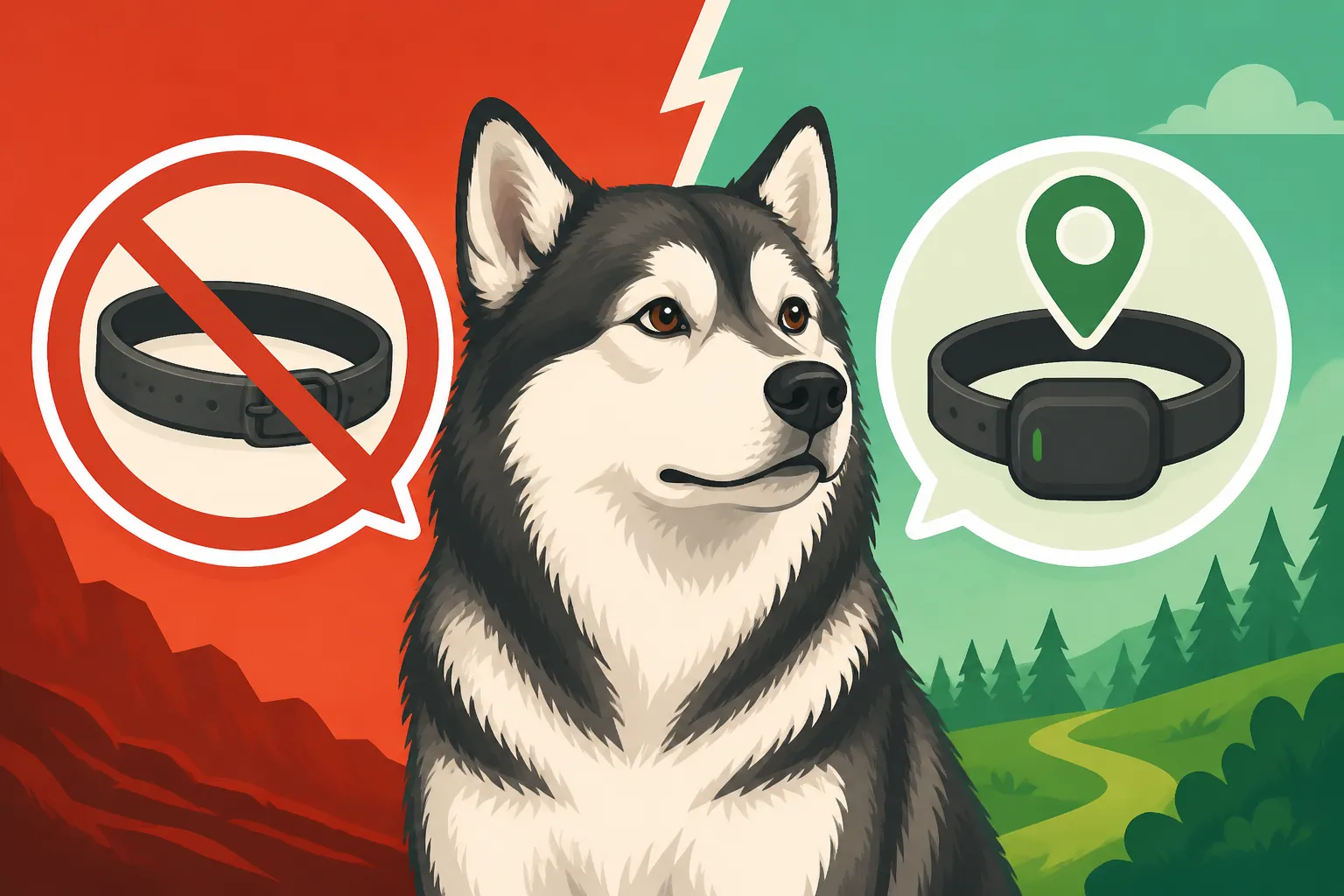
Whether a Tracking Collar Is Mandatory for a Malamute
It’s a heart-stopping moment many Alaskan Malamute owners know all too well: you turn your back for a second, a gate is ajar, or a squirrel darts by, and suddenly, your big, beautiful companion is gone, a blur across the landscape. The sheer panic that washes over you is indescribable, a desperate fear for their safety and a frantic scramble to find them. This guide aims to tackle that intense anxiety head-on by exploring the role of tracking collars for Malamutes, diving deep into whether they’re an essential tool for every owner, and what you need to consider when investing in one.
Understanding the Malamute's Drive to Roam
Before we even talk about collars, let’s be brutally honest about the breed we adore. Alaskan Malamutes were bred for endurance and independence, tasked with pulling heavy loads over vast, often featureless, terrain. This isn't a breed designed for leisurely strolls around a suburban block or to stay glued to your side off-leash in an open field. Their instincts are powerful, and those instincts often tell them there's a whole world out there waiting to be explored.
The Independent Spirit and Wandering Ways
Malamutes possess a deeply ingrained independent nature that is a double-edged sword. It's part of what makes them so captivating – their ability to make decisions, their strong will, and their self-reliance. However, this same independence means they aren't wired to be constantly checking in with you. If something catches their attention – a scent, a rustle in the bushes, another animal – their instinct to investigate can override any training, no matter how solid you think it is. They are not always trying to run away from you; often, they are simply running to something more interesting. This means that even a well-loved and well-exercised Malamute can decide to embark on an adventure.
Think of it this way: their ancestors were responsible for their own survival, often ranging far from the main camp to hunt or scout. That genetic blueprint is still very much alive in your furry friend. It’s why you might find that while they adore you, they might also see a slightly open gate as an invitation, not a boundary. For more on this, you might be interested in How Far a Loose Alaskan Malamute Travels. They can cover an incredible amount of ground quickly, making a simple walk into a frantic search if they get away.
The Myth of Reliable Recall for a Malamute
Many new Malamute owners hold onto the hope that with enough training, they can achieve a "reliable recall" – that magical command where their dog drops everything and bolts back to them. While you should absolutely train recall diligently and consistently, it's crucial to understand that for an Alaskan Malamute, "reliable" often carries a different meaning than it does for, say, a Labrador Retriever. Their prey drive is immensely strong, a vestige of their hunting heritage. A rabbit, a deer, or even a blowing leaf can activate that primal instinct, and suddenly, your voice becomes background noise to the thrill of the chase.
I’ve heard countless stories, and lived a few myself, where a Malamute who knows "come" perfectly in a controlled environment will simply turn a deaf ear when something more exciting presents itself. It's not defiance, not really. It’s their history calling. This inherent trait is precisely why many experienced owners will tell you Why an Alaskan Malamute Will Never Have a Reliable Recall. It’s not a failure on your part; it’s just the Malamute being a Malamute. Therefore, relying solely on verbal commands when off-leash is a gamble with stakes too high for most of us.
What Exactly Is a Tracking Collar?
Given the Malamute's natural inclinations, you can see why the idea of a tracking collar isn't just a gadget for some but a genuine peace-of-mind solution for many. But what are we actually talking about when we say "tracking collar"? It's more than just a fancy dog tag; it's a piece of technology designed to pinpoint your dog's location, giving you a chance to reunite with them quickly and safely.
How GPS Tracking Collars Work
The most common and widely accessible type of tracking collar for pets today utilizes Global Positioning System (GPS) technology. These devices contain a small GPS receiver that picks up signals from satellites orbiting the Earth. Once it receives enough signals, it can calculate its precise location. This location data is then transmitted to your smartphone, tablet, or computer via a cellular network or, in some cases, a dedicated radio frequency.
The collar usually has a built-in SIM card, much like your phone, allowing it to communicate. When your dog ventures outside a pre-set "safe zone" or "geofence" that you define in the accompanying app, you receive an alert. Then, you can open the app and see your dog's real-time location on a map. Some even offer a "live tracking" mode that updates the location every few seconds, allowing you to follow their path directly. The accuracy can vary depending on signal strength and environmental factors like dense tree cover or tall buildings, but generally, they are precise enough to guide you to within a few feet of your dog.
Different Technologies for Different Needs
While GPS is the dominant technology, it's not the only one. Understanding the distinctions can help you choose the best fit for your Malamute's adventures and your specific living situation.
- Cellular/GPS Hybrids: Most consumer pet trackers fall into this category. They use GPS for location and cellular networks for communication. This means they need cellular coverage to send you updates. If your Malamute bolts into a remote area with no cell service, the collar might still track its location, but it won't be able to send that information to your device until it re-enters an area with coverage. Companies like Tractive and Find My Pet offer devices that rely heavily on this blend.
- RF (Radio Frequency) Trackers: These systems consist of a small transmitter on your dog's collar and a handheld receiver that you carry. They don't rely on cellular networks or satellites. Instead, they send out a radio signal that your receiver picks up. As you get closer to your dog, the signal strength on your receiver increases, guiding you in the right direction. The major limitation here is range – typically a few miles at most in ideal conditions – and the need for you to be actively searching with the receiver. They are often favored by hunters or those in very remote, cell-service-deprived areas, but they lack the real-time mapping convenience of GPS.
- Bluetooth Trackers: Think of devices like Apple AirTags or Tile trackers. These are not suitable as primary tracking devices for a Malamute. They rely on other Bluetooth-enabled devices (like smartphones) to be nearby to relay their location. While they might work if your dog gets lost in a densely populated urban area where many people have phones, they are useless if your Malamute runs into the woods or a quiet residential street. The range is incredibly limited, usually a few hundred feet, and the updates are infrequent and reliant on the kindness of strangers' phones.
Here's a quick comparison of the main types:
| Feature | GPS/Cellular Tracker | RF (Radio Frequency) Tracker | Bluetooth Tracker |
|---|---|---|---|
| Technology | GPS for location, Cellular for data transmission | Radio frequency signal | Bluetooth signal, relies on other devices |
| Range | Unlimited (as long as cell service is available) | Typically 1-3 miles, line-of-sight | Very limited (hundreds of feet), relies on other phones |
| Real-time | Yes, frequent updates via app | Requires active handheld receiver, directional | Infrequent, opportunistic updates |
| Subscription | Often required for cellular data | Generally none, one-time purchase | None |
| Battery Life | 2-7 days, depending on usage | Weeks to months | Months to a year, replaceable battery |
| Best Use Case | Wide-area tracking, geofencing, daily monitoring | Remote areas without cell service, active hunting | Key/item finding, not suitable for active pets |
The Case for a Tracking Collar on an Alaskan Malamute
So, is it truly "mandatory"? While no official body mandates a tracking collar, for an Alaskan Malamute owner, it’s arguably one of the most prudent investments you can make for your dog's safety and your own peace of mind. Given their unique blend of independence, prey drive, and stamina, the risks associated with a loose Malamute are higher than with many other breeds.
Mitigating the High Risk of Escape
Let’s face it, Malamutes are escape artists extraordinaire. They dig, they jump, they chew, they learn to open latches – sometimes all within a single afternoon! You might have an impeccably fenced yard, but accidents happen. A gate might not latch properly, a visitor might leave a door ajar, or your Malamute might discover a weak spot in the fence you never knew existed. They are powerful, intelligent dogs, and if they decide to go exploring, they are incredibly determined.
A tracking collar acts as your last line of defense. It transforms the sheer terror of not knowing where your dog is into an actionable plan. Instead of driving aimlessly around the neighborhood calling their name, you can pinpoint their location and head directly to them. This greatly reduces the time they are exposed to dangers like traffic, unfamiliar dogs, or wild animals. Considering The Malamute That Bolts Through an Open Door is a common scenario, having instant location data can be the difference between a quick recovery and a prolonged, agonizing search.
Preventing Tragic Outcomes and High Costs
The consequences of a lost Malamute can be devastating, both emotionally and financially. Beyond the heartbreak, a loose Malamute can cause accidents, get injured, or even, due to their strong prey drive, harm other animals. The costs associated with finding a lost dog can escalate quickly: reward money, printing flyers, veterinary bills if they're injured, or impound fees from animal control.
Imagine this scenario: your Malamute, let's call him Kodiak, slips out during a delivery. Without a tracking collar, you're relying on luck and the kindness of strangers. Days might pass. If Kodiak ends up hit by a car, the emergency vet bills can be astronomical. Even if he's found unharmed by animal control, impound fees, daily boarding charges, and potential fines add up. These costs can easily dwarf the price of a quality tracking collar and its subscription. Services like Chewy offer a range of these collars, making them accessible. In a worst-case scenario, if Kodiak is severely injured, your pet insurance (perhaps from Healthy Paws) might cover the medical bills, but wouldn't it be better to avoid the injury altogether? The cost of What an Emergency Vet Visit Costs for a Malamute is a stark reminder of why prevention is always better.
Choosing the Right Tracking Collar for Your Malamute
Not all tracking collars are created equal, and what works for a tiny Chihuahua won't necessarily cut it for a robust Alaskan Malamute. You need something durable, reliable, and appropriate for their size and activity level.
Durability and Fit for a Large, Active Breed
Your Malamute isn't a delicate flower. They roll in mud, dig in dirt, push through brush, and generally live life with gusto. Therefore, the tracking collar needs to be built to withstand these adventures. Look for:
- Robust Construction: The device itself should be rugged, often made with durable plastics or reinforced casings. It should be securely attached to a strong collar that can withstand pulling and tugging.
- Waterproof Rating: Malamutes love snow and water. An IPX7 or IPX8 rating means it can handle splashes, rain, and even a quick dip without failing.
- Secure Attachment: The tracker should be firmly attached to the collar itself, not dangle loosely where it can get caught or chewed off. Some trackers are integrated directly into the collar webbing.
- Comfort and Size: While you want it robust, it also needs to be comfortable for your dog to wear continuously. Ensure it’s not too bulky or heavy, and that it fits properly without chafing. Many brands offer different sizes to accommodate larger breeds.
A good tracking collar should integrate seamlessly with a sturdy, everyday collar. Consider pairing it with a durable nylon or biothane collar, rather than a thin fabric one.
Battery Life and Subscription Considerations
These are often the hidden costs and practical considerations that can make or break your tracking collar experience.
- Battery Life: This is critical. A Malamute can be lost for hours or even days. A tracker with only a 24-hour battery life might die before you can find them. Look for trackers that offer several days of battery life on a single charge. Some models have customizable tracking intervals; more frequent updates mean faster battery drain. It’s a trade-off you need to manage. Get into the habit of charging it regularly, just like your phone.
- Subscription Plans: Most GPS/cellular trackers require a monthly or annual subscription fee. This fee covers the cost of the cellular data needed to transmit your dog's location to your device. Don't skip this research! Compare plans, check for long-term contract options, and understand what features are included (e.g., live tracking, activity monitoring, geofence alerts). While it's an ongoing cost, think of it as a small insurance premium for your peace of mind. The subscription is what makes the technology work, transforming a dormant piece of hardware into a lifesaver.
Before committing, read reviews specifically from owners of active or large breeds to gauge real-world battery performance and durability. You'll want to ensure the tracker can go the distance, just like your Malamute.
Integrating a Tracking Collar into Responsible Malamute Ownership
A tracking collar is a powerful tool, but it's not a magic bullet. It should be part of a broader strategy for responsible Malamute ownership, especially when it comes to their safety and containment.
Microchipping: A Fundamental Backup
A tracking collar gives you real-time location data, but what happens if the collar comes off, gets damaged, or runs out of battery? This is where microchipping becomes absolutely vital. Every Alaskan Malamute should be microchipped. A microchip is a tiny transponder, about the size of a grain of rice, implanted under your dog's skin, usually between the shoulder blades. It contains a unique identification number that can be read by a scanner at a vet's office or animal shelter.
If your Malamute is found without their collar, a scan of their microchip will link them back to you through a national database. Always make sure your registration information is current with your microchip provider – updated phone numbers, addresses, and emergency contacts are key. A microchip, combined with a tracking collar, creates a robust safety net, ensuring that even if one system fails, you have another layer of protection.
Secure Containment is Still Paramount
Even with the best tracking collar, your primary focus should always be on preventing your Malamute from getting lost in the first place. Secure containment isn't just about keeping your dog in; it's about keeping them safe from the outside world and preventing them from becoming a danger or nuisance to others.
This means:
- A strong, tall, and deep fence: Malamutes are notorious diggers and jumpers. Your fence needs to be at least 6 feet high, and the bottom should be buried or reinforced with concrete to prevent digging under. For more on this, check out Fencing a Yard Against a Malamute That Was Bred to Dig.
- Secure gates: Ensure all gates have heavy-duty, Malamute-proof latches that can't be easily nudged open or figured out. Double-latching is always a good idea.
- Supervision: Never leave your Malamute unattended in the yard for extended periods. They are smart and resourceful, and a bored Malamute is an inventive Malamute.
- Leash discipline: Always use a sturdy leash and harness when walking your Malamute, even in areas you consider safe. Remember, Why an Alaskan Malamute Can Never Be Off Leash is a mantra for good reason.
- Training: Consistent training, while not guaranteeing recall, builds a stronger bond and helps establish boundaries. It’s part of a holistic approach to managing their independent nature.
A tracking collar supplements, rather than replaces, responsible containment. It's an emergency tool for when preventative measures inevitably fail, because with a Malamute, it's often a matter of when, not if.
Beyond Tracking: Health and Wellness Integration
Many modern tracking collars offer more than just location services. They often include activity monitoring, much like a fitness tracker for humans. This can provide valuable insights into your Malamute's daily exercise levels, sleep patterns, and even changes in behavior. For example, a sudden drop in activity might alert you to a potential health issue, or it could simply tell you your Malamute is being uncharacteristically lazy.
Some apps associated with these collars even allow you to log food intake or connect with other pet-care apps. While brands like Ollie focus on providing fresh, nutritious food that supports overall health, ensuring your Malamute is well-fed and receives adequate exercise also contributes to their general well-being. A happy, healthy Malamute is often a more content Malamute, potentially less inclined to seek "entertainment" by escaping, though their innate drive to explore will always be there. Think of these additional features as an added layer of care for your beloved companion, helping you stay connected to their daily life in more ways than one.
Conclusion
So, is a tracking collar "mandatory" for an Alaskan Malamute? While the law might not require it, I, as a veteran Malamute owner, would strongly argue that it's an indispensable tool for their safety and your peace of mind. Their unique breed characteristics – the powerful prey drive, the wanderlust, the independent spirit – make them highly susceptible to getting lost. A high-quality tracking collar, chosen for durability, reliable battery life, and backed by a solid subscription, transforms the terrifying uncertainty of a lost Malamute into a manageable situation. Combine it with microchipping, vigilant containment, and consistent training, and you create the most robust safety net possible for your beloved companion. Don't wait for that heart-stopping moment; be prepared.
Disclaimer
This article is for general informational purposes only and does not constitute professional advice. Laws, prices and regulations vary by location and change over time. Consult a qualified professional for guidance on your specific situation.