The Malamute That Bolts Through an Open Door
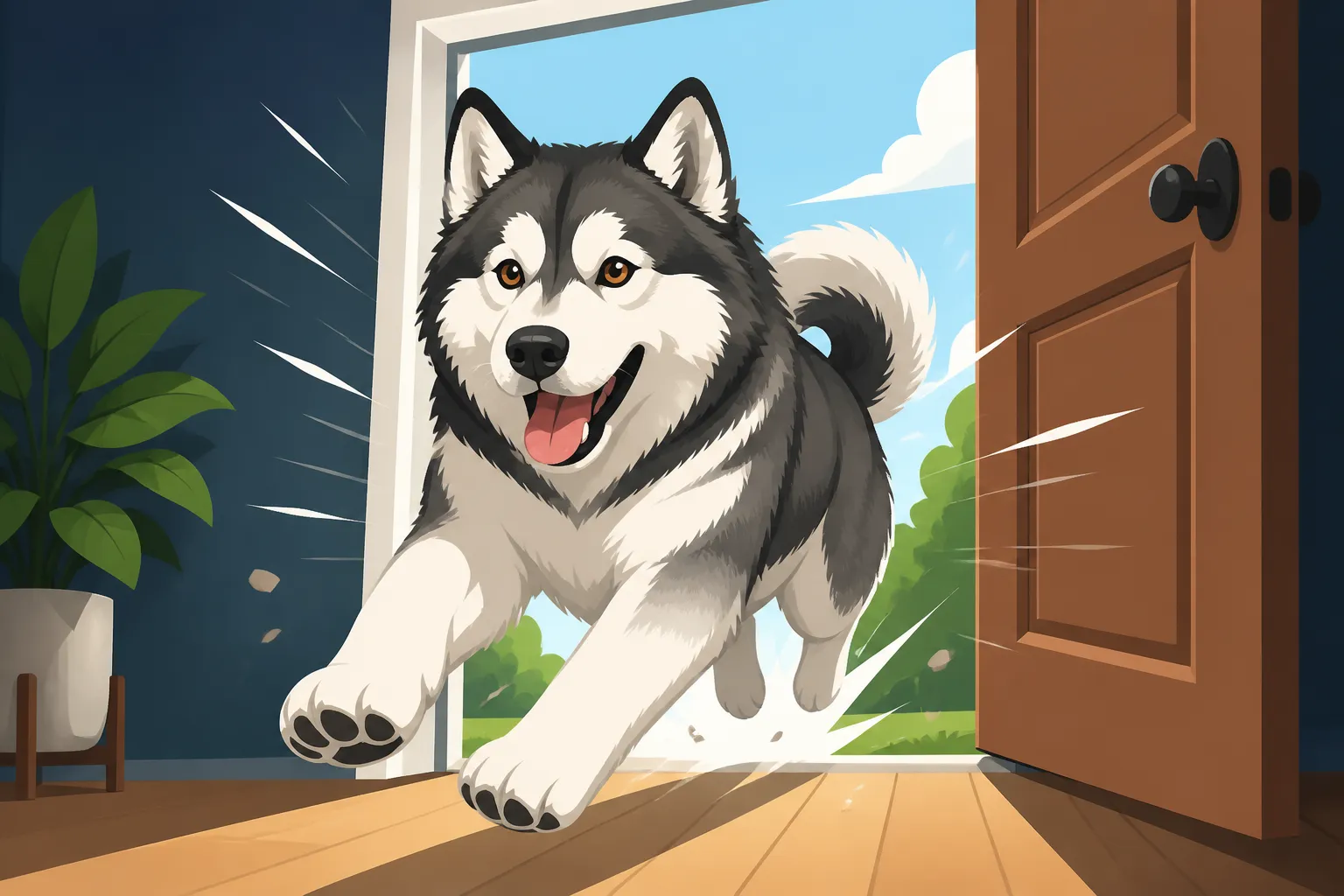
The sight of your magnificent Alaskan Malamute, ears perked and tail flagged, making a break for it the moment a door cracks open is one of the most heart-stopping experiences a Malamute owner can face. It's not just a minor inconvenience; it's a genuine fear for their safety, knowing how quickly they can disappear and the dangers they might encounter. This guide will delve deep into why your Malamute feels compelled to bolt, why traditional training often misses the mark, and practical, empathetic strategies to keep your furry escape artist safely by your side.
Understanding the Malamute's Innate Drive to Bolt
It's easy to feel frustrated, even angry, when your Malamute repeatedly tries to escape. You might think they're being stubborn or disobedient, but in reality, this behavior is deeply rooted in their history and instincts. They aren't trying to upset you; they're simply being Malamutes.
The Call of the Wild and Prey Drive
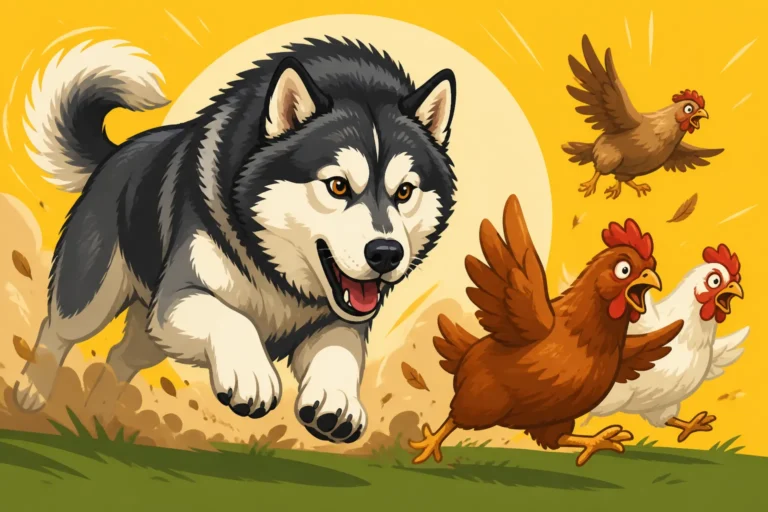
Imagine being bred for thousands of years to cover vast distances, to hunt for survival, and to explore untamed landscapes. That's your Malamute. An open door, to them, isn't a boundary; it's an opportunity. The world outside is a symphony of scents, a potential chase, a grand adventure waiting to happen. Their powerful prey drive, honed over generations, means a squirrel darting across the yard, a distant rabbit, or even a blowing leaf can trigger an unstoppable urge to pursue. This isn't a dog being naughty; it's a dog responding to millennia of selective breeding. We often talk about how A Malamute Was Bred to Hunt Bears and It Has Not Forgotten, and that same ancient instinct fuels their desire to explore and chase anything that moves. For a Malamute, the thrill of the chase, even for something as small as a bird, is incredibly potent and difficult to ignore.
This intense drive means that once they've committed to bolting, turning back isn't really an option in their minds. They're hardwired for pursuit, and the immediate reward of the chase far outweighs any past training or potential reprimand. Understanding that this is a fundamental part of their being, rather than a personal slight, is the first step in effectively managing their door-dashing tendencies. You're not fighting stubbornness; you're working with deeply ingrained instinct.
Curiosity and the Need for Exploration
Beyond the prey drive, Malamutes are incredibly curious creatures with an insatiable need to explore. Their intelligence isn't always demonstrated by obedience to human rules but by their problem-solving skills when it comes to navigating their environment. An open door presents an exciting new puzzle to solve, a new territory to sniff, and new experiences to be had. They want to know what's on the other side, what smells are out there, and what adventures await.
Think about it from their perspective: your home is familiar, but the world beyond is constantly changing. Every time that door opens, there's a chance for something new and fascinating. They see an opportunity, not a transgression. This exploratory drive, combined with their incredible stamina, means that once they're out, they're not just going to run a block and come back. They can cover significant distances, fueled by curiosity and a desire to see what's over the next hill. This is why a simple "stay" command might hold for a moment, but the lure of the unknown is often too strong.
Lack of "Street Smarts" and Danger Awareness
Perhaps one of the most terrifying aspects of a Malamute bolting is their apparent lack of awareness of dangers like traffic or unfamiliar environments. They live in a world driven by scent and instinct, not by human concepts of road safety or property lines. A car roaring down the street is just another noise, not a deadly projectile. A busy intersection is simply a new area to investigate, not a place to exercise extreme caution.
This isn't a sign of low intelligence; it's a reflection of their evolutionary programming. In their ancestral environment, the biggest dangers were other large predators, not fast-moving metal boxes. They simply haven't developed the inherent caution around modern hazards that some other breeds might display. This vulnerability means that every escape attempt is a potential life-or-death situation, making effective management and training absolutely paramount. It also highlights why relying on a "reliable recall" for a Malamute is often a fool's errand, as discussed in detail in Why a Malamute's Recall Cannot Be Trusted. Their focus shifts entirely to the external stimulus, rendering your voice almost irrelevant in that crucial moment.
Why Traditional Training Often Fails (and What to Do Instead)
Many Malamute owners, understandably, try methods that worked with other breeds or follow general obedience advice. However, the unique temperament and drives of an Alaskan Malamute often require a different approach. What works for a Golden Retriever might just make your Malamute more clever at escaping.
The Problem with Punishment and Force
When a Malamute bolts, the natural human reaction might be to yell, chase, or punish them upon their return. While this might temporarily stop the behavior in some dogs, with a Malamute, it almost invariably backfires. Punishing a Malamute for returning to you after an escape teaches them that coming back is bad. It doesn't teach them not to bolt; it teaches them not to trust you when they've had a moment of freedom. Instead of preventing future escapes, it often just makes them harder to catch next time.
Malamutes respond poorly to force or intimidation. They are independent thinkers, not eager-to-please automatons. Harsh handling can damage your bond, leading to a dog who is either fearful and sneaky or defiant. They will learn to avoid conflict by simply not engaging with you, or by finding more clandestine ways to get what they want. As we discuss in Why Force Fails on an Alaskan Malamute, positive reinforcement and building trust are the cornerstones of effective Malamute training. You want them to want to be with you, not fear what happens if they don't comply. A Malamute who associates the open door with punishment is a Malamute who will be even more determined to get away when the chance arises.
Building a Solid "Wait" or "Stay" at Thresholds
Instead of relying on punishment, focus on proactive, positive reinforcement training for door manners. The goal is to teach your Malamute that the door isn't a launchpad to freedom, but a place where good things happen when they remain calm and attentive to you. Start with a "wait" or "stay" command indoors, far from the actual door. Practice with low distractions, rewarding heavily for even a few seconds of stillness.
Once they understand the command, gradually move closer to the door. Start by having them "wait" while you touch the doorknob, then open it slightly, then wider. Each step should be heavily rewarded if they remain in position. If they move, calmly reset and try again, making the task easier if needed. The key is to make waiting by the door more rewarding than bolting through it. This method, often referred to as "threshold training," is detailed further in Teaching an Alaskan Malamute to Wait at a Threshold. Consistency is absolutely vital; every family member must adhere to the same rules, every single time. Even one slip-up can set you back significantly.
Management is Key: Prevention Over Cure
While training is crucial, for a breed with such powerful drives, management is truly your first line of defense. Think of it as putting up guardrails while you're teaching them how to drive safely. You simply cannot rely solely on a command when a Malamute's instincts are shouting at them to run.
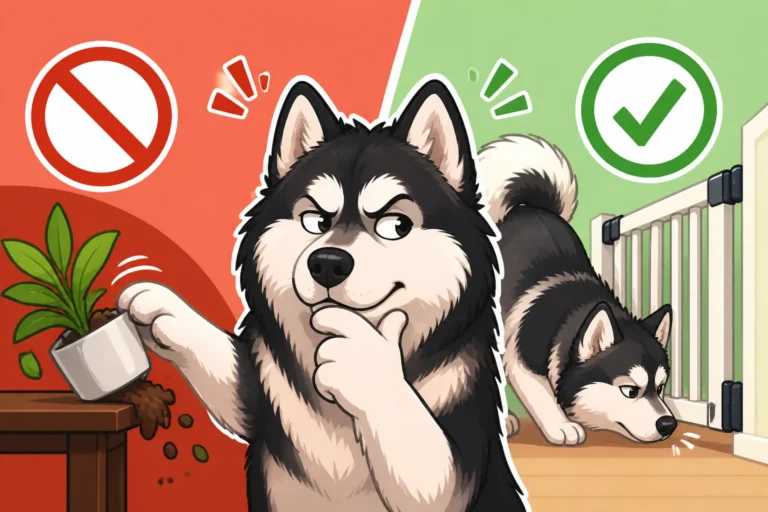
This means creating an environment where bolting is as difficult as possible. Consider installing baby gates or x-pens near entryways to create a physical barrier. If you have a front door that opens directly to the outside, an "airlock" system with two gates or doors can be a literal lifesaver. Never assume your Malamute won't try to bolt; assume they will and plan accordingly. This might also mean keeping them on a leash when answering the door, even inside your own home, especially during critical training periods or if you know a particular trigger (like the mail carrier) is imminent. It's about reducing the opportunities for failure and increasing the opportunities for success through prevention.
Practical Strategies for Door Management
Once you understand why your Malamute acts the way they do, you can implement practical, consistent strategies that work with their nature, rather than against it. These aren't quick fixes, but long-term habits that build safety and trust.
Creating a "No-Go" Zone Near Doors
One highly effective strategy is to teach your Malamute that the area immediately surrounding the door is off-limits unless specifically invited. This can be achieved through various methods:
- Baby Gates or X-Pens: Install sturdy baby gates a few feet away from your main entry points. This creates a buffer zone. When someone comes to the door, your Malamute is safely behind the gate, unable to rush past. This gives you time to manage the opening of the door without the immediate stress of a potential escape. You can find robust options for these on Amazon that are tall enough to deter even determined Malamutes.
- Tethering: For dogs that might try to climb or jump a gate, consider tethering them securely a few feet from the door before opening it. Use a sturdy leash and a heavy anchor, ensuring they have enough slack to stand and lie down comfortably but not reach the door itself. This is a temporary solution for high-risk moments and should always be supervised.
- Place Command: Train a strong "place" command, where your Malamute goes to a designated spot (like a dog bed) and stays there until released. Practice this extensively, starting far from the door and gradually moving closer. When the doorbell rings or someone knocks, direct them to their "place" before you even approach the door.
Consistency is paramount. Every time the door is approached or opened, your Malamute must adhere to the "no-go" rule. Over time, this consistent boundary teaches them that the doorway is your space to control, not theirs to exploit.
Training with High-Value Rewards
Malamutes are often highly food-motivated, which can be a huge asset in training. Regular kibble might not cut it when faced with the irresistible allure of the great outdoors, so you need to bring out the big guns. Think cooked chicken, cheese, hot dogs, or commercially prepared high-value treats.
When practicing "wait" or "stay" at the door, every successful moment, no matter how brief, should be followed by a jackpot of these incredible treats. Don't just give one; give a handful! Make it clear that staying calm and waiting for your cue yields far greater rewards than any potential escapade. Training systems like those offered by BAXTER & Bella often emphasize positive reinforcement and structured lessons, which can be incredibly helpful for teaching reliable door manners with high-value treats as a primary motivator. Remember to keep training sessions short, fun, and end on a positive note, especially with an intelligent, easily bored breed like the Malamute.
The "Doorbell Drill" and Counter-Conditioning
The doorbell or a knock can be a major trigger for door bolting. The sudden sound often cues a rush to the door, an excited state, and then the dash. You can counter-condition this response by changing its meaning for your Malamute.
The "doorbell drill" works like this:
- Have a friend or family member ring the doorbell or knock.
- Before your Malamute can react, immediately give a high-value treat away from the door.
- Repeat this many times. The goal is for your Malamute to hear the doorbell and immediately look at you, anticipating a treat, rather than rushing to the door.
- Gradually increase the criteria. Once they're reliably looking at you, start adding a "sit" or "down" command before giving the treat.
- Practice with you approaching the door while they hold their position, still rewarding heavily.
This process teaches them that the doorbell means "pay attention to mom/dad for treats," not "time to race out the door." Over time, their emotional response to the trigger will shift from frantic excitement to calm anticipation.
Using a Long Line or Leash Indoors
For Malamutes with a severe bolting problem, or during the initial stages of training, a long line or leash worn indoors can be a game-changer. This isn't for punishment, but for gentle, consistent management and redirection.
Here's how it works:
- Attach a lightweight long line (10-15 feet) or a regular leash to your Malamute's harness (never just a collar if they're a bolter, as they can slip out or injure themselves).
- Let them drag the line around the house, but keep a close eye on them to prevent entanglement.
- When you approach a door or hear a knock, pick up the end of the line. This gives you a gentle way to prevent them from bolting without having to grab their collar or chase them.
- You can then calmly guide them back to their "place" or away from the door, reinforcing the desired behavior with treats.
This tool allows you to maintain control during vulnerable moments and prevents the habit of successfully bolting from forming or being reinforced. It provides a safety net while you work on building those solid verbal cues.
Tools and Gear for Enhanced Safety
Even with the best training and management, accidents can happen. A door might be left ajar by a visitor, or a child might inadvertently open it. Having the right safety gear is not just recommended; it's an essential part of responsible Malamute ownership.
| Tool/Technique | Description | Benefits | Considerations |
|---|---|---|---|
| Physical Barriers | Baby gates, x-pens, double-door "airlocks" at entry points. | Prevents immediate dashing, provides a buffer zone, reduces opportunities for failure. | Requires consistent use, gates must be tall and sturdy enough for a Malamute. |
| Door Manners Training | "Wait" or "Stay" commands at thresholds, counter-conditioning doorbell. | Teaches calm behavior, builds impulse control, strengthens bond through positive reinforcement. | Requires patience, consistency, and high-value rewards; not a quick fix. |
| Leash/Harness Control | Using a well-fitting, escape-proof harness and a secure leash near doors. | Prevents slips, provides immediate physical control during high-risk moments. | Harness must be correctly fitted; dogs can still lunge if not held securely. |
| GPS Tracker | Device attached to collar that provides real-time location tracking. | Indispensable for recovery if an escape occurs, offers peace of mind. | Requires battery charging, subscription service often needed, not a preventative. |
| "Place" Command | Training the dog to go to a specific mat or bed and stay until released. | Creates a safe, predictable routine during door openings, builds obedience. | Needs extensive practice and high reinforcement, especially with distractions. |
Secure Leashes and Harnesses
This might seem obvious, but it's astonishing how many dogs slip out of ill-fitting collars or harnesses. For a Malamute, whose neck is often thicker than their head and who can be surprisingly agile, a standard flat collar is simply not enough. They can "back out" of them in seconds if they pull hard enough.
Invest in a secure, escape-proof harness. A "Y-front" harness that has straps around the chest and behind the front legs is often a good choice, as it distributes pressure evenly and is much harder to slip out of. Ensure it fits snugly but comfortably. Always double-check the fit regularly, especially if your Malamute is still growing or gaining/losing weight. Some owners even use a combination of a collar and harness, with the leash clipped to both for extra security. This small investment can make a huge difference in preventing an accidental escape from becoming a lost dog situation.
GPS Trackers
Let's be realistic: no matter how much you train or how many precautions you take, a Malamute might still manage to bolt. They are resourceful, clever, and driven by powerful instincts. This is where a GPS tracker becomes an absolutely indispensable tool.
These small devices attach to your dog's collar and, via an app on your smartphone, allow you to track their real-time location. While it won't prevent the escape, it dramatically increases your chances of a swift and safe recovery. Imagine the terror of knowing your Malamute is out there, but having no idea which direction they went or how far they've traveled. A GPS tracker eliminates that blind panic and gives you an actionable plan. You can find various models and brands on Amazon, ranging in features and price points. Given their propensity for escape and their incredible endurance, a GPS tracker truly is Why a GPS Collar Is Essential for a Malamute. It's peace of mind wrapped around their neck.
Double Gates and Air Locks
For homes with frequent door traffic, or for Malamutes that are particularly prone to bolting, creating a physical "airlock" system at your main entry points can be a lifesaver. This involves having two barriers that must be opened sequentially.
For example, you might have a sturdy baby gate a few feet inside your front door, effectively creating a small vestibule. When someone comes to the door, you open the main door, but your Malamute is still contained behind the inner gate. You can then manage the interaction, and only when the main door is securely closed can you open the inner gate. This provides a crucial second layer of defense, giving you time to react and control the situation before your Malamute can make a dash for freedom. This might mean installing an actual second door if feasible, or simply strategically placing two heavy-duty gates to form a secure, contained space.
Ultimately, living with an Alaskan Malamute that bolts through an open door requires a combination of deep understanding, consistent training, vigilant management, and the right safety gear. It's a commitment, but one that ensures the safety and well-being of your beloved, adventurous companion.
Disclaimer
This article is for general informational purposes only and does not constitute professional advice. Laws, prices and regulations vary by location and change over time. Consult a qualified professional for guidance on your specific situation.