A Malamute Was Bred to Hunt Bears and It Has Not Forgotten
Bringing an Alaskan Malamute into your life means welcoming a magnificent, powerful dog with a heart that beats to an ancient rhythm. Many new owners, however, quickly face a stark reality: their fluffy, friendly companion possesses an intense prey drive and an independent nature that can feel overwhelming, often stemming directly from its heritage as a subsistence hunter. This guide dives deep into the historical role of the Alaskan Malamute in hunting large game, particularly bears, and how those ingrained instincts profoundly shape their behavior today, offering comprehensive insights and practical strategies for managing these powerful traits in a modern home.
The Echoes of the Wild: How the Malamute's Ancestry Shapes Its Instincts Today
When you look at your Alaskan Malamute, it’s easy to get lost in their stunning beauty, their friendly "woo-woos," and their undeniable charm. But underneath that thick, luxurious coat and those intelligent eyes lies a deeply ingrained history. These aren't just pretty dogs; they are living relics of a time when their very survival, and that of their human companions, depended on their keen senses, strength, and hunting prowess. They weren't merely pulling sleds; they were partners in a hunt, often for formidable prey.
The Original Hunters of the Mahlemut
Imagine a world where food isn't just a trip to the grocery store. For the Mahlemut people of Alaska's Kotzebue Sound, their dogs were indispensable. These were communities living in harsh, unforgiving landscapes, and every resource was vital. The Alaskan Malamute, as we know it today, was carefully developed by these indigenous people over centuries, not for racing across vast distances at breakneck speeds, but for freighting heavy loads and, crucially, for assisting in hunting. Their sheer size, strength, and unwavering determination made them perfect for tracking and cornering large game.
These dogs were integral to the very fabric of the Mahlemut's existence. They were bred to work in close cooperation with humans, but also to possess the discernment and grit needed to survive and thrive in a wild environment. This isn't just a romantic notion; it's a genetic blueprint. The traits that made them successful hunters and haulers — their intelligence, independence, incredible stamina, and formidable prey drive — are still very much alive and well in the Malamute curled up on your living room rug. Understanding this deep-seated heritage is the first step to truly understanding your dog's behaviors and why some things just feel so inherent to them.
What an Alaskan Malamute Was Bred to Hunt
While they were invaluable for pulling sleds laden with supplies and game, the Alaskan Malamute's role extended beyond mere transportation. They were active participants in hunting expeditions, particularly for large, formidable prey. When we talk about "hunting bears," it’s not just a colorful anecdote; it speaks to the immense courage, strategic thinking, and physical power these dogs possessed. They were not typically the "kill" dogs, but rather the ones who would track, corner, and hold large animals at bay, allowing the human hunters to make the final, decisive move. This required a profound understanding of animal behavior, incredible stamina to pursue prey over long distances, and the bravery to stand up to a dangerous adversary.
Beyond bears, Malamutes would have assisted in hunting seals, caribou, and other substantial game that provided sustenance, furs, and materials for survival. Their keen sense of smell, powerful physical build, and inherent drive to pursue and engage with prey were honed over generations. These aren't traits that disappear easily, even with generations of selective breeding for companionship. The urge to chase, to stalk, and to engage with potential "prey," whether it's a rabbit, a squirrel, or even a leaf skittering across the yard, is a direct manifestation of this ancient purpose. This is why What an Alaskan Malamute Was Bred to Hunt is so crucial to understanding their behavior.
The Modern Malamute's Prey Drive: From Wilderness Survival to Backyard Challenges
Fast forward to today, and your Alaskan Malamute is likely living a very different life than its ancestors. Instead of vast, icy tundras, they have fenced backyards. Instead of tracking caribou, they're probably eyeing the neighborhood cat or the squirrel scampering up a tree. Yet, that powerful, ancient programming remains. The prey drive, once a matter of survival, is now one of the biggest behavioral challenges many Malamute owners face.
How Strong a Malamute's Prey Drive Is
Let's be brutally honest: an Alaskan Malamute's prey drive is not something you can train out of them, and it's certainly not something to underestimate. It's an intrinsic part of who they are. Imagine a deep, primal urge, almost like an undeniable hunger. That's what their prey drive feels like to them. It's the instinct to spot, stalk, chase, and potentially kill smaller, faster-moving animals. This isn't aggression in the malicious sense; it's simply following their biological imperative. This drive is often incredibly strong, sometimes even overriding years of training or a previously calm demeanor.
Many owners are shocked when their otherwise gentle giant suddenly snaps into a laser-focused predator at the sight of a bunny. This isn't a lapse in judgment; it's their genes taking over. It’s why you might see them ignoring your commands, pulling with surprising force, or even scaling fences in pursuit of a perceived target. It's a fundamental aspect of their being, and recognizing its intensity is paramount to managing it safely and effectively. You can learn more about its potency in How Strong a Malamute's Prey Drive Is.
What an Alaskan Malamute Does to Small Animals
It's a tough truth to face, but your Alaskan Malamute can be a real threat to smaller animals, including cats, small dogs, rabbits, squirrels, and even birds. Their history of hunting and dispatching game means they possess the physical capability and the instinct to do serious harm. Many owners hold onto the hope that if their Malamute is raised with a cat, for example, it will be safe. While some individual Malamutes can coexist peacefully with specific cats, it's always a calculated risk and requires constant vigilance. The "rule" often is: if it runs, it's prey.
A Malamute's interaction with a small animal might start with a curious sniff, but a sudden movement from the smaller animal can trigger the full-blown chase and kill sequence. This is why a well-meaning "play date" with a small terrier can turn into a tragedy in seconds. It’s not about malice; it’s about instinct. This also extends to wildlife in your yard or on walks. A Malamute seeing a deer, a rabbit, or even a neighborhood cat will often react with an intensity that can surprise even experienced owners. This is important to remember when considering What an Alaskan Malamute Does to Small Animals or How Safe a Malamute Raised With a Cat Is.
Living with a Predator: Safety and Management Strategies
Given the strength of their prey drive, living safely and harmoniously with an Alaskan Malamute requires a proactive and vigilant approach. You can't simply ignore this fundamental aspect of their being and hope for the best. It requires specific strategies, dedication, and a deep understanding of their needs.
Why a Malamute's Recall Cannot Be Trusted
This is perhaps one of the most difficult lessons for new Malamute owners to learn, and one that often comes with heartbreaking consequences. Despite how well-trained your Malamute might be in a distraction-free environment, their recall, especially when prey drive is triggered, is simply not reliable. That means, in almost all circumstances, an off-leash Malamute is a disaster waiting to happen. Imagine the scenario: you're at the park, your Malamute is trotting along, seemingly enjoying the sniff. Suddenly, a rabbit darts across the field. In that instant, every ounce of your dog's ancient hunting instinct ignites.
Your commands, your pleas, your desperate whistles – they will likely fall on deaf ears. The biological urge to chase is so overwhelmingly powerful that it completely eclipses any training they might have. They are in a primal state, and you, their loving owner, are momentarily irrelevant. This isn't a sign of disrespect; it's a biological imperative. For this reason, it's critical to understand Why a Malamute's Recall Cannot Be Trusted and adopt lifelong management strategies.
Leash Safety: Tools and Techniques
Since off-leash freedom is generally not an option for Malamutes outside of securely fenced areas, leash safety becomes paramount. This isn't just about preventing escapes; it's about protecting your dog, other animals, and even yourself. A standard nylon collar and leash simply won't cut it when a powerful Malamute decides a squirrel is worth pursuing. They can slip collars with ease, snap leashes, or drag you off your feet.
Investing in robust, secure equipment is non-negotiable. Many owners find success with a well-fitted harness that offers better control and prevents slipping. Some prefer martingale collars, which tighten slightly to prevent escape without choking, but a harness is often the safer bet for preventing neck injury from sudden pulls. Double-leashing—using both a collar and a harness with separate leashes held by you—provides an extra layer of security. Furthermore, a high-quality, durable leash, perhaps one made of biothane or heavy-duty nylon, is essential. Consider a hands-free leash if you're comfortable, but ensure it's attached to a secure belt to allow for maximum shock absorption. For training, a long line can give them a sense of freedom in a safe, open space while still maintaining control. Products available on platforms like Amazon can be a good starting point for finding heavy-duty leashes and harnesses.
The Non-Negotiable Fence and Containment
If your Malamute has access to a yard, a secure fence is not just a recommendation; it's an absolute necessity. And by "secure," we mean truly Malamute-proof. These dogs were bred to travel vast distances and are incredibly adept at finding weaknesses in boundaries. They are notorious diggers, capable of creating impressive tunnels in a short amount of time. They are also intelligent problem-solvers who can figure out gate latches, and surprisingly agile climbers who can scale fences that seem impossibly high.
A standard 4-foot fence is often insufficient. Many Malamute owners recommend at least a 6-foot fence, preferably with "L-footings" or a buried wire mesh along the bottom to prevent digging out. Regular inspections of your fence line are crucial, as they will continually test for weaknesses. Remember, an invisible fence is generally not effective for a Malamute with a strong prey drive; the desire to chase will almost always outweigh the discomfort of the static correction. The lure of a rabbit or a deer on the other side is too strong. This is precisely why Fencing a Yard Against a Malamute That Was Bred to Dig is such a critical topic for Malamute owners.
Training with Instinct in Mind: Realistic Expectations
Training an Alaskan Malamute isn't about breaking their spirit or eliminating their instincts; it's about channeling them and teaching them appropriate behaviors within a human household. This requires patience, consistency, and a deep understanding of what motivates this independent, intelligent breed.
Why Force Fails on an Alaskan Malamute
Trying to use harsh corrections, physical force, or dominance-based training methods with an Alaskan Malamute is not only counterproductive but can be damaging to your relationship and their overall temperament. These dogs are strong-willed, intelligent, and fiercely independent. They were bred to make their own decisions in a harsh environment, not to blindly obey. If you try to force them, they will often become stubborn, shut down, or, even worse, develop behavioral issues like fear-based aggression. They are not like many other breeds that thrive on unquestioning obedience.
Instead, a Malamute responds far better to positive reinforcement, clear boundaries, and fair treatment. They need to understand why they should do something, not just be compelled to do it. Building a trusting relationship where they see you as a benevolent leader who provides resources and guidance, rather than a dictator, is the key. They respect fairness and consistency. This approach also helps manage their potential Same Sex Aggression in a Pack Bred Alaskan Malamute by promoting a sense of security and clear expectations rather than competition. This deep understanding of their psychology is highlighted in Why Force Fails on an Alaskan Malamute.
What an Alaskan Malamute Will Work For
So, if force doesn't work, what does motivate an Alaskan Malamute? The answer often comes down to high-value rewards and making training fun and engaging. These are food-motivated dogs, especially for novel or particularly tasty treats. Think boiled chicken, cheese, or specialized training treats, not just their regular kibble. For many, the reward of a good "job" or engaging in a desired activity is just as powerful.
They thrive on having a purpose and enjoy activities that tap into their natural abilities. Scent work, puzzle toys, and, of course, pulling activities, are all incredibly motivating. Short, engaging training sessions that end on a high note are far more effective than long, repetitive drills that bore them. They are smart enough to figure out repetitive tasks and will often decide they've done enough after a few repetitions. Keep it fresh, keep it fun, and always have a jackpot reward ready for truly exceptional effort. Many online training platforms, such as BAXTER & Bella, emphasize positive reinforcement methods that align well with the Malamute's learning style.
Essential Obedience Cues and Their Limitations
While a Malamute's recall may never be 100% reliable in high-prey situations, teaching solid foundation obedience is still incredibly important for safety and daily living. Cues like "sit," "stay," "leave it," and a solid "watch me" or "focus" command are invaluable. A strong "leave it" can help prevent them from snatching something dangerous off the ground or, with repeated practice, might momentarily interrupt their focus on a distant squirrel. "Stay" is vital for door manners and maintaining control in busy environments.
However, always remember their limitations. These cues are tools to manage their behavior in controlled situations, not guarantees against their deeply ingrained instincts. You can teach a "leave it" for a dropped piece of food, but expecting it to override the sight of a running rabbit is often asking too much. The goal is to build a strong foundation that gives you the best possible chance of redirecting their attention and maintaining safety, but never to rely on it as the sole barrier against their prey drive. Consistent training is key, and exploring resources like BAXTER & Bella can help establish these foundational cues with positive methods.
Enriching the Hunter's Life: Satisfying Innate Needs
A bored Alaskan Malamute is often a destructive Malamute, and one whose natural instincts are left completely unfulfilled can easily become frustrated. Providing appropriate outlets for their intelligence, strength, and prey drive is crucial for their physical and mental well-being.
Channeling the Prey Drive with Safe Activities
Since we can't let them hunt actual prey, we need to create safe, stimulating alternatives that tap into that powerful drive. Think of activities that mimic the chase, the search, and the reward. Flirt poles, for instance, can be a fantastic way to engage their chase instinct. It allows them to pursue and "catch" a toy on a stick, giving them a satisfying physical and mental workout without endangering other animals. Scent work or "nose games" are also excellent, allowing them to use their incredible sense of smell to track and find hidden treats or toys, mimicking the "search" phase of a hunt.
Puzzle toys, especially those that require manipulation to get a treat, can keep their intelligent minds engaged. These can be particularly useful for those times when you can't actively engage them in a physical game. Regular walks where they can sniff and explore, simulating tracking, are also more enriching than simply going for a brisk walk. Remember, it's not just about physical exercise; it's about mental engagement that respects their history.
The Undeniable Urge to Pull
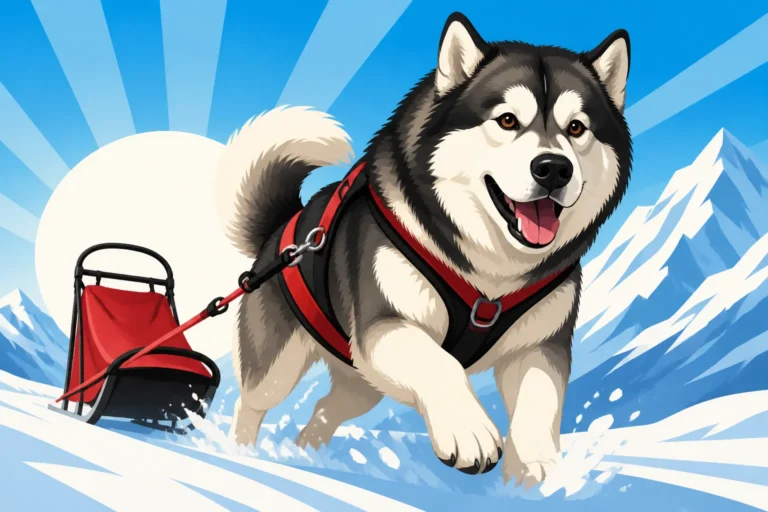
No discussion of Malamute enrichment would be complete without talking about pulling. This isn't just a fun activity; for many Malamutes, it's a deep, fundamental need. They were quite literally made to pull, to put their broad shoulders and powerful hindquarters into a harness and move weight. Whether it's a sled in the snow, a cart on dry land, or even just you on skis (skijoring) or a bike (bikejoring), providing an outlet for this instinct is incredibly important.
The sense of purpose and accomplishment they get from pulling is immense. It provides an unparalleled physical workout and profound mental satisfaction. Even if you're not a musher, you can still introduce them to recreational weight pulling or urban mushing with appropriate gear and training. This activity satisfies their drive to work and their incredible stamina, helping to burn off excess energy that might otherwise be channeled into less desirable behaviors. It's truly Pulling Is the Only Job an Alaskan Malamute Really Wants for many of them.
Mental Stimulation and Environmental Enrichment
Beyond specific activities, a Malamute needs consistent mental stimulation and an enriching environment. They are smart, and if not given appropriate mental challenges, they will find their own, which often translates to chewing furniture, digging craters in your yard, or escaping. Rotate their toys regularly to keep things novel. Offer chew items like durable Kongs filled with frozen treats or long-lasting chews from Amazon to satisfy their oral fixation and keep them occupied.
Consider setting up a "dig pit" in your yard, a designated area where they are allowed to dig, to satisfy their natural inclination. This can save your lawn and deter them from digging under fences. Regular training sessions, even short ones, help keep their minds sharp and reinforce your bond. Think about how their ancestors were constantly assessing their environment, tracking scents, and making decisions; your Malamute still has that cognitive capacity and needs an outlet for it. A stimulated Malamute is generally a happier, better-behaved Malamute. For ideas on what toys or chews can stand up to a Malamute's power, What a Malamute Chews Through in a Year offers insights into their destructive capabilities.
Coexistence and Responsibility: Managing the Malamute's Hunter Heart
Owning an Alaskan Malamute with its strong prey drive is a significant responsibility. It means making lifestyle choices that prioritize safety for your dog, your family, and your community. It's about being a diligent advocate and a responsible guardian.
The Risk a Malamute Poses to a Small Dog
While Malamutes are generally friendly with people, their relationship with other dogs, especially smaller breeds, can be complicated and even dangerous. Their prey drive doesn't always distinguish between a wild rabbit and a small, yappy dog that might run like one. Even if your Malamute has lived peacefully with larger dogs, a small, fast-moving dog can trigger that primal instinct. It's a risk that responsible Malamute owners simply cannot afford to ignore.
Introducing a Malamute to a small dog, or allowing them to interact, should be done with extreme caution, often requiring professional guidance and constant supervision. Dog parks, for instance, are generally not safe or appropriate for Malamutes for this very reason – the unpredictable nature of other dogs, especially small, running ones, can be a recipe for disaster. This is why Why a Dog Park Is Wrong for an Alaskan Malamute is a key piece of advice. It’s not about your Malamute being inherently "mean"; it’s about their hardwired biology.
Muzzle Training: A Tool for Safety, Not Punishment
Muzzle training is one of the most responsible and compassionate things you can do for an Alaskan Malamute, especially one with a strong prey drive. It's not a sign of a "bad" dog; it's a sign of a thoughtful owner. A well-fitting basket muzzle allows your dog to pant, drink water, and even take treats, all while providing an essential layer of safety in situations where their prey drive might be triggered or where they might accidentally hurt another animal.
Consider situations like vet visits, crowded public places, or even walks in areas where you know there might be small animals. Muzzle training allows your Malamute to participate in more activities safely, reducing your stress and preventing potential tragedy. Introduce the muzzle gradually and positively, making it a comfortable and normal part of their gear. It should never be used as punishment. Think of it as a seatbelt for your dog—a tool for safety. Understanding When a Malamute Should Wear a Muzzle can be life-saving.
The Absolute Necessity of a GPS Collar
Given the Malamute's tendency to escape if an opportunity arises and their unreliable recall, a GPS tracking collar is not a luxury; it's practically mandatory. Imagine the panic if your Malamute slips a leash or digs out of the yard. Their speed and stamina mean they can cover vast distances in a short amount of time, and their prey drive will keep them focused on their chase, making them oblivious to roads or dangers.
A GPS collar offers peace of mind and significantly increases the chances of a swift recovery if they do get loose. These devices typically integrate with your smartphone, allowing you to track your dog's location in real-time. This simple piece of technology can be the difference between a terrifying ordeal and a quick, safe reunion. In a world where accidents happen, this is one of the best preventative measures a Malamute owner can take. Why a GPS Collar Is Essential for a Malamute is an article that emphasizes this vital piece of equipment.
Understanding the "Why": A Malamute's Behavioral Nuances
Beyond the obvious manifestations of their prey drive, many of a Malamute's other behaviors are also rooted in their ancestral roles and the environment they evolved in. Understanding these nuances helps you appreciate the full spectrum of their unique personality.
The Malamute's Independent Spirit
Unlike many working breeds that were developed for close, constant obedience, Malamutes possess a profound independent streak. They were partners to the Mahlemut, not servants. They were expected to make their own decisions in critical situations, to find the best path, or to conserve energy when necessary. This isn't stubbornness; it's independence. This means they often think for themselves and might question commands or choose not to comply if they don't see the immediate benefit or if their own judgment tells them otherwise.
This independence is often mistaken for defiance, but it's really a testament to their intelligence and self-reliance. It's why positive reinforcement and building a strong, respectful relationship are so crucial. You're not just training a dog; you're collaborating with a sentient being who has their own thoughts and motivations. Trying to force them into submission will only lead to a battle of wills, and often, the Malamute will win simply by digging in their heels.
The Digging Instinct: More Than Just Boredom
Oh, the digging! Every Malamute owner knows the struggle of a perfectly manicured lawn suddenly resembling a lunar landscape. While boredom can certainly contribute, digging for a Malamute is far more than just a naughty habit. It's an instinct woven into their very DNA, serving multiple purposes in their ancestral environment. They would dig dens for shelter, especially to escape harsh winds and cold, or to create cool hollows in the summer to escape the heat.
They also dug to hunt rodents and other burrowing creatures. That tell-tale "nose-down, furiously digging" posture is straight out of their hunting playbook. You can't truly stop a Malamute from digging because it's so inherent. The best approach is to manage it, perhaps by providing a designated "dig pit" where they are allowed to indulge this natural behavior. Even then, don't be surprised if they still find other "prime" digging locations. A Malamute's Digging Is Not a Problem, It Is the Breed perfectly encapsulates this reality.
The Woo-Woo and Howl: Communication from the Wild
One of the most charming and distinct aspects of Malamute behavior is their vocalization. While they are not prolific barkers, they are masters of the "woo-woo," a characteristic howl that sounds almost like they're talking. This isn't just a cute quirk; it's a deeply ingrained form of communication rooted in their pack dynamics and their wild ancestry. Howling is a way to communicate over long distances, to signal their presence, to call to their pack, or to respond to environmental triggers like sirens.
Their ancestors would have used these vocalizations to communicate during hunts, to gather the pack, or to alert to dangers. The "woo-woo" is often a greeting, a sign of excitement, or a way to express their feelings in a less aggressive manner than a bark. Understanding that these vocalizations are part of their genetic makeup helps owners appreciate their unique expressive nature rather than trying to suppress it entirely. You can explore this further in Why a Malamute Wooes Instead of Barking.
Conclusion: Embracing the Wild Spirit in Your Home
Living with an Alaskan Malamute means constantly being aware of their powerful instincts and honoring their heritage. It's a journey of understanding, patience, and realistic expectations. You're not just getting a dog; you're bringing a piece of the Arctic wilderness, a sophisticated, intelligent, and strong-willed animal, into your home. Their prey drive, their independence, their digging, and their unique vocalizations are not flaws to be fixed, but integral parts of the magnificent creature they are. By embracing these traits, providing appropriate outlets, consistent positive reinforcement training, and vigilant management, you can forge an incredible bond with a Malamute who is happy, fulfilled, and a cherished member of your family. It's a challenging path, but for those who commit to it, the rewards are immeasurable.
| Behavioral Trait | Ancestral Purpose | Modern Manifestation | Management Strategy |
|---|---|---|---|
| Prey Drive | Hunting large and small game for sustenance | Chasing squirrels, cats, small dogs; intense focus on moving objects | Secure leashing, high fences, muzzle training, flirt pole, scent work. |
| Independence | Making critical survival decisions in harsh environments | "Selective hearing," questioning commands, thinking for themselves | Positive reinforcement, short engaging training, building trust and respect, making them want to cooperate. |
| Digging | Creating dens for shelter/hunting burrowing animals | Yard destruction, digging under fences, creating cool hollows in summer | Designated "dig pit," secure fence footings, mental stimulation. |
| Pulling | Hauling heavy loads (sleds, game) | Strong leash pulling, desire for structured pulling activities (skijoring, carting) | Harness training, consistent leash manners, providing outlets for pulling (weight pull, recreational mushing). |
| Vocalizations (Woo/Howl) | Long-distance pack communication, alerting | Greeting "woos," howling at sirens/other dogs, expressive conversations | Understanding meaning, appropriate responses, teaching "quiet" cue (without suppressing entirely). |
Disclaimer
This article is for general informational purposes only and does not constitute professional advice. Laws, prices and regulations vary by location and change over time. Consult a qualified professional for guidance on your specific situation.