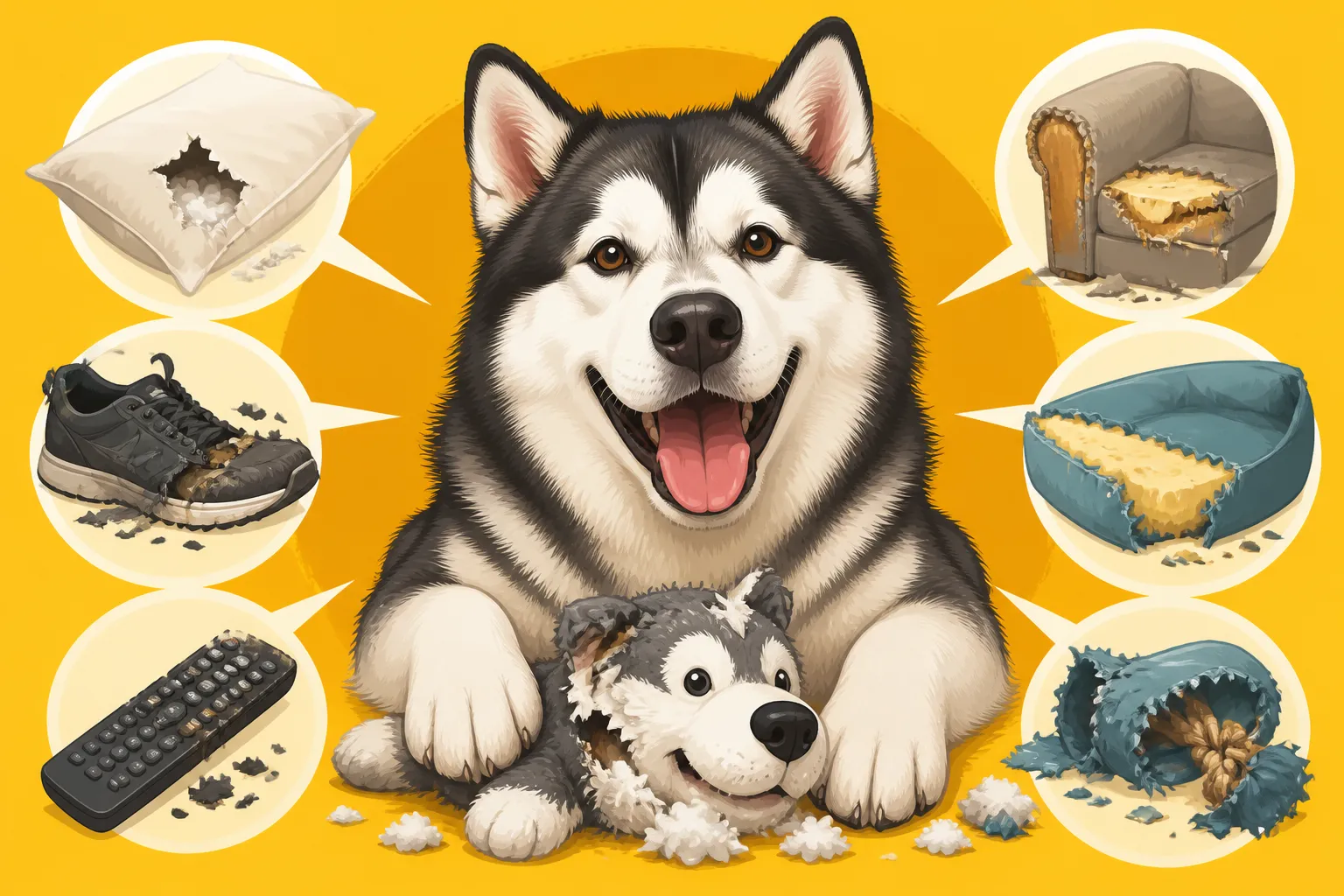
What a Malamute Chews Through in a Year
If you've ever walked into a room to find your favorite slipper in shreds, a crater in your drywall, or the leg of your antique coffee table looking like a beaver's latest project, you know the particular brand of heartbreak and frustration that comes with owning a strong-willed, chew-happy Alaskan Malamute. It's not just a puppy phase; for many Malamute owners, it's a constant, often expensive, reality. This guide is here to walk you through what a Malamute chews through in a typical year, why they do it, and critically, what you can do to protect your home and your sanity.
The Instinct Behind the Destruction: Why Malamutes Chew So Much
It’s easy to feel personally offended when your Malamute demolishes something you cherish. We often project human malice or spite onto our dogs, thinking they’re "getting back at us" or being deliberately naughty. But with a Malamute, relentless chewing is rarely about spite. It’s deeply rooted in their history, their intelligence, and their physical needs. Understanding this foundational "why" is the first step toward managing the "what."
Bred to Bust Through Ice and Bone
Think about the original purpose of the Alaskan Malamute. These magnificent dogs were bred by the Mahlemut people of Alaska as powerful freighting animals. Their job wasn't just to pull heavy loads across frozen terrain; it was to survive in a harsh, unforgiving environment. This meant having incredibly strong jaws, teeth designed for crushing, and an innate drive to use them. Whether it was processing a meal of tough game, gnawing on bones, or even breaking through ice to get to water, their mouths were their primary tools. They weren't bred to sit politely on a sofa; they were bred to work with their mouths, to do things with them.
When you bring one of these powerful dogs into a modern home, that ancient instinct doesn't just vanish. It manifests. A Malamute's mouth is a sensory organ, a stress reliever, a problem-solving tool, and a way to explore the world. A bored Malamute, or one feeling anxious, will revert to what its ancestors did: use its formidable jaws. This isn’t a flaw in your dog; it’s a feature of the breed, a testament to their strength and heritage. Ignoring this inherent drive is like asking a fish not to swim.
Boredom is the Devil's Workshop for a Malamute
Perhaps the single biggest driver of destructive chewing in an Alaskan Malamute, once past the puppy stage, is sheer, unadulterated boredom. These are incredibly intelligent, high-energy dogs who were designed for hours of demanding physical and mental work every single day. Modern pet life, with its limited walks and long stretches of alone time, simply doesn't cut it for many Malamutes.
When under-stimulated, they become restless. That restless energy has to go somewhere, and often, it goes right into your furniture, your baseboards, or anything else they can get their formidable teeth on. They're not being malicious; they're trying to entertain themselves, to engage their minds and bodies. Imagine being a brilliant engineer, locked in an empty room with nothing but a single, dull pencil. You'd probably start taking apart the walls or furniture out of sheer intellectual frustration! Malamutes are much the same. If they don't have appropriate outlets for their energy – a challenging walk, a long training session, a job to do, or a truly engaging chew toy – they will find their own "work," and it will almost certainly involve chewing something you value. This is why addressing What an Alaskan Malamute Needs Every Day goes a long way in managing destructive habits.
Teething Terrors and Adolescent Anarchy
Of course, not all chewing is born of boredom or ancient instinct alone. Like all puppies, Malamute pups go through an intense teething phase. Those sharp little puppy teeth give way to powerful adult teeth, and the process can be uncomfortable. Chewing helps relieve the pressure and discomfort in their gums, much like a baby uses a teething ring. During this period, which can last from a few months up to six or seven months of age, virtually anything within reach is fair game.
But the chewing doesn't necessarily stop when the adult teeth are fully in. As Malamutes enter adolescence, typically between 12 and 24 months, they often go through a rebellious phase. This is The Adolescent Malamute That Rewrites the Rules at Fourteen Months, and it can be a particularly challenging time. They're testing boundaries, asserting their independence, and their newfound strength means their destructive potential is at its peak. What might have been a minor gnawing as a puppy can become full-blown demolition as an adolescent. This isn't just about discomfort; it's often a combination of lingering teething habits, increased energy, and a desire to explore their world (and push your buttons) with their powerful mouths. Owners often wonder Whether a Malamute Chews Furniture most at this stage.
Common Casualties: What Your Malamute Will Likely Destroy
So, what exactly can you expect a Malamute to target in a year? The answer, unfortunately, is "anything and everything." Their sheer strength combined with their curiosity and determination means few household items are truly safe without proper management. This isn't to scare you, but to prepare you for the reality of living with such a powerful breed.
Furniture Fiascos and Home Havoc
Your furniture often bears the brunt of a Malamute's chewing prowess. A sofa arm, a chair leg, or even the coffee table can quickly become a giant chew toy. I’ve heard stories, and personally experienced, the agony of seeing a beloved armchair transformed into a pile of foam and fabric confetti. It's not just the legs or corners, either; some Malamutes will meticulously remove every button, every bit of trim, or even begin to dismantle the frame itself. Whether an Alaskan Malamute Chews Furniture is less a question of "if" and more "when" and "how much."
Beyond furniture, your home itself is a potential chew target. Baseboards seem to be a particular favorite, perhaps because they offer a satisfying splintering texture and are often overlooked. Door frames, especially around entryways, can also suffer significant damage as a Malamute tries to "dig" its way through, or simply chews out of frustration or boredom. I've even known Malamutes who've taken chunks out of drywall, leaving gaping holes as a testament to their oral fixation. What Replacing a Door Frame a Malamute Chewed Costs can be substantial, not just in materials but in labor. This kind of damage isn't just inconvenient; it can be incredibly expensive to repair, especially if it happens repeatedly.
Personal Property Perils
It's not just the big, stationary items that are at risk. Your personal belongings, those things you leave lying around, are often surprisingly appealing to a Malamute. Shoes are a classic target – they smell like you, they're often made of interesting textures, and they're perfectly sized for a good chew. Flip-flops, sneakers, even sturdy leather boots can be reduced to unrecognizable scraps within minutes. Remote controls, eyeglasses, mobile phones, and even laptops can fall victim to those powerful jaws, often with heartbreakingly expensive consequences.
Think about anything that hits the floor or is left on a low table. Books, magazines, children's toys (especially plush ones), blankets, pillows – if it's accessible and offers an interesting texture or smell, it's a candidate for destruction. Even seemingly unappetizing items, like car keys or wallets, can be chewed into oblivion. The frustration here isn't just the monetary cost, but the sheer inconvenience of losing essential items or sentimental objects. A Malamute sees a new object as something to investigate, and their primary method of investigation is their mouth.
Yard and Garden Gobblers
The destruction doesn't stop at the backdoor. Your yard and garden are equally, if not more, enticing for a Malamute’s chewing and digging habits. Sprinkler heads, often plastic and conveniently located at ground level, are an irresistible temptation. Hoses left coiled on the ground become snakes to be conquered. Plastic watering cans, garden tools, even decorative yard ornaments can be chewed beyond recognition. And don't forget the plants themselves! What a Malamute Does to a Yard can be truly impressive, from digging up newly planted flowers to gnawing on the bark of young trees.
For a Malamute, the outdoors offers an endless buffet of chewable items. Sticks and fallen branches are natural, appropriate chew items, but they don't always stop there. If they can get hold of something man-made, they often will. This is where the frustration can really mount, as repairing irrigation systems or replacing landscaping can be a significant unexpected expense. Their natural drive to dig, a habit they cannot be truly "stopped" from, often leads them to unearth pipes or wiring, making them even more accessible for chewing.
Strategies to Mitigate the Mayhem and Protect Your Possessions
Living with a Malamute doesn't mean resigning yourself to a constantly redecorated home courtesy of your dog's oral fixations. While you can't completely eliminate their natural drive to chew, you absolutely can manage it and redirect it toward appropriate outlets. It requires consistency, patience, and a proactive approach, but it is entirely possible to coexist peacefully with your Malamute and your belongings.
The Power of the Indestructible Toy
The single most effective strategy is to provide your Malamute with appropriate, durable, and appealing chew toys. I cannot stress this enough: if you don't give them something acceptable to chew, they will find something unacceptable. And for a Malamute, "durable" often means "virtually indestructible" in human terms. Many standard dog toys simply won't stand up to their powerful jaws for more than a few minutes. Look for toys made of hard rubber, reinforced nylon, or those designed specifically for "power chewers."
Brands like Kong, Nylabone, GoughNuts, and West Paw Design offer lines of toys that are specifically engineered to withstand heavy chewing. Interactive puzzle toys, especially those that dispense treats, are also fantastic as they engage both their chewing instinct and their intelligent minds. Rotating toys can help keep them interesting; don't leave all the toys out all the time. Put a few away and bring them out later to make them seem "new" again. Chewy is a great place to explore a wide range of highly-rated, durable chew toys specifically designed for strong chewers. You might find that investing in a few truly robust toys is far cheaper in the long run than replacing furniture.
Crate Training as a Sanctuary for Your Stuff
Crate training is not just a tool for housebreaking; it's an indispensable management tool for Malamute owners, especially during the puppy and adolescent phases. When you cannot directly supervise your Malamute, a properly introduced and positively reinforced crate becomes a safe, den-like space for them – and a safe haven for your belongings. This prevents opportunistic chewing when you're busy, asleep, or out of the house.
It's crucial that the crate is seen as a positive place, not a punishment. Fill it with a comfy bed (preferably a chew-proof one, as What a Chew Proof Bed for a Malamute Costs can prevent endless replacements), safe chew toys, and maybe even a puzzle feeder. Start with short periods and gradually increase the time. A Malamute should never be crated for excessively long periods, as it can lead to frustration and a negative association with the crate. But for those times when you need to prevent destruction, a well-trained Malamute in a sturdy crate can save you countless headaches and repair bills. Also, remember that Whether a Malamute Destroys a Crate is a real concern if the crate isn't robust enough or they are left in it too long without stimulation. You'll need one built for strength, as What a Crate a Malamute Cannot Break Costs can be surprising.
Managing the Environment: Proofing Your Home
Beyond toys and crates, you need to become a master of "Malamute-proofing" your home. This means seeing your environment through your dog's eyes (or rather, their mouth). Get down on their level and look for tempting targets.
- Elevate: Move shoes, books, remote controls, and anything else you value off the floor and onto high shelves or behind closed doors.
- Block Access: Use baby gates to restrict your Malamute's access to certain rooms when you can't supervise. This is particularly useful for areas with delicate furniture or potential hazards.
- Protect Furniture: Consider covers for sofa arms, or bitter-tasting sprays (like Grannick's Bitter Apple) on furniture legs or baseboards. While not a permanent solution, they can act as a deterrent while you work on redirection.
- Secure the Yard: Walk your yard regularly to remove tempting items like hoses, unattended tools, or anything they might find to chew. Reinforce garden beds or cover exposed irrigation lines.
- Consistent Supervision: This is key. When your Malamute is out and about, keep an eye on them. If you see them eyeing something inappropriate, redirect them immediately to an approved chew toy with a cheerful "No, chew this!"
Consistency and proactive management are your best friends. Don't wait for them to start chewing; provide appropriate outlets before they feel the need to create their own entertainment. Addressing Whether a Bored Malamute Destroys the House with ample exercise and mental engagement is also crucial.
The True Cost: Beyond Replacements and Repairs
When we talk about what a Malamute chews through in a year, it's easy to focus on the tangible items: the shoes, the furniture, the garden hose. But the financial and emotional toll goes much deeper than just the cost of replacement or repair. There are often hidden costs and profound frustrations that come with managing a determined chewer.
Unexpected Vet Bills from Ingested Items
One of the most terrifying and potentially expensive consequences of a Malamute's chewing habit is the ingestion of foreign objects. While some small, soft items might pass without issue, many things can cause serious, life-threatening problems. Socks, pieces of toys, parts of shoes, fabric, wood splinters, or even rocks can lead to gastrointestinal obstructions.
Symptoms can range from vomiting and lethargy to complete loss of appetite and abdominal pain. If a foreign body gets stuck, it can require emergency surgery, which is incredibly expensive. We’re talking thousands of dollars for diagnostics, surgery, and post-operative care. This is where pet insurance, like a plan from Healthy Paws, can be an absolute lifesaver. While it won't prevent the chewing, it can certainly cushion the financial blow if your curious chewer ends up needing emergency medical intervention. It’s a cost you desperately hope you never incur, but it's a very real risk for a dog with such a strong oral drive.
Behavioral Training and Professional Help
Sometimes, excessive or inappropriate chewing isn't just a phase or boredom; it can be a symptom of deeper behavioral issues like separation anxiety, generalized anxiety, or even compulsive disorders. If you find that your Malamute's chewing is relentless, despite ample exercise, appropriate chew toys, and consistent management, it might be time to seek professional help.
A certified professional dog trainer or a veterinary behaviorist can assess the underlying cause of the chewing and develop a tailored plan. This could involve counter-conditioning, desensitization, medication (in severe cases of anxiety), or specific enrichment strategies. The cost of such professional help varies widely, but it's an investment in your dog's well-being and your household's peace. It's far better to address these issues head-on than to live in a constant state of frustration and property damage. Even basic obedience classes or working with a trainer on impulse control can help channel that intelligent energy.
The Emotional Toll of Constant Destruction
Finally, and perhaps most importantly, there's the emotional cost. Living with a dog that constantly destroys things can be incredibly draining. It leads to frustration, anger, stress, and sometimes even resentment. You might feel like you're constantly cleaning up messes, replacing items, and battling your dog. It can strain your relationship with your Malamute and even impact your quality of life.
The constant vigilance, the worry about what you'll come home to, and the financial burden can take a significant toll on an owner. It's okay to admit that it's hard. Many Malamute owners understand this struggle intimately. This is why addressing the chewing through consistent management and training is so important – not just for your possessions, but for your bond with your dog and your own mental well-being. Remember, your Malamute isn't doing it to spite you, but out of deeply ingrained instincts that need proper redirection.
To put some common scenarios into perspective, here's a table of typical chewing targets and their associated costs:
| Item Type | Common Chewed Items | Potential Damage/Cost Shape | Prevention/Mitigation |
|---|---|---|---|
| Home Structure | Baseboards, door frames, drywall, corners of walls | Minor repairs to significant structural work | Bitter sprays, physical barriers, crate training |
| Furniture | Sofa legs/arms, chair legs, coffee tables | Fabric replacement, wood repair, full item replacement | Chew-proof covers, elevated furniture, durable chew toys |
| Personal Items | Shoes, remote controls, eyeglasses, phones, books | Full replacement, expensive electronics repair | Keep out of reach, secure storage |
| Pet Belongings | Dog beds, leashes, harnesses, plastic bowls | Frequent replacement (chew-proof options exist) | Invest in tough, reinforced versions; What a Chew Proof Bed for a Malamute Costs |
| Yard/Garden | Sprinkler heads, hoses, garden tools, plants, wiring | Irrigation repair, landscaping replacement, electrical repair | Secure items, provide designated digging pit, supervision |
| Hidden/Medical Costs | Ingested objects leading to blockages | Emergency vet bills (diagnostics, surgery, aftercare) | Strict supervision, appropriate chew toys, pet insurance (e.g., Healthy Paws) |
This isn't to say every Malamute will chew all of these things every year, but these are the common battlegrounds for many owners. Being prepared, understanding the "why," and implementing consistent management strategies are your best defenses against the determined jaws of your beloved Alaskan Malamute. You might also want to look into What an Alaskan Malamute Was Bred to Hunt to understand the strength and persistence of their mouth drive.
Disclaimer
This article is for general informational purposes only and does not constitute professional advice. Laws, prices and regulations vary by location and change over time. Consult a qualified professional for guidance on your specific situation.