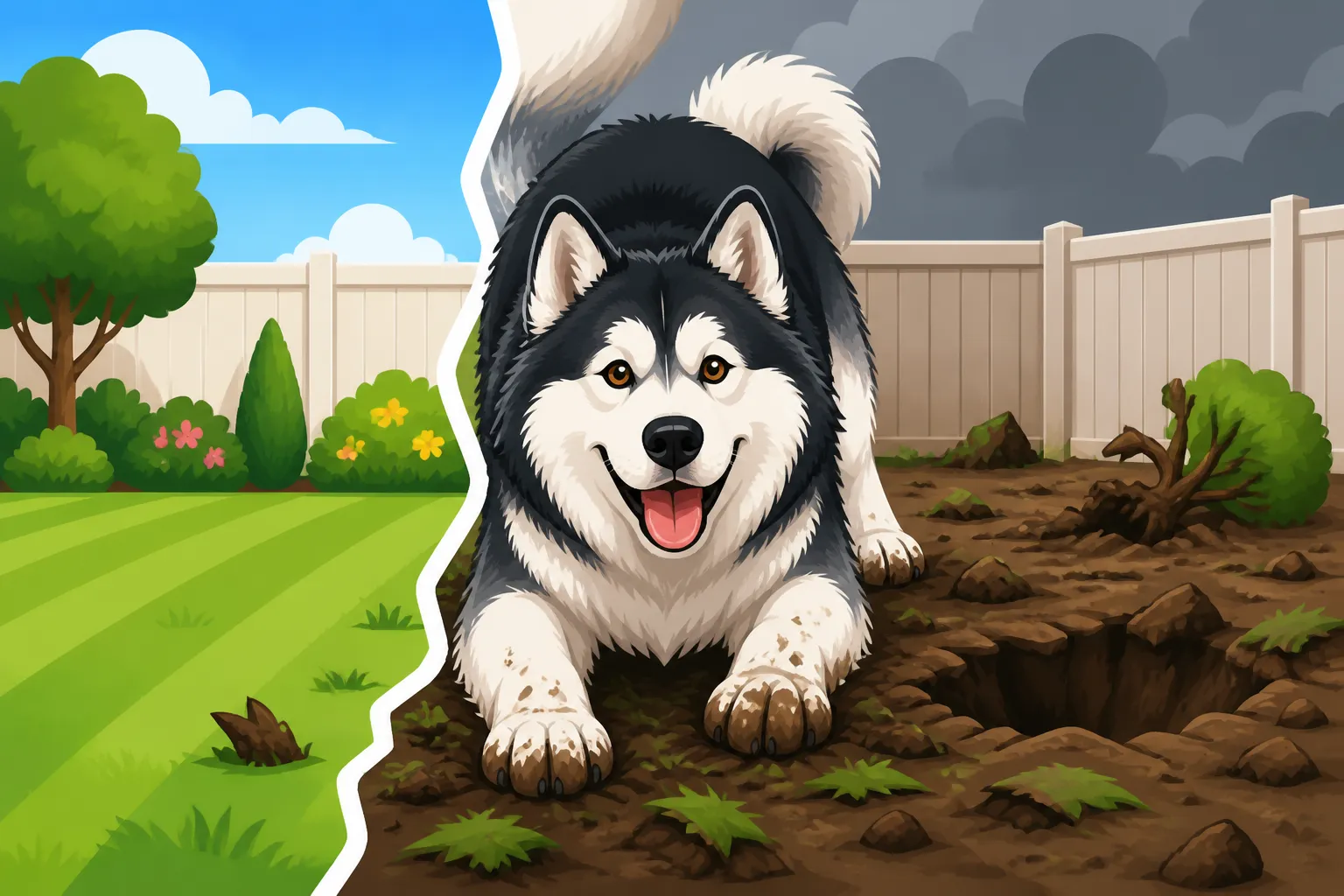
What a Malamute Does to a Yard
You've just invested in a beautiful new yard, maybe even planted some fresh landscaping or laid down new sod, only to introduce your Alaskan Malamute, and suddenly, your picturesque outdoor space starts to resemble an archaeological dig site. It's a common, often frustrating reality for Malamute owners. These magnificent dogs, with their deep-seated instincts, are expert landscape architects in their own unique way, often leaving behind craters, pathways, and escape routes. This guide will walk you through the specific ways an Alaskan Malamute transforms a yard and, more importantly, offer practical strategies for managing their innate behaviors to protect your outdoor haven and keep your furry companion safe.
The Instinctual Drive to Dig: More Than Just a Bad Habit
When you see your Malamute with a muddy nose, proudly surveying a newly excavated pit, it's easy to label it as "naughty" or "stubborn." However, this behavior isn't simply about misbehavior; it's a deeply ingrained instinct, a living echo of their ancestors' survival in the unforgiving Arctic. Understanding this fundamental drive is the first step toward managing it effectively.
A Deep-Seated History of Excavation
Imagine the vast, frozen landscapes where the Alaskan Malamute's ancestors, working alongside the Mahlemut people of Kotzebue Sound, earned their keep. Digging was not a casual pastime; it was a matter of life and death. In a land where temperatures plunged far below freezing, a Malamute would dig to create a shallow, sheltered hollow in the snow. This burrow offered protection from fierce winds and provided a surprisingly effective insulator against the cold, trapping their body heat and allowing them to rest comfortably. It was their survival shelter, a vital skill passed down through generations.
Even today, in a cozy suburban backyard, that primal urge remains. On a warm summer day, you might observe your Malamute diligently excavating a cool, damp spot in the shade. This is their way of escaping the heat, creating a natural air-conditioned lounge right in your flower bed. This isn't them trying to destroy your prized petunias; it’s them trying to regulate their body temperature, a direct response to their ancestral programming. You can read more about this in our article, Why a Malamute Digs to Stay Cool. Similarly, in cooler weather, they might dig to create a windbreak or a more comfortable bed. This deep-seated instinct means that "stopping" a Malamute from digging entirely is often an exercise in futility. Instead, the focus needs to shift to redirection and providing appropriate outlets.
The Thrill of the Hunt and the Chase
Beyond creating shelter, digging also played a crucial role in the Malamute's hunting repertoire. Their keen sense of smell, honed over millennia to detect prey beneath layers of snow or earth, makes them formidable excavators when a scent is caught. A rustle under the garden shed, a faint tremor in the ground, or the lingering scent of a vole or squirrel can instantly ignite their prey drive. For a Malamute, a backyard isn't just a place to play; it's a potential hunting ground, a canvas waiting to reveal hidden treasures.
When a Malamute begins to dig frantically, nose pushed deep into the soil, they're likely following a scent trail. They are attempting to flush out or capture whatever small creature has dared to trespass on their territory. This can lead to surprisingly deep and extensive excavations, particularly along fence lines, under bushes, or at the base of trees where rodents might burrow. This instinct is so powerful that even the most well-behaved Malamute can become momentarily deaf to commands when on the trail of an unseen quarry. Understanding What a Loose Malamute Hunts can give you further insight into this powerful drive. This type of digging isn't boredom; it's pure, unadulterated primal instinct taking over, and it's a huge contributor to the "lunar landscape" many Malamute owners find themselves living with.
The Excavation Site: What Malamute Digging Looks Like
When we talk about a Malamute digging, we're not talking about a dainty scratch in the dirt. These are powerful, purpose-driven excavations that can dramatically alter the topography of your yard. Their strength and determination mean that a simple patch of overturned earth can quickly become something far more substantial and problematic.
Craters, Trenches, and Escape Routes
A Malamute's digging tends to be characterized by its sheer scale. You might start with a small divot one morning, and by evening, find a hole deep enough to stand in, or at least deep enough for your Malamute to disappear into. These aren't dainty little scrapes; they are often deep, wide craters, frequently found at the base of fences, along house foundations, or under beloved trees and shrubs. The soil isn't just tossed aside; it's often piled neatly, demonstrating a surprising efficiency in their earth-moving operations.
What often starts as a cooling hollow or a pursuit of a mole can quickly evolve into an escape tunnel. A Malamute sees a fence not as a barrier, but as a challenge, and the ground beneath it as the most obvious weak point. They are incredibly persistent, and once they've started an escape route, they'll often return to it, gradually deepening and widening it until they can squeeze through. This is why vigilance is key, as a small hole today can be a gaping maw tomorrow. For those wondering just how dedicated these dogs are, our article How Far Down a Malamute Will Dig offers a fascinating, albeit potentially alarming, look into their capabilities. These efforts often result in a patchwork of holes across the lawn, making it not only unsightly but also a tripping hazard for humans and potentially dangerous for your dog if they dig into utilities or unstable ground.
The "Dig Pit" and Its Limitations
One of the most commonly recommended strategies for managing a Malamute's digging is to provide a designated "dig pit." The idea is simple: give them an approved area where they can satisfy their innate urge to dig without destroying the rest of your yard. A typical dig pit might be a sandbox, a raised garden bed filled with loose soil, or even just a corner of the yard loosely fenced off. You can bury toys or treats in it to encourage them to use it, celebrating when they do. This method aims to redirect the behavior, rather than suppress an instinct that's virtually impossible to eradicate.
While a dig pit can be a fantastic tool, it's important to be realistic about its limitations. While some Malamutes take to it readily, others might still prefer to dig where they choose, especially if they're pursuing a perceived prey animal or attempting an escape. It often takes consistent training and redirection, and even then, it's not a foolproof solution. A Malamute's intelligence and independence mean they might view the dig pit as one place to dig, not the only place. If you're considering this, our detailed guide on Giving an Alaskan Malamute Its Own Digging Pit offers invaluable advice on setting one up for success. Remember, for a Malamute, digging is a puzzle, a game, and a necessity—and they're usually quite good at solving puzzles on their own terms.
Beyond Digging: Other Ways Malamutes Remodel Your Yard
While digging often takes center stage when discussing Malamutes and yards, it's by no means the only way these powerful and inquisitive dogs can reshape your outdoor space. Their sheer size, strength, and curiosity mean that other elements of your landscaping and garden can also fall victim to their playful investigations or sheer presence.
The Perils of Unattended Landscaping
Your beautifully manicured garden beds, with their delicate flowers and meticulously chosen shrubs, can quickly become an irresistible playground for a Malamute. Small plants might be dug up, trampled, or "pruned" with a playful nip. Irrigation lines, particularly those easily accessible at ground level, are prime targets for chewing. A Malamute's powerful jaws, designed for crushing bones and working through tough hides, can make short work of plastic piping, leading to costly repairs and frustrated gardeners. Hoses left coiled on the lawn can become chew toys, shredded and rendered useless in minutes.
Even seemingly sturdy elements like decorative lawn ornaments, garden lights, or smaller pieces of outdoor furniture can be dragged, chewed, or tipped over. A bored Malamute, or one simply exploring their environment, doesn't distinguish between a favorite rose bush and a generic weed; both might be fair game for investigation. They are naturally curious and use their mouths to explore the world around them, often resulting in unintended destruction. If you're dealing with a young Malamute, it's worth reading What a Malamute Destroys Before It Turns Two to prepare for their energetic and often destructive puppy and adolescent phases. Safeguarding your landscaping means thinking like a Malamute: what would they find interesting to chew, dig, or simply rearrange?
Wear and Tear on Pathways and Grass
Beyond active destruction, a Malamute's presence alone can have a significant impact on your yard's aesthetics and health. Their impressive size and robust build mean they can exert considerable pressure on the ground. Over time, consistent patrol routes or play patterns can lead to what many owners affectionately call "Malamute highways" – distinct, worn-down paths carved into your lawn where the grass simply cannot recover. These trails often appear along fence lines where they might patrol, or in specific circuits they run during bursts of zoomies.
In addition to worn paths, their heavy paws can compact soil, especially in high-traffic areas, making it harder for grass to grow and potentially impacting drainage. During wet weather, their powerful strides can quickly turn a lush lawn into a muddy obstacle course, tracking dirt and debris into your home. Conversely, in dry, hot conditions, areas of grass might become further stressed by their presence, especially if they're also digging cool spots or simply choosing to lie down in specific areas. It’s a subtle form of yard "remodeling" that isn’t malicious, but simply a consequence of having a large, active dog who loves their outdoor space.
Securing Your Sanctuary: Fencing and Containment Challenges
Perhaps one of the most significant challenges for an Alaskan Malamute owner is ensuring their yard is a secure environment. These dogs are intelligent, independent, and possess an uncanny ability to find the weakest link in any containment system. Failing to address these challenges can lead to lost dogs, potential harm to your Malamute, and liability issues.
The Houdini Factor: Escalating Escape Attempts
Alaskan Malamutes are legendary escape artists, a trait born from their working heritage where they often roamed vast territories. For them, a fence isn't necessarily a boundary; it's a puzzle to be solved, a challenge to overcome. They will test every inch of your perimeter. This "Houdini factor" manifests in various ways: they will dig under fences with astonishing speed and persistence, they will jump over surprisingly high barriers, and some are even adept climbers, using anything from slight protrusions to mesh openings to scale a fence. You might be surprised by How a Malamute Climbs a Fence or How High a Malamute Can Jump when motivated.
It's not uncommon for a Malamute to patiently work on a weak spot for days or weeks, unseen by their owner, until the opportunity to bolt arises. A simple latch on a gate might be figured out, a loose board discovered, or a previously insignificant gap exploited. This constant testing and seeking of escape routes means that a secure yard for a Malamute demands much more than a standard residential fence. Their powerful instincts tell them that freedom and exploration are paramount, making containment a continuous, active effort.
Fortifying Your Fences Against an Arctic Architect
Given their inherent desire to explore and their knack for escape, fortifying your fence is non-negotiable for a Malamute owner. A standard four-foot picket fence, or even a five-foot chain link, is often merely a suggestion for these dogs. A truly Malamute-proof fence needs to address both their digging and their climbing/jumping abilities.
For the diggers, the solution lies in going deep. Burying a layer of heavy-gauge chicken wire, hardware cloth, or even concrete footings along the entire fence line is essential. This creates an underground barrier that discourages tunneling. Concrete footings can be a significant investment but are often the most effective long-term solution against persistent excavators. You can learn more about this in What Concrete Footings for a Malamute Fence Cost. For climbers and jumpers, increasing the height of the fence to at least six feet is often necessary, and some owners even opt for inward-slanting fence toppers to deter scaling. These angled extensions make it difficult for a dog to get a purchase to climb over. Furthermore, special attention must be paid to gates. Standard gate latches are often easily manipulated by a clever Malamute. Investing in secure, double-locking latches or even adding padlocks can prevent them from opening the gate themselves. Speaking of gates, it's worth understanding The Gate Latch a Malamute Learns to Open. And a crucial point: "invisible" or electronic fences are generally not suitable for Malamutes. Their high pain tolerance and immense prey drive mean they will often run right through the static correction if sufficiently motivated, prioritizing the chase over discomfort. Our article Whether an Invisible Fence Is Wasted Money on a Malamute explains why this is often the case.
| Malamute Yard Challenge | Typical Malamute Behavior | Mitigation Strategy |
|---|---|---|
| Digging Holes | Creating craters, tunnels for shelter, prey, or escape | Designated dig pit, buried fence barriers (mesh/concrete), strong supervision, increased mental enrichment |
| Chewing Landscaping | Gnawing on plants, irrigation lines, garden decor | Malamute-resistant planting, securing hoses/wires, providing durable chew toys |
| Worn Paths | Creating "Malamute highways" through regular patrol/play | Varying exercise routes, dedicated dog run, durable ground cover (mulch, gravel) in high-traffic areas |
| Escaping Fences | Jumping, climbing, digging under perimeter fences | Minimum 6ft solid fence, anti-climb features, buried fence barriers, secure gate latches |
| Destroying Furniture | Tipping, chewing outdoor furniture | Selecting robust, chew-resistant furniture, securing items when unsupervised, providing appropriate chew toys from reputable brands like Chewy |
Living in Harmony: Managing a Malamute's Yard Impact
While the challenges of a Malamute and a pristine yard can seem daunting, it's entirely possible to create an outdoor space that works for both of you. The key is to acknowledge their innate drives and implement a multi-faceted approach that combines robust containment with enrichment and consistent management.
A Multi-Layered Approach to Containment
Effective management of a Malamute's yard impact isn't about finding a single magic bullet; it's about layering multiple strategies to create a resilient system. First and foremost, secure fencing, as discussed, is paramount. Think of it as your first line of defense. However, even the best fence can be breached if a Malamute is left unsupervised for extended periods with nothing to do. Constant vigilance is important, especially with young, energetic dogs. When you can't actively supervise your Malamute in the yard, consider using a securely roofed kennel run. A well-built kennel run provides a safe, contained space where they can still enjoy the outdoors without the opportunity to dig up your prize-winning roses or attempt an escape. For those considering this, our article What a Kennel Run for a Malamute Costs to Build can offer insights into the investment required.
Beyond physical barriers, managing their access to different parts of the yard can be helpful. Perhaps certain flower beds are permanently fenced off, or you rotate which sections of the yard your Malamute has access to. This prevents them from continuously working on the same spot or creating extensive "Malamute highways" through the entire lawn. The goal is not to eliminate their instincts, but to channel them into appropriate and manageable outlets.
Enrichment and Exercise: The Best Defense
A tired Malamute is often a less destructive Malamute. These dogs were bred for endurance and hard work, and without sufficient physical and mental stimulation, they will find their own ways to entertain themselves – often through digging, chewing, or plotting escapes. Regular, vigorous exercise is crucial. This doesn't just mean a short walk around the block; it means activities that truly engage their powerful bodies and minds. Pulling activities like canicross, bikejoring, or weight pull are excellent outlets that tap into their natural drive to work. Pulling Is the Only Job an Alaskan Malamute Really Wants for many of these dogs, and providing an outlet for this instinct can significantly reduce destructive behaviors in the yard.
Mental enrichment is equally important. Puzzle toys, training sessions, and interactive games can help tire their minds. Brands like Chewy offer a wide variety of durable chew toys and puzzle feeders that can keep a Malamute engaged when they are in the yard, redirecting their chewing and problem-solving instincts away from your landscaping. Even just having a consistent routine and spending quality time with them can make a big difference. A Malamute that feels like part of the family and has their needs met is generally a happier, less destructive dog. A well-fed Malamute on a balanced diet, perhaps even with a fresh food option like Ollie, can also contribute to overall well-being, which in turn supports better behavior.
Dealing with Damage: Repair and Maintenance
Despite your best efforts, some level of yard damage is almost inevitable with an Alaskan Malamute. It's simply part of living with the breed. The key is to be prepared for it and to have strategies for repair and ongoing maintenance. For lawns scarred by craters or worn paths, regular seeding and careful watering can help grass recover. Consider using more resilient ground covers, such as hardy varieties of clover or even decorative gravel, in areas that see heavy Malamute traffic. Raised garden beds are also an excellent way to protect your plants from digging and trampling, keeping them literally out of reach.
When it comes to potential injuries caused by the yard modifications, prevention is always best. Regularly inspect your yard for new holes, exposed roots, or any hazards that your Malamute might create or stumble upon. For unexpected vet bills resulting from an enthusiastic digger unearthing something sharp or having an accident, investing in pet insurance from providers like Healthy Paws can offer peace of mind. While they won't pay for your landscaping, they can certainly help with the cost of treating your dog if they suffer an injury during their yard adventures. Ultimately, living with a Malamute means embracing a certain level of outdoor ruggedness and accepting that your yard might never be quite as pristine as it once was, but it will certainly be full of character and the memories of your amazing companion.
Disclaimer
This article is for general informational purposes only and does not constitute professional advice. Laws, prices and regulations vary by location and change over time. Consult a qualified professional for guidance on your specific situation.