Whether an Invisible Fence Is Wasted Money on a Malamute
It's a common scenario: you’ve just brought home your majestic Alaskan Malamute, or perhaps you've had one for a while, and the thought of giving them freedom in your yard without the visual clutter of a tall fence is incredibly appealing. You start looking into invisible fences, those ingenious systems that promise containment with a simple buried wire and a collar. However, if you're a Malamute owner, you're likely already wondering, "Is this truly a viable solution for my dog?" This guide aims to tackle that exact question, diving deep into why invisible fences often fall short for these independent, strong-willed, and highly motivated northern breeds.
The Allure of the Invisible Fence and the Malamute Reality
The concept of an invisible fence sounds like a dream come true for many dog owners. Imagine your Malamute romping freely in your yard, safely contained without the need for towering barriers that might block your view or alter your property's aesthetics. For some breeds, these systems can be quite effective, working on the principle of a mild static correction when the dog approaches a boundary set by an underground wire. But for an Alaskan Malamute, a breed known for its intelligence, independence, and incredibly strong drives, the reality often diverges sharply from this idyllic vision.
What Invisible Fences Promise
Invisible fence companies often highlight convenience, aesthetics, and cost-effectiveness compared to building a physical fence. They promise to give your dog freedom within defined limits, all while maintaining the look of your landscape. The basic idea is simple: a transmitter sends a signal along a buried wire, creating a boundary. When your dog, wearing a special receiver collar, gets close to this boundary, the collar emits a warning beep. If the dog continues, it receives a static correction designed to deter them from crossing. The system relies heavily on consistent training to associate the warning and correction with the boundary, teaching the dog to respect the invisible line. It's pitched as a solution for dogs that like to roam, offering a "safe" space for them to explore.
Why a Malamute Isn't Your Average Dog
However, the Alaskan Malamute is anything but average when it comes to containment. These dogs were bred for thousands of years to haul heavy freight across vast, open, and often unforgiving landscapes. Their instincts drive them to explore, to follow scent trails, and to disregard minor discomforts when a strong motivation presents itself. They possess incredible endurance, remarkable strength, and a high pain tolerance developed from working in harsh conditions. What might be a sufficient deterrent for a less driven breed often registers as a mere annoyance or a brief surprise to a Malamute that has a goal in mind. Their deep-seated independence means they're not always eager to please, and their problem-solving skills are top-notch – they will test boundaries, both physical and invisible.
Why Invisible Fences Fail Alaskan Malamutes So Often
Let's get real about why invisible fences, despite their technological advancements, are usually a poor fit and often a wasted investment for an Alaskan Malamute owner. It boils down to a combination of their innate breed characteristics and the inherent limitations of the system itself.
The Malamute's Drive to Explore and Chase
The primary reason invisible fences are so ineffective for Malamutes is their powerful prey drive and their instinct to roam. These dogs are built for covering ground, and a scent or a visual stimulus – a squirrel, a rabbit, a neighbor's cat – can override any learned aversion to a static correction in an instant. Imagine your Malamute catching sight of a deer bounding across your yard. That innate urge to chase, honed over generations of hunting alongside humans, is an almost irresistible force. A quick zap from a collar simply won't compare to the thrill of the hunt. They will often blow right through the boundary, taking the momentary discomfort to pursue what they perceive as a much greater reward. Once they've learned they can push past the boundary, even once, the system's credibility is severely undermined. They might endure the static to get out, and then be hesitant to come back in, leading to a very stressed and potentially lost dog. We've heard countless stories of Malamutes who have learned to "take the hit" to escape, leaving their owners heartbroken and worried. This inherent drive is why Why an Alaskan Malamute Will Never Have a Reliable Recall is a common topic among owners.
High Pain Threshold and Thick Coat Insulation
Alaskan Malamutes are equipped with a dense, double coat designed to protect them from extreme cold, which also provides a surprising amount of insulation against external stimuli, including the static correction from an invisible fence collar. Their thick fur can prevent the prongs from making consistent, firm contact with the skin, especially if the collar isn't perfectly snug or if their coat is particularly thick at the time. This means the correction might be inconsistent or less intense than intended. Furthermore, as a working breed, Malamutes possess a naturally high pain tolerance. What feels like a sharp jolt to a smaller, less robust dog might feel like a mild annoyance to a Malamute driven by instinct or curiosity. They are bred to withstand hardship, and a temporary unpleasant sensation often won't stop them from a determined course of action.
Psychological Impact and Barrier Frustration
Relying on aversion-based training, which invisible fences inherently are, can have negative psychological impacts on a Malamute. While the goal is to teach them to respect a boundary, the method involves pain or discomfort. This can create anxiety, fear, or confusion, especially if the dog doesn't clearly understand why they are being corrected. A Malamute might become "collar-shy" or develop fear of the yard itself. Even worse, the invisible nature of the boundary can be incredibly frustrating for a dog. They don't see the barrier, only feel the consequence. This can lead to barrier frustration, where the dog becomes agitated or even aggressive at the invisible line, as they cannot understand why they are being punished for approaching an area that looks open. This isn't just about escaping; it's about the mental well-being of a highly intelligent animal.
Training Challenges and Ethical Considerations
Training a Malamute is an art form, not a science experiment, and invisible fences complicate this significantly. The way these systems work often conflicts with positive, trust-based training methods that are most effective for this breed.
The Difficulty of Aversion-Based Training with a Malamute
Alaskan Malamutes are independent thinkers, not eager-to-please golden retrievers. They respond best to positive reinforcement, clear communication, and building a strong relationship based on mutual respect and trust. Aversion-based training, like that used with invisible fences, relies on creating an unpleasant association with a behavior. While it can stop a behavior, it doesn't teach an alternative, and it can erode the trust between owner and dog. With a Malamute, if they associate the unpleasant sensation with you or the yard, rather than just the boundary, it can create behavioral issues or make them less responsive to other training. Why Force Fails on an Alaskan Malamute is a crucial read for any owner considering training methods that rely on punishment. These dogs are too smart and too sensitive for a punitive approach to be the primary method of containment.
The "One-Way Ticket" Problem
A significant, and often overlooked, ethical issue with invisible fences for any strong-willed dog, especially a Malamute, is the "one-way ticket" phenomenon. If a Malamute, driven by prey drive or curiosity, does blow through the boundary despite the correction, they are then outside the "safe" zone. If they try to come back into their yard, they will receive another correction. This can be incredibly confusing and terrifying for the dog. They learn that going out might be worth the momentary zap, but coming home is also associated with pain. This traps them outside the boundary, often leading to them becoming lost or getting into dangerous situations, like traffic or confrontations with other animals. We've seen owners lamenting What Retrieving a Loose Malamute Costs or even worse, the tragic consequences of a Malamute escaping. For an owner, the fear of How Far a Loose Alaskan Malamute Travels is a constant worry.
Lack of Protection from External Threats
An invisible fence offers absolutely no protection from anything entering your yard. It's a psychological barrier for your dog, not a physical one. This means other dogs, wildlife, or even people can easily wander onto your property and interact with your Malamute. Given that Malamutes can have Same Sex Aggression in a Pack Bred Alaskan Malamute or high prey drive, this can lead to dangerous encounters for both your dog and any intruders. If your Malamute is caught up in an altercation with another dog, or if a child wanders into your yard, the invisible fence does nothing to prevent it, and could even exacerbate it if your dog is feeling stressed or confused by the system. You need to consider the full picture of safety, not just keeping your dog in, but also keeping unwanted elements out.
Safer, More Reliable Alternatives for Malamute Containment
Given the inherent challenges and risks, what are the best ways to safely and effectively contain your Alaskan Malamute? The answer usually involves physical barriers and dedicated supervision.
Robust Physical Fencing
This is, hands down, the most reliable method for containing an Alaskan Malamute. A physical fence provides a visible, tangible barrier that both you and your dog can understand. However, not just any fence will do. Malamutes are notorious escape artists, known for their digging prowess and surprising climbing abilities.
- Height: A minimum of 6 feet is usually recommended, but many Malamute owners opt for 8-foot fences, especially if their dog is a jumper.
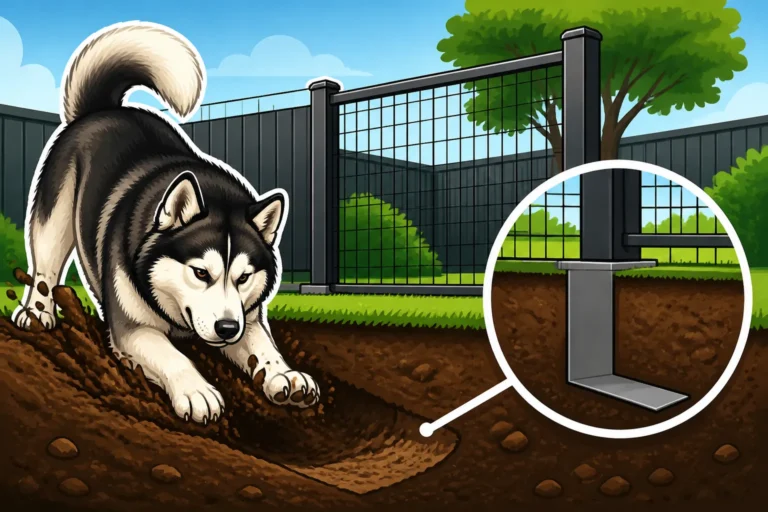
- Depth: Malamutes are champion diggers. Fencing a Yard Against a Malamute That Was Bred to Dig is a critical step. The fence needs to be buried at least 1-2 feet deep with concrete footings or an L-footer made of wire mesh laid horizontally along the ground on the inside of the fence to prevent digging under. Alternatively, some owners choose to pour a concrete footer along the fence line.
- Material: Strong, sturdy materials are essential. Chain link, wood, or privacy fences are common. Ensure there are no gaps or weak points your Malamute can exploit. Regular checks are necessary because these determined dogs will constantly look for weaknesses.
- Topping: For the most persistent climbers, consider a "coyote roller" or angled extensions at the top of the fence to prevent them from getting a grip and going over.
A well-constructed physical fence offers peace of mind, protecting your Malamute from escaping and preventing unwanted visitors from entering their space.
Supervised Leash Time and Kennel Runs
Even with a fantastic physical fence, nothing beats direct supervision. When your Malamute is outside, you should ideally be out there with them. For exercise beyond a fenced yard, a sturdy leash and harness are non-negotiable. Forget the idea of off-leash walks in unfenced areas; a Malamute's prey drive and independent nature make Why an Alaskan Malamute Will Never Have a Reliable Recall a harsh reality. A tracking collar with GPS capability, like those from brands such as Garmin, can offer an extra layer of security in case of an accidental escape, making Why a GPS Collar Is Essential for a Malamute a wise investment.
For times when direct supervision isn't possible, but your Malamute needs to be outdoors, a secure kennel run can be an excellent option.
- Construction: These should be built like fortresses. Think heavy-gauge chain link or welded wire panels.
- Covered Top: Many Malamutes can climb, so a solid roof or secure mesh top is crucial to prevent them from scaling the walls.
- Dig-Proof Base: Just like with fencing, the perimeter needs to be secured against digging. A concrete slab or deeply buried L-footers are essential.
A well-designed kennel run provides a secure, albeit temporary, outdoor space for your Malamute to enjoy some fresh air without the risk of escape. When browsing for supplies for such a setup, retailers like Chewy offer a vast array of durable kennel panels and accessories that stand up to the rigors of a Malamute.
Mental and Physical Exercise as a Foundation
No matter the containment method, remember that a tired Malamute is a good Malamute. These dogs need significant mental and physical stimulation to prevent boredom, which can often be the root cause of escape attempts or destructive behaviors. Regularly engaging in activities like hiking, carting, weight pulling, or even long walks can go a long way. Consider activities that tap into their natural instincts, like scent work or puzzle toys. A well-exercised and mentally engaged Malamute is far less likely to feel the overwhelming urge to escape. Even feeding a high-quality diet, perhaps from services like Ollie, contributes to their overall health and energy levels, which in turn impacts their behavior and willingness to engage in training.
| Feature | Invisible Fence (for Malamutes) | Physical Fence (for Malamutes) |
|---|---|---|
| Effectiveness | Extremely low; easily breached by prey drive/motivation. | High, if properly constructed and maintained. |
| Safety | Low; no protection from external threats; "one-way ticket" risk. | High; physical barrier against escape and intruders. |
| Training Method | Aversion-based (static correction). | Boundary is clear and visible; can be paired with positive reinforcement. |
| Digging Control | None; dog can easily dig under. | Requires extensive effort (buried sections, L-footers, concrete). |
| Climbing Control | None; dog can easily jump/climb over. | Requires sufficient height (6-8 ft) and potential anti-climb features. |
| Cost | Initial low cost, but potential for ongoing costs (lost dog, vet bills). | Higher initial investment for robust construction, but better long-term security. |
| Aesthetics | Undisturbed landscape. | Visible structure, can be integrated into landscaping. |
| External Threats | No protection from animals or people entering. | Acts as a deterrent and physical barrier to entry. |
| Psychological Impact | Can cause confusion, anxiety, barrier frustration. | Clear boundary reduces confusion; less stress on the dog. |
Ultimately, while the idea of an invisible fence for your Alaskan Malamute might seem convenient, the reality is that it's likely wasted money and, more importantly, a potential safety risk for your beloved companion. Their ancient instincts, incredible strength, and thick coats make them uniquely unsuited to a system that relies on mild static correction for containment. Investing in robust physical fencing and committing to consistent, positive training and ample exercise are the truly responsible and effective ways to keep your Malamute safe and happy.
Disclaimer
This article is for general informational purposes only and does not constitute professional advice. Laws, prices and regulations vary by location and change over time. Consult a qualified professional for guidance on your specific situation.