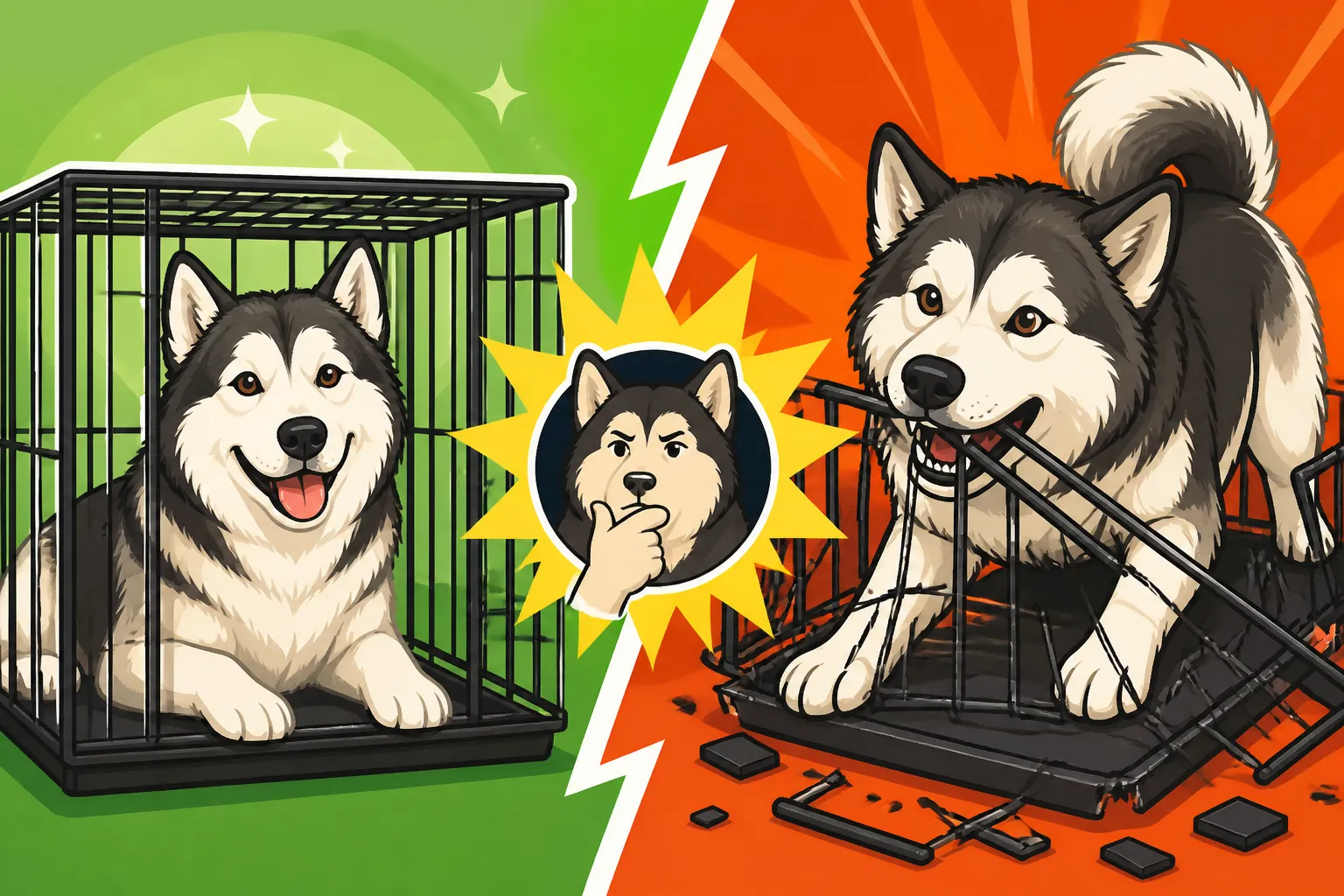
Whether a Malamute Destroys a Crate
Many Alaskan Malamute owners face the disheartening reality of coming home to a destroyed dog crate, wondering if their beloved companion is simply too strong, too stubborn, or suffering from a deeper issue. It's a frustrating, often expensive problem that can leave you feeling defeated and questioning your dog's safety. This guide will delve into the Malamute's unique temperament and needs, helping you understand why they might destroy a crate, identify the warning signs, choose the right containment solution, and implement effective strategies to ensure their safety and your peace of mind.
Understanding the Malamute Mindset Behind Crate Destruction
When an Alaskan Malamute decides to dismantle their crate, it's rarely out of pure spite or naughtiness. More often, it stems from deep-seated breed traits, unmet needs, or underlying anxieties. These dogs were bred for endurance, intelligence, and problem-solving in harsh environments, and those same qualities, when misdirected, can become a formidable force against even the sturdiest enclosure.
Boredom and Lack of Exercise
Imagine being built to pull heavy sleds across vast, icy landscapes, to think and work independently for hours on end, and then being asked to spend your day confined in a small space with nothing to do. This is often the reality for a Malamute who destroys a crate due to boredom. These dogs have boundless energy and an intelligent, active mind that requires constant stimulation. If they aren't physically tired and mentally engaged before being crated, they will find their own "job," and that job often involves deconstructing their immediate environment. A bored Malamute isn't just lying there wishing you were home; they're actively looking for an outlet for their energy, and a crate offers a tempting challenge. This is why understanding How Much Exercise an Alaskan Malamute Needs is so crucial. They need significant physical exertion, not just a quick walk around the block, to truly tire them out.
Beyond physical exertion, Malamutes thrive on mental challenges. Puzzle toys, training sessions, or even just novel environments can help satiate their intelligent minds. If these needs are consistently overlooked, the crate can become the ultimate puzzle to solve or a challenging object to overcome. Their powerful jaws, designed for chewing on hard arctic foods and breaking ice, are perfectly equipped for ripping apart plastic, bending wire, or even gnawing through wood. It’s not aggression; it’s an attempt to alleviate profound boredom and frustration.
Separation Anxiety vs. Pure Destructiveness
It's vital to differentiate between a Malamute who is simply destructive due to boredom or lack of training and one suffering from genuine separation anxiety. While both can lead to crate destruction, the underlying motivation and therefore the treatment approach are quite different. A Malamute with separation anxiety isn't just bored; they're experiencing extreme distress when left alone. This distress can manifest as incessant howling, barking, pacing, urination/defecation, and frantic attempts to escape, which often include tearing apart their crate. The destruction is a symptom of panic, not just a destructive impulse.
Signs of true separation anxiety often begin as soon as you show cues that you're leaving, like picking up your keys or putting on your coat. They might become clingy, whine excessively, or start showing other anxious behaviors. If your Malamute only destroys the crate when you're gone, but otherwise seems calm when left alone in another room (e.g., if someone else is home), it's more likely to be boredom or a lack of proper crate training. However, if the destruction is accompanied by other extreme distress signals and happens every time they are left alone, even for short periods, then you might be dealing with Whether an Alaskan Malamute Gets Separation Anxiety, which requires a more specialized approach, possibly involving a veterinary behaviorist.
The Instinct to Dig and Chew
Alaskan Malamutes come from a lineage where digging was not just a pastime but a survival skill. They would dig dens for shelter, hunt burrowing animals, and create cool spots to lie in during warmer periods. This instinct is deeply ingrained, and it doesn't magically disappear just because they're inside a house or a crate. When confined, a Malamute might instinctively try to dig their way out, focusing on the bottom of the crate or a soft bed within it. This is closely related to A Malamute's Digging Is Not a Problem, It Is the Breed, a behavior that needs an appropriate outlet, not just suppression.
Similarly, chewing is a natural and necessary behavior for dogs, especially for large, powerful breeds like Malamutes. It helps keep their jaws strong, cleans their teeth, and provides mental satisfaction. Without appropriate chew toys or outlets, a crate, particularly a plastic one, can become the perfect object for vigorous gnawing. If a Malamute doesn't have a suitable, durable item to sink their teeth into, they'll turn their attention to whatever is available. This can be especially true during puppyhood and adolescence, when they are exploring the world with their mouths and experiencing teething discomfort. Understanding What a Malamute Chews Through in a Year beyond the crate can give you insights into their overall chewing habits.
Signs Your Malamute is a Crate Destroyer (or Becoming One)
Recognizing the early signs of crate destruction can be crucial for preventing escalation and ensuring your Malamute's safety. It's not always a sudden, dramatic event; often, there are subtle indicators that your dog is struggling with crate confinement. Being observant can help you intervene before things get out of hand.
Minor Chewing and Scratching
The first subtle hints that your Malamute might not be completely comfortable in their crate often appear as minor chewing or scratching. You might notice small bite marks on the plastic edges of a crate door, faint scuff marks on the metal bars, or tiny tears in a fabric crate liner. Perhaps the crate bed looks a little more 'ruffled' than usual, with some stuffing slightly pulled. These aren't just normal signs of wear and tear; they're indicators that your Malamute is exploring ways to interact with, and potentially escape from, their confinement.
Don't dismiss these small signs as harmless. They're like little whispers from your Malamute saying, "I'm not happy in here, and I'm trying to figure something out." At this stage, it's an excellent opportunity to re-evaluate your crate training, increase exercise, introduce new, engaging chew toys (from a reputable source like Chewy), or spend more time reinforcing positive associations with the crate. Ignoring these early warnings can lead to more intense destructive behaviors down the line, potentially putting your dog at risk of injury.
Bent Bars and Escape Attempts
As frustration or anxiety mounts, a Malamute's attempts to escape can become far more forceful and dangerous. If you start to see bent or broken wire bars, especially around the door or corners, you know your Malamute is putting serious effort into getting out. They might push their head, paws, or even their entire body against the crate walls, using their incredible strength to warp the metal. You might also find the crate shifted significantly from its original position, or discover scratches on the floor where it's been dragged around.
These are clear indications of serious escape attempts. This isn't just casual chewing; it's a determined effort to break free. A Malamute who is bending bars is not only capable of escaping but is also at high risk of injuring themselves in the process. Their strong teeth and jaws can get caught, or they can cut themselves on sharp metal edges. At this point, your current crate is insufficient, and you need to consider a more robust solution or re-evaluate the entire crating strategy, especially how long they are being left alone.
Self-Inflicted Injury
The most concerning and dangerous sign of crate destruction is self-inflicted injury. A Malamute driven by extreme anxiety or desperation can cause severe harm to themselves trying to escape. This can manifest as broken teeth from chewing on metal bars, lacerations to their paws or face from sharp edges, scraped noses, or even more serious injuries like broken nails or torn pads from frantic digging and scratching. In extreme cases, a dog might twist itself in a way that leads to sprains or fractures if a limb gets caught in the crate.
Finding blood, missing fur, or limping in your Malamute after being crated is an emergency and requires immediate veterinary attention. These injuries are a stark reminder that the crate is no longer a safe place for your dog, and you need to find an alternative confinement method immediately. In these situations, your focus must shift from prevention to damage control and safety. Pet insurance, such as Healthy Paws, can be incredibly helpful for covering unexpected veterinary bills arising from such incidents, as these injuries can be extensive and costly to treat. If a Malamute gets injured trying to get out of a crate, it is absolutely essential to stop crating until the underlying cause is addressed.
Choosing the Right Crate: Built to Withstand a Malamute
When it comes to crating an Alaskan Malamute, "standard" often just doesn't cut it. Their strength, intelligence, and determination mean you need a crate that is truly Malamute-proof, not just dog-proof. Investing in the right crate from the start can save you a lot of frustration, money, and potential vet bills.
Materials and Construction That Matter
Forget flimsy wire crates or soft-sided fabric ones; these are simply invitations for a determined Malamute to escape or destroy. For a breed like this, you need to think heavy-duty. Welded steel crates, often advertised as "escape-proof" or "heavy-duty," are usually the best bet. These crates feature thicker gauge wire, reinforced stress points, and often have a double-latch system on the door. Look for crates with square or rectangular tubing frames rather than just thin wire, as these provide superior rigidity. Some even come with a solid top and bottom, which makes them much harder to bend or lift.
Another excellent option, though often pricier, is an aluminum crate designed for travel or police/military K9 use. These are incredibly durable, lightweight, and often have solid sides, reducing the visual stimulation that can contribute to anxiety for some dogs. Plastic crates, while sturdy for many breeds, still carry a risk with a Malamute's powerful jaws. They can often gnaw through the plastic bars or the door frame over time. You want a crate that feels incredibly solid, with no weak points that a Malamute's ingenuity (and teeth) can exploit. Remember, a cheap crate is often a wasted investment when it comes to this breed, as you'll likely replace it multiple times or deal with injuries. This leads directly to the question of What a Crate a Malamute Cannot Break Costs, which can be a significant upfront expense but an investment in safety.
| Crate Type | Pros | Cons | Suitability for Malamutes (1-5, 5 being best) |
|---|---|---|---|
| Standard Wire | Affordable, good ventilation, portable | Easily bent, less secure latches, can injure paws | 1 (Not recommended) |
| Heavy-Duty Wire | More robust than standard wire, better latches | Still susceptible to bending/breaking over time | 3 (Better, but not ideal for persistent destroyers) |
| Plastic (Airline-style) | Enclosed, provides den-like feel, portable | Can be chewed through, latches might not hold against strong pushing | 2 (Limited use, only for mild cases) |
| Aluminum (High-end) | Extremely durable, secure, often solid sides, lightweight for transport | Expensive, less ventilation, can be noisy | 5 (Excellent) |
| Welded Steel (Heavy-duty) | Most durable, highly secure, designed to prevent escape | Very heavy, expensive, less aesthetically pleasing | 5 (Excellent, especially for severe cases) |
Size and Comfort
Even the most robust crate won't be effective if it's too small or uncomfortable. A Malamute needs enough room to stand up, turn around easily, and lie down comfortably in various positions. A crate that's too cramped can increase stress and frustration, fueling destructive behavior. While it's often recommended for puppies to have a crate that's just big enough to prevent accidents, adult Malamutes need ample space. Measure your dog from the tip of their nose to the base of their tail, and from the top of their head to the floor. The crate should be at least 4-6 inches longer and taller than these measurements.
Beyond size, consider the bedding. While plush, soft beds might seem inviting, they are often the first casualty of a destructive Malamute, turning into a pile of stuffing. Look for chew-proof dog beds, elevated cots, or even just a thick mat or a few old towels that are easily washable and replaceable. Some Malamutes prefer a bare crate floor, especially if they are trying to stay cool. Providing a bowl of water that can't be tipped over (like a hanging bucket or spill-proof bowl) is also essential, especially for longer crating periods.
Security Features
The latches and doors are often the weakest link in any crate, and a clever Malamute will quickly exploit them. Standard slide-bolt latches can often be jiggled open or even learned by intelligent dogs. Look for crates with multiple locking points, ideally with secure, strong latch mechanisms that require more than a simple slide to open. Carabiner clips or snap hooks can be added to standard wire crate doors as an extra layer of security, but these are often temporary fixes rather than long-term solutions for a truly determined escape artist.
Some heavy-duty crates feature a "guillotine" style door that slides down and locks into place, or have complex locking mechanisms that are impossible for a dog to manipulate. A Malamute who is hell-bent on escaping will often focus their efforts on the door. Ensuring that the door itself is as robust as the rest of the crate, with sturdy hinges and a frame that resists bending, is paramount. Remember that these dogs are natural problem solvers; if there's a way out, they'll eventually find it. You need a crate that outsmarts them.
Strategies to Prevent Crate Destruction (and Keep Your Malamute Safe)
Preventing crate destruction in an Alaskan Malamute is a multifaceted approach that combines proper training, appropriate exercise, mental stimulation, and addressing any underlying issues. It's about setting your Malamute up for success, not just hoping they'll tolerate confinement.
Exercise and Mental Stimulation Before Crating
This is arguably the most critical component. A tired Malamute is a good Malamute, and a mentally satisfied Malamute is less likely to resort to destructive behaviors out of boredom or frustration. Before you plan to crate your Malamute, ensure they have had ample physical exercise. This means a long, brisk walk, a good run, a solid session of fetch (if they're into that), or even a pulling session. Malamutes thrive on having a job, and engaging them in activities like Pulling Is the Only Job an Alaskan Malamute Really Wants can be incredibly fulfilling. Aim for at least 60-90 minutes of strenuous activity before crating, not just a leisurely stroll.
Beyond physical exercise, mental stimulation is equally important. Engage their brains with obedience training, puzzle toys, scent work, or even just interactive play. Make them work for their food using dispensing toys or by scattering kibble for them to "hunt." A Malamute who has used both their body and their brain extensively will be much more inclined to rest quietly in their crate rather than trying to escape it. Think of it as burning off their "problem-solving fuel" before they turn that problem-solving energy on their crate. This drastically reduces the likelihood of them seeing the crate as a challenge to overcome.
Proper Crate Training Techniques
Crate training should never be about forcing your Malamute into a box; it should be about creating a safe, positive, and comfortable "den." The process needs to be gradual and positive, associating the crate with good things. Start by making the crate an inviting place. Throw in high-value treats, like those found from Ollie, or their favorite toys. Feed meals inside the crate with the door open. Gradually introduce short periods of confinement, always returning before your Malamute shows signs of distress. Use a cheerful tone and lots of praise.
Never use the crate as punishment, as this will only create negative associations and exacerbate destructive tendencies. The crate should be a place where your Malamute feels secure and can relax, not a prison. For puppies, starting early is key, and this is well covered in resources like The First Year With an Alaskan Malamute Puppy. For adult Malamutes, it might take more time and patience to undo any negative associations, but the principles remain the same. Gradually increase the duration of crating, always ensuring they are comfortable and happy. If they start to show any distress, shorten the time and reinforce positive experiences.
Chew-Proof Toys and Enrichment
To redirect your Malamute's natural chewing and digging instincts, provide them with appropriate outlets inside the crate. "Chew-proof" is key here – for a Malamute, that often means virtually indestructible. Kongs filled with frozen peanut butter, raw ground meat, or other treats can keep them occupied for extended periods. Durable rubber chew toys, such as those from Nylabone or Goughnuts, are often a good choice. Avoid anything that can be easily shredded or ingested, as this poses a choking hazard or can lead to intestinal blockages.
For Malamutes who love to dig, you might consider a small "dig box" outside the crate filled with sand or safe items. While not directly for inside the crate, offering appropriate digging outlets elsewhere can reduce the urge to dig in the crate itself. Inside the crate, ensure any bedding is truly robust, or consider foregoing soft bedding entirely if your Malamute just shreds it. Remember, the goal is to provide a more appealing and appropriate target for their natural behaviors than the crate itself. Providing a variety of engaging toys can also keep their minds busy, reducing boredom and the temptation to destroy their confined space.
Addressing Underlying Behavioral Issues
If, despite all your efforts with exercise, positive crate training, and appropriate enrichment, your Malamute continues to destroy their crate or shows signs of severe anxiety, it's time to seek professional help. This might indicate an underlying behavioral issue, such as severe separation anxiety, generalized anxiety, or even a medical condition that makes confinement intolerable. Punishing a Malamute for crate destruction will only worsen the problem, increasing fear and anxiety. Why Force Fails on an Alaskan Malamute is an important concept here – these dogs respond best to positive reinforcement and understanding.
Consulting with a certified professional dog trainer or a veterinary behaviorist is crucial. They can assess your Malamute's specific situation, accurately diagnose the root cause of the destruction, and develop a tailored behavior modification plan. This plan might include medication in conjunction with behavior therapy for severe anxiety cases, or more intensive training protocols. Sometimes, it also means accepting that a crate may not be the best long-term solution for your particular Malamute and exploring alternative safe confinement options, such as a dog-proofed room or a secure outdoor kennel run. Your Malamute's safety and well-being are paramount, and sometimes that means thinking outside the traditional crate.
Disclaimer
This article is for general informational purposes only and does not constitute professional advice. Laws, prices and regulations vary by location and change over time. Consult a qualified professional for guidance on your specific situation.