How Many Pounds of Food a Malamute Eats in Winter
Many Alaskan Malamute owners, especially those new to the breed, often find themselves scratching their heads when winter rolls around. There's a common misconception that because these majestic dogs are built for the cold, they must gorge themselves silly through the colder months, doubling their food intake. The reality is far more nuanced, and misunderstanding your Malamute's winter dietary needs can lead to either an overweight, sluggish companion or, worse, one that isn't receiving enough fuel for their inherent drives and activity. This guide is here to untangle the complexities of winter feeding for your Alaskan Malamute, helping you understand how much they truly need and how to adjust their diet thoughtfully.
The Alaskan Malamute's Unique Winter Physiology and Metabolism
It's easy to assume that a dog bred for the Arctic, with its thick double coat and powerful build, must burn through calories at an astronomical rate in winter. After all, if we feel hungrier when it's cold, shouldn't they? But the Alaskan Malamute isn't just any dog; they are a marvel of natural selection, specifically adapted by the Mahlemut people of the Arctic for endurance and efficient energy use in harsh conditions. Their bodies are finely tuned machines, and understanding this inherent efficiency is key to proper winter feeding.
Built for Efficiency, Not Excess
Unlike many breeds, Alaskan Malamutes possess an incredibly efficient metabolism, a legacy of their ancestors' survival in environments where food wasn't always plentiful or predictable. This means they are designed to extract maximum energy from what they consume and conserve that energy effectively. They don't just "burn hot" like a furnace needing constant refueling; they use fuel incredibly wisely. Think of it less like a gas-guzzling muscle car and more like a highly economical, long-haul truck. They need consistent, high-quality fuel, yes, but not necessarily more of it than a similarly sized dog of a different breed, unless their activity level genuinely dictates it. The Efficient Metabolism That Surprises Every New Malamute Owner goes into more detail about this fascinating aspect of the breed. This genetic predisposition means that simply upping their food quantity without considering actual energy expenditure can quickly lead to weight gain, which is detrimental to their joints and overall health.
The Thermoregulatory Advantage
Their famed double coat isn't just for show; it's a sophisticated insulation system. The dense undercoat traps air, creating a thermal barrier that keeps their body temperature stable even in sub-zero temperatures. This incredible natural insulation means they don't have to expend nearly as much energy simply to stay warm as a short-coated breed would. When you see your Malamute happily curled up in a snowdrift, seemingly impervious to the cold, it’s because their body is doing exactly what it was designed to do – conserve heat without excessive metabolic effort. This thermoregulatory advantage directly impacts their caloric needs. While a Great Dane might shiver and burn extra calories in the same environment, your Malamute is often quite comfortable, meaning their baseline caloric burn for warmth isn't as dramatically elevated as you might instinctively think.
Decoding Winter Dietary Needs: More Than Just Calories
So, if their metabolism is efficient and their coat is a natural heater, what does determine how many pounds of food your Malamute needs in winter? The answer isn't a simple weight-to-food ratio; it's a dynamic equation that heavily relies on their individual activity level, age, health, and even the ambient temperatures they genuinely experience. It's about tailoring their diet to their actual energy output, not just the season.
Activity Levels Dictate the Menu
This is, without a doubt, the single biggest factor in determining your Malamute's winter food intake. A Malamute that spends its winter days engaged in heavy freighting, skijoring, or long-distance mushing will indeed require significantly more calories and therefore more pounds of food than a pet Malamute whose winter activity consists primarily of short walks and playing in the backyard.
Consider two hypothetical Malamutes:
- Yukon, the working dog: Yukon lives in a colder climate, is actively trained for weight pull competitions three times a week, and enjoys long, strenuous hikes on the weekends. He might be pulling several hundred pounds of gear or working through deep snow for hours. His caloric output is immense. For a dog like Yukon, his food intake during peak training season in winter might increase by 25-50% or even more compared to his off-season diet, potentially consuming several pounds of food daily, depending on the calorie density of his kibble. This is where a performance formula, often found on reputable pet supply sites like Chewy, truly shines, offering higher fat and protein content. Feeding a Working Malamute Against a Pet One touches on this distinction.
- Luna, the family companion: Luna enjoys her daily walks, plays fetch in the snow for 30 minutes, and otherwise spends her time indoors or napping in a sunny spot. While she still loves the cold, her overall activity level hasn't drastically changed from autumn, perhaps just shifting from long, hot summer walks to shorter, more playful winter romps. Luna's caloric needs might only increase marginally, if at all, to account for the slightly colder ambient temperatures she experiences outdoors. Simply adding extra food for Luna without this increase in activity could easily lead to unhealthy weight gain.
It's crucial to be honest about your Malamute's actual workload. A dog playing in a snow-filled yard for an hour is active, but it's not the same as a dog pulling a sled for miles.
Age, Health, and Individual Nuances
Just like with people, a Malamute's age and health status play a vital role in their metabolic rate and, consequently, their dietary needs.
- Puppies and Adolescents: Growing Malamute puppies require a nutrient-dense diet to support their rapid development. Even in winter, their needs are geared more towards growth than just cold weather adaptation. However, it's vital not to overfeed them, as too-rapid growth can exacerbate joint issues like Hip Dysplasia in an Alaskan Malamute. Once they hit adolescence, particularly around 14-18 months, their energy might seem boundless, but their growth rate slows, and their metabolism becomes more efficient. This is the age many owners accidentally overfeed.
- Senior Malamutes: As Malamutes age (typically after 7-8 years, which you can learn more about in Caring for an Alaskan Malamute Past Eight), their metabolism tends to slow down. They might become less active, preferring shorter excursions. Consequently, their caloric needs often decrease, even in winter. Continuing to feed them the same amount as their younger, more active selves can lead to obesity, which puts undue strain on their aging joints and organs. It's about finding that delicate balance.
- Individual Metabolism: Even within the breed, there are individual differences. Some Malamutes are naturally leaner, with higher metabolisms, while others are "easy keepers" who gain weight on relatively little food. You know your dog best. Monitor their body condition closely (more on this later) rather than adhering strictly to general guidelines.
Consider also any underlying health conditions. A Malamute with a thyroid issue, for instance, might have a sluggish metabolism regardless of the season, requiring careful dietary management under veterinary guidance.
Optimizing the Winter Diet: What to Feed and How Much
Now that we understand the factors influencing their winter caloric needs, let's talk about the practicalities: what kind of food should you be looking for, and how should you adjust the quantity and timing? It's not just about throwing more kibble in the bowl; it's about making smart choices to provide optimal nutrition for the season.
High-Quality, High-Fat Formulas
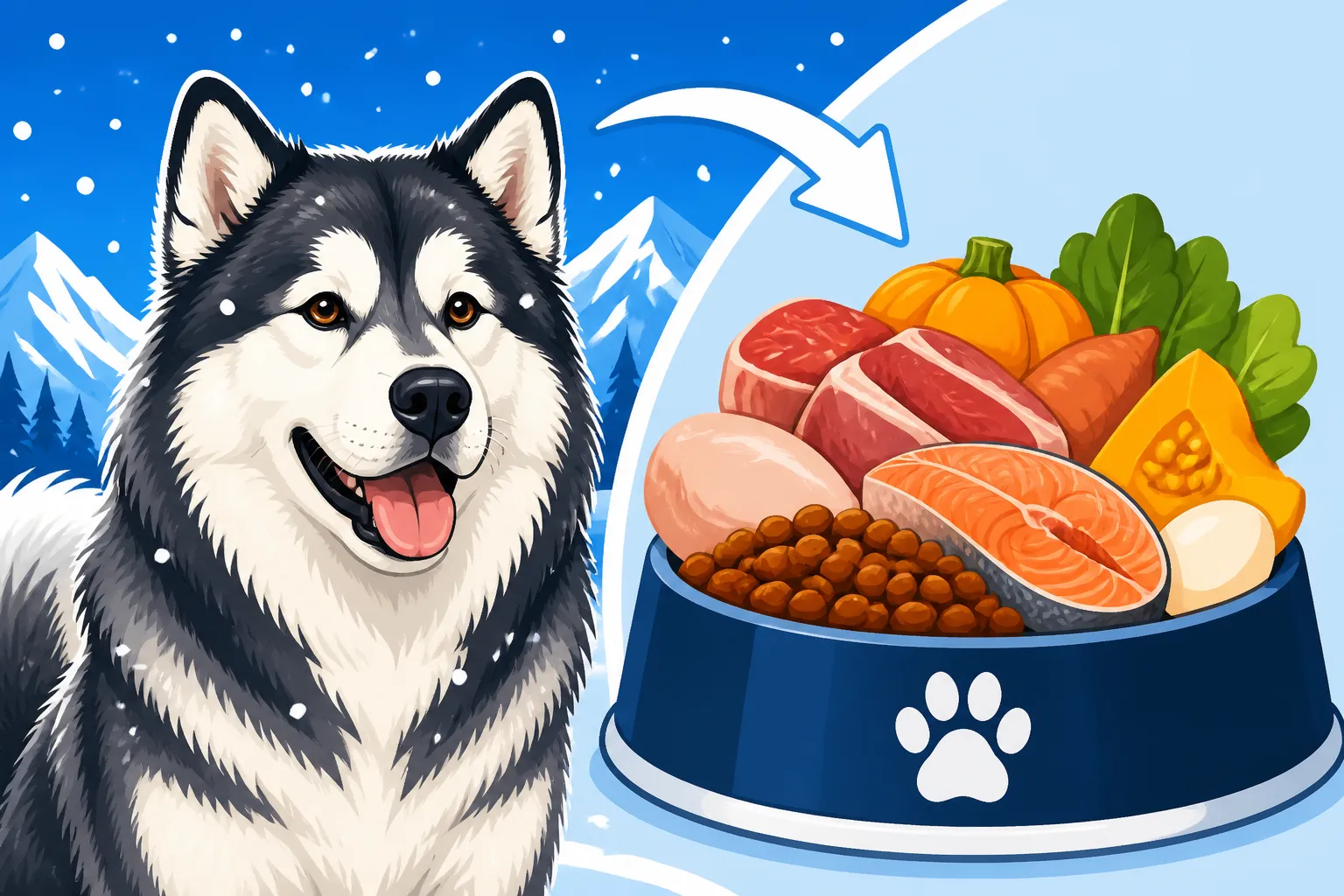
For active Malamutes, especially those consistently working in cold temperatures, a diet higher in fat can be incredibly beneficial. Fat is a dense source of calories, providing twice the energy per gram compared to protein or carbohydrates. This means they can get the necessary caloric boost without having to consume a massive volume of food, which can sometimes lead to digestive upset or bloat.
- Look for Performance Formulas: Many reputable dog food brands offer "performance," "sporting dog," or "active dog" formulas. These are specifically designed with higher fat and protein content to meet the demands of working dogs. Protein is also crucial for maintaining muscle mass, especially when they're exerting themselves. Whether a Working Malamute Needs a Performance Formula delves deeper into this. You might find a wider selection of these specialized formulas on online retailers like Chewy, often with detailed nutritional breakdowns.
- The Role of Fat: Aim for a food with a fat content in the range of 18-25% for highly active dogs. For pet Malamutes with moderate activity, their regular high-quality adult formula (typically 12-18% fat) might be perfectly adequate, perhaps with a slight increase in portion size if they're genuinely spending more time outdoors in the cold.
- Consider Quality Ingredients: Regardless of fat percentage, always prioritize high-quality ingredients. The first few ingredients should be identifiable meat sources (e.g., chicken meal, lamb, beef). Avoid foods with excessive fillers or artificial additives. Some owners explore fresh food diets, from services like Ollie, to ensure high-quality, digestible nutrients, but even with these, the caloric density for winter activity needs careful consideration.
Strategic Portioning and Meal Timing
The exact "pounds" of food will vary wildly based on calorie density and your dog's specific needs, but here's a general approach:
- Start with the Manufacturer's Guidelines (and adjust): Most dog food bags provide feeding guidelines based on weight and activity level. Use this as your starting point. Then, critically observe your dog. Are they gaining weight? Losing weight? Maintaining condition?
- Gradual Adjustments: Don't drastically change their food amount overnight. Incremental adjustments of 10-15% over a few days are much easier on their digestive system.
- Frequent Small Meals: For highly active or working Malamutes who might need a significant increase in food, consider splitting their daily ration into two or even three smaller meals. This aids digestion and can help prevent bloat, a serious concern for deep-chested breeds like Malamutes. How Many Meals a Day an Alaskan Malamute Needs is an excellent resource on this. If they're working, a smaller meal before strenuous activity and a larger one post-work can be effective.
- Hydration is Key: Even in winter, proper hydration is crucial. Cold can mask thirst, and Malamutes can become dehydrated if they don't have constant access to fresh water. If you're using a dry kibble, ensuring they have plenty of water to drink is even more important. Some owners add warm water or bone broth to their kibble in winter to increase moisture intake and palatability.
Here's a generalized table to illustrate how activity influences daily food intake in pounds, assuming a calorie-dense performance kibble (e.g., 400-450 kcal per cup), for an average adult Malamute weighing around 75-85 lbs. Remember, these are rough estimates; your dog's specific needs will vary.
| Activity Level (Winter) | Estimated Daily Kibble (Cups) | Estimated Daily Kibble (Pounds) | Considerations |
|---|---|---|---|
| Low | 3 – 4 cups | 1.0 – 1.3 lbs | Mainly indoor, short walks. Monitor for weight gain. |
| Moderate | 4 – 6 cups | 1.3 – 2.0 lbs | Daily walks, regular play in snow. Slight increase from non-winter. |
| High | 6 – 8 cups | 2.0 – 2.7 lbs | Regular hiking, light pulling, consistent outdoor activity. |
| Very High (Working) | 8 – 12+ cups | 2.7 – 4.0+ lbs | Intense freighting, mushing, weight pull. May require multiple meals/day. |
Note: These are approximations. Always consult your veterinarian and monitor your individual dog's condition.
Beyond the Bowl: Monitoring Health and Preventing Issues in Winter
Feeding isn't just about quantity; it's about observing your Malamute's overall health and well-being. The winter months can bring unique challenges, and proactive monitoring, coupled with a well-adjusted diet, can make all the difference.
Keeping an Eye on Body Condition
The thick Malamute coat can hide a multitude of sins – including excess weight or, conversely, a dog that's getting too thin. It's notoriously difficult to tell a Malamute's condition just by looking. You need to use your hands. Regularly perform a "rib check":
- Run your hands along their sides: You should be able to feel their ribs easily, like feeling the knuckles on your hand when your palm is flat. You shouldn't be able to see the ribs, but you should definitely feel them without pressing hard.
- Check their waist: From above, your Malamute should have a discernible waist tucking in behind their ribs. From the side, their abdomen should gently slope up, not hang low.
- Assess their fat covering: If you have to press firmly to feel their ribs, they're likely carrying too much weight. If their ribs are visibly prominent, they're too thin and need more food. Keeping an Alaskan Malamute at a Working Weight emphasizes the importance of maintaining an ideal lean condition.
Adjust their food up or down by small increments (e.g., 1/4 to 1/2 cup per day) until you achieve or maintain that ideal condition. Remember, their weight might fluctuate slightly with activity levels, so consistency in checking is key.
Hydration and Bloat Prevention
We mentioned hydration earlier, but it bears repeating. In cold weather, dogs may not feel as thirsty, but they still need water, especially with dry kibble. Ensure their water bowls don't freeze if they are outdoors. Consider an insulated or heated bowl if necessary. Dehydration can lead to various health issues and can exacerbate the risk of bloat, or Gastric Dilatation-Volvulus (GDV), which is a life-threatening emergency.
To minimize the risk of bloat:
- Avoid vigorous exercise immediately before or after meals. Give them at least an hour of rest on either side. Whether a Malamute Should Rest After Eating highlights this critical point.
- Use slow feeder bowls. These can encourage them to eat more slowly, reducing the amount of air they swallow with their food. Whether a Slow Feeder Reduces a Malamute's Bloat Risk is a good resource if you're concerned.
- Feed multiple small meals rather than one large one, particularly for active dogs receiving higher volumes of food.
- Limit elevated feeding bowls unless specifically recommended by your vet, as some studies suggest they might increase bloat risk.
Finally, always have an emergency plan in place. Knowing the signs of bloat – distended abdomen, unproductive retching, restlessness – and having immediate access to veterinary care is paramount. It's always wise to consider pet insurance, like plans from Healthy Paws, especially for an active breed that might encounter unexpected winter ailments or injuries.
Adjusting your Alaskan Malamute's diet for winter is a thoughtful process, not a simple increase in quantity. It involves understanding their unique physiology, keenly observing their activity levels and body condition, and making intelligent choices about the type and timing of their meals. By doing so, you'll ensure your magnificent Malamute is perfectly fueled to enjoy the season they were truly born for.
Disclaimer
This article is for general informational purposes only and does not constitute professional advice. Laws, prices and regulations vary by location and change over time. Consult a qualified professional for guidance on your specific situation.