How a Malamute’s Noise Carries in a Neighborhood
It's a familiar scenario for many Alaskan Malamute owners: you step outside and hear your beloved companion's distinctive "woo" carrying clear across the neighborhood, or perhaps a full-throated howl echoing through the evening air. While you might find their vocalizations charming, your neighbors might not always agree. Understanding how these unique sounds travel and what triggers them is crucial for maintaining peace and ensuring everyone in your community, including your Malamute, can live harmoniously. This guide will dive deep into the fascinating world of Malamute vocalizations and offer practical strategies to manage their noise levels in a residential setting.
The Alaskan Malamute's Distinctive Vocal Palette
When you think of a dog, you likely picture barking. But Alaskan Malamutes are different. Their vocal repertoire is incredibly rich and, frankly, quite unique among dog breeds. They communicate through a fascinating array of sounds that harken back to their ancient lineage, often to the surprise of new owners who were expecting a more conventional "woof."
More Woo Than Woof: Understanding the Malamute's Core Sounds
The most iconic Malamute sound is undoubtedly the "woo" or "awoo." It's a guttural, drawn-out sound, often accompanied by exaggerated facial expressions – a tilted head, squinting eyes, and an open mouth that seems to articulate each syllable. This isn't a bark; it's a conversation. Malamutes use their woo to greet family members, express excitement, demand attention, or even just to comment on the state of the world as they see it. It's their way of saying, "Hello, I'm here, and I have something to say!"
Unlike a sharp, sudden bark that can be jarring, the woo tends to be more melodic and less aggressive. However, its lower frequency and sustained nature mean it can carry quite far, especially in quiet environments. Imagine a cool evening, the air still, and then a resonating "awooooo" from a few blocks away. It’s distinct, and it definitely gets noticed. Owners often mistake this for incessant barking, but once you learn to distinguish it, you realize it's a complex, almost language-like form of communication. What Sounds an Alaskan Malamute Makes delves deeper into these unique vocalizations.
The Howl: A Call from the Wild
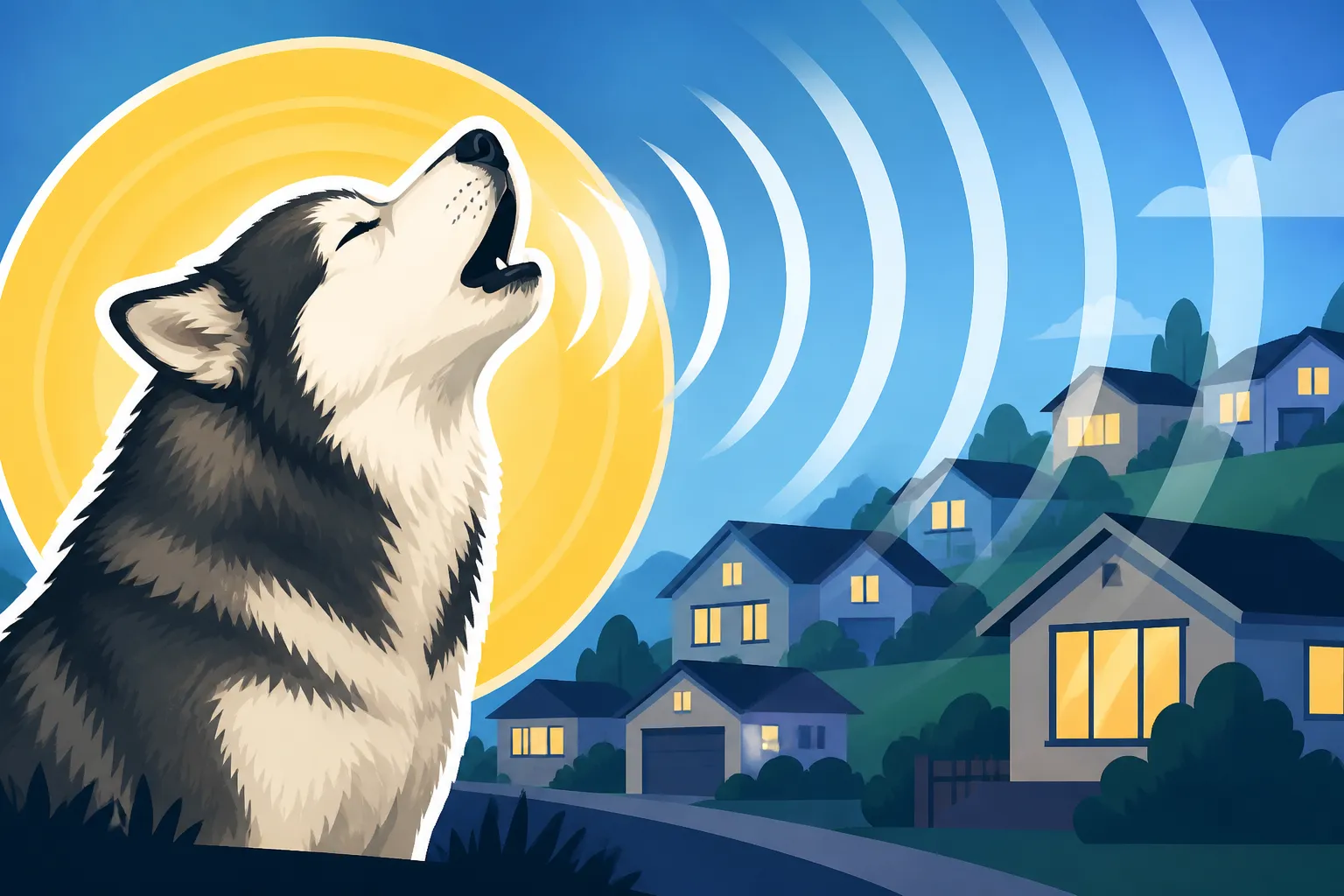
Beyond the woo, Malamutes are celebrated (or sometimes, tolerated) for their magnificent howls. This isn't just a casual vocalization; it's a primal expression, a direct link to their wolf ancestors. Malamute howls are powerful, sustained, and truly designed to travel vast distances, as they would have needed to do in the open expanses of the Arctic to communicate with their pack or to signal location.
A Malamute's howl can be triggered by a variety of stimuli. Sirens are a classic example, eliciting an immediate and often communal response. They hear the siren's rising and falling tone, and something deep within them responds in kind, essentially joining the "chorus." Other dogs howling in the distance can have the same effect, creating a chain reaction across a neighborhood. For an in-depth look at this specific trigger, read Why a Malamute Howls at Sirens. The sheer volume and resonance of a Malamute's howl means it doesn't just travel; it permeates the environment, often vibrating through walls and windows, making it a significant concern for close-quartered neighbors.
The Infrequent Bark: When and Why it Happens
Here's the interesting part: true barking is relatively rare for an Alaskan Malamute, especially compared to many other breeds. If your Malamute is barking incessantly, it's often a sign that something is amiss. A bark from a Malamute is usually a warning, a sudden alert, or a sign of deep frustration. It might be directed at an unfamiliar person approaching the house, an animal in the yard, or an object that has startled them.
When a Malamute does bark, it's usually deep, forceful, and intentional. It’s not the yappy, repetitive bark you might hear from a smaller breed. This infrequent nature, however, doesn't mean it's less impactful. Because it's less common, a Malamute's bark can be even more startling and attention-grabbing. If your Malamute is barking excessively, it’s a strong signal that you need to investigate the cause, as it's not their natural mode of prolonged communication. This might indicate territorial concerns, anxiety, or even pain, and warrants a closer look.
How Malamute Sounds Travel: Acoustics of Your Neighborhood
The way sound travels isn't just about the volume a dog produces; it's heavily influenced by the environment around them. Your neighborhood's layout, the materials of nearby buildings, and even the weather can play a huge role in how far and how clearly your Malamute's woos and howls are heard.
Environmental Factors: Open Spaces, Buildings, and Barriers
Imagine living in a sprawling rural area versus a dense suburban development. The difference in how sound carries is immense. In open spaces, sound waves can travel largely unobstructed, dissipating over a wide area. A Malamute's howl on a large property might be heard for miles, but as a faint, distant echo. In a more confined residential area, however, sound waves can bounce off buildings, creating echoes and even amplifying certain frequencies. This phenomenon is particularly noticeable in neighborhoods with closely packed houses, brick walls, or lots of hard surfaces like concrete patios and driveways.
Fences, especially solid ones, can act as a partial barrier, but they're rarely soundproof. A tall wooden fence might block some direct line-of-sight sounds, but the lower frequency howls and woos often travel over or through them. Sound doesn't just go in a straight line; it bends and reflects. This means that even if your Malamute is in your backyard, its vocalizations can easily reach neighbors directly behind, beside, and even across the street, especially if there's an open path for the sound to travel. Consider using external sound dampening strategies if you have close neighbors, such as strategically placed dense shrubbery or even purpose-built sound barriers.
Time of Day and Community Noise Levels
The time of day significantly impacts how noticeable and intrusive your Malamute's vocalizations become. During the bustling hours of the day, with traffic, kids playing, lawnmowers humming, and general human activity, your Malamute's occasional woo might blend into the background noise. It's still there, but it's less prominent. This is why many owners don't realize their dog is noisy until a neighbor brings it up, often because they're home during the day when general noise is higher.
However, as evening settles and neighborhood activity winds down, ambient noise levels drop dramatically. Suddenly, that familiar Malamute howl or expressive woo becomes much more distinct and can feel louder. Early mornings, late evenings, and the quiet hours of the night are when sound carries furthest and is most likely to disturb. A single howl at 2 AM can feel like an invasion to a sleeping neighbor, whereas the same howl at 2 PM might barely register. Understanding this dynamic is key to managing the impact of your Malamute's noise, not just the noise itself. What Neighbors Say About a Malamute further explores how community perception shifts with noise.
The Startle Factor: Why Certain Sounds Carry More Weight
It's not just about volume; it's about context and expectation. A sudden, unexpected sound, even if not extraordinarily loud, can be far more startling and irritating than a consistent, lower-level noise. Malamute howls, with their sudden onset and sustained nature, can be particularly jarring when they break the silence. This "startle factor" is a major reason why neighbors often complain about howling. It can wake them from sleep, interrupt quiet moments, or even cause alarm.
Furthermore, some sounds trigger a more visceral, almost primal response in humans. The sound of a dog howling can evoke feelings of loneliness, distress, or even fear, especially if it's perceived as a "wolf-like" sound. This emotional response can quickly escalate a minor annoyance into a significant complaint, even if the howling isn't constant. It's not just the decibels, it's the feeling the sound evokes. This is also why How a Malamute's Voice Differs From a Husky's is an important read, as nuances in vocalizations can lead to different neighbor perceptions.
Common Triggers for Neighborhood Noise
Malamutes don't just vocalize for no reason. There's always an underlying trigger, and understanding what sets your dog off is the first step toward effective management. Often, the cause is rooted in their breed characteristics and high intelligence.
Boredom, Isolation, and Lack of Mental Stimulation
This is perhaps the number one culprit for excessive Malamute vocalization. Alaskan Malamutes are highly intelligent, active, and social dogs. They were bred to work alongside humans in challenging conditions, requiring both physical stamina and mental engagement. When left alone for long periods without sufficient exercise, mental enrichment, or companionship, they get bored. And a bored Malamute is a destructive, or in this case, a noisy Malamute.
A Malamute left in a backyard with nothing to do will quickly invent its own entertainment, which often involves digging, escaping, or vocalizing. Their howls and woos can become an expression of frustration, loneliness, or a desperate plea for attention. They're essentially saying, "Hey! I'm bored! Interact with me!" This isn't out of spite; it's a natural consequence of their needs not being met. Providing ample physical activity and mental puzzles is non-negotiable for a well-adjusted, quieter Malamute. Many owners find that without a proper outlet, their Malamute quickly becomes an adolescent terror, as detailed in The Adolescent Malamute That Rewrites the Rules at Fourteen Months.
Environmental Stimuli: Sirens, Other Dogs, and Passing Traffic
As mentioned earlier, Malamutes are highly responsive to their environment. Sirens – police cars, ambulances, fire trucks – are almost universally irresistible to a Malamute. The unique pitch and wavering tone seem to tap into an ancient instinct, prompting them to "sing along." This isn't a problem unique to Malamutes, but their powerful vocalizations make it particularly noticeable.
Beyond sirens, the sounds of other dogs barking or howling in the vicinity can also set off a chain reaction. A Malamute might hear a distant dog and feel compelled to respond, to establish its presence, or to "join the conversation." Similarly, consistent exposure to passing traffic, pedestrians, or even wildlife (squirrels, birds) can become a source of overstimulation, leading to alert barking or frustrated woos. It's like they feel the need to comment on every little thing that happens in their perceived territory, even if it's just the mail carrier walking by.
The Social Call: Responding to Other Howls or Activity
Malamutes are pack animals at heart. Their ancestors communicated over vast distances to locate each other, signal danger, or announce a successful hunt. This innate desire to communicate with their "pack" (which often includes you, your family, and even other neighborhood dogs) is a powerful driver for their vocalizations. When they hear another dog howling, whether it's a domestic dog or a distant coyote, it’s a natural instinct for them to respond. It's a "hello, I'm here, who's out there?" kind of exchange.
This also extends to human activity. If you're outside playing with children, or having a lively conversation with neighbors, your Malamute might feel compelled to join in, adding their enthusiastic woos to the general hubbub. They want to be part of the group, part of the action. While endearing to owners, it can become problematic when their "participation" is consistently loud and disruptive. Recognizing their social drive is key to directing it appropriately.
Proactive Strategies for Noise Management
Managing a Malamute's noise isn't about silencing them entirely – that's impossible and goes against their nature. It's about understanding their triggers, meeting their needs, and training them to modulate their vocalizations. A multi-faceted approach is almost always required.
Enrichment and Exercise: The Foundation of a Quieter Malamute
A tired Malamute is a good Malamute, and a mentally stimulated Malamute is even better. These dogs need a significant amount of daily exercise. We're not talking about a leisurely stroll around the block; we're talking about vigorous activity that engages both their body and their mind. For a comprehensive look at their daily needs, check out What an Alaskan Malamute Needs Every Day. This could include long hikes, jogging, biking, or harness work like sledding or weight pull (Pulling Is the Only Job an Alaskan Malamute Really Wants). Physical exertion drains their excess energy, making them less likely to resort to vocalization out of boredom.
| Activity Type | Examples | Noise Reduction Benefit |
|---|---|---|
| Physical | Running, Hiking, Fetch, Tug, Swimming, Pulling | Burns excess energy, reduces boredom-induced vocalizations |
| Mental | Puzzle Toys, Scent Work, Obedience Training | Engages mind, reduces frustration, teaches self-control |
| Social | Structured Playdates, Family Interaction | Meets social needs, reduces loneliness vocalizations |
| Destructive | Chewing on appropriate toys, Digging Pit | Redirects natural urges away from vocal frustration |
Beyond physical exercise, mental enrichment is paramount. Puzzle toys (like those you can find on Amazon), scent games, and regular training sessions can keep their sharp minds occupied. If a Malamute is constantly learning new tricks, working on obedience commands, or figuring out how to get treats out of a dispenser, they're less likely to be howling at the wind. Rotate toys regularly to keep things fresh and exciting. A bored dog will find something to do, and that something often involves making noise.
Training for Calm and Quiet: Tools and Techniques
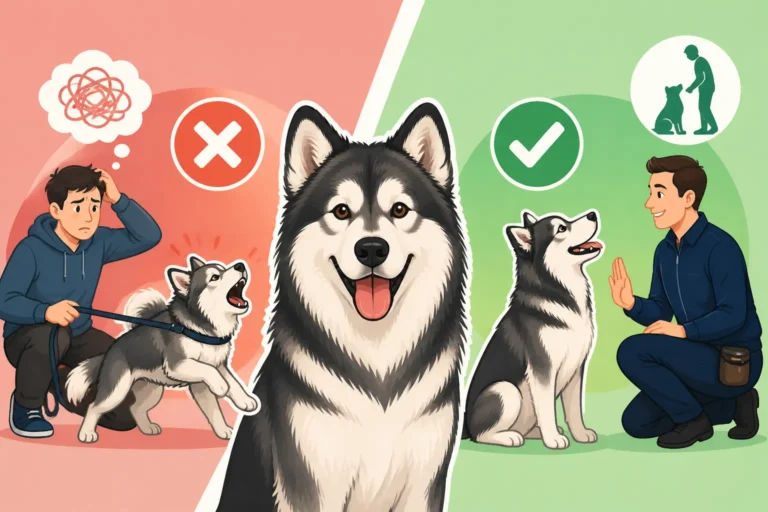
While Malamutes are independent thinkers, they are highly trainable, especially when motivated by positive reinforcement. The key is to teach them an alternative behavior to vocalizing and to reward quiet. Start with a "quiet" cue. When your Malamute barks or howls, wait for a momentary lull, then say "Quiet" and immediately reward them with a high-value treat. Over time, they'll associate the cue with ceasing vocalization. You can gradually increase the duration they need to be quiet before receiving the reward. Teaching an Alaskan Malamute a Quiet Cue provides more detailed steps for this process.
Consistency is absolutely critical. Everyone in the household needs to be on board. If one person allows vocalization and another punishes it, your Malamute will get confused. For persistent issues, or if you're a new dog owner, resources like BAXTER & Bella offer online puppy schools and training programs that can guide you through these techniques with professional support. These programs often provide structured lessons for impulse control and calming behaviors, which are invaluable for a vocal breed like a Malamute. Management tools like sturdy crates or playpens can also be useful for creating a designated quiet space when you can't actively supervise.
Soundproofing Your Home and Yard: Creating a Buffer Zone
Sometimes, despite your best training efforts, you still need an extra layer of protection against sound traveling. While true soundproofing is expensive and often impractical for an entire yard, there are steps you can take to mitigate noise. Inside your home, heavy curtains, rugs, and upholstered furniture can absorb sound waves, reducing echoes and preventing noise from escaping as easily. If your Malamute is prone to vocalizing when home alone, consider leaving a white noise machine or soft music playing to mask external triggers.
For your yard, consider the landscaping. Dense hedges or a double fence can offer a modest sound buffer, though nothing will be completely soundproof against a determined Malamute howl. If a specific area of your yard triggers vocalization (e.g., a fence line shared with a noisy neighbor), try to block visibility to that area or create an "exclusion zone" where your Malamute isn't left unsupervised. Some owners even invest in outdoor kennels with solid sides or partial roofing, which can help contain sound to some extent, especially if lined with sound-absorbing materials.
Navigating Neighbor Concerns and Building Community Harmony
Even with the best intentions and training, neighbor complaints can arise. How you handle these situations can make all the difference in maintaining good relationships and resolving issues effectively.
Open Communication and Realistic Expectations
The first step when a neighbor complains about your Malamute's noise is to listen. Really listen, without getting defensive. They might be genuinely bothered, and it's important to validate their feelings. Thank them for bringing it to your attention and assure them you're working on it. Open, honest communication can go a long way. You might even ask them about specific times or triggers they've noticed, as this could provide valuable insights you weren't aware of.
It's also important to set realistic expectations for both yourself and your neighbors. Your Malamute is a Malamute; they will woo, they will howl, and they will communicate. The goal isn't absolute silence, but reasonable noise levels. Explain to your neighbors the breed's natural tendencies and the steps you're taking. Offer solutions like bringing your dog inside during sensitive hours (early morning, late evening) or providing your contact information for urgent concerns. Sometimes, simply knowing you care and are actively addressing the issue is enough to diffuse tension.
When to Consult a Professional Trainer or Behaviorist
If you've tried everything and your Malamute's vocalizations remain excessive and disruptive, or if they seem rooted in anxiety, aggression, or deep-seated behavioral issues, it's time to call in the professionals. A certified professional dog trainer or a veterinary behaviorist can observe your Malamute in its environment, identify specific triggers, and develop a tailored training plan. They can offer insights and techniques that an average owner might not be aware of, helping you get to the root cause of the noise.
These professionals can also help you understand if the vocalization is a symptom of a deeper problem, like separation anxiety, which requires a more specialized approach than simple "quiet" training. They can guide you on the proper use of training tools and ensure you're not inadvertently reinforcing unwanted behaviors. For some owners, the question isn't if they need help, but Whether a Malamute Needs a Professional Trainer. For a breed as strong-willed and intelligent as a Malamute, professional guidance can be a game-changer.
Leveraging Technology for Monitoring and Management
In today's world, technology offers several tools that can help you monitor and manage your Malamute's noise when you're not home. Pet cameras with two-way audio and barking alerts (many available on Amazon) allow you to see and hear what your dog is doing, and even speak to them if needed. This can help you identify triggers you weren't aware of (e.g., the mailman always sets them off at 11 AM) and allows you to intervene remotely.
Sound-activated deterrents, such as citronella spray collars, can be considered for specific, problematic barking. However, these should always be used under the guidance of a professional trainer, as they are management tools, not training solutions, and can have unintended negative consequences if used improperly. Ultimately, understanding why your Malamute is making noise is far more effective than simply trying to suppress it. Monitoring tools simply give you the data to understand the "why" better.
In conclusion, living with an Alaskan Malamute means embracing their unique vocal nature. While their woos and howls are a cherished part of their personality, responsible ownership requires understanding how these sounds impact your neighborhood and proactively working to manage them. By providing ample exercise and mental stimulation, implementing consistent training, and maintaining open communication with your neighbors, you can foster a peaceful coexistence for everyone.
Disclaimer
This article is for general informational purposes only and does not constitute professional advice. Laws, prices and regulations vary by location and change over time. Consult a qualified professional for guidance on your specific situation.