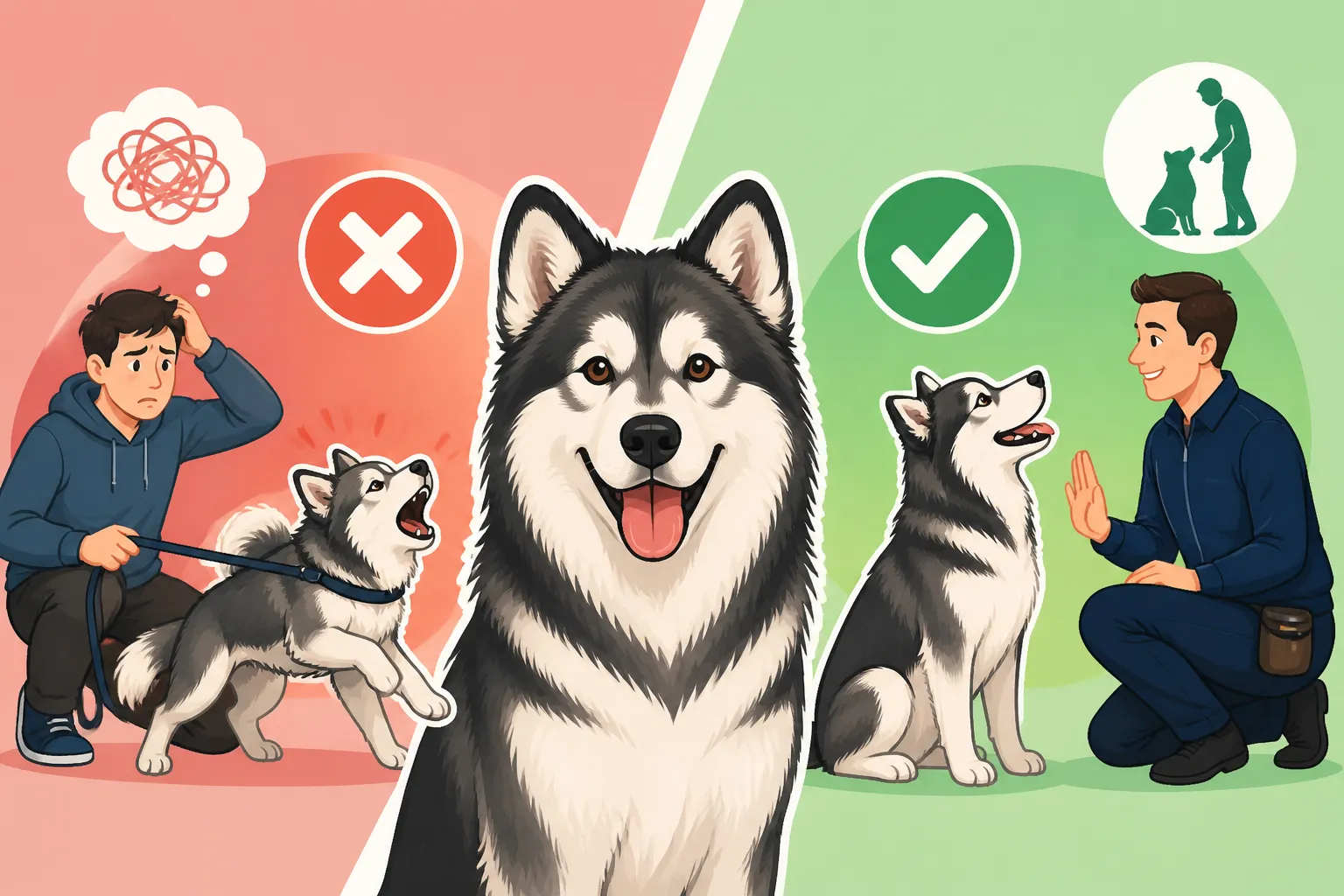
Whether a Malamute Needs a Professional Trainer
Bringing an Alaskan Malamute into your life is an adventure, but let's be honest, it's also a significant challenge. Many new owners, and even some experienced dog people, quickly realize that these intelligent, independent, and powerful dogs operate on a different wavelength than most other breeds. The question often arises: "Do I really need a professional trainer, or can I figure this out myself?" This guide will delve deep into the Malamute's unique temperament, explore common behavioral hurdles, and help you understand when seeking professional guidance isn't just helpful, but potentially essential for a harmonious life with your magnificent companion.
Understanding the Unique Malamute Mindset
Before you even consider bringing in a professional, it's crucial to grasp what makes an Alaskan Malamute tick. These aren't your average Golden Retrievers or Poodles; they were bred for thousands of years to haul heavy freight across vast, frozen landscapes, often making their own decisions far from human oversight. That independence, resilience, and problem-solving ability, while admirable, can be incredibly frustrating in a modern home environment.
Why Traditional Training Methods Often Fall Short
Many dog training principles are built around breeds eager to please, breeds that live for human approval and compliance. Malamutes? Not so much. They're smart, incredibly smart, but they use that intelligence to evaluate if your request aligns with their current agenda. If it doesn't, you'll often be met with a polite refusal, a moment of deep thought followed by a completely different action, or perhaps a blank stare that screams, "Why bother?"
For example, trying to teach a "stay" for an extended period in a stimulating environment can feel like pulling teeth. Your Malamute might understand the command perfectly well in a quiet living room, but the moment a squirrel darts by the window, or a tempting scent wafts from the kitchen, that "stay" suddenly becomes optional. They weren't bred to sit still and wait; they were bred to think on their feet, hunt, and make choices for survival. Their "stubbornness" isn't defiance; it's a deeply ingrained trait of independence. You might find yourself repeating cues, getting increasingly frustrated, while your Malamute is just calculating if the reward is truly worth the effort of doing what you've asked. A traditional trainer who doesn't understand this fundamental difference might misinterpret their behavior as defiance rather than an inherent drive to self-govern.
The Deep-Seated Instincts You're Up Against
Beyond the independent streak, Malamutes come pre-programmed with a set of instincts that can clash dramatically with human expectations. Their prey drive, for instance, is incredibly strong. They were bred to hunt large game, and that instinct doesn't just vanish because they're now living in your suburban home. A rabbit, a neighborhood cat, or even a small dog can trigger an intense chase response. This is why Why an Alaskan Malamute Will Never Have a Reliable Recall is a common topic among Malamute owners. You simply cannot trust them off-leash in an unfenced area.
Then there's the digging. Oh, the digging! It's not malicious; it's instinctual. They dig to create cool hollows in summer, to hunt for rodents, or simply because it's a deeply satisfying activity. Telling a Malamute "no digging" is like telling a fish "no swimming." It's part of who they are, and trying to suppress it entirely without providing an appropriate outlet can lead to immense frustration for both dog and owner. A Malamute's Digging Is Not a Problem, It Is the Breed is something you'll hear from experienced Malamute people repeatedly. You might try every deterrent on the market, from chicken wire to pepper spray, only to find your Malamute has simply moved their excavation efforts to a new, equally inappropriate spot in the yard.
Their vocalizations are another unique trait. Malamutes are known for their "woo-woos," howls, and various conversational noises, rather than typical barking. While charming, these can become problematic if they vocalize excessively due to boredom, anxiety, or simply to express themselves loudly. These deeply ingrained behaviors often require more than just basic obedience training; they require management strategies, redirection, and a deep understanding of the breed's natural drives.
When a Professional Trainer Becomes a Game Changer
So, if Malamutes are so different, when does it become clear that professional help isn't just a luxury, but a necessity? Often, it's when those unique traits manifest as significant behavioral challenges that impact the quality of life for both you and your dog.
Tackling Specific Behavioral Challenges
Malamutes often present challenges that go beyond a simple "sit" or "stay." We're talking about things like intense leash pulling that makes walks miserable, destructive chewing that rivals a beaver's work, chronic digging that turns your yard into a lunar landscape, or even concerning behaviors like same-sex aggression.
Consider the adolescent Malamute. Around 14 months, many owners find their once-compliant puppy suddenly starts to "forget" everything they learned. This isn't unusual. The Adolescent Malamute That Rewrites the Rules at Fourteen Months often involves testing boundaries, asserting independence, and generally being a defiant teenager. If your Malamute starts to pull so hard they nearly dislocate your shoulder on walks, or they decide that the living room couch is an excellent new chew toy, or if you're battling a severe case of escape artistry, these are all signs that you need more than just a basic obedience class. A professional trainer, especially one familiar with the breed, can help you navigate this difficult period, providing strategies to reinforce good behavior and manage the less desirable ones. They can assess if the pulling is simply excitement, or if your Malamute is genuinely trying to move forward with purpose, as they were bred to do, making a standard "heel" command a true test of wills.
Furthermore, if you're dealing with issues like The Age Same Sex Aggression Appears in a Malamute, where your dog might be showing aggression towards other dogs of the same gender, a professional behaviorist or trainer specializing in aggression is absolutely crucial. This is not a problem you can "fix" with online videos; it requires nuanced understanding, careful management plans, and often, hands-on guidance to ensure safety and improve your dog's social interactions.
Learning to Communicate in "Malamute"
One of the greatest benefits of a professional trainer for a Malamute owner is that they teach you how to understand and communicate effectively with your dog. It's not just about teaching your dog commands; it's about teaching you to speak their language and motivate them in ways that resonate with their inherent drives.
A good trainer will emphasize positive reinforcement and force-free methods. They understand that Why Force Fails on an Alaskan Malamute. These dogs shut down, become resentful, or simply ignore heavy-handed tactics. Instead, a knowledgeable trainer will help you identify what genuinely motivates your Malamute – whether it's a specific high-value treat, a favorite toy, a game of tug, or the chance to do something stimulating like pulling a cart. They can show you how to use these motivators to shape behavior and build a strong, trusting relationship. For instance, they might suggest using a long line and working on recall in a carefully controlled, distraction-free environment, gradually adding challenges, rather than just shouting "come" and hoping for the best when your Malamute is already halfway to the next county. They'll also help you understand that a Malamute's "work" isn't necessarily a job in the traditional sense, but an outlet for their physical and mental energy. What an Alaskan Malamute Will Work For is often less about pleasing you and more about satisfying their innate urges.
What to Look for in a Malamute-Savvy Professional Trainer
Not all trainers are created equal, and for a breed as unique as the Alaskan Malamute, selecting the right professional is paramount. A generic "dog trainer" might have great success with other breeds, but could inadvertently cause more harm than good with a Malamute if they don't understand the breed's specific needs.
Experience with Northern Breeds is Non-Negotiable
This is perhaps the single most important factor. Look for a trainer who explicitly states they have experience with Alaskan Malamutes, Siberian Huskies, Samoyeds, or other similar spitz-type breeds. They should understand the independent nature, the high prey drive, the digging instinct, and the specific motivations that work (and don't work) for these dogs. Ask them specific questions: "What methods do you use for a Malamute that refuses to retrieve?" or "How do you handle leash reactivity in a Malamute?" Their answers should demonstrate a deep understanding of the breed's temperament, rather than generic advice that applies to any dog.
A trainer with Northern breed experience will tell you that recall will always be a work in progress, and management (like leashes and secure fencing) is key, rather than promising a "perfect" off-leash Malamute. They'll emphasize channeling natural behaviors, like providing a designated digging pit or engaging in structured pulling activities, instead of trying to extinguish them entirely. They understand that a Malamute's communication might be less about barking and more about body language, eye contact, and subtle cues that many might miss.
Methods That Work and Those That Don't
Always prioritize trainers who use positive reinforcement, force-free, and reward-based methods. This means using treats, toys, praise, and play to encourage desired behaviors, rather than punishment, fear, or intimidation. As mentioned, Malamutes do not respond well to force. Why Force Fails on an Alaskan Malamute is a lesson many owners learn the hard way. A trainer who advocates for alpha rolls, choke chains, prong collars as the primary solution, or e-collars for correction (as opposed to specific, limited use under expert guidance for advanced off-leash training in certain contexts) might not be the best fit for this sensitive yet headstrong breed.
Look for certifications from reputable organizations, and don't hesitate to ask for client testimonials or to observe a training session if possible. A good trainer acts as a mentor, empowering you with the skills and knowledge to continue training your Malamute long after their sessions are over. Online resources like BAXTER & Bella can be a fantastic supplement, providing structured courses and access to trainers for virtual support, which can be particularly helpful for building foundational skills before or during in-person training.
Group Classes vs. Private Sessions
Both group classes and private sessions have their merits, and the best approach often involves a combination.
- Group Classes: These can be great for socialization and working on obedience cues around distractions. However, for a Malamute, careful consideration is needed. A well-run class will have small numbers, experienced instructors, and a focus on positive interactions. If your Malamute is highly reactive to other dogs, especially those of the same sex, a group class might be too overwhelming initially. It's vital to assess Whether a Group Class Suits an Alaskan Malamute before committing. Some Malamutes thrive on the interaction and the challenge, while others find it too stimulating and become over-aroused or defensive.
- Private Sessions: For specific behavioral issues like severe leash pulling, destructive tendencies, or reactivity, private one-on-one sessions with a trainer are often more effective. They allow the trainer to focus entirely on your dog's individual needs and tailor a program specifically for your household. This can be invaluable for establishing a solid foundation before attempting group settings, or for addressing nuanced problems that require individualized attention. Many owners find that starting with private sessions to get a handle on the biggest challenges, then transitioning to carefully selected group classes for socialization and advanced obedience, works best.
The Investment: Time, Effort, and Financial Considerations
Deciding to hire a professional trainer for your Alaskan Malamute is an investment, not just of money, but of your time and commitment. It's important to go into it with realistic expectations.
It's Not a "Set It and Forget It" Solution
A professional trainer is not a magic wand. They are guides, educators, and motivators who provide you with the tools and knowledge to train your dog. The real work, the consistent daily practice, and the dedication to implementing their strategies fall squarely on your shoulders. You might have an amazing session with a trainer, but if you don't follow through at home, the progress will be fleeting.
This means being prepared to dedicate regular time each day to training exercises, reinforcing good behaviors, and managing environments to prevent undesirable ones. It also means consistent communication with your trainer, asking questions, and being honest about challenges you're facing. Your Malamute needs routine, clear boundaries, and consistent application of rules from everyone in the household. Without your active participation, even the most skilled trainer won't be able to achieve lasting results. Remember, Whether an Alaskan Malamute Needs an Experienced Owner is often answered with a resounding "yes," precisely because these dogs require consistent, knowledgeable handling.
Weighing the Costs of Professional Help Against the Alternatives
Professional training, especially with a specialist, can be a significant financial outlay. Rates for private sessions or specialized behavior modification can vary widely. However, it's crucial to look at this investment in the broader context of Malamute ownership.
Consider the alternatives:
- Property Damage: An untrained Malamute, especially one prone to digging or chewing, can cause thousands of dollars in damage to your home and yard. Think about replacing chewed furniture, repairing fences, or replanting entire sections of your garden. You might find sturdy, chew-proof beds and crates on Amazon, but they won't stop the underlying behavioral issue if it's boredom or anxiety.
- Medical Bills: Escape artists can get hit by cars or injured in fights. Diggers can ingest harmful substances. Dogs with aggression issues can cause injury to other animals or people, leading to costly vet bills or legal fees.
- Behavioral Escalation: Ignoring problems like reactivity or aggression rarely makes them better; they usually escalate, becoming harder and more dangerous to manage.
- The Heartbreak of Rehoming: Sadly, many Malamutes end up in rescues because owners become overwhelmed by their unique challenges. The emotional toll of having to rehome a beloved pet, and the dog's trauma of losing its home, is immeasurable. What a Behaviorist Costs a Malamute Owner might seem high, but compare it to the cumulative cost of repeated damage, vet bills from incidents, or the ultimate price of not being able to keep your dog.
Investing in professional training early on, or as soon as significant behavioral issues arise, can prevent these costly and heartbreaking scenarios. It fosters a better relationship, enhances your dog's safety, and allows both you and your Malamute to live a happier, more fulfilling life together. For many Malamute owners, it's not a question of if they need a professional trainer, but when and which one.
| Malamute Challenge | How a Professional Trainer Helps |
|---|---|
| Pulling on Leash | Teaches proper leash handling techniques, uses tools like front-clip harnesses, and builds engagement exercises. |
| Destructive Chewing/Digging | Identifies root causes (boredom, anxiety), suggests appropriate outlets (chew toys, digging pit), and management strategies. |
| Poor Recall | Develops a strong foundation for recall in low-distraction environments, then gradually increases difficulty; emphasizes management. |
| Same-Sex Aggression | Provides careful assessment, behavior modification plans, management protocols (crate and rotate), and counter-conditioning. |
| Stubbornness/Independence | Helps owners find high-value motivators, uses positive reinforcement to make training rewarding, and builds a strong bond. |
| Escape Attempts | Addresses underlying motivations, suggests secure containment solutions, and works on door/gate manners. |
| Excessive Vocalizations | Identifies triggers (boredom, attention-seeking), teaches "quiet" cues, and provides enrichment ideas. |
Ultimately, while some rare individuals may possess the inherent understanding and experience to raise a well-adjusted Malamute without professional help, for most of us, these dogs are simply too complex, too independent, and too powerful to navigate alone. A good trainer provides the roadmap, the tools, and the encouragement you need to unlock your Malamute's incredible potential and build a truly special bond.
Disclaimer
This article is for general informational purposes only and does not constitute professional advice. Laws, prices and regulations vary by location and change over time. Consult a qualified professional for guidance on your specific situation.