Whether an Alaskan Malamute Needs an Experienced Owner
An Alaskan Malamute can be a wonderful companion, but its size, strength, independence, and exercise needs can catch an unprepared owner off guard. You do not necessarily need years of dog experience; you do need realistic expectations, reliable routines, and a willingness to manage the breed’s instincts rather than assume they will disappear.
Does an Alaskan Malamute need an experienced owner
Experience helps, but preparation matters more
An experienced owner may recognize early signs of overexcitement, frustration, or discomfort and feel more confident managing a powerful dog on leash. But experience alone does not guarantee a good match. Someone who has owned several easygoing dogs may still be surprised by a Malamute’s independent streak, persistence, and strong interest in chasing wildlife.
A first-time owner can do well if they are thoughtful and consistent: they research the breed before bringing home a dog, choose a responsible source, plan for training and exercise, and ask for help when a problem is bigger than they can safely handle. That preparation matters more than being able to say, “I’ve always had dogs.”
It is also worth being honest about what you want from a dog. If you picture a companion who stays close off leash, greets every dog happily, or obeys a cue immediately in any situation, a Malamute may be frustrating—even for an experienced handler. If you enjoy training, can manage a dog who sometimes makes his own decisions, and take safety seriously, the relationship can be deeply rewarding. For another perspective on the breed’s everyday realities, see What Alaskan Malamute Owners Wish They Had Known.
The practical demands are what catch people off guard
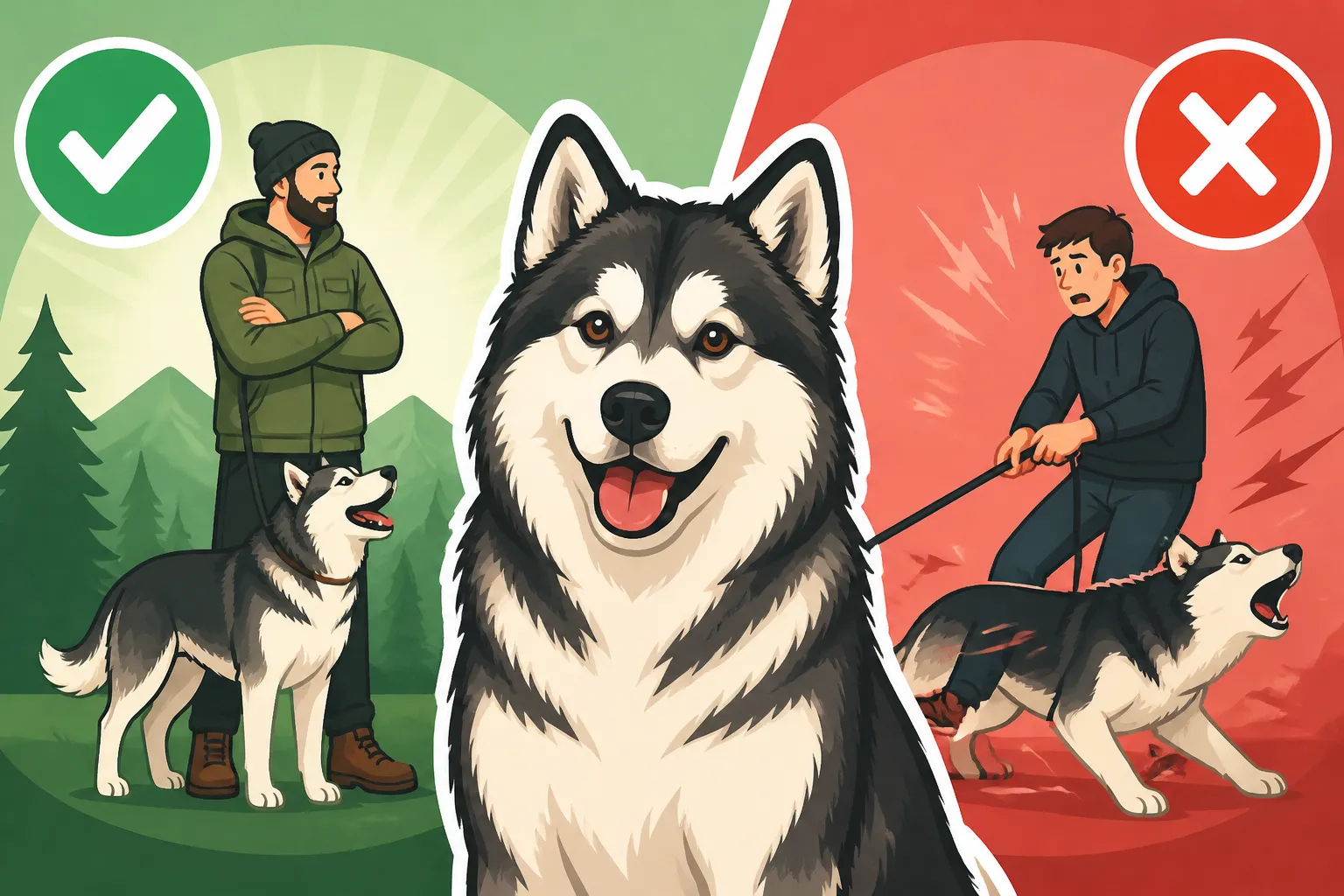
A Malamute is a large, strong working dog. Pulling on leash, barging through an open door, or trying to follow a squirrel can become a safety issue quickly—not because the dog is necessarily “bad,” but because the dog has the size and determination to make an impulsive choice difficult to interrupt. Good leash habits and secure handling are not optional extras.
Malamutes are also independent. They were bred to work alongside people, but that does not mean they were bred to wait for constant instructions. A dog may understand a cue and still decide that another option is more interesting. That can be discouraging if you expect training to produce automatic obedience. It helps to treat training as an ongoing partnership, with management and rewards supporting the behavior you want.
And then there is the ordinary, unglamorous work: brushing a dense coat, cleaning up shed fur, providing appropriate activity, and keeping the dog from practicing unwanted habits when unsupervised. If you are comparing the breed with an easiergoing companion, Whether an Alaskan Malamute Suits a First Time Owner can help you think through the commitment more specifically.
What makes Malamutes challenging to manage
Strength, prey drive, and recall need realistic expectations
Many Malamutes have a strong instinct to chase small animals. A dog who lives calmly with the family cat may still react differently to a rabbit or an unfamiliar cat outdoors. That does not make every Malamute unsafe around every animal, but it does mean introductions, supervision, barriers, and careful choices matter.
Recall can be another sore point. A Malamute may come reliably in a quiet room and ignore the same cue when something compelling is nearby. For that reason, a fenced area or leash is often a safer choice than trusting an off-leash recall in an open park. Training can improve responsiveness, but owners should not treat a promising practice session as proof that the dog is safe to release near roads, livestock, or wildlife. The reasons behind this challenge are explored in Why a Malamute's Recall Cannot Be Trusted.
The table below can help you assess whether the day-to-day demands fit your situation.
| Malamute trait | What it can look like at home or outside | What helps |
|---|---|---|
| Considerable strength | Pulling toward a smell, animal, or another dog | Leash skills, suitable equipment, and an owner able to manage the dog physically |
| Independent decision-making | Responding selectively when distractions are present | Short, rewarding training sessions and realistic expectations |
| Prey interest | Fixating on or chasing small animals | Secure containment, supervision, and thoughtful introductions |
| High activity needs | Restlessness or mischief when under-stimulated | Regular exercise, enrichment, and an appropriate job or activity |
| Heavy shedding | Fur collecting on furniture, clothing, and floors | A consistent grooming routine and realistic household expectations |
| Possible dog selectivity | Tension around certain dogs, especially in close quarters | Managed introductions, space, and professional guidance when needed |
These are tendencies to plan for, not a prediction that every individual dog will behave the same way. Age, early experiences, health, training, and the environment all matter. Still, it is much easier to prepare for a trait before it becomes a daily conflict than to assume your dog will be an exception.
Exercise and mental work are part of the routine
A Malamute generally needs more than a brief walk around the block. That does not mean every dog needs to run hard every day. Activity should suit the individual dog’s age, health, conditioning, and the weather. Long walks, sniffing opportunities, training games, and suitable pulling activities can all contribute to a fuller routine. For ideas and safety considerations, explore How Much Exercise an Alaskan Malamute Needs.
Mental work counts, too. A short session practicing manners, searching for treats, or learning a new task can be more useful than repeating a simple route while the dog remains bored. But activity is not a substitute for management. A tired dog still needs a secure yard, supervision around animals, and consistent expectations indoors.
Weather deserves special attention. A thick-coated northern breed can be at risk in warm conditions, especially during strenuous exercise. Plan activity for cooler parts of the day, make water and shade available, and stop if the dog appears distressed. The goal is not to exhaust the dog into good behavior; it is to meet needs safely and build predictable habits.
What a prepared owner needs to provide
Training should be consistent, kind, and practical
Malamute training tends to go better when it is clear and rewarding rather than forceful. A dog who is physically corrected or intimidated may become more anxious, resistant, or difficult to handle, particularly when already frustrated. Instead, teach practical behaviors in manageable steps: walking with a loose leash, waiting at doors, settling on a mat, and turning away from distractions.
Use rewards the dog cares about, keep sessions brief enough to hold attention, and practice in different places gradually. A cue learned in the kitchen may not yet be reliable beside a busy trail. If you are struggling with pulling, reactivity, or handling, a qualified trainer who uses humane methods can help you make a plan that fits your dog and household. Why Force Fails on an Alaskan Malamute explains why pressure and confrontation can backfire with this breed.
Training also includes the routines people sometimes overlook. Teach visitors how to enter calmly. Use gates when deliveries arrive. Keep doors secured so the dog cannot rush outside. Store food and tempting household items where the dog cannot help himself. These small changes are not signs of failure; they prevent a strong, curious dog from rehearsing habits that are difficult to undo.
A household needs to fit the dog, not just admire the breed
Before bringing a Malamute home, consider who will do the daily care and what happens when life gets busy. A dog who is alone for long stretches without activity or companionship may become restless and destructive. A household with young children needs close adult supervision and clear rules for both dog and child. Children should not climb on, corner, or disturb a dog who is eating or resting.
Other pets need careful consideration, too. Some Malamutes live peacefully with dogs or cats, while others need more management. Do not assume that a puppy raised around a household pet will automatically be safe with every animal for life. Plan for supervision and physical separation when needed. If you are weighing the family fit, Whether an Alaskan Malamute Is Safe With Children and An Alaskan Malamute in a Home With Cats or Small Dogs offer related considerations.
Your home does not have to be a remote cabin or a snowy property, but it does need to support safe exercise and containment. A secure fence, workable walking routes, and a plan for hot weather can make a real difference. Think about the practical environment as carefully as the dog’s appealing appearance. The Household an Alaskan Malamute Was Built For provides useful breed context.
How to decide if this breed fits your experience and life
Ask yourself these questions before committing
Instead of asking only whether you have enough experience, ask whether you can manage the specific responsibilities. Can you physically handle a strong dog on leash? Are you prepared to keep the dog secured even if recall is inconsistent? Can you give time to training, exercise, grooming, and supervision most days—not just during the exciting first weeks?
Also consider your tolerance for mess, noise, and imperfect obedience. A Malamute may shed heavily, vocalize, dig, or test household boundaries. These behaviors can often be managed, redirected, or reduced, but it is unrealistic to expect the breed’s instincts and working energy to vanish. If you need a dog who is low-shedding, easy to exercise, and reliably off leash, another breed may fit better.
Finally, plan for support. Meet adult Malamutes, talk with knowledgeable owners and responsible breeders or rescue groups, and ask specific questions about temperament and health history. A well-matched adult dog may suit some homes better than a puppy, while a carefully selected puppy can suit others. The important part is to make an informed choice rather than choose based on appearance alone. The First Year With an Alaskan Malamute Puppy can help you picture the early commitment.
Build a support plan before a problem appears
A prepared owner does not have to handle every challenge alone. Identify a veterinarian, find a trainer who can work with a large independent breed, and decide where the dog can exercise safely. If you are purchasing equipment or routine care supplies, a retailer such as Chewy may be one place to compare options for grooming tools, enrichment items, or everyday essentials; choose products based on your dog’s needs and check suitability rather than assuming one item works for every Malamute.
It is also sensible to make a household plan for predictable pressure points: who walks the dog when the weather is poor, how you will manage visitors, where the dog rests when children are active, and what happens if the dog reacts to another animal. Owners often feel overwhelmed when they try to invent these arrangements during a difficult moment. A little preparation can make daily life calmer for everyone.
For grooming supplies, some owners use Chewy to browse brushes and coat-care tools, then ask a groomer or experienced Malamute owner whether the tool suits their dog’s coat. Another owner might use Chewy to replace a puzzle toy or durable leash, while still relying on hands-on training and supervision to address behavior. Shopping can support a routine, but it cannot replace one.
An Alaskan Malamute does not require an owner with a particular résumé. The breed does require a person who respects its strength and instincts, welcomes ongoing training, and can make practical adjustments at home. If those responsibilities feel manageable—and appealing—you may be ready, whether this is your first dog or your fifth. If they sound exhausting or incompatible with your lifestyle, recognizing that now is a thoughtful choice, not a failure.
Disclaimer
This article is for general informational purposes only and does not constitute professional advice. Laws, prices and regulations vary by location and change over time. Consult a qualified professional for guidance on your specific situation.