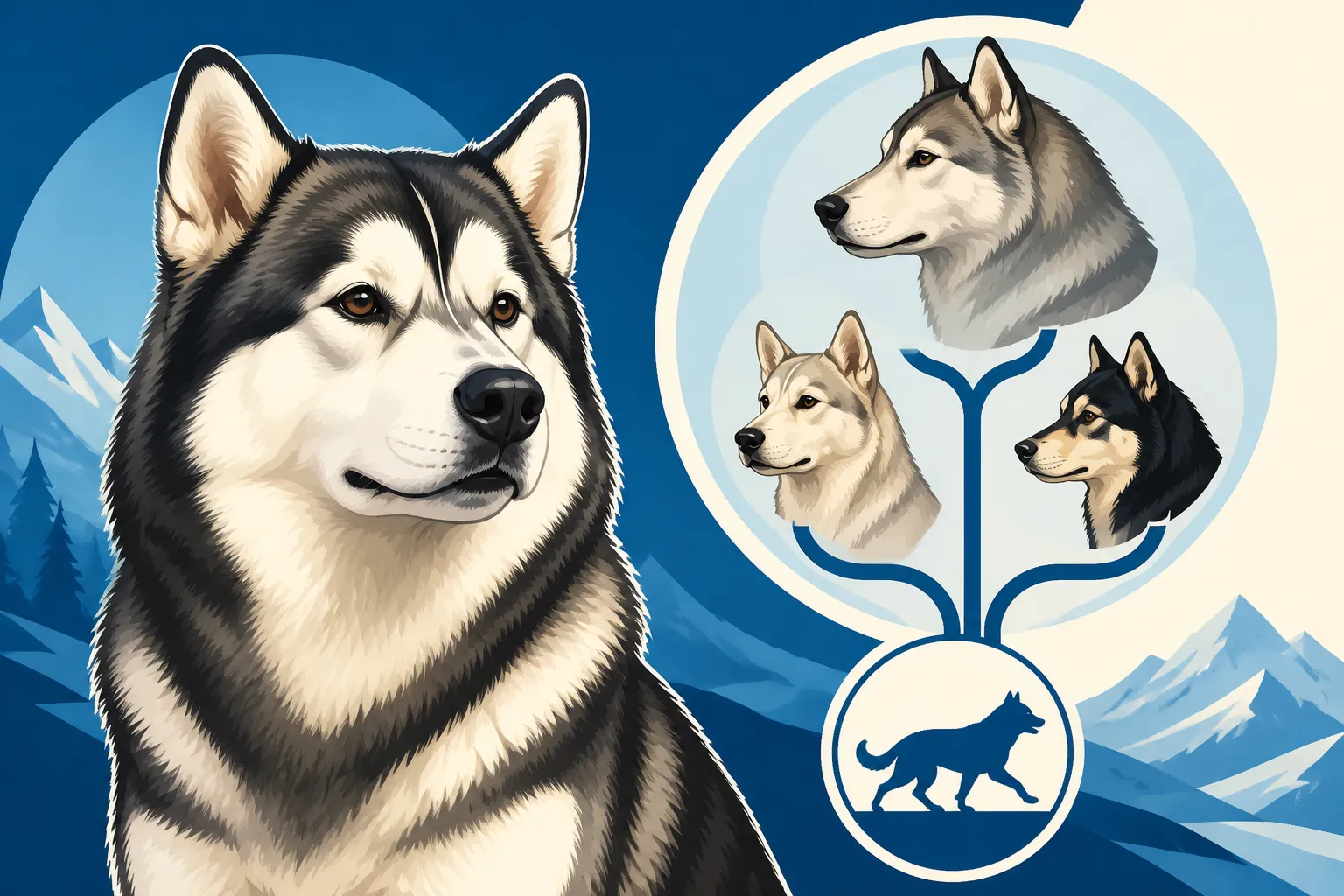
Whether Malamutes Descend From Siberian Dogs
It's a really common question, and one that trips up a lot of folks new to the magnificent Alaskan Malamute: did these powerful dogs descend directly from Siberian dogs? Given their shared Arctic heritage and purpose, it’s an understandable assumption, but the reality of the Malamute's lineage is far more rooted in the specific environment and culture of its Alaskan homeland. This guide will clarify the Malamute's true origins and disentangle it from its often-confused cousins.
The Deep Roots of Arctic Sled Dogs: A Shared, Ancient Ancestry
When we talk about the origins of any breed, especially one as ancient as the Alaskan Malamute, it's easy to get lost in the mists of time. Many Arctic breeds share a very deep, ancient ancestry, a lineage that traces back to early dog migrations with humans across vast, icy landscapes. But "shared ancestry" isn't the same as "direct descent."
Tracing Back to Ancient Migrations
Imagine a time thousands of years ago, when nomadic human populations moved across the Bering land bridge, bringing their canine companions with them. These dogs were invaluable, not just as hunters, but as helpers in hauling possessions and providing warmth. Over millennia, as these groups settled in different regions of the Arctic and Subarctic, their dogs adapted to the specific local conditions and the unique needs of their human partners. This long, slow process of natural selection and human-guided breeding for function is how the distinct Arctic "types" of dogs began to emerge. They all sprang from a common, very ancient pool of robust, cold-hardy dogs, but their paths diverged greatly once they settled into different geographical pockets. This deep history highlights that while there's a broad genetic connection across many northern breeds, it's more akin to distant cousins sharing a great-great-grandparent, rather than a direct parent-child relationship between modern breeds. Understanding this broad migration helps us appreciate Whether the Alaskan Malamute Is One of the Oldest Breeds and why their heritage runs so deep.
Distinguishing Between Ancestry and Direct Lineage
This is where the confusion often lies. When people ask if Malamutes descend from Siberian dogs, they often picture a direct line from, say, Siberian Huskies to Malamutes. That's not the case at all. Think of it more like this: both the Malamute and other Siberian breeds (like the Siberian Husky, for instance) trace their roots back to those very early Arctic dogs. They are all descendants of ancient working dogs who were indispensable to the survival of indigenous peoples in the unforgiving northern climates. However, once these dog populations were established in their respective regions – the Mahlemut people's territory in Alaska for the Malamute, and regions of Siberia for breeds like the Husky – they evolved independently. They were shaped by distinct environments, different human cultures, and specific working demands, leading to the unique breeds we recognize today. There wasn't a "Siberian dog breed" that then traveled to Alaska and became the Malamute. Instead, indigenous people in both regions developed their own distinct working dogs from a shared, ancient genetic foundation.
The Mahlemut and Their Dogs: A Distinct Development in Alaska
To truly understand the Alaskan Malamute's origin, we must turn our attention to the Mahlemut people of the Kotzebue Sound region in northwestern Alaska. Their very existence was intertwined with the capabilities of their dogs, and it was their needs that meticulously shaped the breed we cherish today.
The Mahlemut People and Their Unique Needs
The Mahlemut, an Inuit group, lived in an incredibly harsh environment where survival depended on efficient travel and the ability to move heavy loads over vast distances of snow and ice. They weren't looking for speed; they needed pure, unadulterated power and stamina. Their dogs were critical for hunting seals and bears, for hauling supplies and food from the ocean to inland camps, and for transporting entire households during seasonal migrations. The emphasis was always on a dog that could freight substantial weight steadily, day in and day out, without complaint or falter. This meant a dog with incredible bone strength, a deep chest for powerful lungs, a thick, insulating coat, and a calm, intelligent disposition that could work cooperatively with its human team. This direct, functional breeding by the Mahlemut people is the true story behind The Mahlemut of Kotzebue Sound Bred the Alaskan Malamute. They developed a dog perfectly suited for their unique lifestyle, a true partner in survival. It's fascinating to consider What the Mahlemut Used Their Malamutes For and how every physical trait served a vital purpose.
Local Adaptation and Selective Breeding
The development of the Alaskan Malamute was a prime example of a "landrace" evolving into a recognized breed through selective breeding driven by specific local requirements. The Mahlemut people were not formally "breeders" in the modern sense with stud books and registries. Instead, they carefully selected dogs that excelled at the job. The strongest, most enduring, most cooperative dogs were the ones allowed to reproduce, ensuring that these essential traits were passed down. Dogs that were too small, too fast but lacking endurance, or too aggressive to work in a team would not have been favored. This process occurred over countless generations within the relative isolation of the Mahlemut territory. The dogs adapted to the local climate, the available food sources, and the precise demands of their human companions. Therefore, the Malamute developed in situ in Alaska, shaped by the hands and needs of the Mahlemut people, responding to their unique environmental and cultural pressures. They were not imported as a pre-existing breed from Siberia but were a distinctly Alaskan creation.
Debunking the Siberian Connection: What the Genetics Say
While it's easy to lump all powerful, fluffy Arctic dogs together, modern genetic science and historical records clearly differentiate the Alaskan Malamute from breeds originating in Siberia. It's not just about appearances; it's about distinct evolutionary paths.
Genetic Studies and Divergent Paths
In recent decades, advancements in canine genetic research have allowed scientists to map the ancestry of dog breeds with incredible detail. These studies consistently show that while all northern breeds share ancient genetic markers pointing to very old wolf ancestors and early dog migrations, their specific lineages diverged thousands of years ago. The Alaskan Malamute's genetic signature links it closely to other Arctic breeds of North American origin, reinforcing its distinct development within Alaska. These studies don't show a direct, recent genetic influx from specific Siberian breeds. Instead, they support the idea of parallel evolution – similar environmental pressures (cold, need for hauling) leading to similar physical adaptations (thick coats, sturdy builds) in geographically separated dog populations, all stemming from ancient working dogs. This is part of the fascinating insight into Whether Malamute DNA Shows Ancient Arctic Ancestry. It tells a story of independence rather than direct inheritance from specific Siberian lines.
The Alaskan Malamute vs. the Siberian Husky: A Key Distinction
Perhaps the most common source of confusion regarding Malamute origins is their frequent comparison to the Siberian Husky. Both are incredible northern breeds, but they were developed for fundamentally different purposes, by different indigenous peoples, in different parts of the world.
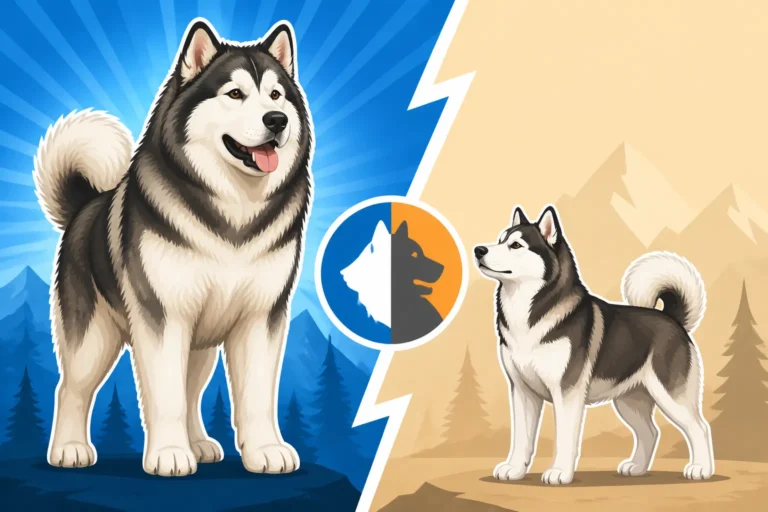
The Siberian Husky, as its name suggests, was developed by the Chukchi people of northeastern Siberia. Their dogs were bred for speed and endurance over long distances, often with lighter loads. This need for swift travel created a dog that is generally smaller, more agile, and faster-paced. In contrast, the Alaskan Malamute, developed by the Mahlemut in Alaska, was bred for freighting heavy loads slowly and steadily. This required immense power, a larger build, and an unflappable disposition. The differences are not just cosmetic; they reflect thousands of years of divergent breeding goals.
Here's a simple comparison to help illustrate these key differences:
| Feature | Alaskan Malamute | Siberian Husky |
|---|---|---|
| Primary Origin | Northwestern Alaska (Mahlemut people) | Northeastern Siberia (Chukchi people) |
| Primary Purpose | Heavy freighting, power, endurance | Light freighting, speed, endurance |
| General Size | Larger, heavier, more robust bone structure | Medium, lighter, more agile |
| Build | Powerful, sturdy, broad chest | Leaner, athletic, built for swift movement |
| Coat | Very dense, thick double coat | Dense double coat, often slightly less voluminous |
| Eye Color | Brown (blue eyes are a disqualifying fault) | Blue, brown, bi-colored, parti-colored (all acceptable) |
| Temperament | Dignified, powerful, independent, strong-willed | Energetic, mischievous, friendly, independent |
It's clear from this table that while they both belong to the Spitz family and are cherished sled dogs, they are distinct breeds with separate histories. Many people are genuinely surprised to learn Why Blue Eyes Disqualify an Alaskan Malamute because they associate them so strongly with the blue eyes often seen in Huskies. This difference alone speaks volumes about their separate breed standards and heritage. The very essence of Freight, Not Speed: What Separates a Malamute From a Racing Dog perfectly encapsulates the Malamute's unique purpose.
Understanding Breed Development in the Arctic Circle
The way breeds like the Alaskan Malamute came into being is a testament to the powerful influence of environment and human need on canine evolution. They weren't simply "found" but were carefully molded over centuries.
The Concept of Landraces and Modern Breeds
Before the advent of formal kennel clubs and breed standards in the last few hundred years, most working dog types across the globe existed as what we call "landraces." A landrace is a domesticated animal population that has adapted to a specific environment and human cultural practices through both natural and artificial selection, without strict human-controlled breeding programs or isolated gene pools. Essentially, dogs within a landrace share common characteristics because they perform similar jobs in similar environments, rather than because they descended from a handful of foundation dogs chosen by a breeder.
The Malamute was a classic example of an indigenous Arctic landrace. The Mahlemut people had functional needs, and the dogs that best met those needs thrived and passed on their traits. There was no single "founding pair" or strict pedigree; rather, a population of highly adapted dogs developed over generations. It was only later, when outsiders discovered these incredible dogs during the Alaskan Gold Rushes and subsequent Arctic expeditions, that efforts began to formalize them into the modern Alaskan Malamute breed we know today, with established pedigrees and breed standards. The original Alaskan dog types, including the Malamute's ancestors, were truly shaped by the forces of the wild and the demands of human survival in the far north. This explains How Long Malamute Type Dogs Have Been in Alaska, predating modern kennel club recognition by a significant margin.
The Importance of Geographic Isolation
The relative geographic isolation of the Mahlemut people in the remote Kotzebue Sound region played a critical role in the distinct development of their dogs. Without constant intermixing with dog populations from other areas, the Malamute's gene pool remained relatively pure, allowing their specific characteristics to become deeply ingrained. This isolation fostered a unique type of dog that was perfectly suited to the conditions and tasks within the Mahlemut territory.
While there might have been occasional contact and exchange, it wasn't enough to dilute the core traits that defined the Mahlemut dog. This natural geographic barrier acted as a powerful selective force, ensuring that the dogs were honed for their freighting tasks and robust survival in extreme cold. This concept of isolated development is crucial to understanding why the Alaskan Malamute is recognized as a breed distinct from those developed in Siberia or other parts of the world, even if all northern dogs share those ancient, ancient ties. The modern breed we know today, including the distinct The Kotzebue and M'Loot Lines Behind Every Modern Malamute, owes much to this historical isolation and focused breeding by the Mahlemut.
So, while the Alaskan Malamute certainly shares ancient common ancestry with other Arctic sled dogs, its specific lineage and breed development were proudly and uniquely Alaskan, sculpted by the Mahlemut people for their freighting needs, not directly descended from modern Siberian dog breeds.
Disclaimer
This article is for general informational purposes only and does not constitute professional advice. Laws, prices and regulations vary by location and change over time. Consult a qualified professional for guidance on your specific situation.