Whether a Giant Alaskan Malamute Is a Real Type
It's incredibly easy to get swept up in the allure of a "Giant Alaskan Malamute" when you see pictures or hear descriptions online. Many prospective owners find themselves confused, wondering if there's a distinct, super-sized version of this magnificent breed, often advertised with grand claims. This guide aims to clear up that confusion, diving deep into the official breed standards, the reality behind "giant" claims, and what it truly means for the health and well-being of these wonderful dogs.
Understanding the Alaskan Malamute Standard Size
When we talk about an Alaskan Malamute, we're not just talking about any big, fluffy dog from the Arctic. We're talking about a breed with a specific, well-documented history and a set of characteristics, including size, that were honed over centuries for a very particular job. The breed standard exists for a reason, defining the ideal Malamute.
The Official Breed Standard
The official breed standard for the Alaskan Malamute, as recognized by major kennel clubs like the American Kennel Club (AKC), outlines a specific size and weight range that is considered ideal for the breed's historical function. For males, the ideal height is usually around 25 inches at the shoulder, with an ideal weight of about 85 pounds. Females are typically a bit smaller, around 23 inches tall and 75 pounds. These aren't rigid maximums, but rather the preferred range where the dog performs its job best. This "ideal" size isn't just arbitrary; it reflects the physical build needed for endurance and freighting—pulling heavy loads over long distances in harsh conditions. A Malamute needed to be strong and hardy, but not so overwhelmingly large that it became inefficient or prone to injury.
Imagine the indigenous Mahlemut people of the Kotzebue Sound, for whom the Malamute was an indispensable partner. Their dogs were bred for sustenance, not for bragging rights about sheer size. They needed a dog that could work tirelessly, day in and day out, without breaking down. This historical context is vital to understanding why the standard is set as it is.
Why Size Matters in the Breed
The size of an Alaskan Malamute isn't just a number; it's intricately tied to its function and health. The breed was developed as a heavy-duty freighting dog, meaning it needed power and stamina over speed. An animal too small wouldn't have the muscle and bone structure for heavy loads, and one too large could struggle with efficiency, overheating, and maintaining sustained effort. The standard size is a balance, ensuring the dog has the robust physique to handle harsh Arctic environments and demanding work. Deviating too far from this ideal can impact their gait, their ability to regulate body temperature, and their overall structural integrity.
A Malamute's strength lies in its powerful, well-muscled body and deep chest, designed for pulling. If a dog is significantly oversized, its bone structure and joints might not be able to adequately support the extra mass, potentially leading to orthopedic issues down the line. It's about proportion and functional correctness, not just height or weight in isolation.
Variation Within the Standard
It's important to remember that even within the official breed standard, there's always a natural range of size and weight. Not every male Malamute will be exactly 25 inches and 85 pounds, nor every female exactly 23 inches and 75 pounds. Some will be a little taller or shorter, a little heavier or lighter, while still falling comfortably within the accepted standard and remaining functionally sound. These variations are perfectly normal. A male might be 26 inches and 90 pounds, for instance, and still be considered a well-built, standard Malamute.
What we're looking for is a dog that embodies the overall type and balance described in the standard, not just hitting a precise number on a scale. Think of it like people; we all vary in height and build, but most of us fall within a "normal" range. This natural variation is healthy and expected in any breed.
The Phenomenon of "Giant" or "Oversized" Malamutes
The term "Giant Alaskan Malamute" often sparks a lot of curiosity and sometimes, unfortunately, misleads prospective owners. It's a phrase that conjures images of majestic, wolf-like creatures of immense size, but the reality is a bit more nuanced and often less glamorous than the marketing suggests.
What People Mean by "Giant"
When someone refers to a "Giant Alaskan Malamute," they typically mean a dog significantly larger than the breed's official standard. This could be a male topping 100 or 120 pounds, or even more, and standing noticeably taller than 25 inches at the shoulder. The public perception often equates "bigger" with "better" or more impressive, especially for a breed already known for its impressive stature. However, this desire for extreme size can be a slippery slope away from responsible breeding and canine health. These dogs might be impressive to behold, but their sheer size often comes with a trade-off in terms of physical soundness and longevity.
It’s easy to be wowed by a massive Malamute, but it’s crucial to understand that this goes beyond the recognized ideal for the breed. While a large Malamute can certainly be a wonderful companion, the label "giant" typically implies a deviation from the established functional norm.
How Dogs Get to Be "Giant"
Dogs that are significantly larger than the breed standard can come about for a few reasons. Sometimes, it's simply a case of selective breeding where breeders, either intentionally or unintentionally, prioritize size over adherence to the full breed standard and functional soundness. They might breed the largest dogs in their litters together, hoping to produce even larger offspring. Other times, the "giant" label might be applied to a Malamute that has simply been overfed from puppyhood, leading to excessive weight gain that strains its developing frame. A diet rich in calories but poor in balanced nutrients, or simply too much food, can contribute to rapid, unhealthy growth.
Then there's the possibility of mixed breeding. Sometimes, a dog marketed as a "Giant Alaskan Malamute" might actually be a Malamute mixed with another larger breed, like a Great Pyrenees or a Mastiff type, to achieve that imposing size. Without proper documentation and transparency from a breeder, it can be difficult for a buyer to discern the true genetic makeup. This is why it's so important to research breeders thoroughly and understand the lineage of any puppy you consider.
Marketing "Giant Malamutes"
The use of terms like "Giant," "Mammoth," or "Colossal" Malamutes is often a marketing tactic, particularly by breeders who might be less concerned with upholding breed standards and more with appealing to a niche market. These terms aren't recognized by legitimate kennel clubs or breed associations, and they don't designate a distinct subtype of Alaskan Malamute. Instead, they often refer to dogs that fall outside the established size guidelines. For example, if you're looking for high-quality food for a larger dog, you might find specific large breed formulas on sites like Chewy that cater to their nutritional needs, regardless of whether they are officially "giant" or just on the larger side of the standard.
These breeders might emphasize the impressive stature of their dogs, sometimes glossing over potential health issues associated with excessive size. It's a way to differentiate their puppies in a crowded market, but it often comes at the expense of breed integrity and the long-term well-being of the dogs. A responsible breeder will always prioritize health, temperament, and adherence to the breed standard, rather than chasing extreme measurements.
Health Implications of Oversized Malamutes
While a larger-than-average Malamute might seem impressive, that extra size can often come with a heavy burden on their health. The breed standard exists not just for aesthetics, but because it represents the optimal functional and healthy size for the Malamute's anatomy. When a dog deviates significantly from this, the body can struggle to cope.
Joint and Skeletal Concerns
One of the most significant health concerns for oversized Malamutes is the strain on their musculoskeletal system. Carrying excessive weight, especially during their rapid growth phase as puppies and adolescents, puts immense pressure on their developing joints. This dramatically increases the risk and severity of conditions like hip dysplasia and elbow dysplasia. These conditions, where the joints don't form correctly, can lead to painful arthritis, lameness, and a reduced quality of life, sometimes requiring extensive and costly veterinary interventions, even surgery. You can learn more about Hip Dysplasia in an Alaskan Malamute for a deeper dive into this common issue.
The sheer mass of an oversized dog can also exacerbate other joint issues, causing premature wear and tear on cartilage and ligaments. Imagine trying to run a marathon while carrying an extra 50 pounds; your joints would suffer considerably. The same principle applies to our beloved Malamutes, whose bodies are not designed for extreme bulk.
Cardiovascular and Organ Stress
Beyond the obvious joint issues, carrying a significantly larger body also places an increased workload on an oversized Malamute's internal organs. The heart has to work harder to pump blood through a larger vascular system, and other organs like the lungs, kidneys, and liver also face greater demands. This added stress can potentially contribute to a higher risk of cardiovascular problems or organ dysfunction over time.
While not always immediately apparent, this internal strain can subtly undermine the dog's overall health and resilience. It's a hidden cost of excessive size that isn't always discussed when someone is admiring a "giant" puppy, but it's a very real concern for their long-term well-being. Keeping a dog at a healthy, appropriate weight, as recommended by a vet or the breed standard, is one of the best ways to support their internal systems.
Lifespan Considerations
It's a widely observed trend across dog breeds that larger dogs, on average, tend to have shorter lifespans than smaller breeds. This general rule holds true within a single breed when comparing standard-sized individuals to those that are significantly oversized. The increased strain on joints, the elevated risk of orthopedic issues, and the added workload on internal organs can all contribute to a reduced overall lifespan for a "Giant Alaskan Malamute." For typical Alaskan Malamutes, The Ten to Fourteen Years an Alaskan Malamute Lives is a common range, but an oversized dog might fall short of even that.
While we all want our dogs to live as long and healthy a life as possible, prioritizing extreme size over functional correctness can inadvertently shorten their time with us. A dog that is constantly battling joint pain or struggling with cardiovascular issues will naturally have a harder time reaching its full genetic potential for longevity.
Distinguishing "Giant" From Other Malamute Lines
To truly understand why the "Giant" Malamute isn't a recognized type, it helps to look at the historical foundation of the breed and how true Malamute lines developed. The original breeders were focused on function, not exaggerated size for show.
Kotzebue and M'Loot Lines
Every modern Alaskan Malamute traces its lineage back to two primary foundation lines: the Kotzebue and the M'Loot. These lines, while sharing common ancestry, had slight differences in appearance and build, largely due to their specific geographic locations and the preferences of their respective breeders. The Kotzebue line dogs were generally smaller and more compact, adhering closely to the ideal freighting dog described in the original standard. They were known for their uniformity and working prowess.
The M'Loot line, on the other hand, often produced dogs that were a bit larger and more varied in appearance. While still within the acceptable range of the breed standard, they tended to be on the higher end of the size spectrum. However, even the largest M'Loot dogs were not what would be considered "giant" in the sense of being disproportionately oversized. They were simply robust, powerful individuals that still maintained the functional integrity of the breed. Understanding The Kotzebue and M'Loot Lines Behind Every Modern Malamute helps clarify that even these historical lines didn't aim for extreme size.
The Impact of Crossbreeding
It's crucial to acknowledge that sometimes, what's marketed as a "Giant Alaskan Malamute" might actually be a mixed-breed dog. Breeders with less ethical intentions might cross a Malamute with another large breed, such as a Great Dane, Saint Bernard, or even a Great Pyrenees, to achieve an impressive size that they then market as a "special" or "rare" type of Malamute. These dogs may look superficially like Malamutes, but they are not purebred and often inherit a blend of characteristics, including potential health issues from both parent breeds.
This practice is misleading and undermines the integrity of the Alaskan Malamute breed. A true Malamute is a purebred dog, meticulously bred to a standard that ensures its health, temperament, and functional capabilities. If you're looking at a dog advertised as a "Giant Malamute" with unclear lineage or registration, it's wise to be very cautious and consider if it might be a crossbreed rather than a true Alaskan Malamute.
When a Malamute is Simply Large, But Still a Malamute
It's important to differentiate between an officially oversized or "giant" Malamute (which isn't a recognized type) and a Malamute that simply falls on the larger end of the acceptable breed standard. Some purebred Alaskan Malamutes, through natural genetic variation within responsible breeding programs, might be a couple of inches taller or ten to fifteen pounds heavier than the "ideal" measurements. These dogs are still well-proportioned, functionally sound, and recognized as Alaskan Malamutes.
The key distinction lies in proportion, health, and adherence to the overall breed type. A genuinely large, but still standard, Malamute will have good bone structure, balanced proportions, and the ability to move freely and powerfully, reflecting its working heritage. This is different from a dog whose size is so exaggerated that it compromises its health or functional ability, which is typically what the term "giant" implies outside of marketing hype.
Responsible Breeding and Purchasing Practices
When you're bringing an Alaskan Malamute into your home, whether it's your first dog or you're an experienced owner, the choices you make about where you get your puppy have profound implications for its health and your shared future. Responsible breeding is about so much more than just producing cute puppies; it's about preserving the breed and ensuring healthy, well-adjusted companions.
Prioritizing Health Over Size
A truly responsible breeder will always prioritize the health, temperament, and adherence to the breed standard over any fleeting trend like extreme size. This means conducting comprehensive health screenings on both parent dogs for conditions common in the breed, such as hip and elbow dysplasia, inherited eye diseases, and specific genetic conditions like inherited polyneuropathy or chondrodysplasia. For example, Zinc Is the Thread Running Through Three Malamute Diseases highlights the importance of understanding genetic health.
They're not trying to create the biggest dog possible; they're striving to produce dogs that are sound in mind and body, capable of living full, active lives. A breeder who focuses on "giant" size might be inadvertently—or intentionally—breeding dogs prone to debilitating health issues, simply to meet a perceived market demand for bigger pets. Always look for transparency regarding health clearances and genetic testing.
What to Ask a Breeder
When speaking with a potential breeder, don't be shy about asking direct, probing questions. Start by inquiring about the health clearances for both parents, not just a vague assurance that they're "healthy." Ask to see certifications from organizations like the Orthopedic Foundation for Animals (OFA) for hips and elbows, and canine eye certifications. Ask about genetic testing results for common Malamute conditions. Also, ask about their breeding philosophy – what qualities do they prioritize in their breeding program? Their answer should align with health, temperament, and adherence to the breed standard.
A reputable breeder will be happy to answer your questions thoroughly and transparently, and they'll likely have just as many questions for you, too. They care deeply about where their puppies go and want to ensure a good match. Be wary of any breeder who is evasive, pressures you into a sale, or refuses to provide documentation.
Avoiding Misleading Claims
If you encounter a breeder advertising "Giant," "King," or "Mammoth" Alaskan Malamutes, consider it a significant red flag. As discussed, these terms are not recognized by official breed clubs and are typically marketing ploys. A reputable breeder will talk about their dogs in terms of their adherence to the breed standard, their working ability, their temperament, and their health clearances, not their exaggerated size.
Be critical of websites or social media posts that emphasize only the immense size of their dogs, sometimes showing pictures that might be manipulated or feature dogs that are unhealthy due to their size. Focus on breeders who are members of the Alaskan Malamute Club of America (AMCA) or similar national breed clubs, as these organizations typically uphold rigorous ethical standards for breeding and require health testing.
Caring for a Larger-Than-Standard Malamute
If you've already brought home a Malamute that has grown to be larger than the official breed standard, or if you're considering adopting one, it’s important to understand that their care requirements might need a few adjustments. Their increased size can impact everything from their diet to their exercise regimen.
Nutritional Needs
Larger dogs naturally have higher caloric needs than their standard-sized counterparts. However, simply feeding more isn isn't always the answer, especially for a dog already prone to joint issues. It's crucial to provide a high-quality, balanced diet formulated for large breeds, especially during their growth phase. These foods often have a carefully calibrated calcium-to-phosphorus ratio to support slow and steady bone development, which is critical for preventing orthopedic problems. You might find excellent large-breed options on sites like Chewy, offering formulations specifically designed to support healthy growth and joint health.
Overfeeding can lead to rapid growth, which is detrimental to joint health, and can also lead to obesity, compounding the stress on their body. Consult with your veterinarian to determine the appropriate feeding schedule and portion sizes, monitoring their body condition closely. While Feeding a Working Malamute Against a Pet One highlights activity levels, an oversized Malamute will need its diet carefully managed to prevent excess weight.
Exercise and Lifestyle Adjustments
For an oversized Malamute, exercise is essential, but it needs to be managed carefully, especially when they are young and still growing. High-impact activities like aggressive jumping or long-distance running should be limited until their growth plates have closed, usually around 18-24 months of age. Even as adults, continuous high-impact activities might need to be moderated to protect their joints. Focus on activities that build muscle without excessive strain, such as swimming, walking on soft surfaces, or controlled leash walks.
Regular, moderate exercise helps maintain a healthy weight and strengthens the muscles supporting their joints. However, pushing an oversized dog too hard can exacerbate existing orthopedic issues. Always observe your dog for signs of discomfort or lameness, and adjust their activity levels accordingly. You can get a general idea of breed needs in How Much Exercise an Alaskan Malamute Needs, but remember that larger dogs may need specific adaptations.
Veterinary Care
Regular and proactive veterinary care is even more critical for a larger-than-standard Malamute. Consistent check-ups allow your vet to monitor their growth, assess their joint health, and catch any potential issues early. Discuss joint supplements (like glucosamine and chondroitin) with your vet, as these might be beneficial for supporting joint health, especially in a dog carrying more weight. Even if you get your dog food from Chewy, always defer to your vet's advice on supplements and diet changes.
Be vigilant for any signs of lameness, stiffness, or changes in gait, and report them to your vet promptly. Early intervention can make a significant difference in managing conditions like arthritis and improving your dog's quality of life. An oversized Malamute may simply be predisposed to more wear and tear, making preventive and ongoing veterinary attention paramount.
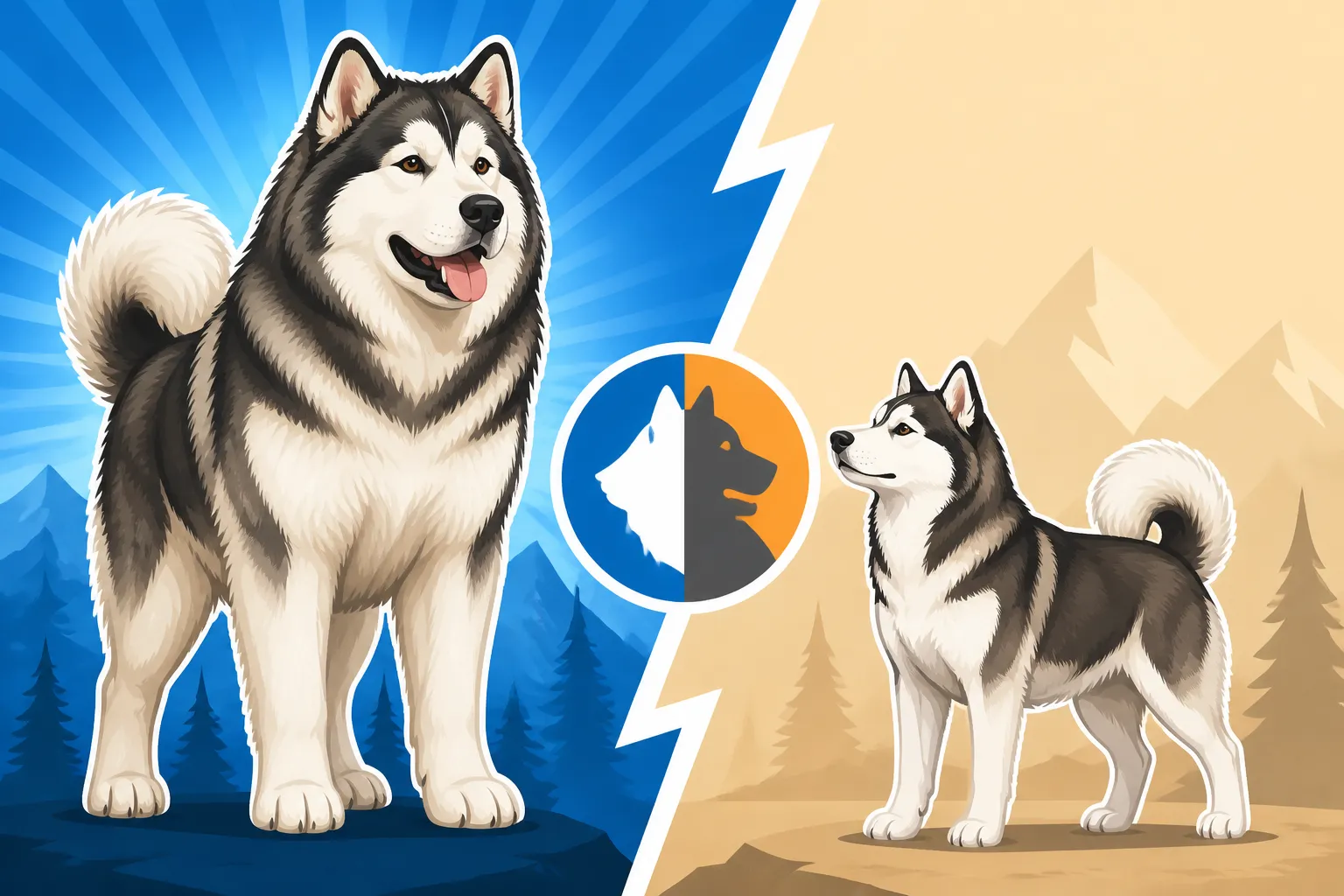
Comparison: Standard vs. "Giant" Alaskan Malamute Traits
Understanding the differences between a Malamute that fits the breed standard and one marketed as "giant" can clarify expectations and highlight potential issues.
| Trait | Standard Alaskan Malamute | "Giant" Alaskan Malamute (Often Oversized) |
|---|---|---|
| Height (Male) | Ideal 25 inches (range often 24-26 inches) | Often 27+ inches |
| Weight (Male) | Ideal 85 pounds (range often 80-95 pounds) | Often 100+ pounds, sometimes 120+ |
| Height (Female) | Ideal 23 inches (range often 22-24 inches) | Often 25+ inches |
| Weight (Female) | Ideal 75 pounds (range often 70-85 pounds) | Often 90+ pounds, sometimes 110+ |
| Function | Bred for endurance freighting, balanced power and stamina | Often bred for size over function, potential for reduced efficiency |
| Joint Health Risk | Moderate, managed with responsible breeding | High, increased stress on hips, elbows, and other joints |
| Lifespan | Typically 10-14 years | Potentially reduced, due to increased health burdens |
| Breed Recognition | Recognized by major kennel clubs (AKC, KC) | Not a recognized type or variant by official breed clubs |
| Temperament | Independent, intelligent, strong prey drive, affectionate | Can vary; sometimes more sedate due to physical limitations |
| Care Needs | Standard large breed care, regular exercise & mental stimulation | Modified exercise to protect joints, vigilant health monitoring |
Disclaimer
This article is for general informational purposes only and does not constitute professional advice. Laws, prices and regulations vary by location and change over time. Consult a qualified professional for guidance on your specific situation.