The Mahlemut of Kotzebue Sound Bred the Alaskan Malamute
When you welcome an Alaskan Malamute into your home, you're not just getting a dog; you're inviting a living piece of history, a creature whose very essence was meticulously crafted over millennia by the Mahlemut people of Alaska's Kotzebue Sound. Understanding their ancestral purpose and the environment that shaped them is absolutely crucial to truly appreciate and properly care for these magnificent animals today. This comprehensive guide will explore the profound connection between the Mahlemut and their dogs, delving into how this ancient culture bred a resilient, indispensable companion perfectly suited for the unforgiving Arctic.
The Mahlemut: Architects of an Arctic Icon
Imagine living in a world where survival hinged on every decision, every resource, and every living being around you. That was the reality for the Mahlemut people, and it was in this crucible of necessity that the Alaskan Malamute was forged. Their dogs were not merely pets; they were partners in the truest sense of the word, essential for daily life and long-term existence.
Who Were the Mahlemut of Kotzebue Sound?
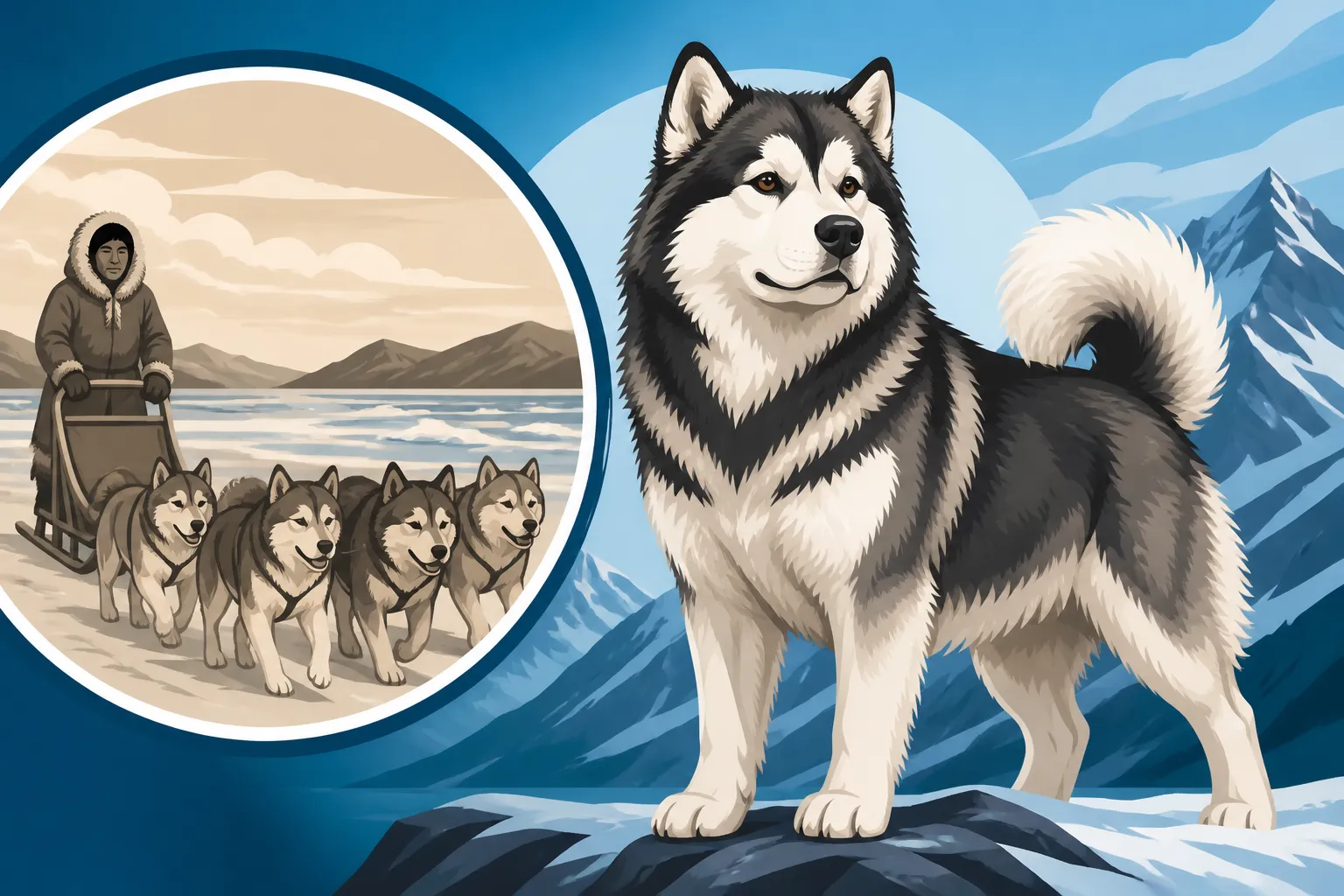
The Mahlemut were an ancient Inuit group who lived in the challenging, isolated region around Kotzebue Sound, nestled in the northwest corner of what we now call Alaska. Their existence was intrinsically linked to the land and its harsh rhythms, primarily focusing on hunting, fishing, and trapping. This wasn't a sedentary life; they were often semi-nomadic, moving their camps seasonally to follow game and access vital resources. Their very culture was built on ingenuity, resilience, and a profound respect for their environment. The winters were long, dark, and brutally cold, with temperatures often plummeting far below freezing, and the land blanketed in deep snow for months on end. Summers offered a brief reprieve, but the constant underlying current was one of survival against immense odds. You can learn more about their specific location in Where the Malamute's Kotzebue Sound Is.
In such a desolate yet resource-rich landscape, human life would have been almost impossible without the right tools and partners. The Mahlemut had an intimate knowledge of their surroundings, understanding the migratory patterns of caribou, the movements of seals and whales in the icy waters, and the availability of berries and fish. Their ability to thrive, and not just survive, in this extreme environment speaks volumes about their intelligence and adaptability. The dogs they lived and worked with were an extension of this ingenuity, carefully selected and bred to meet the specific demands of their life.
Their settlements, though temporary by modern standards, were places of community and shared purpose. Everyone, including the dogs, had a role. The bond between human and animal was not sentimental in the modern sense, but deeply practical and mutually beneficial, born out of shared hardship and collective effort. It was a relationship of absolute reliance, where the strength and capabilities of the dogs directly impacted the well-being and survival of the entire community.
The Genesis of a Specialized Working Dog
Given the extreme conditions and the Mahlemut's lifestyle, the idea of a "pet" dog, as we understand it today, simply didn't exist. Every animal had to earn its keep, and the dogs were no exception. What the Mahlemut needed was not a speedy racer or a delicate lapdog, but a powerhouse – a dog capable of tremendous endurance, unwavering strength, and an intelligent mind to navigate treacherous terrain. They weren't just looking for brute force; they needed a canine partner with an innate understanding of teamwork and a robust constitution.
The breeding choices made by the Mahlemut were driven by these very practical needs. They implicitly selected for dogs with physical attributes perfect for hauling heavy loads across snow and ice: a dense, weatherproof coat, broad paws for traction, powerful muscles, and a sturdy skeletal structure. Equally important were the temperamental traits: a willingness to work as part of a team, intelligence to make sensible decisions in difficult situations, and an independent spirit balanced with loyalty. These were not traits developed through formalized breeding programs and written pedigrees, but through generations of living, working, and surviving side-by-side with their canine companions.
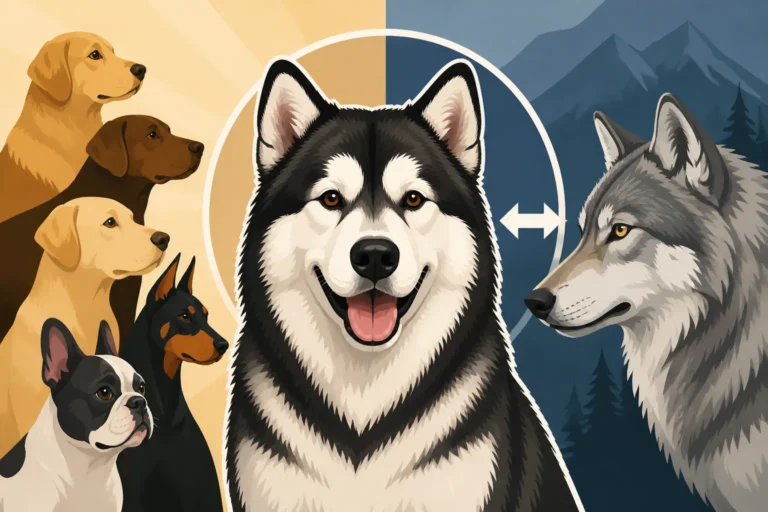
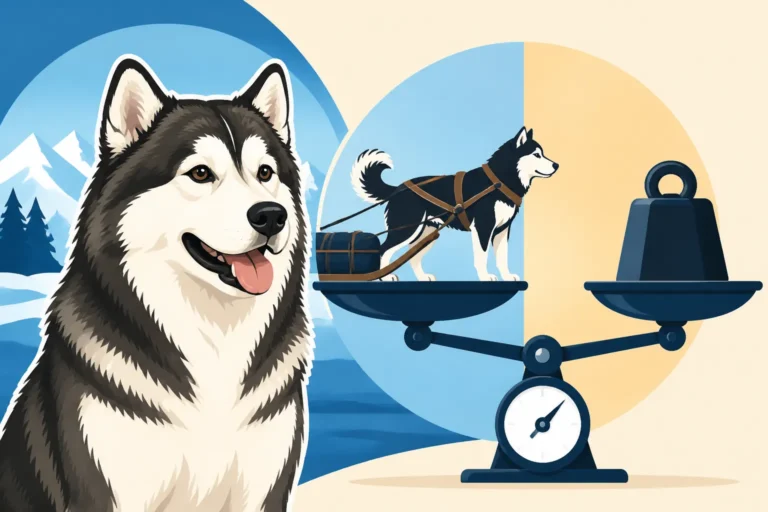
Contrast this with the origins of other Arctic breeds, like the Siberian Husky, which were bred for speed and efficiency over lighter loads. The Malamute's purpose was fundamentally different: it was about slow, steady, powerful freighting. This distinction is crucial and often misunderstood by new owners. The Mahlemut cultivated a dog designed to pull and keep pulling, day after day, regardless of the challenges. Freight, Not Speed: What Separates a Malamute From a Racing Dog perfectly encapsulates this fundamental difference.
A Life of Labor: The Malamute's Original Purpose
The Alaskan Malamute’s history is etched into its very being, a living testament to the demanding tasks it was bred to perform. Every muscle, every strand of its double coat, and every aspect of its personality points back to its original job as an indispensable working partner for the Mahlemut people.
Freighting and Hauling Essential Goods
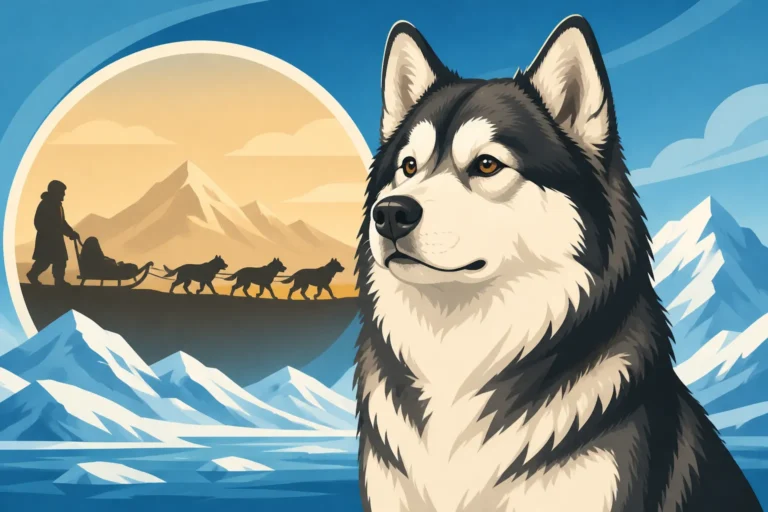
The primary, overarching purpose of the Alaskan Malamute was freighting. Imagine vast stretches of snow and ice, with no roads, no vehicles, and distances that would stagger modern sensibilities. The Mahlemut relied entirely on their dog teams to transport everything necessary for life. This included the bounty of a successful hunt—heavy caribou carcasses, seals, and other game—which often meant the difference between plenty and starvation for the community. Beyond food, they hauled firewood, crucial for warmth in their unforgiving climate, and supplies that might have been traded or acquired from other groups. When entire camps needed to relocate, the dogs were responsible for moving tents, tools, and even small children across miles of frozen wilderness.
This wasn't about speed; it was about sheer, unyielding power and stamina. A Mahlemut team would patiently and steadily pull incredibly heavy loads, often weighing hundreds of pounds, sometimes for days on end. The pace was deliberate, designed for maximum efficiency and endurance, ensuring the team could cover vast distances without exhaustion or injury. The dogs worked in harness, often as part of large, cohesive teams, their individual strengths combining for collective success. Their broad chests and powerful legs allowed them to break trail through deep snow, while their large, well-padded feet provided excellent traction on ice and packed snow. This tireless dedication to pulling is still deeply ingrained in the breed's DNA, even in modern pet Malamutes.
The importance of this role cannot be overstated. Without these dogs, the Mahlemut people would have been severely limited in their ability to hunt large game far from their settlements, transport necessary provisions, or move their homes when resources shifted. The Malamute was, quite simply, the engine that drove their existence, enabling a lifestyle that would otherwise have been impossible in the Arctic. Their work directly contributed to the survival and prosperity of the entire Mahlemut community.
Hunting Companionship and Utility
While freighting was paramount, the Malamute's utility extended beyond just pulling sleds. They were also invaluable companions and aids in hunting, though perhaps not in the way many might envision. Unlike some hunting breeds that retrieve or flush game, the Malamute's role was more about tracking, cornering, and providing early warnings. Their keen senses, especially their exceptional sense of smell and hearing, were crucial in locating game across the vast, often featureless landscape. A Malamute might track a caribou through a blizzard, or alert hunters to the presence of a polar bear or other predators. For example, they were known to assist in hunting large game like bears, helping to hold the animal at bay until hunters could safely approach. How a Malamute Helped Hunt a Bear goes into more detail on this formidable task.
They also played a role in subsistence hunting for marine mammals. Historical accounts suggest that some Malamute-type dogs could even detect the breathing holes of seals under the ice, a critical skill that directly contributed to the Mahlemut's food supply. How a Malamute Found Seals for the Mahlemut explores this fascinating aspect of their hunting prowess. This wasn't just about finding food; it was about maximizing hunting efficiency in an environment where every calorie counted.
Beyond hunting, Malamutes offered more subtle forms of utility. They were vigilant guardians of the camp, their watchful nature and imposing presence deterring unwanted wildlife. In the frigid Arctic nights, dogs would often sleep curled up with their human families, providing much-needed warmth – a living, breathing heater in an age before modern insulation. While certainly not their primary purpose, it's also a stark historical truth that in times of extreme famine, an animal as robust as a Malamute might have represented a last resort for survival, though this would have been a deeply sorrowful choice given their immense value as working partners.
Traits Forged in Ice: Physical and Temperamental Characteristics
The very blueprint of the Alaskan Malamute is a testament to natural selection guided by human need. Every aspect of their physical form and their deep-seated temperament was painstakingly, if unconsciously, refined to ensure survival and success in the Arctic.
Physical Adaptations for the Arctic
When you look at an Alaskan Malamute, you're observing a masterpiece of natural engineering, honed for survival in one of the planet's harshest environments. Their most iconic feature is undoubtedly their double coat. This isn't just fluffy fur; it's a highly functional, multi-layered insulation system. The dense, oily undercoat acts like a thermal blanket, trapping warm air close to the body and preventing heat loss. It's incredibly thick, almost woolly in texture, providing unparalleled warmth. Over this, a coarser, protective outer coat sheds snow and ice, preventing moisture from penetrating to the skin. This outer layer is surprisingly sleek and prevents ice balls from clinging, allowing the dog to move efficiently even in heavy snow. This remarkable coat is why you'll see a Malamute quite content to nap in a snowdrift, seemingly oblivious to the cold that would send other breeds shivering indoors.
Beneath that magnificent coat lies a powerful, robust physique. Malamutes possess a heavy bone structure, giving them a solid, grounded presence. Their broad chests house strong lungs, essential for sustained effort, and their muscular bodies are built for strength and endurance rather than speed. Their legs are strong and straight, providing stable propulsion, and their large, compact, well-padded feet with tough soles act like natural snowshoes, providing excellent grip and distributing weight evenly over soft snow. These physical traits were not coincidental; they were critical for navigating deep snow, pulling heavy loads, and withstanding prolonged exposure to sub-zero temperatures.
Another remarkable adaptation is their incredibly efficient metabolism. Unlike many breeds that require vast amounts of food for their size and activity level, Malamutes are surprisingly economical eaters. Generations of living in an environment where food resources could be scarce meant that only dogs that could extract maximum energy from minimal intake would survive and thrive. This efficient metabolism, while a blessing for the Mahlemut, can sometimes be a challenge for modern owners who might inadvertently overfeed their Malamute, leading to obesity. It’s a subtle yet profound characteristic that points directly to their history. The Efficient Metabolism That Surprises Every New Malamute Owner delves deeper into this unique aspect of their biology.
Temperament and Intelligence for Teamwork
Beyond their physical prowess, the Malamute's temperament is equally a product of their Mahlemut heritage. They were bred to work in teams, not just with other dogs, but intrinsically with humans. This fostered a strong sense of pack mentality and cooperation. Within their dog teams, there was a clear hierarchy, and they understood their place and how to function within a group. This translates today into a dog that often thrives in a family setting, viewing their humans as their pack, but also one that often does best with clear, consistent leadership from their owner. This innate desire to be part of a group makes them generally affectionate and loyal to their human companions.
However, their intelligence and independence are also hallmark traits, born from necessity. These weren't dogs that could afford to simply follow every command blindly. In the treacherous Arctic, a dog might need to make a judgment call – to avoid thin ice, or to find an alternative route if a path was impassable. This independence means they are incredibly smart and capable problem-solvers, but it also means they aren't always eager to comply with arbitrary commands if they don't see the point. They are not naturally biddable in the way a Border Collie might be; they need to be convinced and respected. This is why force-based training often backfires with a Malamute, leading to stubbornness rather than compliance.
Their strong natural instincts, while crucial for their original purpose, also manifest in ways that modern owners need to manage carefully. The intense prey drive, essential for hunting and survival, means that small, fast-moving animals are often viewed as game. A Malamute Was Bred to Hunt Bears and It Has Not Forgotten vividly illustrates the power of this instinct. Similarly, their instinct to dig, originally for shelter, for caching food, or for finding water under snow, is deeply ingrained. A Malamute's Digging Is Not a Problem, It Is the Breed confirms this undeniable characteristic, often leading to impressive crater-like excavations in suburban yards. These aren't "bad" behaviors; they are simply the authentic expression of a dog bred for a specific, demanding life.
The Symbiotic Relationship: Mahlemut and Malamute Daily Life
The bond between the Mahlemut people and their dogs was a profound partnership, built on mutual respect and absolute necessity. It was a relationship far deeper than mere ownership, shaping the daily lives of both species in ways that are hard for modern society to fully grasp.
Integrated into the Mahlemut Way of Life
For the Mahlemut, their dogs weren't separate entities kept in kennels far from human activity. They were intimately woven into the fabric of daily life, considered an integral part of the family or, more accurately, the working unit. Their survival was deeply intertwined; the Mahlemut needed the dogs for transportation and hunting, and the dogs relied on the Mahlemut for food, shelter, and direction. This constant proximity and shared purpose meant a level of integration that is rare in today's world. Dogs would often sleep with families, not only providing companionship but also crucial warmth in the frigid Arctic nights. This cohabitation fostered a strong, albeit rugged, sense of affection and loyalty.
The care provided to these dogs was practical and focused on their ability to perform. They were fed, often with portions of the very game they helped to acquire, and their injuries or ailments would have been tended to with whatever rudimentary knowledge and resources were available. There was a clear understanding that a healthy, capable dog meant a healthier, more secure family. This wasn't pampering, but rather an investment in their most valuable asset. The dogs, in turn, offered unwavering loyalty and tireless effort.
The respect given to these animals wasn't sentimental, but rather a profound appreciation for their strength, intelligence, and dedication. Their contributions were visible and vital every single day. They were acknowledged as intelligent beings capable of significant contributions, and this mutual understanding created a unique and powerful relationship. Every puppy born was a potential future worker, a guardian, and a partner, valued from the moment it drew breath.
Training and Communication in an Extreme World
Training a Malamute in the Mahlemut era was a far cry from modern obedience classes. It was a hands-on, instinct-driven process, focused on practical skills essential for survival and efficient work. Puppies would have grown up immersed in the working environment, learning by observation from their elders and through direct interaction with their human handlers. Commands would have been simple, clear, and consistent, often relating to direction, starting, stopping, and managing loads. Think of it as on-the-job training, where mistakes could have serious consequences, reinforcing the importance of learning quickly and effectively.
Communication was equally direct and effective. The Mahlemut learned to read their dogs' body language, their vocalizations, and even their subtle shifts in demeanor. Conversely, the dogs learned to interpret their handlers' voices, hand signals, and even the nuances of their sleds. These were not just verbal commands, but a holistic system of communication built on years of shared experience. The Malamute's characteristic "woo" and range of vocalizations, rather than barking, would have been an integral part of this communication, conveying excitement, warning, or even an invitation to play. What Sounds an Alaskan Malamute Makes explores the rich vocal repertoire of the breed.
The bond between handler and dog was built on this profound mutual reliance and understanding. It wasn't about enforcing dominance through harsh methods, but rather establishing clear leadership through consistency, trust, and shared purpose. A skilled Mahlemut dog driver understood the individual personalities of their dogs, knowing which dog excelled at leading, which was best suited for wheel position, and how to motivate each one. This deep, functional relationship allowed them to navigate the most challenging conditions together, a testament to the wisdom of the Mahlemut people and the incredible capabilities of their Alaskan Malamutes.
| Trait Category | Mahlemut Selection Priority (Survival) | Modern Pet Owner Priority (Companionship) |
|---|---|---|
| Physical | Extreme Cold Tolerance, Strength, Endurance, Efficient Metabolism, Heavy Bone, Dense Coat, Large Paws | Good Health, Manageable Shedding (though often a surprise!), Attractive Coat, Appropriate Size for Home, Healthy Appetite, Longevity |
| Temperament | Pack Compatibility, Independence, Intelligence, Willingness to Pull, Alertness, Resilient, Resourcefulness | Affectionate, Good with Children, Tolerant of Other Pets (can be challenging), Trainability, Moderate Energy, Low Barking (more "woo") |
| Skills | Freighting, Hunting Assistance, Navigation, Digging for Shelter/Food Cache, Warning of Predators, Trail Breaking | Basic Obedience, Leash Walking, House Training, Enjoying Walks/Hikes, Safe Recall (often a significant challenge), Adaptability to Domestic Life |
From Remote Village to Global Recognition
For centuries, the Alaskan Malamute lived a life primarily known only to the Mahlemut people in their remote Arctic homeland. It was an existence defined by work, survival, and an unbreakable bond with their human partners. However, as the world began to shrink, and external forces reached even the most isolated corners of the globe, the Malamute's destiny began to shift dramatically.
The Gold Rush and Early Exposure
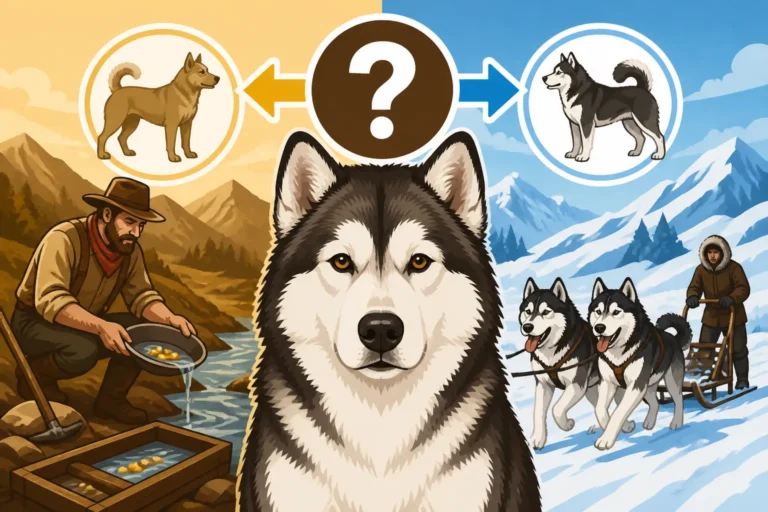
The late 19th and early 20th centuries brought an influx of outsiders to Alaska, lured by the promise of gold. Prospectors, traders, and adventurers from warmer climates suddenly found themselves in a brutally cold landscape, utterly unprepared for the challenges of Arctic travel. They quickly realized the indispensable value of the local sled dogs. The powerful, enduring dogs of the Mahlemut people stood out as exceptional freight haulers, far superior to many of the smaller, faster dogs brought from elsewhere. This sudden demand for sled dogs led to widespread crossbreeding. Outsiders, keen on speed or simply ignorant of the unique qualities of the Mahlemut dog, often bred them with other breeds, threatening to dilute the pure Malamute type that had been so carefully cultivated over generations. Whether the Gold Rush Nearly Ruined the Malamute explores this perilous period for the breed.
This era was a double-edged sword for the Malamute. On one hand, it brought them to the attention of the wider world, showcasing their incredible capabilities. On the other hand, it put their purity at significant risk. Without a formalized breed standard or dedicated preservation efforts, the distinct Mahlemut dog could have easily disappeared into a generic "sled dog" type. It was a critical juncture where the very traits that made them so valuable were in danger of being lost.
Thankfully, some individuals recognized the unique qualities of these dogs and began efforts to preserve them. These early enthusiasts and breeders understood that there was something special about the Mahlemut dogs – a specific combination of strength, endurance, and temperament that needed to be protected. They began to seek out the purest examples of the breed, often traveling to remote villages to find dogs that still carried the original Mahlemut characteristics. This marked the beginning of conscious efforts to establish and maintain the Alaskan Malamute as a distinct breed.
Expeditions to the Poles and AKC Recognition
The Malamute's reputation as an unparalleled freighting dog spread, and their services were soon sought for some of the most ambitious and dangerous expeditions of the early 20th century. Explorers like Admiral Richard E. Byrd, Robert Peary, and Roald Amundsen relied heavily on these powerful dogs to haul supplies and equipment across the vast, frozen expanses of the Arctic and Antarctic. These were not races for glory, but grueling journeys where reliable transportation was a matter of life and death. The Malamute's ability to pull heavy loads day after day, withstand extreme cold, and navigate treacherous terrain proved invaluable to the success of these pioneering polar expeditions. Peary, Amundsen and Byrd Took Malamutes to the Poles details their heroic contributions to exploration.
As their fame grew, so did the desire to formalize and preserve the breed. Dedicated individuals, often those who had witnessed firsthand the Malamute's incredible capabilities, began the work of establishing a breed standard and gaining official recognition. Key figures like Arthur Walden and Eva Seeley were instrumental in this process, collecting dogs that embodied the original Mahlemut type and working to create the foundational lines of the modern Alaskan Malamute, notably the Kotzebue and M'Loot lines. The Kotzebue and M'Loot Lines Behind Every Modern Malamute delves into the origins and significance of these two influential bloodlines.
In 1935, these efforts culminated in the official recognition of the Alaskan Malamute by the American Kennel Club (AKC). This was a landmark achievement, cementing the breed's status and providing a framework for its preservation. The Year the AKC Recognized the Alaskan Malamute marks this crucial moment in the breed's history. This recognition meant that breeders now had a standard to adhere to, helping to ensure that the unique physical and temperamental characteristics honed by the Mahlemut were maintained for future generations, even as the dogs transitioned from purely working animals in remote regions to companions and athletes in a wider world.
Honoring the Heritage: Modern Malamute Ownership
Bringing an Alaskan Malamute into your life today means taking on a rich legacy, a responsibility to understand and honor the millennia of selective breeding by the Mahlemut people. These dogs aren't just pets; they are living testaments to an extraordinary past, and their needs reflect that deep heritage.
The Responsibility of Owning a Mahlemut Descendant
When you choose an Alaskan Malamute, you're not just choosing a breed; you're choosing a history. The instincts that were vital for survival in the Arctic are still very much alive in your Malamute, even if they live in a comfortable suburban home. This means understanding their profound need for physical and mental stimulation. A bored Malamute is a destructive Malamute, and they require consistent, engaging exercise to channel their boundless energy and powerful working drive. A simple walk around the block often isn't enough to satisfy a dog bred to pull heavy loads for miles.
One of the most common challenges for modern owners is managing their instinctual behaviors. Their powerful prey drive, developed for hunting, means that cats, squirrels, or even small dogs can trigger a chase response that can be incredibly difficult, if not impossible, to curb. Safe containment is paramount. Their digging instinct, originally for shelter or caching food, can turn your manicured lawn into a moonscape. Fencing a Yard Against a Malamute That Was Bred to Dig offers insights into just how determined these dogs can be. Escaping is also a well-known Malamute trait, driven by their desire to explore and roam vast territories. A Malamute is often adept at climbing, digging under, or even figuring out latches on fences, requiring truly escape-proof containment.
Ongoing training and socialization are non-negotiable. While intelligent, their independence means they require patient, consistent, positive reinforcement methods. They thrive on clear leadership, not harsh dominance, and they are incredibly observant, learning patterns and exploiting inconsistencies. Socialization from a young age is crucial to help them navigate a world full of strangers, other dogs, and novel experiences, ensuring their powerful presence is channeled appropriately. Understanding these inherent traits isn't about seeing them as flaws, but as essential parts of their magnificent heritage, requiring dedicated management and respect from their owners.
Preserving Breed Health and Type
Responsible Malamute ownership also extends to supporting ethical breeding practices that aim to preserve the health and integrity of the breed. While the Mahlemut's selection was natural and practical, modern breeders must employ scientific tools to combat genetic conditions that can arise in any purebred line. This includes health testing for common issues such as hip and elbow dysplasia, inherited eye conditions, and certain neurological or endocrine disorders. Choosing a puppy from parents who have undergone these health clearances, verified by organizations like the Orthopedic Foundation for Animals (OFA) or through DNA testing, is a crucial step in ensuring the long-term health of your companion and contributing to the overall health of the breed. The Health Tests Both Alaskan Malamute Parents Should Have provides a more detailed look at these vital screenings.
Beyond health, preserving the breed's "type" means maintaining the physical and temperamental standards established to honor the original Mahlemut dogs. This means promoting the robust build, the dense double coat, the characteristic head shape, and the intelligent, dignified temperament that defines the Alaskan Malamute. These standards are not arbitrary; they are a direct reflection of the functional traits that made the breed so successful in its native environment. Supporting breeders who prioritize both health and adherence to the breed standard helps to ensure that the Mahlemut's legacy continues to thrive.
Furthermore, being a Malamute owner means being aware of their unique dietary needs. Their efficient metabolism, while a survival advantage in the Arctic, means they can easily become overweight on standard diets. Choosing a high-quality dog food appropriate for their activity level and ensuring proper portion control is vital. Some owners also choose to supplement with specific nutrients that support overall health, like omega fatty acids for coat and skin health, or joint supplements for their powerful frames. Reputable brands found at retailers like Chewy often offer breed-specific or large-breed formulas that cater to these needs, making it easier for owners to provide optimal nutrition. Regular veterinary check-ups are also crucial for catching any potential health issues early, allowing your Malamute to lead a long, healthy life.
The Enduring Spirit: A Call to Understanding
The Alaskan Malamute is more than just a large, beautiful dog; it is a profound connection to an ancient way of life, a living testament to human-animal partnership in the face of extreme adversity. To truly appreciate and successfully live with a Malamute, one must look beyond the fluffy exterior and embrace the deep-seated heritage that defines them.
Connecting Past Purpose to Present Needs
Understanding the Malamute's origins with the Mahlemut people is not merely a historical exercise; it is the absolute key to successful, fulfilling ownership today. It helps us realize that behaviors often perceived as "problems" – the digging, the independent streak, the vocalizations, the immense energy – are not flaws, but rather intrinsic parts of their identity, honed for survival. These dogs were literally bred to pull, to explore, and to make intelligent decisions in challenging environments. Therefore, a modern Malamute needs a "job," even if that job isn't hauling a sled full of caribou across the tundra.
Activities like weight pulling, competitive sledding (dryland mushing or snow mushing), bikejoring, canicross, or even simply long, challenging hikes with a backpack fulfill their innate drive to work and pull. Providing these outlets taps into their genetic programming, transforming potential destructive behaviors into constructive, enjoyable activities. Pulling Is the Only Job an Alaskan Malamute Really Wants emphasizes just how important this is for their well-being. Without such opportunities, their incredible energy and intelligence can manifest in ways that are frustrating for owners and unsatisfying for the dog. They thrive when they have a purpose, when their minds and bodies are engaged in meaningful activity that echoes their ancestral tasks.
While most Malamutes won't ever see the Arctic Circle, their core needs remain the same. They need to feel like part of a pack, to be physically and mentally challenged, and to have their intelligence respected. Owners who embrace this understanding often find themselves forming an incredibly deep and rewarding bond with their Malamute, appreciating them for the magnificent, ancient working dogs that they truly are. It’s about meeting them where they are, rather than trying to force them into a mold they were never designed for.
The Malamute as a Family Member
Despite their powerful working background and independent nature, Alaskan Malamutes are renowned for their affectionate and loyal personalities within their human families. They bond deeply with their "pack," often displaying a gentle and tolerant nature with children when properly socialized and supervised. They crave inclusion and companionship, and while they might not be constantly demanding attention like some breeds, they thrive on being an integral part of family life. Their quiet dignity and loving presence can enrich a household immeasurably, offering a unique blend of strength and devotion.
However, it is vital to acknowledge that a Malamute is not a dog for everyone. They require an experienced, committed owner who is prepared for the significant time, effort, and understanding required to manage a large, intelligent, and instinct-driven breed. This isn't a dog you can leave alone for long hours without consequence, nor one that will be content with minimal exercise. They need space, engagement, and consistent training. But for those who are willing to put in the work, the rewards are immense. The loyalty of an Alaskan Malamute, their playful spirit, and their quiet wisdom are unparalleled.
Prospective owners should thoroughly research the breed, speak with experienced Malamute owners and breeders, and be honest about their lifestyle and commitment levels. It’s a decision that impacts over a decade of your life, and the Malamute deserves an owner who understands and respects their incredible heritage. Finding appropriate gear, from strong harnesses for pulling to durable chew toys to keep them occupied, is often a journey in itself, and retailers like Chewy can be a great resource for finding the specialized equipment and nutritional support these magnificent dogs require. Embracing the Malamute means embracing a piece of history, a wild spirit, and a truly exceptional companion.
Disclaimer
This article is for general informational purposes only and does not constitute professional advice. Laws, prices and regulations vary by location and change over time. Consult a qualified professional for guidance on your specific situation.