Peary, Amundsen and Byrd Took Malamutes to the Poles
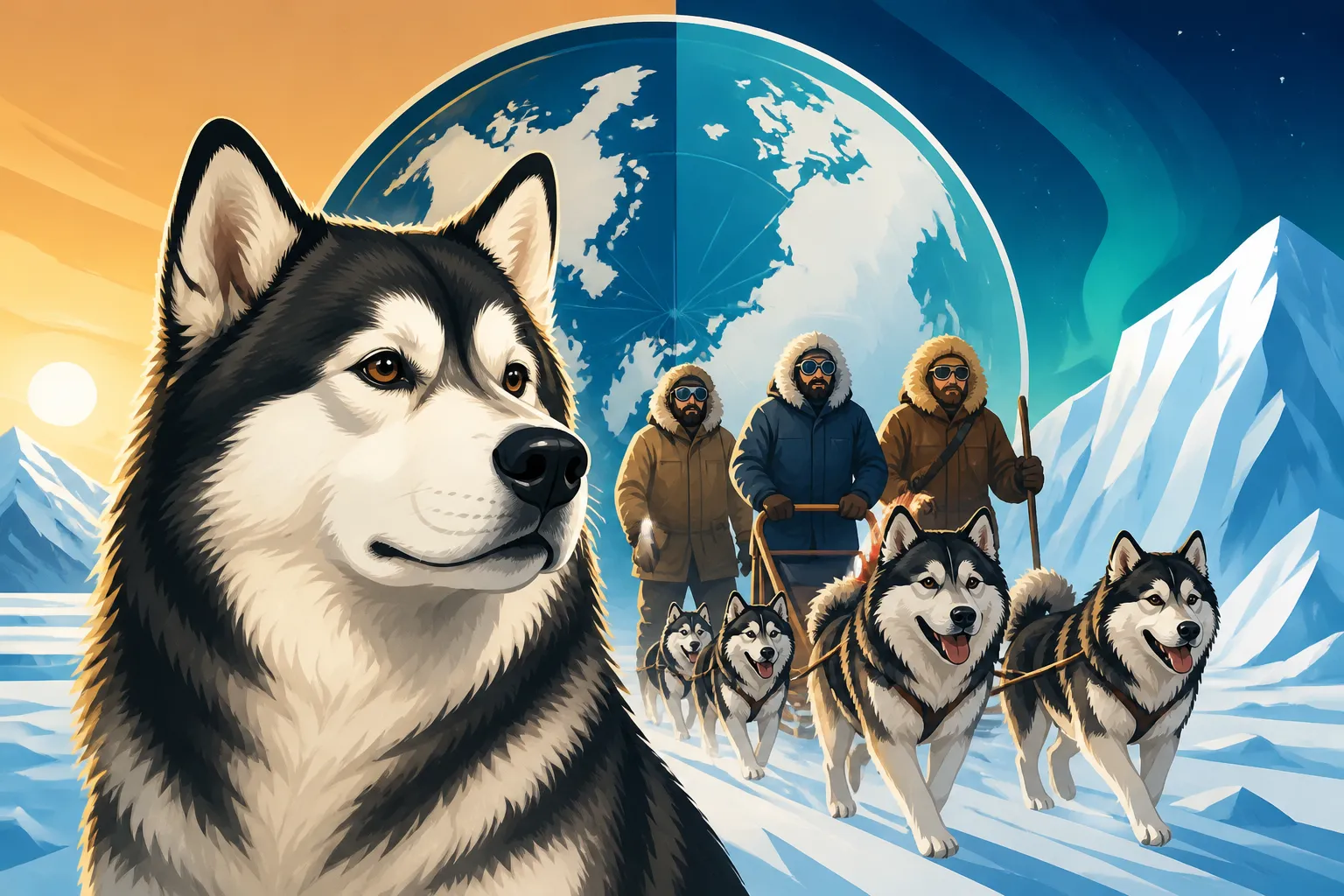
When you look at those grainy, sepia-toned photographs of intrepid explorers battling the elements in the frozen wilderness, it's easy to see the dogs as just a generic "sled dog" team. But for those of us who live and breathe Alaskan Malamutes, we know there's a much richer, more profound story behind those stoic, fur-clad heroes. This guide will take you on an epic journey back in time, revealing the incredible tales of how specific, powerful breeds, predominantly the magnificent Alaskan Malamute, became the true, paw-powered engines that drove some of humanity's most daring polar expeditions, focusing on the legendary figures of Peary, Amundsen, and Byrd.
The Call of the Poles: Why Sled Dogs Were Essential
Imagine a world before snowmobiles, before advanced aviation, before robust GPS systems. The poles were truly uncharted territory, hostile, vast, and utterly unforgiving. To venture into such an extreme environment meant relying on methods that had been perfected over centuries by indigenous peoples, and central to that survival was the sled dog. These weren't just animals; they were partners, navigators, and the very lifeblood of expeditionary travel.
The Unforgiving Arctic and Antarctic Environments
The polar regions present challenges that are almost incomprehensible to those of us living in temperate climates. We're talking about temperatures that plummet far below freezing for months on end, winds that can scour flesh from bone, and blizzards that reduce visibility to mere feet. The terrain itself is a treacherous mix of shifting ice floes, deep snowdrifts, hidden crevasses, and impassable pressure ridges. It's a landscape that tests the very limits of endurance for any living creature, human or animal.
Think about trying to navigate that in heavy, cumbersome clothing, pulling supplies that weigh hundreds of pounds. The sheer scale of the desolation means no natural shelter, no easy resupply points, and every mile gained feels like a hard-won battle. For an explorer, every decision, every piece of equipment, and every member of the team had to be chosen with the utmost care, knowing that failure could mean certain death. It's no wonder that only the toughest, most resilient beings could hope to survive, let alone thrive, in such a brutal setting.
The Unique Demands of Polar Travel
Polar travel wasn't just about getting from point A to point B; it was an exercise in extreme logistics. Expeditions needed to carry tons of food, fuel, scientific equipment, and survival gear. Humans, even strong ones, simply couldn't transport enough supplies over such distances and through such difficult terrain on their own. Skis helped, but they weren't enough. Horses, historically used in exploration, were utterly unsuitable for deep snow and extreme cold, requiring vast amounts of fodder that was impossible to carry.
This is where the sled dog shone. These animals possessed incredible strength, endurance, and an innate ability to work in a team. They could travel long distances daily, often for weeks on end, pulling heavy loads across frozen wastes. More than just brute force, they offered navigation skills that humans, even with compasses, often lacked in whiteout conditions. Their acute senses could sometimes detect thinning ice or hidden dangers before humans could. They were truly indispensable, an extension of the explorers' will to push forward into the unknown.
Why Dogs, Not Horses or Machines, Became the Go-To
It might seem obvious now, but in the early 20th century, the choice of traction animal was a critical, often debated, decision. Horses, magnificent as they are, were a disaster waiting to happen in the polar regions. Their large hooves broke through snow crusts, they sank in deep drifts, and their digestive systems were ill-suited for the harsh diet that could be transported. More importantly, they couldn't endure the extreme cold without constant, intensive care and shelter.
Early attempts with motorized vehicles were equally futile. Machines of that era were notoriously unreliable, prone to breaking down in extreme cold, and consumed vast quantities of fuel that had to be hauled. They were heavy, cumbersome, and often got stuck, requiring more human effort to move than they saved. Dogs, on the other hand, were biological machines perfectly adapted to their environment. They could eat a concentrated diet (often seals or other animals harvested along the way), their thick coats protected them, and their paws were built for snow and ice. They were self-repairing, self-reproducing (though not ideal on an expedition!), and, crucially, they weren't dependent on fragile mechanical parts. For these reasons, the humble, yet mighty, sled dog became the undisputed king of polar transport.
Peary's Arctic Expeditions: Forging a Path with Malamutes
Robert Peary is a name synonymous with Arctic exploration, specifically the quest for the North Pole. His expeditions, spanning decades, were grueling affairs that pushed both men and dogs to their absolute limits. It's in these frozen sagas that the incredible capabilities of the Alaskan Malamute truly came to the fore, often in ways that were brutally effective.
Robert Peary's North Pole Ambitions
Peary’s obsession with reaching the North Pole began in the late 19th century. He saw it as the ultimate geographic prize, a challenge that demanded unparalleled grit and resourcefulness. Unlike some of his contemporaries who favored grand, cumbersome expeditions, Peary learned to adopt the methods of the indigenous Inuit people. This meant traveling light, living off the land as much as possible, and, most critically, relying on dog teams. His strategy was a series of pushes: main support teams would lay depots, and then smaller, faster teams would make the final dash for the pole.
This multi-team approach was utterly dependent on the strength and endurance of his dogs. They weren't just pulling supplies; they were the engine of his entire logistical system. Without them, the sheer volume of gear and food required for such an ambitious undertaking would have been impossible to transport. It was a testament to his determination and the dogs' capabilities that he kept coming back, learning and refining his approach with each successive attempt.
The Role of Indigenous Knowledge and Dogs
Peary's success, or at least his ability to survive and return from his numerous Arctic ventures, was deeply rooted in his willingness to learn from the Inuit. He recognized that they had mastered life in the Arctic over millennia. Their methods of hunting, clothing, shelter, and crucially, dog handling, were far superior to any European techniques. Peary adopted their clothing, their igloo-building skills, and their preferred dog breeds. The Mahlemut of Kotzebue Sound Bred the Alaskan Malamute – and these were the kinds of dogs Peary employed. He understood that these dogs, often acquired directly from the Inuit, were bred for heavy freighting, not speed, which was exactly what was needed for his long, arduous journeys across the ice.
The Malamutes provided more than just pulling power. They were adept at navigating treacherous ice and snow, their thick coats offering insulation against the brutal cold. Peary's teams often consisted of 10-20 dogs per sled, capable of pulling immense weights. It wasn't about glamour; it was about sheer, unadulterated work, day in and day out. The indigenous handlers, who traveled with Peary, were invaluable in their ability to understand and communicate with these hardy animals, maximizing their effectiveness in an environment that tolerated no mistakes.
The Harsh Realities of Peary's Journeys
While Peary eventually claimed to have reached the North Pole in 1909, his expeditions were marked by extreme hardship and tragic losses, particularly among his dog teams. The dogs endured unimaginable conditions: frostbite, exhaustion, and starvation were constant threats. Supplies were finite, and the strategy sometimes involved cannibalizing weaker dogs to feed the stronger ones and the men – a grim reality of survival in the polar wastes. This practice, while horrifying to modern sensibilities, highlights the desperate measures taken to ensure the expedition's survival and its push towards the objective.
The demands placed on these dogs were extraordinary. They would pull for hours, sometimes through blinding blizzards, with minimal rest. Their paws were constantly at risk from sharp ice, and their bodies were pushed to the brink of collapse. Peary's accounts, while controversial, underscore the profound reliance on these animals, whose lives were sacrificed for the advancement of human exploration. It reminds us of the incredible resilience inherent in the Alaskan Malamute breed, a resilience born from centuries of demanding work.
Amundsen's Race to the South Pole: A Different Strategy, Similar Dog
Just a few years after Peary's North Pole claim, another epic race unfolded at the other end of the world: the dash to the South Pole between Roald Amundsen and Robert Falcon Scott. Amundsen, a master of Arctic survival, knew that dogs would be his secret weapon, and his use of them, while controversial, led to his decisive victory.
Roald Amundsen's Calculated Approach
Amundsen’s entire expedition was meticulously planned, drawing heavily on his extensive experience in Arctic travel and his study of Inuit methods. He understood that a successful polar journey wasn't about heroic suffering; it was about efficient logistics and maximum utilization of resources. He learned from the mistakes of others and embraced the dog team as the superior mode of transport for the Antarctic plateau. His strategy focused on speed and agility, planning his journey to arrive at the pole and return before the harshest conditions set in.
He purchased a large number of dogs, mostly Siberian Huskies and Greenland Dogs, which are closely related to the Alaskan Malamute in their working purpose and incredible endurance. His objective was not just to use them for hauling but to ensure they were a critical part of his entire food chain, providing sustenance for themselves and, if necessary, for the men. This calculated, almost ruthless, efficiency stood in stark contrast to the more traditional, often romanticized, British approach to exploration.
The Use of Dogs for Speed and Sustenance
Amundsen's use of dogs was arguably the most significant factor in his victory over Scott. He started with a large team, knowing that some dogs would eventually be culled to feed the others, and the men. This might sound horrific, but in the brutal calculus of polar survival, it was a practical decision designed to ensure the overall success of the expedition and the survival of the men. The dogs were essentially living provisions, turning perishable dog meat into fuel for the remaining, stronger dogs and the human team.
This "dog-eat-dog" strategy (quite literally) allowed Amundsen's team to carry less external food weight for the dogs, making their sleds lighter and faster. The dogs were worked incredibly hard, covering impressive distances daily. Freight, Not Speed: What Separates a Malamute From a Racing Dog – and Amundsen valued that powerful, steady pull, even if his dogs were slightly leaner than pure Malamutes. This efficiency in travel and resource management meant his team reached the South Pole first and returned safely, a feat that eluded Scott.
Controversies and Successes
Amundsen's expedition, while a triumph of planning and execution, was not without its controversies. His decision to cull dogs for food horrified some, particularly the British public, who viewed animals through a different lens. Scott, for example, relied on ponies, which proved utterly inadequate for the Antarctic conditions, and then on manhauling, a testament to human endurance but a recipe for slow, agonizing progress.
Despite the ethical debates that continue to this day, Amundsen’s success undeniably proved the superiority of the dog team for polar travel. His careful selection of robust, cold-hardy dogs, combined with a pragmatic, almost brutal, understanding of polar logistics, secured his place in history. The dogs, though their lives were often short and brutal, were integral to humanity's conquest of the South Pole, cementing the reputation of these northern breeds as unparalleled companions in extreme environments.
Byrd's Antarctic Ventures: Scientific Exploration and Canine Companions
While Peary and Amundsen pursued geographic firsts, Admiral Richard E. Byrd’s expeditions to Antarctica in the early to mid-20th century marked a shift towards scientific exploration. Even as technology advanced, dogs remained a crucial, if evolving, part of his operations, demonstrating their continued indispensability.
Richard E. Byrd's Scientific Missions
Admiral Byrd's Antarctic expeditions, beginning in the late 1920s and continuing for decades, were primarily focused on scientific research and mapping. He was exploring a continent, not just aiming for a single point. This meant extensive surveying, meteorological observations, and geological studies across vast, unexplored territories. His missions were larger, more complex, and often involved establishing long-term bases like "Little America."
For these extensive operations, dogs were still essential for moving men and equipment over distances too great for manhauling and too treacherous for early mechanized vehicles. While aircraft played an increasingly important role in reconnaissance and transport, they couldn't replace the dogs for sustained ground travel, especially in areas where planes couldn't land or where heavy loads needed to be shuttled over shorter distances. The dogs provided the reliable, flexible ground transportation that was critical for setting up scientific outposts and conducting field research.
Dogs in the Age of Mechanization
Byrd's expeditions spanned a period of rapid technological advancement. He experimented with tractors, snowmobiles, and aircraft to supplement his dog teams. Yet, even with these innovations, the dogs proved their worth repeatedly. Machines were temperamental in the extreme cold, required constant maintenance, and consumed precious fuel. A broken tractor meant hours, if not days, of repair, often in brutal conditions.
Dogs, however, were remarkably reliable. They adapted to different snow conditions, could navigate around crevasses, and didn't require fossil fuels. They might get tired, but they rarely "broke down" in the mechanical sense. This flexibility and dependability meant that even when other modes of transport failed, the dogs could still get the job done. They were the backup, the reliable workhorse, and often the primary means of transport for critical supplies and personnel to isolated scientific camps. It really showed that sometimes the old ways are truly the best, especially when you consider What an Alaskan Malamute Needs Every Day in terms of their physical and mental stimulation.
Maintaining Canine Health in Extreme Conditions
With longer missions and a scientific focus, the health and welfare of the dog teams became a more formalized concern. While the conditions were still incredibly harsh, there was a greater emphasis on veterinary care and nutritional planning. Feeding a Working Malamute Against a Pet One was a specialized science, ensuring the dogs received enough calories and nutrients to endure the extreme cold and demanding work. This often involved high-fat diets, sometimes supplemented with local resources like seal meat.
The dogs were housed in kennels or tethered outdoors, relying on their thick double coats to protect them from the elements. Regular checks for frostbite, paw injuries, and exhaustion were critical. Byrd’s expeditions, while still demanding immense sacrifice from the dogs, represented a step towards more humane practices than some earlier, more desperate, polar ventures. These dogs were seen as valuable assets, and their health was paramount to the expedition's success, highlighting the enduring respect for their capabilities.
The Challenges and Sacrifices of Polar Dogs
The romantic image of the sled dog hero often overshadows the brutal realities these animals faced. From the extreme cold to the relentless physical demands, their lives on polar expeditions were a testament to their incredible hardiness, but also a stark reminder of the immense sacrifices they made.
Extreme Cold and Nutritional Needs
While Malamutes are famously cold-hardy, even their impressive coats have limits. Temperatures plunging to -50°F or lower, combined with fierce winds, could lead to frostbite on ears, tails, and paws. Keeping warm required immense energy, and every calorie consumed was immediately put to use. The nutritional needs of a dog working in these conditions were astronomical. They needed high-fat, high-protein diets to fuel their internal furnaces and maintain their weight.
Imagine the struggle of keeping dozens of dogs fed in a desolate landscape. Food was heavy to carry, and sources were scarce. Expeditions often relied on dried meat, pemmican (a mixture of rendered fat and dried meat), or whatever local game could be caught, like seals or polar bears. The constant battle against starvation was real, for both men and dogs. Sometimes, a dog's life literally depended on whether another dog could be sacrificed. This desperate calculus of survival is a chilling reminder of how close to the edge these expeditions operated. It makes you really think about Whether a Malamute Needs More Fat in Winter even in a modern, comfortable home.
Brutal Terrain and Physical Demands
Beyond the cold, the terrain itself was a constant adversary. Dogs hauled heavy sleds across endless, featureless plains of snow, up and down formidable sastrugi (wind-sculpted snowdrifts), and over pressure ridges of jagged ice. Hidden crevasses were a constant threat, and dogs sometimes fell through, requiring harrowing rescues. The sheer physicality of the work was relentless. Day after day, week after week, they pulled, often through blinding blizzards and whiteout conditions.
Paw pads, despite their toughness, would crack, bleed, and suffer from frostbite. Muscles ached, and exhaustion was constant. The dogs were bred for this, yes, but even a Malamute has its limits. These journeys were marathons of endurance, pushing every fiber of their being. The ability to just keep going, mile after punishing mile, speaks volumes about the indomitable spirit and physical prowess bred into these animals over thousands of years. It’s why How Much Weight a Malamute Can Safely Pull is such a crucial consideration, even for modern enthusiasts.
Ethical Considerations and Hard Choices
The history of polar exploration with dogs is fraught with ethical complexities. The lives of these animals were often expendable in the pursuit of scientific discovery or geographical glory. The practice of culling weaker dogs to feed the stronger ones, while a stark reality of survival for some expeditions, is deeply disturbing to contemporary sensibilities. Explorers faced choices no one would ever want to make: sacrifice an animal to save a human life, or risk the entire expedition.
These practices reflect a different era, one where animal welfare was often secondary to human goals in extreme circumstances. However, it's also clear that many explorers deeply respected and relied on their canine companions. They understood that their own survival was intrinsically linked to the dogs' ability to perform. The stories serve as a powerful, albeit often difficult, reminder of the profound bond and the immense debt humanity owes to these animals for their silent, tireless contributions to our understanding of the world.
The Legacy: How Polar Exploration Shaped the Malamute's Image
The feats of polar dogs, particularly the powerful Arctic breeds, profoundly impacted the public's perception of these animals. Their heroic efforts under Peary, Amundsen, and Byrd cemented their place in history and played a significant role in the formal recognition and preservation of breeds like the Alaskan Malamute.
Immortalizing the Sled Dog Hero
News of the polar expeditions captivated the world. The tales of courageous men pushing the boundaries of human endurance were intertwined with the stories of their loyal, hardworking dog teams. These dogs became symbols of tenacity, loyalty, and strength. Photographs of teams pulling sleds across vast, white expanses burned into the collective imagination, solidifying the image of the "sled dog" as the ultimate Arctic hero.
This widespread admiration helped to elevate breeds like the Alaskan Malamute from regional working dogs to globally recognized symbols of rugged determination. Their role in these historic achievements wasn't just about utility; it was about inspiration. They were seen as embodiments of the spirit of exploration, pushing forward against impossible odds. This perception undoubtedly contributed to increased interest in the breed and its unique qualities.
The Malamute's Enduring Breed Standard
The heroic accounts from the poles reinforced the characteristics that were already valued in the Alaskan Malamute by the Mahlemut people: strength, endurance, a thick coat, and a powerful build designed for heavy freighting. When the breed was formally recognized, these working traits were central to its standard. The ability to pull for long distances with heavy loads, rather than sheer speed, became the hallmark of the breed, a direct reflection of its ancestral job and its performance in the polar regions.
The physical appearance of the Malamute—its robust bone structure, deep chest, and well-muscled body—is a living testament to its heritage as a freighting dog. The Kotzebue and M'Loot Lines Behind Every Modern Malamute trace back to these types of dogs that were perfectly suited for the relentless demands of Arctic and Antarctic travel. These expeditions didn't just showcase the Malamute; they validated the very essence of what the breed was and still is.
Global Recognition and Breed Preservation
The fame garnered from polar exploration undeniably contributed to the Alaskan Malamute's journey to global recognition. The Alaskan Malamute Is Alaska's State Dog, a testament to its cultural and historical significance. The breed went from being a specialized working dog in a remote part of the world to being recognized by major kennel clubs internationally. This attention helped spur efforts to preserve the breed and its unique genetic heritage.
Without the polar expeditions, the Malamute might have remained a lesser-known regional dog. Instead, its incredible performance on the world stage ensured its enduring legacy. Today, responsible breeders continue to focus on maintaining the health, temperament, and working abilities that made these dogs so invaluable to explorers, ensuring that the spirit of those original polar heroes lives on in every well-bred Malamute. It's a living history, running and pulling right in front of us.
Beyond the Ice: What These Stories Teach Us About Malamutes Today
While the days of grand polar expeditions are largely over, the lessons learned from those harrowing journeys remain incredibly relevant for modern Alaskan Malamute owners. These stories provide deep insights into the breed's innate drives, physical capabilities, and unique temperament, helping us understand and care for these magnificent dogs in contemporary settings.
The Malamute's Innate Drive to Pull
One of the most profound takeaways from the polar sagas is the Malamute's inherent, powerful drive to pull. These dogs were bred for thousands of years to haul heavy loads over vast distances, and that instinct is still very much alive in them today. You see it in the way a Malamute leans into its harness on a walk, the sheer joy in their eyes when given a job, or their powerful, steady gait.
Many modern owners struggle with leash manners, finding their Malamute constantly pulling. But instead of seeing this as a 'problem,' understanding their history helps us reframe it as an innate desire. It's not defiance; it's destiny. This is why Why a Pet Malamute Still Needs to Pull is so important. Engaging them in activities like recreational sledding, dog scootering, canicross, or even just hiking with a weighted backpack (after proper conditioning) can fulfill this deep-seated need, leading to a happier, more content Malamute. Neglecting this drive can lead to boredom and destructive behaviors, as a powerful engine left idle will often find its own (unwanted) work.
Understanding Their Resilience and Intelligence
The survival of Malamutes in the polar regions speaks volumes about their incredible resilience, both physically and mentally. They endured conditions that would break most other creatures, demonstrating a profound toughness and adaptability. This resilience translates to a robust physicality and a stoic temperament. They're not typically fragile dogs; they are built to withstand hardship.
Their intelligence, often manifesting as independent thinking rather than eager-to-please obedience, was also vital. In the unpredictable Arctic, dogs sometimes had to make decisions on their own—avoiding thin ice, finding shelter, or sensing danger. This independence can sometimes be mistaken for stubbornness by owners who expect instant compliance. Instead, it's a testament to their capacity for problem-solving and self-preservation. Understanding this helps us approach their training with respect for their intelligence and a focus on positive reinforcement, recognizing that brute force Why Force Fails on an Alaskan Malamute.
Honoring Their Heritage in Modern Ownership
Owning an Alaskan Malamute is more than just having a pet; it's a commitment to a living piece of history. These dogs carry the legacy of countless generations who helped shape human history, from indigenous migrations to grand polar conquests. Honoring this heritage means recognizing their needs as a working breed, even if their "work" today is recreational. This includes providing ample exercise, mental stimulation, and opportunities for them to use their natural instincts.
It also means respecting their formidable needs for enrichment and engagement. A Malamute isn't just a couch potato; they thrive when given purpose. This might be regular long walks, participation in dog sports, or simply being an active companion in outdoor adventures. Even daily tasks around the home can become purposeful if framed as a "job." Think about the importance of enrichment, and perhaps look into different types of durable toys on Chewy that can stand up to a Malamute’s powerful jaws and independent play style. By understanding and embracing their unique heritage, we don't just provide a home for a dog; we continue the proud legacy of a truly extraordinary breed.
A Comparative Look at Explorer's Dog Use
To truly appreciate the nuances of how Peary, Amundsen, and Byrd utilized their dog teams, it's helpful to see their approaches side-by-side. While all relied on the strength and endurance of Arctic dogs, their objectives and methods created distinct narratives.
| Explorer | Primary Objective | Dog Breeds Used (Type) | Key Dog Strategy | Controversies | Legacy of Dogs |
|---|---|---|---|---|---|
| Robert Peary | North Pole First | Indigenous Arctic dogs (Malamute-type) | Multi-team pushes, dog cannibalization for survival | High dog mortality, cannibalism, North Pole claim debated | Proved dog teams vital for Arctic exploration |
| Roald Amundsen | South Pole First | Siberian/Greenland Dogs (Malamute-type) | High initial numbers, planned culling for speed & sustenance | Planned culling viewed as brutal by some | Demonstrated superior efficiency of dogs for polar travel |
| Richard E. Byrd | Scientific/Mapping | Alaskan Malamutes, various sled dogs | Reliable ground transport, support for scientific outposts | Less controversial, focus on animal welfare grew over time | Dogs remained essential even with advancing technology |
Disclaimer
This article is for general informational purposes only and does not constitute professional advice. Laws, prices and regulations vary by location and change over time. Consult a qualified professional for guidance on your specific situation.