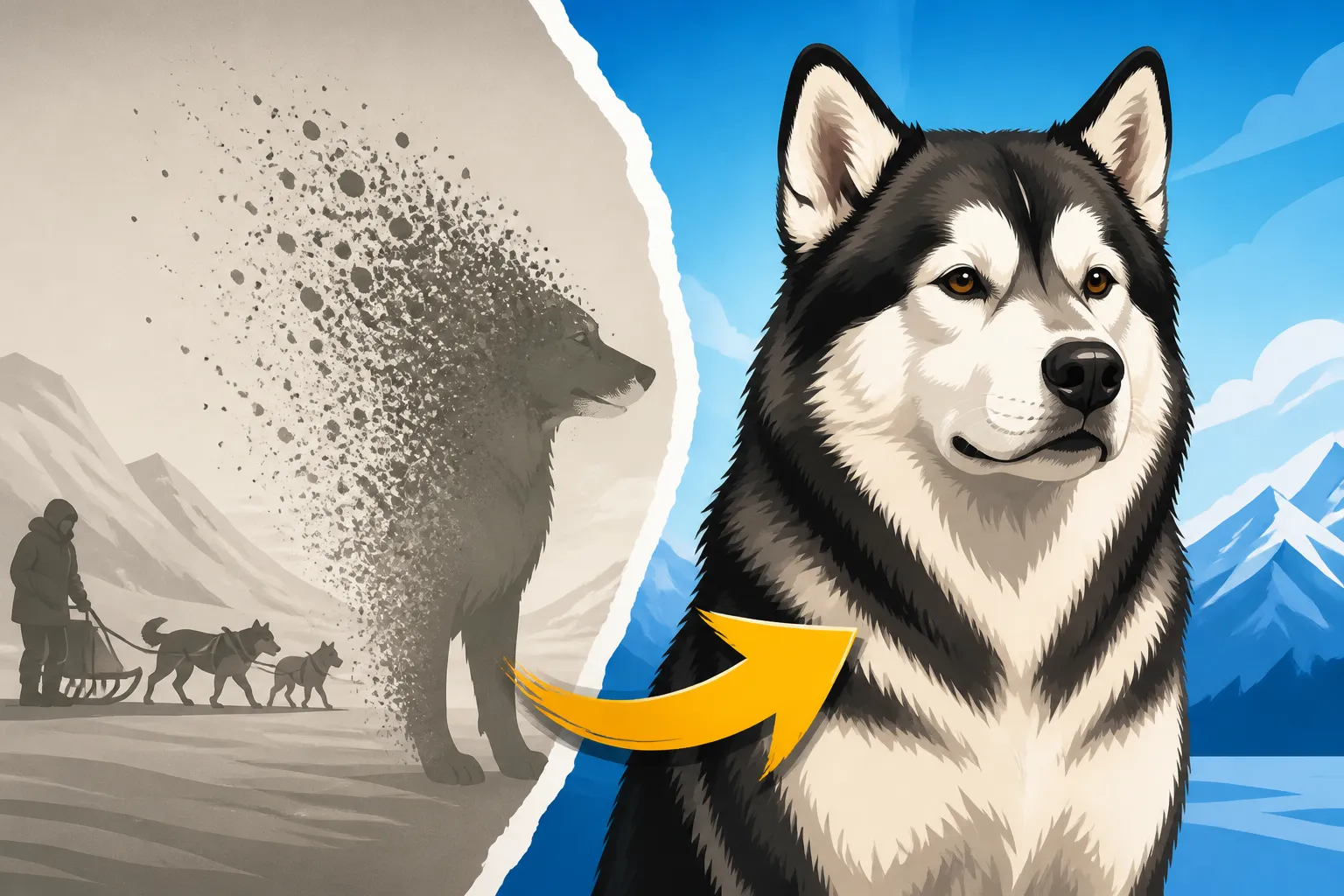
Whether the Malamute Nearly Disappeared by 1900
It’s a common worry for anyone who cherishes a purebred dog: did the breed nearly vanish at some point? For us Alaskan Malamute enthusiasts, the question of whether our beloved breed almost disappeared by the turn of the 20th century, especially around 1900, can be a nagging concern. It touches on the very survival of these magnificent animals and the dedication it took to keep them with us. This guide will delve deep into the historical challenges faced by the Alaskan Malamute, particularly during the turbulent era of the Klondike Gold Rush, and explore the determined efforts that prevented their genuine disappearance, even as their purity was seriously threatened.
The Klondike Gold Rush: A Flood of Change and Crossbreeding
Imagine a time when the world went mad for gold, and suddenly, the remote, icy expanses of Alaska and the Yukon were teeming with fortune-seekers. This was the Klondike Gold Rush, peaking in the late 1890s. While it brought economic upheaval and legendary stories, for the indigenous sled dogs of the region, including the ancestors of our Alaskan Malamutes, it brought an existential crisis. It wasn't quite a "disappearance" in the sense of the breed vanishing entirely, but rather a profound threat to its purity and distinct characteristics.
The Sudden Demand for Sled Dogs
Before the Gold Rush, the Mahlemut people of the Kotzebue Sound region had selectively bred their dogs for centuries. These were powerful, heavy-boned animals, ideally suited for pulling heavy loads over long distances at a steady pace—think freight, not speed. They were their lifeline, essential for hunting, trapping, and transport across vast, challenging terrains. There wasn't an endless supply of them; breeding was intentional and geared toward specific working traits.
Then came the Gold Rush. Thousands upon thousands of prospectors, often ill-prepared and desperate, flooded into the North. They quickly realized that without sled dogs, their chances of survival, let alone striking it rich, were slim to none. This created an astronomical, instant demand for any dog that could pull a sled. Suddenly, dogs that had been valued for their freighting ability were just "sled dogs," needed for a rapid, often brutal, journey to the gold fields. This intense pressure led to a scramble for animals, and quality often took a backseat to sheer availability and immediate utility.
The Influx of "New Blood" and Mixed Breeds
With prospectors pouring in from all corners of the globe, they brought their own dogs with them. Everything from collies and St. Bernards to hounds and other mixed breeds made their way north. These dogs, while perhaps hardy in their own right, were not the carefully cultivated working dogs of the Arctic. The sheer volume of these new arrivals meant that widespread crossbreeding became rampant.
The goal for many prospectors was speed, or simply to get any dog that could get them from point A to point B. The subtle distinctions of a purebred Malamute, with its powerful build and incredible endurance, were often overlooked in favor of creating a "faster" dog or simply ensuring enough animals to form a team. This indiscriminate breeding wasn't about enhancing the Malamute but about creating a new, often diluted, type of sled dog that combined various traits. Imagine trying to find an authentic Malamute puppy today amidst a sea of mixed-breed "husky-types" advertised on a generic pet marketplace, that's what many experienced then, but without the convenience of modern pet supplies from places like Chewy to even sustain them. The original Malamute characteristics were being blended out, piece by piece, generation by generation, almost accidentally.
The Threat of Dilution, Not Extinction
So, did the Malamute disappear? Not quite. The Mahlemut people continued to live in their traditional areas, and their dogs, while perhaps seeing some minor external influences, largely remained true to type in those isolated communities. The threat wasn't that every single Malamute perished, but that the distinct, pure lines that had evolved over centuries would be irrevocably diluted into a generic "Alaskan Sled Dog" type, indistinguishable from the multitude of crosses.
It's similar to how a unique dialect might not disappear entirely, but its specific nuances might fade as more people start speaking a more generalized language. The Malamute's physical characteristics, its specific temperament, and its unparalleled freighting capabilities were all at risk of being lost in this genetic free-for-all. The breed was still present, but its very essence was being blurred. This period highlights the critical difference between a breed becoming extinct and a breed losing its defining characteristics to the point where it's no longer recognizable as its original self. The Gold Rush Nearly Ruined the Malamute delves deeper into this precise challenge.
Why the Alaskan Malamute's Unique Traits Were Imperiled
The Klondike Gold Rush wasn't just a historical event; it was a crucible for the Alaskan Malamute breed. The unique qualities that made these dogs perfect for their original purpose were precisely what made them vulnerable when the priorities of the human population shifted dramatically. Understanding these imperiled traits helps us appreciate the depth of the threat.
The Focus on Speed Over Freight
The Mahlemut people, who meticulously bred these dogs, sought strength, stamina, and an unwavering ability to pull heavy loads day in and day out. Their dogs were built like powerful tanks, designed for endurance, not for bursts of speed. A Malamute's gait is a steady, powerful trot that conserves energy over long hauls. This is why Freight, Not Speed: What Separates a Malamute From a Racing Dog is such an important distinction.
However, many prospectors, particularly those involved in the earliest forms of competitive dog racing that sprung up during the Gold Rush, wanted speed. They weren't moving tons of supplies; they were often racing for bragging rights or small sums of money. For them, a lighter, faster dog, often achieved by crossbreeding with Greyhounds, Salukis, or other swift breeds, was more desirable. This meant that the pure Malamute, with its slower, more methodical pace, was seen by some as "less efficient" for the new demands. The pressure to introduce speed into the bloodlines was immense, directly threatening the very build and movement that defined the Malamute.
Loss of Distinctive Physical and Temperamental Traits
Beyond just speed, the random crossbreeding during the Gold Rush chipped away at the Malamute's distinctive physical appearance and its intrinsic temperament. A purebred Malamute has a specific skull shape, ear set, tail carriage (often a "plume" carried over the back), and a unique double coat designed for extreme cold. Their eyes must be brown, and Why Blue Eyes Disqualify an Alaskan Malamute explains why certain traits are considered fundamental to the breed standard. These were slowly disappearing in the jumble of mixed litters.
Moreover, the Malamute's temperament—its independence, intelligence, strong pack drive, and often challenging but deeply loyal nature—was also at risk. What the Mahlemut Used Their Malamutes For paints a picture of a dog deeply integrated into a specific human society and culture, a partner in survival. When dogs were simply commodities, bred carelessly, these nuanced behavioral traits could easily be lost, resulting in dogs that were perhaps more tractable or less independent, but also less truly Malamute. The unique "woo" sounds they make, their distinct personality, their guarding instincts (or lack thereof), all these were products of generations of selective breeding by the Mahlemut and were now vulnerable.
The Localized Nature of the Mahlemut Dog
Another factor contributing to the perceived "disappearance" was the Malamute's historically localized nature. These dogs were primarily found in the Alaskan Arctic, particularly around the Kotzebue Sound region, which is why Where the Malamute's Kotzebue Sound Is is a vital piece of their history. They were not widely dispersed across the globe, or even across the entire continent, prior to the Gold Rush. This meant that the existing gene pool, while robust within its specific context, was relatively small and geographically concentrated.
When the Gold Rush hit, bringing in a massive influx of external dogs, this concentrated gene pool was highly susceptible to dilution. There wasn't a vast, widespread population of pure Malamutes elsewhere that could absorb and dilute the effects of crossbreeding. The impact was felt acutely in the regions where the prospectors congregated. It was like a pristine, specialized ecosystem suddenly being flooded with invasive species, threatening the native flora and fauna. The sheer scale of the disruption to this localized breed population made the threat of dilution particularly potent.
| Characteristic | Pre-Gold Rush Malamute (Mahlemut Dog) | Gold Rush Era Sled Dog (Mixed) |
|---|---|---|
| Primary Purpose | Heavy freighting, endurance, survival | Variable; speed, general transport, racing |
| Build | Heavy-boned, powerful, deep chest, robust | Lighter, often lankier, more varied |
| Speed | Steady trot, high endurance, moderate pace | Often faster, less endurance, sprint-oriented |
| Temperament | Independent, intelligent, strong pack drive, loyal | More varied, sometimes more tractable or erratic |
| Coat & Appearance | Dense double coat, specific markings, brown eyes | Highly variable, many colors, blue eyes possible |
| Genetic Purity | High, localized, ancient lineage | Mixed, diluted, various breeds combined |
| Availability | Limited to indigenous communities | Abundant, but often crossbred |
The Dedicated Efforts to Preserve the True Malamute
Thankfully, the story of the Alaskan Malamute doesn't end with its dilution. Like many historical narratives of survival, dedicated individuals recognized the unique value of the true Mahlemut dog and committed themselves to its preservation. These efforts, though challenging, were ultimately successful in safeguarding the breed for future generations.
Key Figures in Breed Reconstruction
The task of saving the Malamute from the brink of genetic anonymity fell largely to a few passionate individuals in the early 20th century. While the Gold Rush was raging, the idea of "purebred" dogs as we understand it today was still developing in the North. However, some dog fanciers and working dog enthusiasts started to notice the erosion of the distinct Malamute type.
One of the most prominent figures was Arthur Walden, a New England sled dog enthusiast who recognized the exceptional qualities of the pure Northern dogs. He brought a team of Malamutes, known as the "Chinook" dogs, to the Antarctic expeditions of Admiral Byrd. His efforts helped to popularize the breed and, crucially, maintained a relatively pure line away from the direct influence of the Gold Rush's crossbreeding.
Another pivotal figure was Eva B. Seeley. She received some of Walden's dogs and began a rigorous breeding program at her Chinook Kennels in New Hampshire. Seeley’s meticulous record-keeping and dedication to the original type were instrumental. She sought out genuine Malamutes from Alaska, working to reconstruct and solidify the breed standard. Her efforts, along with those of others like Paul Voelker (who established the M'Loot line), formed the foundation for the two primary lines that exist today: the Kotzebue and the M'Loot. The Kotzebue and M'Loot Lines Behind Every Modern Malamute explains how these foundational lines shaped the modern breed. These individuals weren't just breeding dogs; they were saving a piece of living history, ensuring that the working heritage of the Mahlemut people would continue.
Establishing the Breed Standard and Registration
The efforts of these early breeders culminated in the formal recognition of the Alaskan Malamute. Establishing a breed standard was crucial because it provided a blueprint for what a "true" Malamute should look like and how it should behave. This written standard helped guide breeders in selecting appropriate dogs for breeding, moving away from the indiscriminate mixing of the Gold Rush era. It defined characteristics like size, coat type, color, head shape, and temperament, ensuring that future generations would conform to the traditional Mahlemut dog.
The American Kennel Club (AKC) recognized the Alaskan Malamute in 1935, a monumental step. This recognition provided a formal framework for registration, pedigree tracking, and organized breed clubs. It meant that purebred Malamutes could be officially documented, preventing fraudulent claims and providing a clear lineage for future breeders and owners. This rigorous approach, compared to the free-for-all of the early 1900s, meant that the breed's integrity was now protected by established institutions and dedicated enthusiasts. This also meant that breeders had to maintain careful records, a practice that continues today, contrasting sharply with the chaotic practices of the past when finding any sled dog was paramount. Today, when you order supplies for your Malamute from Chewy, you're interacting with a world where breed standards and documented pedigrees are the norm, a far cry from a century ago.
The Legacy of Preservation Today
The painstaking work of these preservationists means that the Alaskan Malamute, far from disappearing, is now a well-established and beloved breed around the world. Every modern Malamute today, whether destined for the show ring, the sled trail, or a loving family home, traces its lineage back to these dedicated efforts. How the Malamute Was Rebuilt After the Gold Rush details the fascinating journey of this recovery.
While questions might still arise about genetic diversity, as explored in Whether the Malamute Gene Pool Is Narrow, the breed's survival as a distinct entity is a testament to those who valued its unique heritage over temporary fads. The breed continues to thrive, with responsible breeders striving to maintain health, temperament, and adherence to the standard. This historical period serves as a powerful reminder of the importance of responsible breeding practices and the dedication required to protect a breed's integrity against the pressures of changing times.
Understanding the Malamute's Resilience Through History
The story of the Alaskan Malamute at the turn of the 20th century isn't just a historical footnote; it's a testament to the breed's inherent resilience and the unwavering commitment of its human admirers. Far from disappearing, the Malamute, though certainly altered by the chaos of the Gold Rush, bounced back and continues to thrive.
How the Breed Survived and Flourished
The reason the Malamute didn't truly disappear, despite the severe dilution, lies in a few key factors. Firstly, the original Mahlemut dogs, thanks to centuries of natural selection and indigenous breeding, were incredibly robust and resilient. They were simply too well-adapted to their environment and too invaluable to the native peoples to vanish entirely. Pockets of these pure dogs remained in the more remote areas, untouched by the immediate frenzy of the gold fields. These isolated groups served as vital genetic reservoirs.
Secondly, the dedication of figures like Eva Seeley and Arthur Walden, mentioned earlier, was paramount. They actively sought out the purest remaining specimens and established structured breeding programs with the explicit goal of preserving the original type. This intentional, scientific approach countered the haphazard crossbreeding that threatened the breed. Without these deliberate efforts, the Malamute might have indeed faded into obscurity, or at least into a generic Northern sled dog. Their recognition as The Alaskan Malamute Is Alaska's State Dog solidified their cultural and historical significance, further safeguarding their future.
Lastly, the breed’s inherent purpose and appeal couldn’t be entirely erased. There was still a need for a powerful freighting dog, and the Malamute excelled at this like no other. As the initial madness of the Gold Rush subsided, the value of the true Malamute for serious working purposes became clear again. Their calm demeanor, immense strength, and endurance made them indispensable for tasks that required genuine hauling power, rather than just speed.
Learning from the Past for Modern Breeding Practices
The challenges faced by the Alaskan Malamute around 1900 offer invaluable lessons for modern breeders and owners. This period underscores the critical importance of preserving genetic purity and adhering to a breed standard. It's a stark reminder that without careful, responsible breeding, even a robust and ancient breed can be significantly altered or diluted in a relatively short period.
For anyone considering bringing a Malamute into their home, this history emphasizes the importance of researching reputable breeders who prioritize health, temperament, and adherence to the established breed standard. Responsible breeders today leverage tools like DNA testing and extensive health clearances to ensure they are contributing to the breed's health and longevity, a concept that would have been unimaginable to a Gold Rush prospector simply needing a dog that could pull. Many breeders proudly share their dogs' pedigrees and health clearances, information that helps maintain the integrity of the breed that was so hard-won in the early 20th century.
It also highlights the dynamic interplay between human needs and animal welfare. When dogs become mere tools or commodities, their specific needs and genetic heritage can suffer. The Malamute's survival is a testament to the fact that when passion, knowledge, and ethical breeding practices prevail, even the most formidable historical pressures can be overcome. Understanding this history gives us a deeper appreciation for the magnificent animals we share our lives with today and reinforces our role as stewards of this incredible breed. We rely on companies like Chewy for easy access to the best nutrition and care products, reflecting a modern dedication to their well-being that was not available during those tumultuous times. Whether Every Malamute Traces to Kotzebue or M'Loot and Whether Breeders Still Distinguish the Two Malamute Lines further elaborate on the lasting impact of these historical efforts.
Disclaimer
This article is for general informational purposes only and does not constitute professional advice. Laws, prices and regulations vary by location and change over time. Consult a qualified professional for guidance on your specific situation.