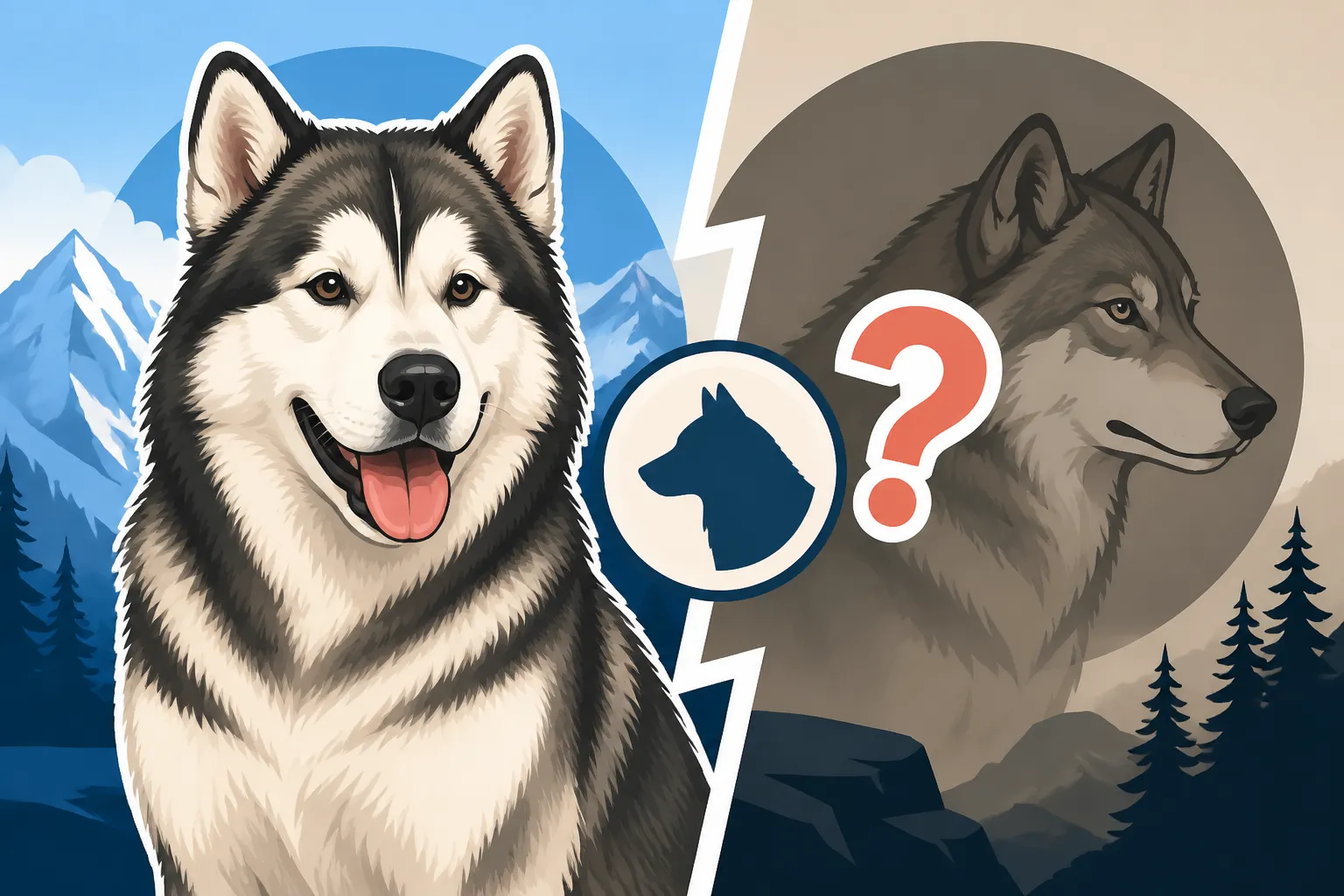
Whether an Alaskan Malamute Can Be Registered as a Wolfdog
An Alaskan Malamute cannot be registered as a wolfdog simply because it looks wolf-like, has a wolf somewhere in its ancestry, or receives a particular result from a DNA test. Breed registration, genetic ancestry, and legal classification are different things. This guide explains what each means, what paperwork can establish, and what to check before buying or registering a dog.
Can an Alaskan Malamute be registered as a wolfdog
Breed registration records a dog’s breed and pedigree
A breed registry records dogs according to its own rules, which commonly require documented parentage and a qualifying pedigree. An Alaskan Malamute registered as a Malamute is recorded within that breed framework; the paperwork does not make the dog a wolfdog, nor does a wolf-like face or coat change its registration category.
A dog’s papers are useful only for the purpose they were issued for. A kennel-club registration may document a dog’s breed lineage, while a breeder’s certificate, sales contract, or privately issued pedigree may have a different meaning. Before relying on any document, find out who issued it, what records support it, and whether the organization is relevant to the question you are trying to answer.
If someone advertises a “registered wolfdog” that is described as an Alaskan Malamute, ask what the word registered means in that specific claim. It might refer to a private database, a breeder’s own records, or a registry for a particular type of animal. It does not automatically mean the dog has recognized wolf ancestry or is legally classified as a wolfdog.
Wolf-like appearance is not wolfdog status
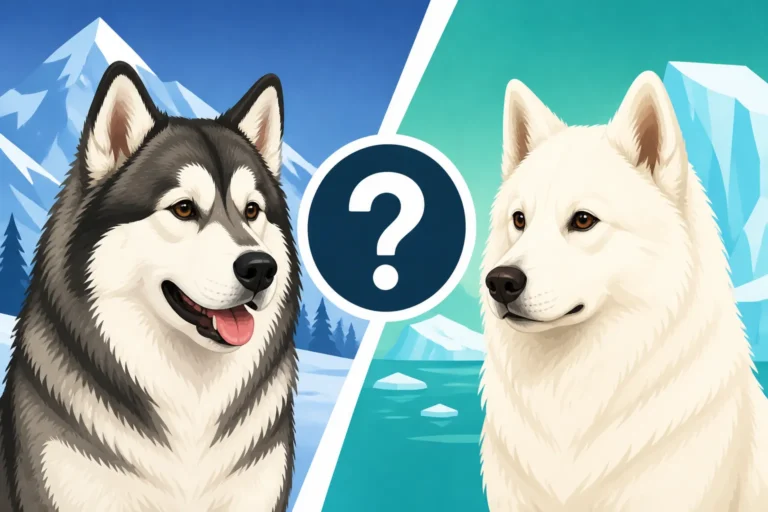
Malamutes have a powerful build, dense coat, upright ears, and wolf-like features. Those traits reflect the breed’s appearance and history; they are not proof that an individual dog is a wolf hybrid. A purebred Malamute can look strikingly wild and still be a domestic dog with Malamute pedigree.
The reverse is true, too: a dog described as a wolfdog may not look especially wolf-like. Appearance alone cannot confirm or rule out ancestry. Claims about a specific dog should be checked against reliable records and interpreted in light of the limits of any genetic testing.
For more on why people confuse these categories, see Whether the Malamute Is Confused With a Wolfdog and Whether a Malamute Is Part Wolf. The key distinction is simple: a breed label, an ancestry claim, and a legal classification are not interchangeable.
What different papers and tests can tell you
Registration papers show a record, not a legal ruling
A recognized breed registry’s paperwork can help document a dog’s recorded breed and pedigree, provided the registration is genuine and the details match the dog. It does not decide whether local law treats an animal as a domestic dog, a wolf hybrid, or another category. Nor does a registration certificate guarantee that every detail in a breeder’s description has been independently verified.
If you are buying a puppy, ask to see the paperwork for both parents and check that the names and identifying details are consistent across the documents. Ask whether the puppy itself can be registered, what conditions apply, and whether the seller is using “registered” to describe a kennel-club record or something else. A vague answer is a good reason to pause and get clarification in writing.
A seller’s phrase such as “wolf lineage,” “wolf content,” or “wolfdog papers” needs more explanation than a standard breed name. Ask who made the ancestry claim, what evidence supports it, and what the document actually certifies. If the seller cannot explain the issuing organization or the basis for the claim, treat the wording as an assertion—not proof.
DNA tests do not register a dog
Consumer DNA tests may estimate breed ancestry or report genetic markers, but a test result is not a pedigree certificate and does not register a dog with a kennel club. It also does not, by itself, settle how an animal is classified under local law. If you are comparing a consumer test you found through a retailer such as Chewy, check what the test says it can establish and what it specifically cannot establish.
A test can be tempting when a dog has an uncertain background, especially for a rescue with no reliable history. Still, breed estimates are not the same as a documented family tree. Results should be read as genetic information from that test’s method, not as a legal determination or an automatic change to the dog’s registration.
If you see a kit through Chewy or another retailer, look for the testing company’s own explanation of its methods, limitations, and reporting language. Keep the report with adoption or veterinary records if it is useful to you, but do not present it as proof of registry eligibility unless the registry itself says it accepts that type of evidence. A retailer listing is not the same as a registry decision.
| Document or evidence | What it may help establish | What it does not establish by itself |
|---|---|---|
| Breed registry certificate | A dog’s recorded breed and pedigree under that registry’s rules | Wolf ancestry or legal wolfdog status |
| Breeder pedigree or certificate | The breeder’s account of the dog’s lineage | Independent verification unless the records can be checked |
| Consumer DNA report | Genetic ancestry estimates or markers reported by the testing company | Kennel-club registration or legal classification |
| Adoption or veterinary records | Identity, care history, and information known to previous owners | A complete pedigree or confirmed ancestry |
| Local permit or agency record | Compliance with a particular local requirement, if applicable | Breed pedigree or acceptance by a kennel-club registry |
How local laws can affect a wolfdog claim
Legal definitions vary by location
The words wolfdog and wolf hybrid may be defined differently by different authorities. Rules can vary by country, state or province, county, and municipality. Depending on the location and the animal’s documented history, requirements could involve ownership restrictions, permits, enclosure standards, reporting, or other conditions. A Malamute’s breed papers do not automatically answer those legal questions.
Do not rely on a social media post, a seller’s assurance, or a rule from a neighboring town. Check with the relevant local animal-control office or other authority that handles animal regulations where the dog will live. If you are moving, traveling, or adopting across jurisdictional lines, check the rules in each place that applies rather than assuming one set of documents will be accepted everywhere.
This is especially important if a seller is using the label “wolfdog” to make the animal sound rare or desirable. The label may have consequences for housing, insurance, transport, or local compliance, even when the animal is described as mostly or entirely domestic dog. Get the relevant authority’s answer before committing to a purchase or making plans based on the claim.
Ask what the authority needs before you act
When contacting an agency, describe the dog accurately and ask what records it uses to assess the animal. You may need to explain whether the dog has a Malamute pedigree, whether anyone has claimed wolf ancestry, and whether any genetic report exists. Avoid framing a consumer DNA result as a legal conclusion; ask the authority how it treats that kind of evidence.
Keep copies of breeder documents, transfer or adoption records, veterinary records, and any relevant test reports. If the dog’s status is disputed, written guidance from the responsible authority is more useful than informal advice from an online group. A qualified local attorney may also help if the classification affects ownership rights or a dispute with a seller.
For a dog that is clearly being sold as a cross or hybrid, read Whether a Malamute Wolf Cross Is Legal alongside the rules in the place where the dog will live. The article Whether Wolf Content Shows in a Malamute DNA Test can also help separate genetic-test language from the stronger claim that an individual animal has confirmed wolf ancestry.
What to do if a seller calls a Malamute a wolfdog
Verify the claim before paying a deposit
Ask the seller to define exactly what they mean by “wolfdog.” Are they claiming the dog is a purebred Malamute with a wolf-like appearance, a Malamute cross, or an animal with documented wolf ancestry? Those are different claims and should come with different kinds of evidence.
Request copies of the documents before you pay a deposit. Confirm the name of the registry or testing organization, and contact that organization directly if the paperwork’s meaning is unclear. Ask whether the puppy’s parents are registered and whether the puppy can be registered under the claimed category. If the seller says the dog has wolf ancestry, ask for the source and documentation rather than relying on a dramatic description or a photograph.
Be cautious if the seller promises that a DNA test will “register” the dog as a wolfdog, says papers are unavailable until after payment, or uses a private certificate as if it were a universal legal license. A credible seller should be able to explain the distinction between a pedigree, a genetic report, and local requirements without pressuring you to decide immediately.
Choose paperwork that matches your real goal
If you want a purebred Alaskan Malamute, focus on verifiable breed records and the health and history of the parents. The guide Whether a Malamute's Papers Matter to a Pet Buyer can help you think through what registration papers do and do not offer a companion-dog owner. If your question is about ancestry rather than breed registration, a DNA report may be one piece of information—but it is not a substitute for records or official guidance.
If you already own a Malamute and someone has called it a wolfdog, start by checking the dog’s existing records. A wolf-like appearance does not invalidate genuine Malamute registration. If the label came from a DNA test, read the test company’s explanation carefully and contact the local authority if the result creates a practical legal question.
If you are choosing between breeds or trying to understand a dog’s history, it may also help to read Whether Malamute DNA Shows Ancient Arctic Ancestry and Whether a Blue Eyed Malamute Is a Husky Cross. These related questions show why striking traits and broad ancestry language are not enough to determine a dog’s registration status. For a Malamute, the clearest answer comes from matching the claim to the right evidence: pedigree records for breed registration, appropriate documentation for ancestry claims, and local authority guidance for legal classification.
Disclaimer
This article is for general informational purposes only and does not constitute professional advice. Laws, prices and regulations vary by location and change over time. Consult a qualified professional for guidance on your specific situation.