Whether a Malamute Is Mistaken for a Wolf by Neighbors
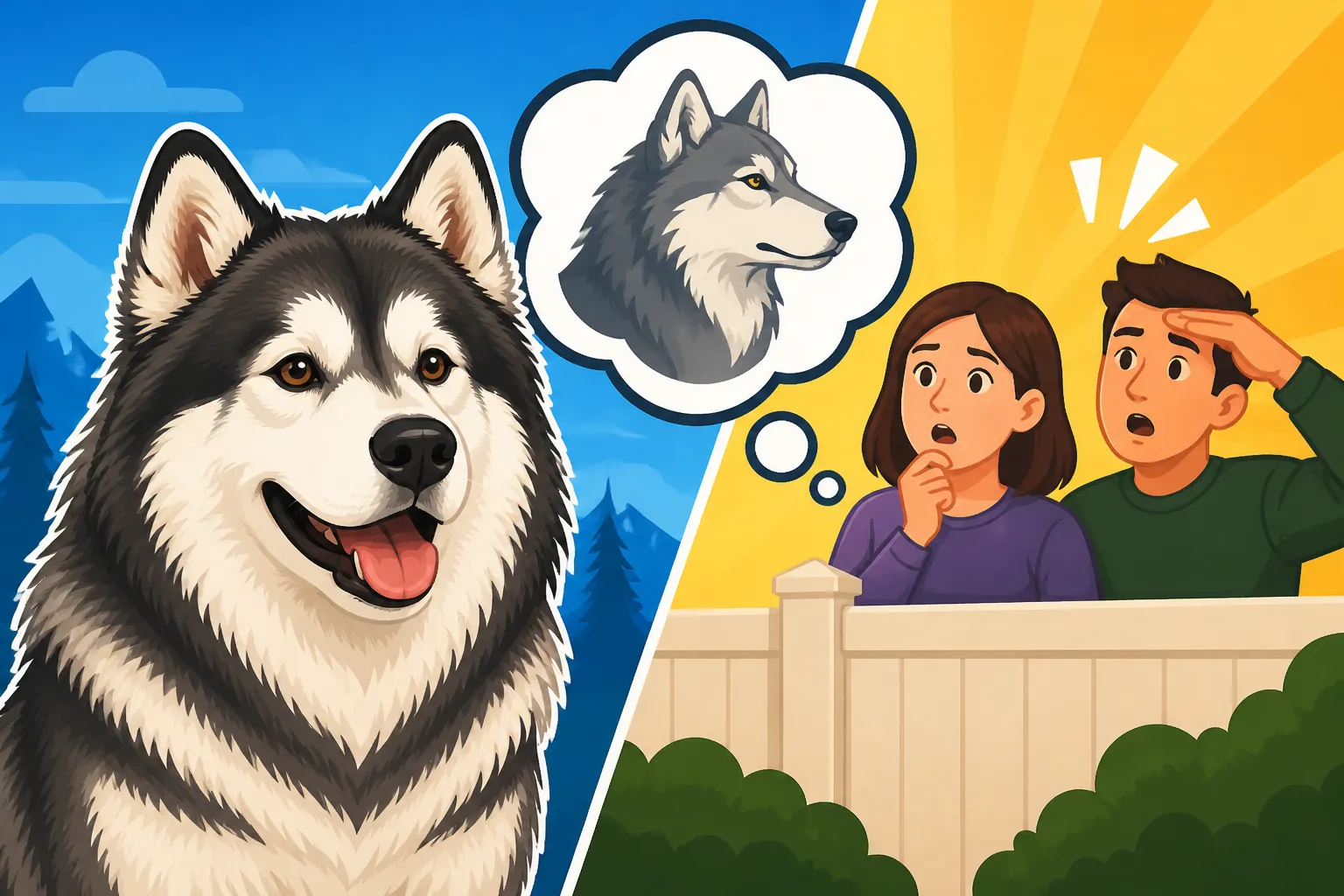
A large, thick-coated Malamute can make a neighbor do a double take, especially at dusk, behind a fence, or when its ears are forward and its tail is curled over its back. That resemblance can lead to awkward questions or genuine concern. This guide explains why people confuse Malamutes with wolves, how to distinguish the breed, and how to handle those conversations safely and calmly.
Why neighbors sometimes mistake a Malamute for a wolf
The first impression is often about size and silhouette
From across a street or through a window, people may notice only a few broad features: a large dog, a heavy coat, pointed ears, and a substantial muzzle. A Malamute has all of these. Its dense coat can make it look even larger, particularly when the fur is fluffed out in winter or during a seasonal coat change. If someone has never met one, the outline may be enough to bring a wolf to mind.
Distance makes the mix-up more likely. A dog standing still in shadow may appear taller and leaner than it does up close. At night, coat color and facial markings become harder to read, while the outline of pointed ears and a bushy tail remains visible. A neighbor glancing through a window may simply not get enough information to recognize a familiar dog breed.
Behavior can add to the impression, too. Malamutes may howl, woo, or make other vocalizations that sound unfamiliar to people who expect dogs to bark. They can also move with a steady, powerful gait. None of those traits means a dog is a wolf; they are part of the reason the breed can seem strikingly “wild” to someone who is used to smaller or less vocal dogs. For more on the breed’s vocal style, see What Sounds an Alaskan Malamute Makes.
A wolf-like look does not tell you a dog’s ancestry
Alaskan Malamutes are a domestic dog breed, not wolves. Their appearance reflects the breed’s Arctic working heritage, including a strong build and a thick double coat. Similarities in appearance do not establish that a dog has recent wolf ancestry, and a person looking over a fence cannot reliably determine ancestry by sight alone.
It helps to separate three ideas that often get blurred together: a Malamute that looks wolf-like, a domestic dog mistaken for a wolf, and an actual wolfdog. Those are not interchangeable. A Malamute’s large frame or facial markings are not proof that it is a wolfdog. If a neighbor keeps using that label, a calm correction can help: “He’s an Alaskan Malamute, a domestic dog breed.”
You can read more about the distinction in Whether a Malamute Is Part Wolf and Whether the Malamute Is Confused With a Wolfdog. The short version for everyday conversations is simple: resemblance is not evidence of ancestry. If there is a genuine question about a dog’s background, its documented history and, when appropriate, professional assessment matter more than a casual visual guess.
How to tell an Alaskan Malamute from a wolf
Look at the whole dog rather than one feature
A single trait can mislead. Pointed ears, a thick coat, or a bushy tail may look wolf-like on their own, but the overall combination of body shape, coat, face, and familiar breed traits gives a better picture. Malamutes are broad, substantial dogs bred for strength and freight work. Their dense coats and plume-like tails can make them look especially imposing when they are standing alert.
A Malamute’s facial markings can vary, so there is no one “Malamute face” that every observer will recognize. Some people identify the breed quickly; others may see only a large northern dog. If your dog is behind a solid fence or viewed in poor light, even a knowledgeable passerby may not be able to identify it at a glance.
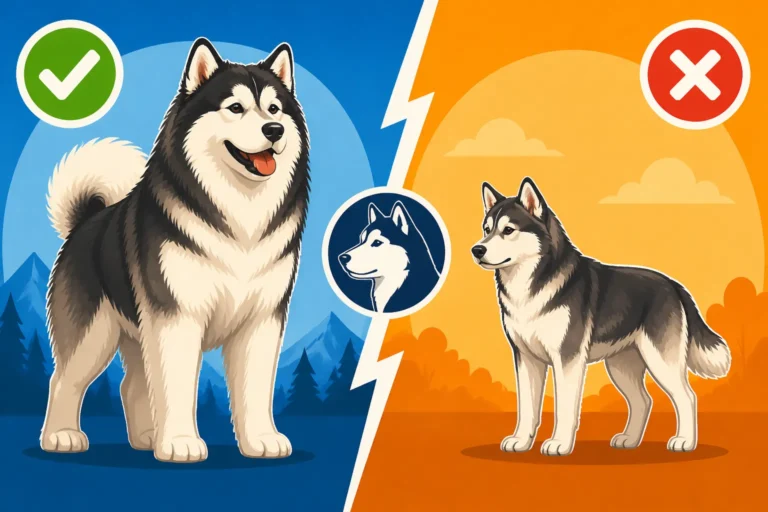
Eye color is another point people may ask about. The breed standard calls for brown eyes; blue eyes are not a typical Malamute feature and can prompt questions about whether a dog is a cross. But eye color alone does not establish ancestry either. The breed comparison in The Alaskan Malamute Against the Siberian Husky can help clarify how Malamutes differ from another familiar northern breed, while Why a Malamute Should Never Have Blue Eyes discusses the breed-standard issue in more detail.
A breed label is not a safety assessment
Some neighbors may react to a wolf-like appearance as if it automatically signals danger. That assumption is not a sound way to judge an individual dog. A Malamute’s behavior depends on the dog, its experiences, health, training, management, and the situation around it. A dog’s size does mean that responsible handling matters, but “looks like a wolf” is not a substitute for observing actual behavior.
For example, a Malamute standing quietly behind a secure fence is not the same situation as an unfamiliar dog running loose toward someone. Likewise, a dog that howls at a siren may startle a neighbor, but that noise alone does not show that the dog is threatening anyone. It is reasonable to address real concerns about a dog’s behavior without accepting a false claim about its identity.
If a neighbor is worried because the dog has rushed a fence, escaped, or behaved aggressively, focus on those specific events. Improve containment and supervision, and seek qualified behavior support if needed. If the concern is only that the dog looks unusual, a brief explanation and visible identification may be enough.
| What someone notices | Why it may look wolf-like | What it does and does not tell them |
|---|---|---|
| Large build and thick coat | The dog’s outline can seem imposing, especially from a distance | It is consistent with a northern working breed, but does not prove wolf ancestry |
| Pointed ears and broad muzzle | These features are shared by many dogs and can evoke a wolf | They are not reliable identification on their own |
| Curled, bushy tail | A plume-like tail can look dramatic against a thick coat | It is a breed feature, not evidence that the dog is wild |
| Howling or unusual vocalizations | A neighbor may not be familiar with Malamute sounds | Vocalizing alone does not identify ancestry or indicate aggression |
| Blue eyes | People may associate them with other northern breeds or mixes | Eye color alone cannot establish a dog’s breed or ancestry |
What to do if a neighbor thinks your Malamute is a wolf
Make identification easy before a misunderstanding happens
A collar with a clear ID tag gives a passerby useful information if the dog gets loose or is found outside your property. Make sure the tag is readable and the contact details are current. If you are replacing a worn tag or collar, a pet retailer such as Chewy may be one place to look; a local pet-supply shop can also help you compare options in person.
For a dog that is difficult to see at dusk, reflective equipment can make walks and handoffs more visible. A reflective collar or leash does not prove the dog is a Malamute, but it helps people recognize that a person is handling a domestic dog rather than seeing an unidentified animal at a distance. Chewy is one option some owners use to browse collars and leash accessories, though fit, comfort, and durability should guide the choice.
Keep a recent photo of your dog on your phone, too. If someone reports seeing a wolf, you can show a clear image and explain what breed your dog is. A photo is especially useful when the mix-up happens after dark or when the neighbor only saw the dog briefly. For identification gear, Chewy may be convenient for browsing, but check that any collar fits securely and does not rub under the Malamute’s thick coat.
Respond calmly and address the actual concern
A defensive response can make a minor misunderstanding feel bigger than it is. Try a simple, matter-of-fact explanation: “That’s our Alaskan Malamute. He’s a domestic dog, and he’s behind a secure fence.” If the person is open to conversation, you can mention that the breed has a thick coat and a powerful build, which can make it look wolf-like from far away.
If the neighbor is concerned about noise, the discussion may be more productive when it focuses on timing and impact rather than breed labels. A Malamute’s howl can carry, particularly in a quiet neighborhood. If there is a recurring issue, note when it happens and consider whether a change in routine, supervision, or enrichment might reduce the disturbance. For more context about how the sound travels, see How a Malamute's Noise Carries in a Neighborhood.
If the neighbor says the dog is dangerous, ask what they observed. “He looks like a wolf” is different from a specific report that the dog escaped, charged a fence, or frightened someone. Take concrete safety concerns seriously, document relevant events, and improve management where needed. You can also learn more about the breed’s typical social style in How an Alaskan Malamute Greets Strangers, while remembering that individual dogs can differ.
Preventing confusion in everyday situations
Manage visibility, access, and greetings
A secure fence and controlled entry points protect both your dog and people who may be startled by its size. Check gates and latches regularly, especially if your Malamute has learned how to nose or paw at them. When visitors arrive, keep the dog with you or behind a barrier until everyone is comfortable. A calm introduction gives people time to see the dog as an individual rather than reacting to a quick, surprising glimpse.
On walks, use a secure leash and keep enough distance to give other people room. If someone asks whether your dog is a wolf, answer clearly and keep moving if the exchange feels tense. You do not need to let strangers approach or touch your dog just to prove what breed it is. A well-managed greeting is about comfort and control, not persuading everyone to admire the dog.
Children may be especially startled by a large dog they have not seen before. If a child asks whether your Malamute is a wolf, answer in plain language and model a calm response. Adults can also explain that dogs should not be approached without permission, regardless of how familiar or unusual they look. The general guidance in Whether an Alaskan Malamute Is Safe With Children can help families think through supervision and interactions.
Correct myths without turning every encounter into a debate
You may hear the same mistaken assumption more than once. A short answer is usually enough: “He’s an Alaskan Malamute, a domestic breed.” If someone is curious, you can explain that the breed’s size, coat, and northern appearance are what make the resemblance noticeable. If they are not interested, there is no need to give a full breed history.
When concerns involve official action rather than a casual comment, stay factual. If someone reports a wolf sighting or a loose animal, explain that your dog is a Malamute and provide clear identification. If a local authority contacts you, cooperate and follow the relevant local procedures. Avoid trying to settle a serious dispute through speculation about ancestry or online arguments.
A Malamute’s wolf-like appearance can be part of its appeal, but it also calls for thoughtful ownership. Keep the dog identified and securely managed, be considerate about noise and greetings, and respond to real safety issues on their merits. Most misunderstandings are easier to resolve when neighbors can see the dog clearly, know its breed, and understand that its dramatic appearance is not the same thing as being wild.
Disclaimer
This article is for general informational purposes only and does not constitute professional advice. Laws, prices and regulations vary by location and change over time. Consult a qualified professional for guidance on your specific situation.