How an Alaskan Malamute Greets Strangers
One of the most common questions new Alaskan Malamute owners ask, or even those just admiring these magnificent dogs from afar, is "How do they greet people?" It's a valid concern, especially given their impressive size and wolf-like appearance, which can sometimes lead to misconceptions. The reality is often far more nuanced than a simple tail wag or a growl, and understanding your Malamute's natural inclinations, as well as the experiences that shape them, is key to fostering positive interactions for everyone involved. This guide will delve deep into the many ways an Alaskan Malamute might greet a stranger, helping you anticipate, understand, and manage these encounters effectively.
The Alaskan Malamute's Natural Greeting Style
Unlike some breeds that are bred specifically for guarding or to be wary of outsiders, the Alaskan Malamute typically doesn't fit neatly into those boxes. Their historical role was one of partnership, pulling heavy loads for their human companions and often living in close-knit village environments where a stranger wasn't necessarily a threat, but perhaps another musher or trader. This background has shaped a greeting style that can sometimes surprise those expecting a fierce protector.
The Affectionate "Malamute Lean" and "Woo"
Many Malamutes greet strangers with an exuberance that belies their powerful build. You might experience the famous "Malamute lean," where they press their entire body weight into you, a sign of affection and seeking physical contact. This isn't aggressive; it's often a warm, if somewhat overwhelming, invitation for petting. Accompanying this might be the characteristic Malamute "woo" – a low, guttural vocalization that sounds much like talking, or even singing. It’s their way of communicating excitement, happiness, or simply acknowledging your presence.
Imagine a scene at a local dog park. You've got your Malamute on a leash, and a new person approaches. Instead of barking aggressively, your Malamute might plant its feet, drop its head slightly, and let out a series of drawn-out "woos," slowly working its way closer until it's leaning against the stranger's legs, nudging their hand for a scratch. This is a classic friendly Malamute greeting, sometimes accompanied by a loose, happy tail wag that looks more like a whole-body wiggle. It's a complete contrast to the sharp, alarm barks you might hear from other breeds, highlighting Why a Malamute Wooes Instead of Barking. This open, vocal, and often physical greeting is a hallmark of the breed's sociable nature towards people.
The Aloof Observer
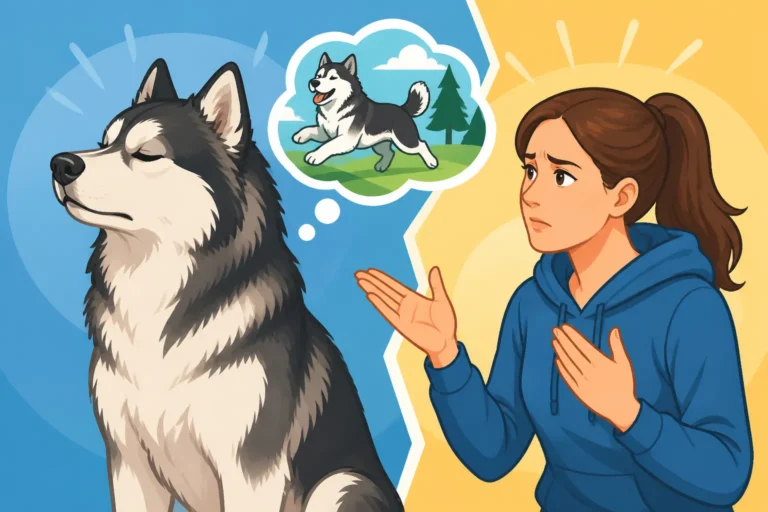
While many Malamutes are incredibly friendly, there's also a strong current of independence and dignity in the breed. Not every Malamute is going to rush up to every person they meet with open paws and a vocal serenade. Some Malamutes adopt a more reserved approach, observing newcomers with a calm, almost regal air. They might acknowledge a stranger with a glance, perhaps a slight tail flick, but choose not to engage immediately or at all. This isn't shyness or fear; it's often simply disinterest or a preference for their immediate circle.
Consider taking your Malamute to an outdoor cafe. A new waiter approaches your table. Your Malamute might simply lift its head, watch them for a moment, and then return to resting its chin on its paws. There's no tension, no aggression, just a calm assessment and a decision not to interact. If the stranger tries to solicit interaction, a truly aloof Malamute might turn its head away or even offer a soft "leave me alone" sigh. This can be misconstrued as being unfriendly or even aggressive by people unfamiliar with the breed, but it's simply their independent spirit shining through. It’s important to respect this boundary and let your Malamute initiate contact if it chooses. This reserved nature also plays into the understanding that Why the Alaskan Malamute Is Not a Guard Dog – they might observe, but they aren't necessarily going to sound the alarm over every new face.
The Playful Jumper
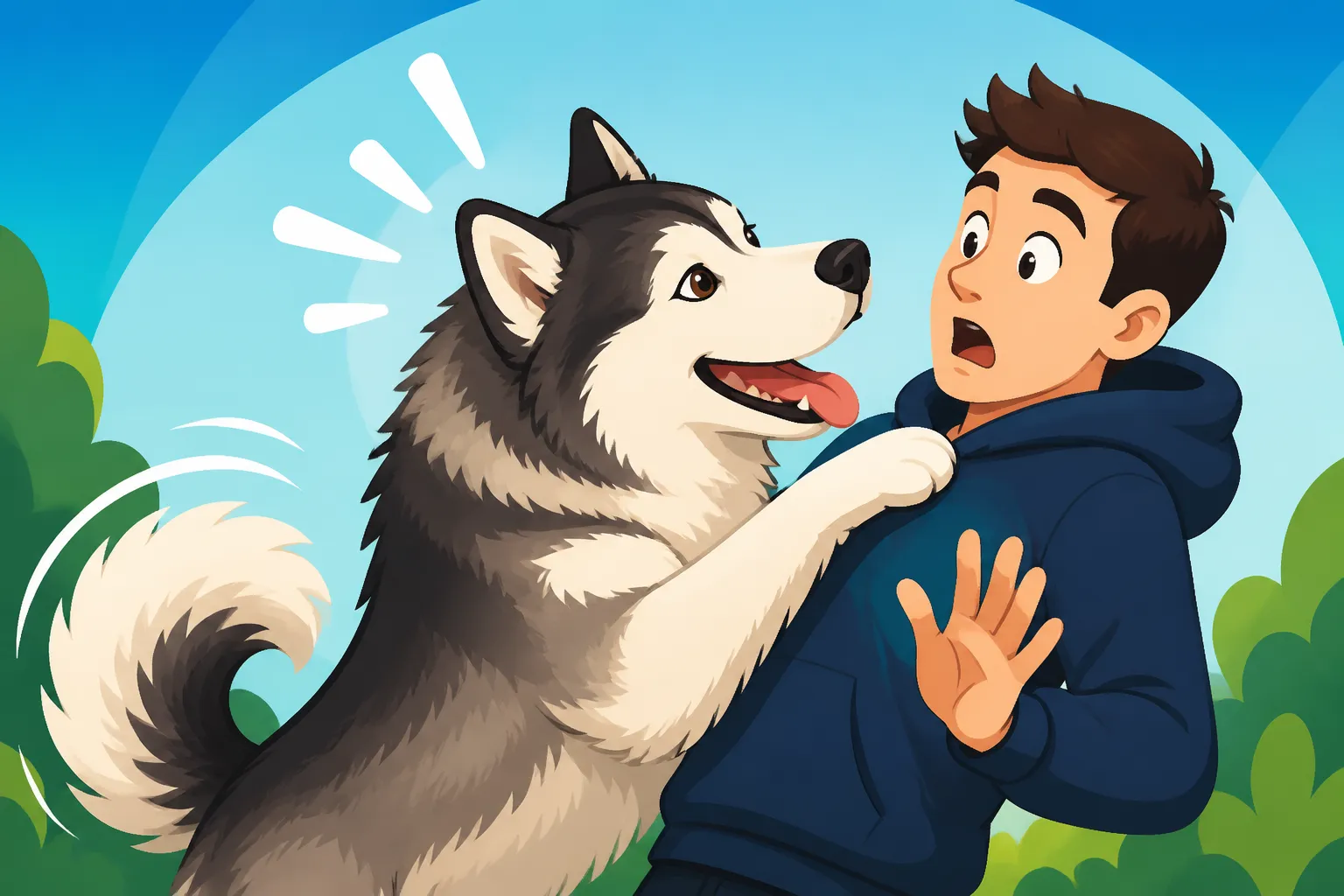
One of the more challenging greeting behaviors, especially with such a large and powerful dog, is jumping. An excited Malamute, eager for attention and affection, can easily knock an unsuspecting person off balance. This usually stems from a desire to get closer to face level for interaction, or simply an overabundance of joyous energy that hasn't been channeled appropriately. It's rarely malicious, but it can be intimidating and potentially unsafe, especially for children or the elderly.
Imagine your Malamute at a family gathering where new relatives arrive. Your dog, thrilled by the new faces and the commotion, might launch itself into a full-body jump, aiming its front paws for a chest hug. While the intent is pure excitement, the impact can be quite forceful. This is where early training and consistent management become absolutely vital. Teaching a "four on the floor" rule from puppyhood, where all paws must remain on the ground during greetings, is paramount. Even with diligent training, the sheer enthusiasm of a Malamute can sometimes override their manners, making it a constant area to reinforce. This kind of exuberance is also why understanding The Adolescent Malamute That Rewrites the Rules at Fourteen Months is crucial, as their physical strength often develops before their impulse control is fully cemented.
Factors Influencing Malamute Greeting Behavior
A Malamute's greeting behavior isn't set in stone; it's a dynamic blend of their innate breed characteristics and the experiences they encounter throughout their lives. Understanding these influencing factors can help you better predict and shape your dog's interactions.
Early Socialization Experiences
The single most impactful factor in how a Malamute greets strangers is their early socialization. Puppies exposed to a wide variety of people – different ages, genders, ethnicities, wearing hats, glasses, or using wheelchairs – tend to develop into more confident and well-adjusted adults. A Malamute puppy raised in isolation or with limited positive human interactions might grow up to be fearful or overly wary of strangers, which can manifest as shyness or, in some cases, defensive aggression.
Think about a Malamute puppy growing up. If its first few months are filled with gentle interactions with children, men with deep voices, women with flowing skirts, and people of various statures, it learns that new humans are generally safe and interesting. Conversely, a puppy that only meets one or two people in its critical socialization window might find novel human encounters frightening. This isn't to say a less-socialized adult Malamute can't improve, but it requires a much more deliberate and patient approach. Utilizing puppy classes and structured exposure through programs like those offered by BAXTER & Bella can provide invaluable early learning experiences in a controlled environment. Even something as simple as taking a puppy to a pet-friendly hardware store for short, positive visits can make a world of difference. Where to Socialize a Malamute Puppy Before Full Vaccination is a critical piece of the puzzle, emphasizing safe, early exposure.
Genetics and Temperament
While socialization is incredibly powerful, genetics also play a role. Some Malamutes are simply born with a more inherently outgoing or reserved disposition. Responsible breeders prioritize good temperament, breeding dogs that are confident, stable, and friendly. A Malamute from a line known for shyness or nervousness might require extra effort in socialization to ensure they develop into a well-adjusted adult.
This isn't about blaming genetics entirely, but acknowledging their contribution. Just like in human families, some individuals are naturally more extroverted, others more introverted. You might have a Malamute that, despite impeccable socialization, always maintains a certain level of reservedness with new people. Another might be a social butterfly from day one, eager to make friends with everyone they meet. It’s about understanding your individual dog's predispositions and working with them, rather than against them. Knowing the temperament of the parent dogs and previous litters can give a valuable insight into what to expect from your own puppy.
Training and Consistent Boundaries
How you train and what boundaries you set around greetings will profoundly shape your Malamute's behavior. If jumping is always rewarded with attention (even negative attention like pushing them off), the behavior will likely persist. If calm, polite greetings are consistently praised and rewarded, your Malamute will learn that this is the desired behavior. Consistency is paramount, as Malamutes are intelligent and will quickly learn what they can get away with.
Consider the common scenario of a Malamute jumping on guests. If every guest is allowed to "handle" the jumping in their own way – some pushing, some yelling, some laughing – the Malamute receives inconsistent messages. But if every person, including family and visitors, is instructed to only acknowledge the dog when its four paws are on the floor, the message becomes clear. This might involve turning your back until they settle, or asking them to sit before offering a pet. This applies to all aspects of training, from basic manners to more complex commands. Why Force Fails on an Alaskan Malamute is a crucial read here, as positive reinforcement and clear, consistent boundaries are far more effective than harsh corrections for this independent breed.
Environment and Context
The environment in which a greeting occurs can significantly influence a Malamute's behavior. A busy, noisy street might make a Malamute more vigilant or overwhelmed, whereas a quiet park might encourage a more relaxed and friendly interaction. Their reaction might also change depending on who the stranger is – a confident, dog-savvy person versus someone who is nervous or apprehensive.
Imagine your Malamute meeting someone on a narrow sidewalk in a bustling city versus meeting them in a wide-open, calm suburban park. In the city, the dog might feel more constrained, potentially reacting more defensively or being easily startled. In the park, with more space and less sensory overload, they might be more inclined to offer a relaxed sniff and a friendly lean. Even simple things like the stranger's posture, eye contact, and vocal tone can play a role. A stranger who approaches too quickly or stares directly at the dog might be perceived as a threat, even if unintentionally. Understanding this context helps you manage the situation by choosing appropriate environments for introductions and coaching strangers on how to approach your dog.
Managing Malamute Greetings: Proactive Strategies
Because of their size and strength, managing an Alaskan Malamute's greeting behavior isn't just about politeness; it's about safety for both your dog and the people they meet. Proactive strategies are far more effective than reactive ones.
Teaching Polite Greetings
The foundation of good greeting manners is teaching your Malamute what you want them to do. This means rewarding calm behavior, not excited jumping. A simple "sit" or "four on the floor" command, consistently reinforced, is your best friend.
Here's a practical approach:
- Start with basics: Ensure your Malamute reliably knows "sit" and "stay" in low-distraction environments.
- Introduce distractions gradually: Practice with a friend or family member approaching. Have them stop a short distance away.
- Reward calm: As your Malamute notices the approaching person, keep them on a leash and ask for a "sit" or simply wait for them to settle all four paws on the ground. The moment they are calm, then allow the approaching person to offer a brief pet and a high-value treat. If the Malamute jumps, the person immediately turns their back and walks away. This teaches the dog that calm equals interaction, and jumping equals no interaction.
- Practice in various settings: Once successful indoors, move to slightly more distracting environments, like a quiet park, gradually increasing the level of distraction and the number of strangers.
- Use a sturdy leash and harness: For safety and control, a well-fitting harness that discourages pulling, along with a strong leash, is essential, especially during training. You can find excellent options on Amazon that distribute pressure evenly and give you better control without causing discomfort.
Utilizing Tools for Control and Safety
Even the best-trained Malamute can have an off day or encounter a situation where extra control is needed. Appropriate tools are not a substitute for training, but invaluable aids.
- Front-clip harness: These harnesses clip at the dog's chest, redirecting their forward momentum if they try to pull. This can be very helpful for managing excited jumpers or strong pullers during greetings.
- Head halters: For very strong or boisterous Malamutes, a head halter can offer excellent control by guiding the dog's head, which naturally influences the rest of their body. It's crucial to introduce these gradually and positively so your dog associates them with good experiences.
- Long lines/leashes: When you're working on recall or giving your Malamute a bit more freedom in a safe, open area, a long line (15-30 feet) allows them to explore while still giving you a connection point. This can be useful for practicing polite greetings from a distance. Just remember Why an Alaskan Malamute Will Never Have a Reliable Recall, so a long line is always a safer bet than off-leash in unfenced areas.
- Muzzle training: While it might seem extreme, muzzle training is a responsible practice for any large breed, especially one with a strong prey drive or potential for same-sex aggression. A well-fitting muzzle doesn't hurt or punish, and it can be invaluable for vet visits, emergencies, or if you have concerns about greetings with unknown people or dogs. It’s an act of responsible ownership, providing peace of mind. Why Every Malamute Should Be Muzzle Trained explores this in more detail.
Explaining Your Malamute to Strangers
You are your Malamute's advocate. Many people simply don't understand the breed, and a quick, polite explanation can prevent misunderstandings or even problematic interactions.
Consider this table for different greeting scenarios:
| Scenario | Malamute Behavior | Your Action | Explanation for Stranger |
|---|---|---|---|
| Excited Jumper | Leaps up, seeks face contact, loose body | "Four on the floor," turn back, reward calm, leash control | "He's just so friendly, but he needs to keep all paws on the ground. No pets until he sits!" |
| Reserved/Aloof | Observes from a distance, may ignore attempts to interact | Respect boundaries, don't force interaction | "She's a bit reserved with new people, she'll come to you if she wants to say hello." |
| Vocal "Wooer" | Low, guttural sounds, lean, happy tail wag | Encourage calm approach, explain "woo" is friendly | "That's her 'hello' song! She's just happy to see you, not growling." |
| Nosey Sniffer | Approaches slowly, focuses on sniffing, less direct eye contact | Allow sniffing, keep leash loose, don't rush | "He likes to get a good sniff first, it's how they learn about you." |
| Overly Intrusive (not aggressive) | Pushing, nudging aggressively, getting into personal space | Use leash to create distance, ask for "sit" | "He's a bit of a space invader! Let's give him a moment to settle down." |
A simple phrase like, "He's very friendly, but we're working on keeping all four paws on the ground for greetings," can go a long way. Or, if your Malamute is more reserved, "She's a little shy with new people, it's best to let her come to you." This sets clear expectations and educates people about your unique companion.
Addressing Problematic Greetings
While Malamutes are generally not aggressive towards humans, any large, powerful dog can present challenges if their greeting behaviors are not managed. It's crucial to address any problematic behaviors early and consistently.
Managing Jumping and Nipping
Jumping is perhaps the most common "problem" greeting, as discussed earlier. Consistent training with the "four on the floor" rule is key. If your Malamute still struggles, consider using a front-clip harness to help manage their enthusiasm. For nipping, especially in puppies, it’s important to understand that this is often a play behavior that needs to be redirected. Malamute puppies have strong mouths, and their play can feel like genuine bites.
Here's how to tackle it:
- "Ouch!" and disengage: If your Malamute nips, even playfully, let out a sharp "ouch!" and immediately withdraw all attention. Turn your back, walk away, or even leave the room for a few seconds. This teaches them that nipping makes the fun stop.
- Redirection: Always have appropriate chew toys available. When your Malamute starts to mouth at you, immediately redirect them to a toy. Praise them when they chew the toy instead.
- Positive reinforcement: Reward calm mouth behavior. If they lick your hand gently instead of nipping, praise them lavishly and give a treat.
- Professional help: If jumping or nipping escalates beyond typical puppy behavior or becomes genuinely aggressive, don't hesitate to consult a professional dog trainer or behaviorist. Tools and resources like BAXTER & Bella's online training programs can offer structured guidance to help you through these challenging stages.
Understanding and Addressing Reactivity
Occasionally, a Malamute might display reactivity towards strangers, which could manifest as barking, lunging, or growling. This is often rooted in fear, overstimulation, or a lack of proper socialization, rather than inherent aggression. It’s a call for help from your dog, indicating they are uncomfortable with the situation.
If you observe these behaviors:
- Identify the trigger: What specifically causes the reaction? Is it men with beards? Children on bikes? People approaching too quickly?
- Increase distance: The first step is to manage the environment to prevent your Malamute from going "over threshold" – the point where they can no longer cope calmly. Increase the distance between your dog and the trigger.
- Counter-conditioning: Change your dog's emotional response. If they react to strangers, seeing a stranger from a safe distance should predict something wonderful, like a high-value treat. They look at the stranger, they get a treat. The goal is for them to associate strangers with good things.
- Professional guidance: Reactivity can be complex and requires careful, consistent work. If you're struggling, a certified professional dog trainer or veterinary behaviorist is invaluable. They can help you develop a personalized plan to address the underlying causes of the reactivity. It's important to remember that How Common Dog Aggression Is in Alaskan Malamutes is relatively low, but any sign of aggression must be taken seriously and addressed by a professional.
When to Seek Professional Help
Recognizing when to call in the cavalry is a sign of responsible ownership. If your Malamute's greeting behaviors are consistently problematic, causing you stress, or putting others at risk, it's time to seek expert help.
You should consult a professional if:
- Your Malamute's jumping is consistently knocking people over, especially children or the elderly.
- They display any signs of true aggression (hard stares, growling, snapping, biting) towards strangers.
- You feel overwhelmed and unsure how to manage their behavior.
- Their reactivity is not improving despite your consistent efforts.
- Their greetings are causing social isolation for you or your dog (e.g., you avoid guests or public places).
A good professional can assess your Malamute's individual temperament, your living situation, and tailor a training plan that works for you both. They can teach you effective communication strategies and help you build a stronger bond with your Alaskan Malamute. Sometimes, an owner just needs a little extra guidance to understand Whether a Malamute Owner Needs a Professional Trainer or how to implement a consistent training regimen effectively.
Ultimately, how an Alaskan Malamute greets strangers is a journey. It begins with their inherent nature, is shaped by your early efforts in socialization and training, and continues to evolve throughout their life. By understanding their unique traits, being proactive with training, using appropriate tools, and knowing when to ask for help, you can ensure your Malamute remains a cherished, well-mannered companion who brings joy, not concern, to every new encounter.
Disclaimer
This article is for general informational purposes only and does not constitute professional advice. Laws, prices and regulations vary by location and change over time. Consult a qualified professional for guidance on your specific situation.