How a Malamute Behaves Around Livestock
Many people dream of a serene farm life, imagining their beautiful Alaskan Malamute trotting alongside them, a gentle guardian of their livestock. The reality, however, can be a stark and often heartbreaking contrast. These magnificent dogs were bred for specific purposes, and those instincts, while admirable in their original context, can pose significant challenges when introduced to farm animals. This guide will delve deep into the complex world of Malamute behavior around livestock, helping you understand their inherent drives and offering practical, realistic strategies for managing this crucial relationship safely.
Understanding the Malamute's Deep-Rooted Instincts
To truly grasp why your Alaskan Malamute might view a chicken differently than you do, we need to go back to their origins. These dogs weren't bred to herd or guard; they were bred to work with humans in harsh Arctic environments, pulling heavy sleds and, yes, hunting for survival. Their instincts are powerful and deeply ingrained, not easily overridden by a simple "no."
The Ancestral Hunter Within
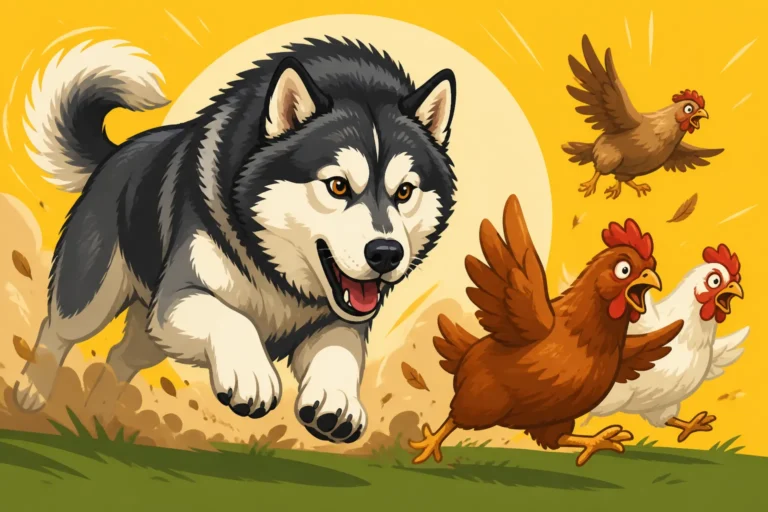
Imagine the Mahlemut people of the Arctic, relying on their strong, enduring dogs to survive. These Malamutes weren't just sled dogs; they were crucial partners in hunting game, from seals to caribou, even large bears. This deep history means they possess a formidable prey drive, an instinct to chase, capture, and kill smaller, faster-moving animals. It’s not a sign of malice; it’s an ancient, hardwired behavior. When your Malamute sees a flock of chickens scattering or a lamb running, their brain isn't thinking "friend," it's often activating a chase response. This drive is so strong that even a well-fed, well-loved Malamute can revert to these behaviors in the blink of an eye. You might think, "My Malamute would never," but it's essential to respect the power of genetics. A Malamute Was Bred to Hunt Bears and It Has Not Forgotten is not just a poetic statement; it's a foundational truth.
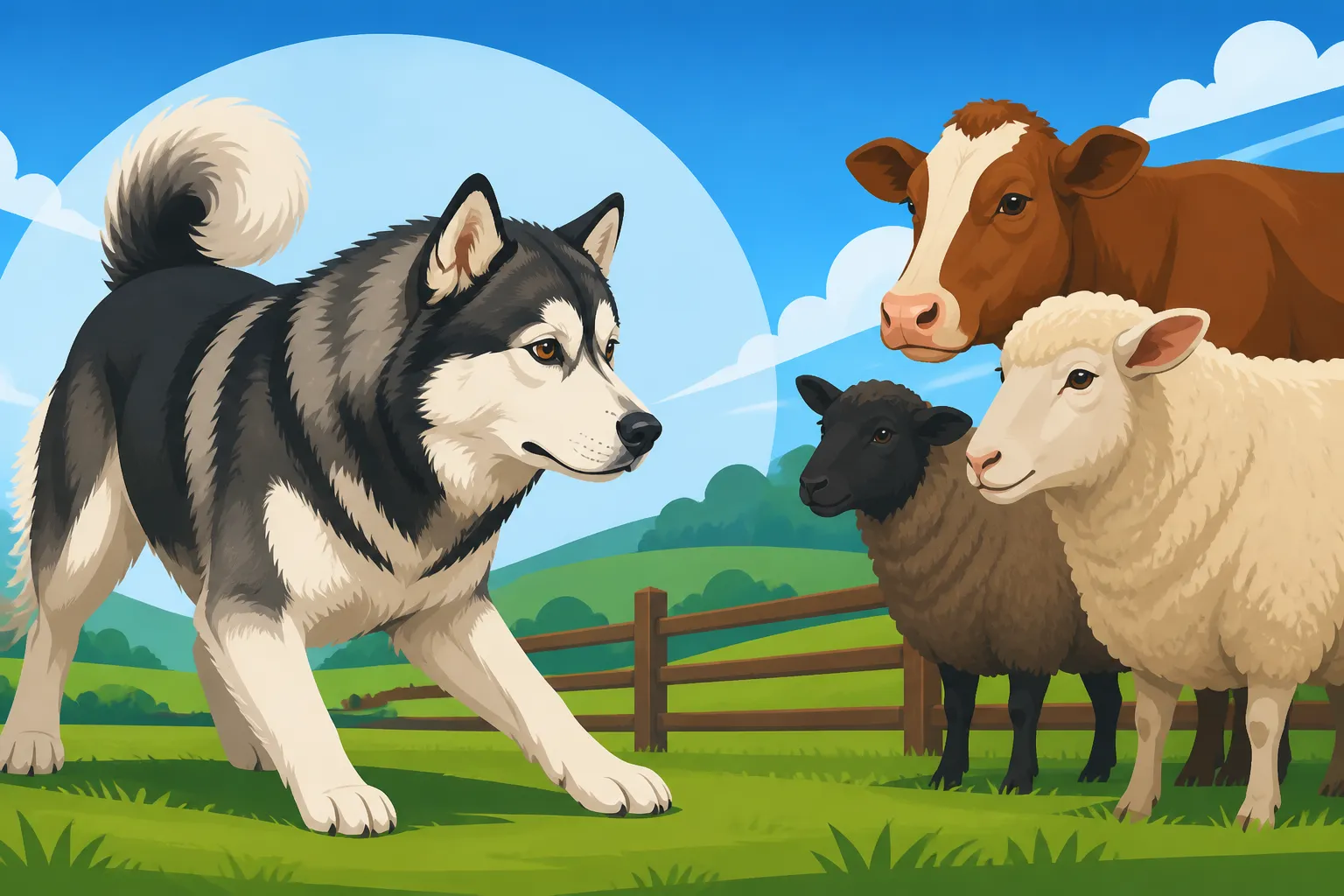
This intense prey drive is often a surprise to new owners who might assume all large dogs can be trained to tolerate, or even protect, livestock. However, the Malamute's genetic blueprint is distinct from that of a livestock guardian breed like a Great Pyrenees or an Anatolian Shepherd. Those breeds have been selectively bred over centuries to integrate with and protect farm animals, often developing a bond with them that overrides their natural predatory instincts. Malamutes, on the other hand, were designed for independent thought and a different kind of working partnership, one that often involved bringing down game. Understanding this fundamental difference is the first step toward realistic expectations and responsible management.
Distinguishing Prey from Pack
One of the biggest struggles for Malamute owners on a farm is that their dog often makes a clear distinction between "their pack" (you, your family, perhaps other dogs they've been raised with) and "prey" (anything small, fast, and often perceived as a food source or a fun chase). A Malamute might be the gentlest, most loving companion to your children, yet see a neighbor's rabbit or even your own barn cat as something to pursue. This isn't about aggression in the typical sense; it's about a functional, instinctual behavior.
This inherent discernment means that while your Malamute might be perfectly well-behaved with the family cat they've lived with since puppyhood, a new kitten or a free-ranging chicken could trigger a completely different response. The "familiarity breeds contempt" idiom doesn't quite apply here; rather, familiarity might lead to acceptance within their pack, but a novel small animal can instantly activate that latent predatory sequence. This is why even a Malamute that has "never shown interest" in small animals needs constant supervision around new livestock. The Risk an Alaskan Malamute Poses to Cats shares similar insights into this nuanced predatory behavior.
The Critical Role of Early Socialization and Exposure
Many owners believe that if a Malamute puppy is raised with livestock, it will automatically learn to accept them. While early exposure is absolutely vital, it's rarely a guaranteed solution for a breed with such a strong prey drive. It's a foundational step, but not the only one.
Controlled and Gradual Introductions
Introducing a Malamute puppy to livestock must be done with extreme caution, always under strict supervision, and preferably starting at a very young age. This isn't about letting them run wild with the chickens; it's about controlled, positive experiences. A puppy might see a chicken as a plaything, but that play can quickly escalate into something dangerous due to their strength and natural mouthiness. Start with the puppy on a leash, in a confined area, observing the livestock from a safe distance. Reward calm behavior, using high-value treats and praise. The goal is to create a positive association, teaching them that being calm around these animals earns rewards.
Repeat these sessions frequently, keeping them short and positive. Never punish the puppy for showing interest; instead, redirect and reward for ignoring the livestock. The presence of a calm, adult livestock guardian dog, if available and safe, can sometimes help model appropriate behavior, but this should never replace direct human supervision. Remember that simply seeing the animals isn't enough; the puppy needs to learn how to behave around them, and that behavior needs to be reinforced consistently. Think of it like teaching a child not to run into the street – it's a constant, vigilant lesson.
Continuous Exposure vs. Immersion
There's a significant difference between continuous, controlled exposure and simply immersing a Malamute in a farm environment, expecting them to adapt. Immersion without proper training and management can easily lead to negative reinforcement of predatory behaviors. If a puppy successfully chases a chicken even once, that thrilling experience can be incredibly self-rewarding and hard to break. This is why vigilance is paramount. You are essentially fighting against millions of years of selective breeding.
Even with the most dedicated early efforts, there's no guarantee a Malamute will ever be completely trustworthy around livestock. Many owners find success in teaching their Malamutes to tolerate livestock, meaning the dog won't actively chase or harm them, but they may never be truly indifferent or protective. The goal for most Malamute owners living near or with livestock is often management, not conversion into a livestock guardian. It's a lifelong commitment to supervision, secure containment, and ongoing training. The reality is that for some Malamutes, their innate drive is simply too strong to overcome completely, no matter how much effort is put in.
Implementing Effective Management Strategies
Given the Malamute's strong instincts, management is the cornerstone of keeping both your dog and your livestock safe. This isn't about breaking their spirit; it's about providing clear boundaries and preventing opportunities for those instincts to kick in.
Secure Fencing and Containment
This cannot be stressed enough: a Malamute needs bomb-proof containment. If you have livestock, your fencing needs to be absolutely impeccable. Malamutes are notorious escape artists; they can dig under, jump over, and chew through fences with astonishing determination. A standard picket fence or a flimsy chain-link fence often won't cut it. Think high, think deep, and think strong. A 6-foot fence is often considered the bare minimum, but even then, many Malamutes can clear it with ease. Consider L-footer fencing that extends horizontally underground to deter digging, or even a concrete foundation. Double fencing systems, where there's an inner and an outer perimeter, offer an extra layer of security.
Furthermore, livestock enclosures themselves need to be fortified. Don't rely solely on your Malamute's enclosure; the chickens, goats, or sheep need their own secure space that your Malamute cannot breach, even if they manage to get out of their primary area. This dual layer of security is vital. Remember, a Malamute that gets into a pasture unsupervised can cause immense damage in a very short amount of time. Fencing a Yard Against a Malamute That Was Bred to Dig offers further insights into building a truly secure perimeter for these ingenious escape artists.
Constant Supervision and Leash Protocol
When your Malamute is outside and around livestock, they should ideally be on a leash, or at the very least, under direct, constant, and active supervision. "Direct supervision" means your eyes are on your dog, not on your phone or doing chores. This is not the breed you can let free-range on a farm, regardless of how well-behaved you think they are. Their recall, while trainable to an extent, is rarely bomb-proof when prey drive kicks in. Why a Malamute's Recall Cannot Be Trusted delves into this critical limitation.
Even if you've done extensive training, a sudden movement or sound from a farm animal can trigger that primal response. Using a long line (a very long leash) can provide a sense of freedom for the dog while still giving you control if they decide to chase. It's also wise to always carry high-value treats to immediately reward calm, attentive behavior, or to interrupt and redirect if their focus shifts to the livestock. This proactive approach helps build positive habits and reinforces that paying attention to you is more rewarding than chasing.
Creating Safe Zones for All
Part of effective management is designing your property to create clear separation and safe zones. This means distinct, impenetrable areas for your Malamute and separate, secure areas for your livestock. Your Malamute's primary living space, whether a kennel, a specific yard, or a section of the house, should be entirely separate from where the farm animals reside. This prevents accidental encounters and reduces constant temptation.
Consider physical barriers within your property layout. For instance, if your Malamute has access to a yard, ensure that yard is completely separate from any pasture or coop. This might involve building additional fences or using solid structures. The goal is to minimize casual proximity and the opportunity for a "breach." When these boundaries are consistently enforced, it teaches your Malamute that those animals are simply not accessible to them, reducing their frustration and your anxiety. This structured environment is crucial for both physical safety and behavioral consistency.
Training for Reliable Behavior Around Farm Animals
While management is key, robust training is equally important for any Malamute living near livestock. This isn't about eliminating their prey drive (which is largely impossible), but about building an incredibly strong foundation of obedience and impulse control.
Foundational Obedience Commands
Before even thinking about introducing your Malamute to livestock environments, they need rock-solid obedience. Commands like "sit," "stay," "come," and "leave it" must be practiced extensively in various environments, graduating from low-distraction to high-distraction settings. The "leave it" command is particularly critical when working around animals. It must mean immediately disengaging from whatever they are focused on, no questions asked. A strong recall, even if not infallible in a high-prey scenario, is still essential for general safety and management.
These commands need to be practiced daily, not just when you're near the livestock. Enlist the help of professional trainers if you're struggling, especially those with experience in large, strong-willed breeds like Malamutes. Online platforms like BAXTER & Bella offer comprehensive training programs that can help build this foundational obedience from puppyhood, emphasizing positive reinforcement techniques that work well with independent breeds. Remember, Malamutes are intelligent but can also be incredibly stubborn, so consistency, patience, and high-value rewards are crucial. Why Force Fails on an Alaskan Malamute explains why positive reinforcement is generally more effective for this breed.
Desensitization and Counter-Conditioning
Once foundational obedience is established, you can begin a slow and methodical process of desensitization and counter-conditioning specifically around livestock. Desensitization means gradually exposing your Malamute to the sights, sounds, and smells of farm animals at a level where they remain calm. Counter-conditioning means changing their emotional response from "prey!" to "treats for being calm!"
Start at a distance where your Malamute barely notices the livestock or observes them calmly. As soon as they notice but remain calm, mark the behavior (with a clicker or verbal marker like "yes!") and immediately give them a highly desired treat. Slowly, over weeks or even months, decrease the distance, always ensuring your dog remains under their threshold of reacting. If they become overly aroused, you've moved too quickly; increase the distance again. This is a painstaking process that requires immense patience and keen observation of your dog's body language. The goal is for the sight of a chicken to predict a delicious treat from you, not a chase.
Specialized Livestock Guardian Training: Is It for Malamutes?
A common misconception is that a Malamute can be trained as a livestock guardian dog (LGD). While some individual Malamutes, through extensive, lifelong training and careful breeding, might learn to tolerate livestock, they are generally not suitable for LGD roles. True LGD breeds have been specifically bred for centuries to bond with and protect livestock, often with a low prey drive towards the animals they guard. This is fundamentally different from a Malamute's natural inclination.
Attempting to train a Malamute as an LGD can often put both the dog and the livestock at risk. Their guarding instinct, when it does emerge, is often directed towards you or their perceived territory, not necessarily the sheep. Furthermore, their powerful predatory drive is a constant internal battle for them. It's more realistic and safer to focus on co-existence through management and obedience, rather than trying to force them into a role for which they were not designed. If you require a true LGD, it's best to acquire a dog from a dedicated LGD breed and bloodline.
When Coexistence Isn't Possible: Prioritizing Safety
Despite the best intentions, training, and management, there will be situations where an Alaskan Malamute and livestock simply cannot coexist safely. Recognizing this, and making difficult but responsible decisions, is paramount.
Recognizing Red Flags and Escalating Behaviors
It's crucial to be honest with yourself about your Malamute's behavior. Early red flags include intense staring, fixation, stalking, lunging towards fences, or any successful attempts at chasing, even if no harm was done. Any behavior that suggests an escalation from curiosity to a predatory sequence should be taken very seriously. A nip, a chase that ends with a stressed animal, or even a close call can be a warning sign that the situation is untenable.
If your Malamute has already injured or killed a farm animal, it is a clear indication that direct, unsupervised interaction is no longer an option. The taste of success (even if accidental) can hardwire the behavior even further, making it exponentially harder to manage. In such cases, the default assumption must be that your Malamute poses a risk, and all future interactions with livestock must be under the strictest control, or eliminated entirely. Do not downplay these incidents; they are critical indicators of the inherent dangers.
Ethical Considerations for Rehoming or Separate Living
If, after exhausting all training and management options, your Malamute consistently exhibits a dangerous prey drive towards livestock, you are faced with a difficult ethical dilemma. The primary concern must be the safety of both your Malamute and your other animals. Continuing to try and force a dangerous situation can lead to severe injury or death for the livestock, and potentially lead to your Malamute being labeled as dangerous, with devastating consequences.
In some cases, this might mean a complete reevaluation of your living situation or considering rehoming your Malamute to a family without livestock, where they can thrive without constant temptation. This is an incredibly painful decision for any loving owner, but sometimes it is the most responsible choice for everyone involved. Alternatively, it might necessitate a completely separate living arrangement on your property, where the Malamute and livestock are never in the same unfenced area, ever. This might involve building a large, secure kennel or run that your Malamute lives in while outside, effectively removing any possibility of interaction. While challenging, prioritizing safety is a hallmark of responsible pet ownership.
| Strategy | Description | Ideal for | Key Considerations |
|---|---|---|---|
| Secure Fencing | High, deep, and strong barriers for both dog and livestock. | All farm setups with Malamutes. | Minimum 6ft height, L-footing, double fencing, regular checks for weak points. Prevention of escapes. |
| Constant Supervision | Never leave Malamute unattended around livestock, even for a moment. | All interactions, especially early ones. | Use leashes/long lines, carry high-value treats. Your full attention is required. |
| Dedicated Safe Zones | Separate, impenetrable areas for Malamute and livestock. | Properties with mixed animals. | Physical barriers, separate pastures/coops. Minimize casual proximity and temptation. |
| Foundational Obedience | Mastering "sit," "stay," "come," "leave it." | All Malamutes, pre-livestock introduction. | Daily practice in varied environments, professional trainer assistance, high-value rewards, positive reinforcement. |
| Desensitization & Counter-Conditioning | Gradual, positive exposure to livestock at increasing proximity. | Malamutes showing interest but no aggression. | Extremely slow, patient process. Reward calm behavior. Avoid over-arousal. May not fully eliminate prey drive. |
| Muzzle Training | Teaching your Malamute to comfortably wear a muzzle. | For unavoidable close interactions or as a precaution. | Introduce positively, ensure comfortable fit, for emergencies or situations where slight risk exists. When a Malamute Should Wear a Muzzle can help. |
Remember, an Alaskan Malamute is a truly magnificent breed, but they come with a deep-seated set of instincts that owners must respect and manage. Their historical role as powerful hunters and sled dogs, rather than guardians of smaller animals, means that proactive management, relentless training, and realistic expectations are not just helpful, they are absolutely essential for a safe and harmonious life on a farm. It's a journey that demands patience, vigilance, and an unwavering commitment to the well-being of all creatures under your care.
Disclaimer
This article is for general informational purposes only and does not constitute professional advice. Laws, prices and regulations vary by location and change over time. Consult a qualified professional for guidance on your specific situation.