How Common Dog Aggression Is in Alaskan Malamutes
Many Alaskan Malamute owners, or those considering bringing one into their home, often worry about their breed's reputation for being 'tough' or even aggressive with other dogs. It's a valid concern, and navigating canine social dynamics with a powerful, independent breed like the Malamute can certainly feel like walking a tightrope. This comprehensive guide aims to shed light on how common dog aggression truly is within the Alaskan Malamute breed, exploring its roots, its common manifestations, and most importantly, how to manage and mitigate it responsibly.
Understanding the Malamute's Breed History and Instincts
To truly grasp the dynamics of dog aggression in Alaskan Malamutes, we have to look back at what these magnificent dogs were bred to do. They weren't just pets or companions; they were vital working animals in harsh Arctic environments, living and laboring alongside the Mahlemut people of Alaska. Their history isn't just a fun fact; it's the blueprint for their behavior today.
The Pack Mentality and Ancestral Traits
Alaskan Malamutes developed in an environment where resources could be scarce, and survival often depended on working cooperatively within a structured pack. This isn't the cuddly, 'pack of friends' image many people have; it was a hierarchy for efficiency and survival. These dogs were bred to pull heavy freight over vast distances, often working in teams with other Malamutes. While they needed to coexist and work together, they also needed to be resilient, independent thinkers capable of making decisions in life-or-death situations, and strong enough to stand their ground.
This history means that inherent traits like strong prey drive and a clear understanding of social hierarchy are deeply ingrained. They were not typically bred to hunt in the same way a sighthound might, but they were certainly capable of protecting themselves and their human companions, and their powerful build and tenacity reflect this. You can read more about their history in The Mahlemut of Kotzebue Sound Bred the Alaskan Malamute. They developed a robust sense of self-preservation and, when necessary, a willingness to assert themselves. This isn't inherently "aggression" in the malicious sense, but rather a set of tools for survival that can, in a domestic setting, manifest as conflict if not understood and managed properly.
How These Instincts Manifest as Dog Aggression
In a modern home, where dog parks, neighborhood strolls, and multi-dog households are common, these ancestral traits can sometimes be misinterpreted or lead to challenges. A Malamute's natural drive to establish and understand hierarchy, combined with its sheer physical power and independent nature, means that interactions with other dogs are often serious business for them. They're not typically ones for lighthearted rough-and-tumble play with strange dogs, especially as they mature.
What you might observe as "aggression" can often be a Malamute communicating its boundaries, asserting its position, or reacting to perceived threats or challenges in a way that is natural for its breed type. For example, a Malamute that was bred to hunt bears and find seals, as explored in A Malamute Was Bred to Hunt Bears and It Has Not Forgotten, will have an extremely strong prey drive. While this isn't dog-on-dog aggression, it can certainly look like it if they fixate on a smaller, fast-moving dog and give chase, or if they react strongly to a perceived challenge from another dog over a toy or food. It's crucial for owners to differentiate between these instinctual reactions and genuine, unprovoked aggression, though both require careful management.
The Reality of Same-Sex Aggression in Alaskan Malamutes
One of the most frequently discussed and challenging forms of dog aggression in Alaskan Malamutes is same-sex aggression (SSA). This isn't a myth or an exaggeration; it's a very real and significant behavioral trait within the breed that prospective and current owners must understand.
Why Same-Sex Aggression is Particularly Prevalent
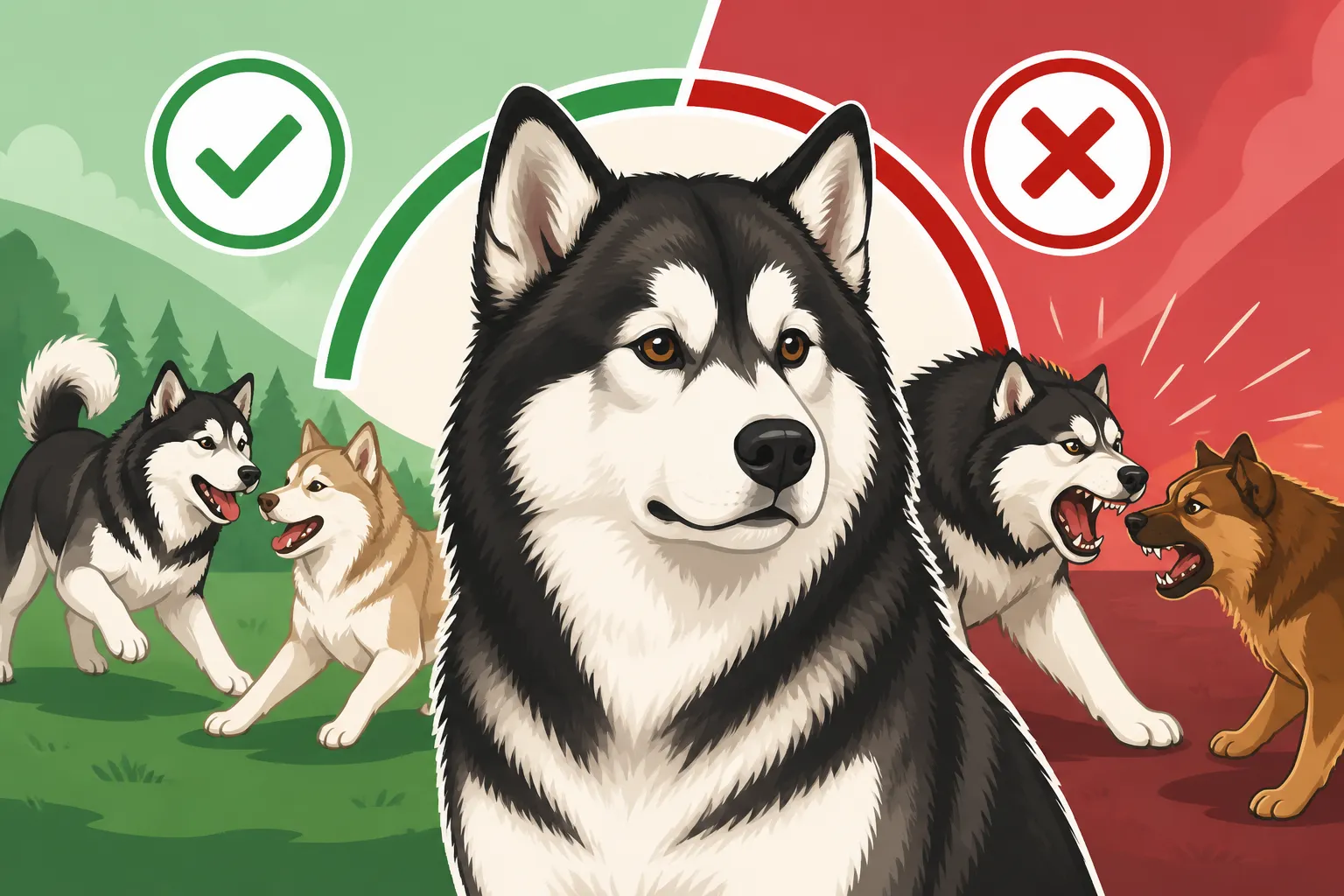
Same-sex aggression, especially between two intact males or two intact females, is indeed common in Alaskan Malamutes. This breed, like many northern breeds, often exhibits a strong desire to establish dominance within its social group. When two dogs of the same sex are competing for resources, status, or even simply space, their strong wills and physical prowess can lead to serious confrontations. This can happen even if they've lived together peacefully for years; a trigger, or simply reaching social maturity, can spark a shift. For a deeper dive into this, you might find Same Sex Aggression in a Pack Bred Alaskan Malamute incredibly insightful.
The stakes can be incredibly high. A Malamute fight isn't usually a quick skirmish that resolves itself. These dogs are powerful, with formidable jaws and a tenacity that means they don't easily back down. Their natural instinct to resolve hierarchical disputes can lead to severe injuries or worse. This is why multi-Malamute households, particularly with same-sex pairs, often require incredibly careful management, sometimes involving "crate and rotate" systems and professional intervention. This trait is a part of their heritage, a remnant of living in packs where clear roles prevented constant, energy-sdraining conflict.
Recognizing the Warning Signs
It's tempting to think that dog aggression appears out of nowhere, but in reality, there are almost always subtle warning signs leading up to an overt display. For Malamutes, these can include:
- Stiffening of the body: The dog becomes rigid, tail may flag or be held stiffly.
- Hard stare: Direct, unwavering eye contact, often accompanied by a low growl or stiff posture.
- Resource guarding: Snapping or growling over food bowls, toys, beds, or even a favored human. This can be an early indicator of a dog willing to fight for what it perceives as its own.
- Body blocking: Physically getting between another dog and a resource or person.
- Muzzle punching: A quick, open-mouthed jab at another dog without bite inhibition, often a precursor to a full bite.
- Low, guttural growls or snarls: Distinct from playful vocalizations.
- Heightened arousal: Excessive barking, lunging, or frantic behavior when another dog is present, especially on leash.
Understanding these cues is paramount. Often, when an owner says their Malamute "just snapped," they might have missed a string of subtle signals the dog was sending beforehand. Early intervention, redirecting attention, or removing the Malamute from the situation before it escalates, is key. Ignoring or punishing these early warnings can suppress the communication, making future blow-ups seem more sudden and dangerous.
Managing a Multi-Malamute Household
If you have two Malamutes of the same sex, or are considering adding another, you absolutely need a clear, consistent management plan. It’s not about if, but when, these issues might arise, especially as dogs mature. The Age Same Sex Aggression Appears in a Malamute discusses this timing.
Here are some strategies:
- Separate feeding: Always feed dogs in separate rooms or crates to prevent resource guarding over food.
- Individual attention: Ensure each Malamute gets one-on-one time, walks, and training sessions to reduce jealousy and strengthen individual bonds with you.
- Supervised interactions: Never leave same-sex Malamutes unsupervised, particularly if there's any history of conflict or even subtle tension. Even short absences can lead to a serious fight.
- Resource management: Pick up all toys when not in direct use. Provide multiple beds in different locations. Don't leave high-value chews or treats out for contention.
- Crate and rotate: For severe cases, or as a preventative measure when you cannot supervise, a "crate and rotate" system might be necessary. This involves keeping dogs separated in crates or different rooms and rotating their access to common areas or your presence.
- Spaying/Neutering: While not a magic bullet, spaying or neutering can sometimes reduce hormone-driven aggression, particularly in males. However, deeply ingrained behavioral patterns may still persist.
It's a lot of work, and it's essential to be realistic about the commitment required. Sometimes, despite best efforts, the safest and most humane option for all involved is to ensure that a Malamute is an only dog, especially if serious fights have occurred. You can explore this further in Whether an Alaskan Malamute Should Be an Only Dog.
Common Triggers and Forms of Malamute Dog Aggression
While same-sex aggression is a prominent concern, Malamutes can display other forms of dog aggression stemming from their powerful instincts and individual experiences. It's important to understand these nuances.
Leash Reactivity and Barrier Frustration
One of the most common scenarios where dog aggression surfaces in Malamutes is on leash. Many Malamutes, due to their independent nature and powerful build, can develop what's known as leash reactivity. This isn't necessarily true aggression, but rather a frustration response: they want to investigate, play, or assert themselves, but the leash prevents them. This frustration can quickly boil over into barking, lunging, and growling at passing dogs. It’s a very common sight to see a strong Malamute straining at the leash, vocalizing loudly, and it’s often deeply frustrating for owners.
Imagine your Malamute, with all its strength and drive, seeing another dog across the street. Its instinct might be to greet or to challenge, but it's physically restrained. This creates immense tension. For some Malamutes, this can manifest as genuine fear-based aggression if they feel trapped and unable to escape. For others, it’s pure frustration. The confined space of a leash, or a fence (barrier frustration), eliminates their natural ability to use distance and body language to communicate, leading to explosive reactions. This is why a dog park, for example, is often the wrong environment for an Alaskan Malamute, as discussed in Why a Dog Park Is Wrong for an Alaskan Malamute.
Managing leash reactivity requires consistent training with positive reinforcement, focus exercises, and sometimes the use of specific gear like front-clip harnesses or head halters to gain better control. Always be prepared to advocate for your dog and create distance from other dogs when on walks. Many owners find a good quality, sturdy harness or head halter on Amazon to be invaluable in gaining better control.
Resource Guarding Among Dogs
Resource guarding, where a dog becomes possessive over food, toys, sleeping spots, or even people, is another common manifestation that can lead to aggressive displays between dogs. Given the Malamute's historical context of competing for survival and resources, this trait is deeply ingrained in some individuals. They understand the value of things.
A Malamute might growl at another dog approaching its food bowl, snarl if a housemate tries to take a prized chew toy, or even guard its owner from other pets. This isn't necessarily about being "mean"; it's a deeply rooted instinct to protect what ensures its survival and comfort. However, in a domestic setting, it's unacceptable and dangerous.
Preventing resource guarding from escalating requires early intervention and consistent management. Always feed dogs separately. Pick up toys when not in use, and teach your Malamute to "trade" items for higher value treats. Never let dogs "work it out" themselves, as this can lead to severe fights. If your Malamute shows signs of guarding, professional guidance is crucial to establish safe boundaries for all household members, both human and canine.
Prey Drive vs. True Dog Aggression
It's absolutely essential to distinguish between a Malamute's inherent prey drive and actual dog-on-dog aggression. Alaskan Malamutes possess a strong, natural prey drive, a legacy from their working history. This means they can be highly motivated to chase and, unfortunately, potentially harm smaller, fast-moving animals, including cats, rabbits, and even small dogs. What an Alaskan Malamute Was Bred to Hunt illustrates this deeply rooted instinct.
When a Malamute reacts intensely to a small dog, it might not be out of malice or a desire for a hierarchical showdown, but rather the hardwired impulse to pursue and capture prey. This can look terrifyingly similar to dog aggression and, to the smaller animal, the outcome can be the same. This distinction is critical for owners. You can train and manage a dog's behavior, but you cannot eliminate a deep-seated instinct like prey drive.
This means that a Malamute may never be safe off-leash in an unfenced area, and careful introductions and constant supervision are required in homes with smaller pets or even certain small dog breeds. Owners must take extreme precautions to prevent any tragic incidents, which often means keeping the Malamute leashed and contained at all times when small animals are present. For the safety of everyone, Why Every Malamute Should Be Muzzle Trained is a valuable read, as a muzzle can prevent a devastating outcome if prey drive is accidentally triggered.
Proactive Management and Training Strategies
Living with an Alaskan Malamute and navigating its natural tendencies towards dog aggression, whether same-sex or otherwise, requires proactive, consistent, and positive management and training. It's about setting your dog up for success, not just reacting to problems.
The Importance of Early and Ongoing Socialization
Proper socialization is critical for any puppy, but for a Malamute, it's absolutely non-negotiable. This doesn't mean letting your puppy "figure it out" in a free-for-all at the dog park. Instead, it means carefully curated, positive experiences with a variety of calm, well-mannered adult dogs, different people, sights, and sounds, especially during their critical socialization window. Think quality over quantity. Programs like those offered by BAXTER & Bella can be incredibly helpful for structured puppy socialization.
However, socialization isn't a one-and-done event. It's an ongoing process throughout your Malamute's life. As they mature, their tolerance for other dogs, especially those of the same sex, may change. Continuing to expose them to controlled, positive interactions can help maintain their social skills, but always be realistic about their breed's inherent predispositions. Focus on teaching your Malamute to tolerate other dogs calmly, rather than expecting them to be everyone's best friend. For insights on a Malamute's developmental stages, consider The First Year With an Alaskan Malamute Puppy.
Consistent Leadership and Positive Reinforcement
Alaskan Malamutes are intelligent and independent, but they thrive on clear boundaries and consistent leadership. This doesn't mean being harsh or punitive. In fact, force-based methods often backfire with Malamutes, making them more stubborn or resentful. Instead, consistent leadership means setting rules, enforcing them fairly, and being a reliable guide they can trust. They respond best to positive reinforcement, where desired behaviors are rewarded. Finding What an Alaskan Malamute Will Work For will give you a great advantage.
Training should focus on teaching a strong "leave it" command, a reliable recall (though remember, a Malamute's recall is rarely 100% reliable off-leash outside a secure area), and solid leash manners. Enroll in obedience classes, but choose ones that focus on positive methods and understand the unique challenges of northern breeds. Consistency is the magic word: every family member must be on the same page, every single day. A Malamute will test boundaries, and they need to know you mean what you say.
When to Seek Professional Help
Sometimes, despite your best efforts, dog aggression can become overwhelming or dangerous. This is not a failure on your part, but an indication that you need specialized help. Never hesitate to consult a professional certified dog trainer or a veterinary behaviorist if:
- Your Malamute has already engaged in a serious fight with another dog.
- The aggression is escalating or becoming more frequent.
- You feel unsafe or unable to control your dog in certain situations.
- The aggression is directed towards household members or children.
- You notice sudden behavioral changes that could indicate an underlying medical issue.
A qualified professional can help you understand the root cause of the aggression, implement a safety plan, and design a tailored modification program. They can also help differentiate between behavioral issues and potential medical problems that might be contributing. Trying to manage serious aggression alone can be dangerous and counterproductive. Sometimes, having an external perspective is exactly what's needed. Whether a Malamute Owner Needs a Professional Trainer offers more guidance on this topic.
Dog aggression in Alaskan Malamutes is a complex issue, deeply rooted in their history and instincts. It's not about them being "bad" dogs, but about understanding their natural predispositions and managing them responsibly. With knowledge, proactive training, and sometimes professional guidance, you can provide a safe and fulfilling life for your Malamute and those around them.
| Type of Dog Aggression | Common Triggers | Malamute Tendency | Management Strategies |
|---|---|---|---|
| Same-Sex Aggression (SSA) | Maturity, resource contention, new dog in home | High, especially with intact males/females | Separate feeding, crate & rotate, professional help |
| Leash Reactivity | Other dogs, confined space on leash | High, due to frustration and strong drive | Positive reinforcement, controlled exposure, proper gear |
| Resource Guarding | Food, toys, favored spots, people | Moderate to High, due to ancestral survival instincts | Separate feeding, teach "trade," remove high-value items |
| Prey Drive | Small, fast-moving animals (including small dogs) | Very High, inherent hunting instinct | Leash discipline, secure fencing, muzzle training |
| Fear-Based Aggression | Overwhelm, perceived threat, lack of escape | Variable, often secondary to poor socialization | Build confidence, controlled exposure, professional help |
Disclaimer
This article is for general informational purposes only and does not constitute professional advice. Laws, prices and regulations vary by location and change over time. Consult a qualified professional for guidance on your specific situation.