The Age Same Sex Aggression Appears in a Malamute
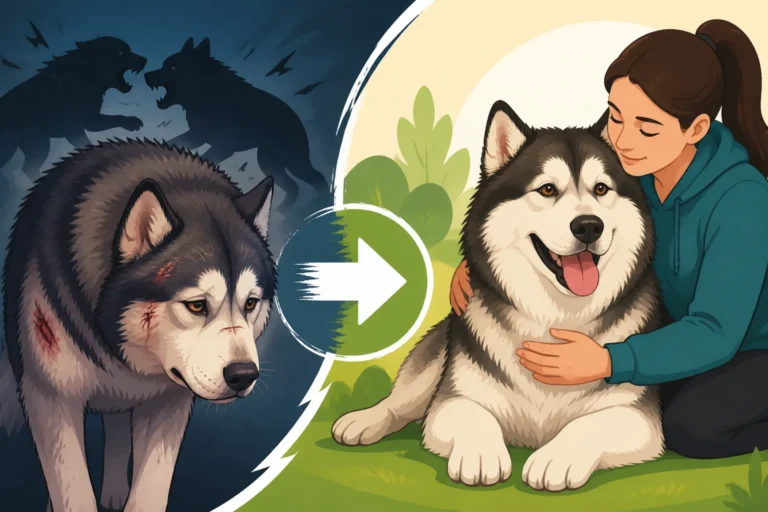
It’s a scenario many Alaskan Malamute owners dread: you’ve poured endless love and effort into socializing your fluffy companion, only for them to reach a certain age and suddenly start reacting aggressively to other dogs of the same sex. This can be incredibly frustrating and even heartbreaking, leaving you wondering what went wrong. This guide will delve into the typical age range when same-sex aggression (SSA) often emerges in Malamutes, exploring the underlying reasons and offering insights into how to understand and manage this challenging behavior.
The Deep-Seated Roots of Same-Sex Aggression in Alaskan Malamutes
When we talk about same-sex aggression in Alaskan Malamutes, it’s important to remember that we’re dealing with a breed steeped in ancient working history and a very specific social structure. These aren't just big, fluffy pets; they are descendants of dogs bred to work in teams, often large groups, but with a clear understanding of hierarchy and boundaries that was crucial for survival in harsh conditions. This history means their social instincts are deeply ingrained and often misunderstood in a modern pet environment.
Imagine a pack of Malamutes in a remote Arctic village, centuries ago. They would work together, sure, but within that working framework, there was an absolute pecking order. Any challenge to that order, especially from a dog of the same sex vying for resources, mates, or status, would be met with swift and decisive action. There wasn't room for endless squabbles; clarity was key to maintaining the peace and efficiency of the team. This innate drive for clear social structure and intolerance of challenges is a significant factor in why same-sex aggression can manifest so strongly in our domestic Malamutes today. They aren't being "mean"; they're often acting on deeply wired instincts that say, "This is my space, my resource, my place, and you, as a competitor, need to respect that."
A Breed Built for Specific Social Dynamics
Alaskan Malamutes possess a strong sense of self and an equally strong desire to maintain their position within a social group, whether that group consists of other dogs or their human family. This isn't necessarily about dominance in the old-school, forceful training sense, but more about clarity and avoiding ambiguity in social interactions. When another dog, particularly one of the same sex, presents itself as a potential challenge or simply doesn't read the subtle signals that a Malamute might be giving, conflict can arise. It's often less about outright attacking and more about establishing boundaries, though these boundary disputes can escalate quickly and dramatically.
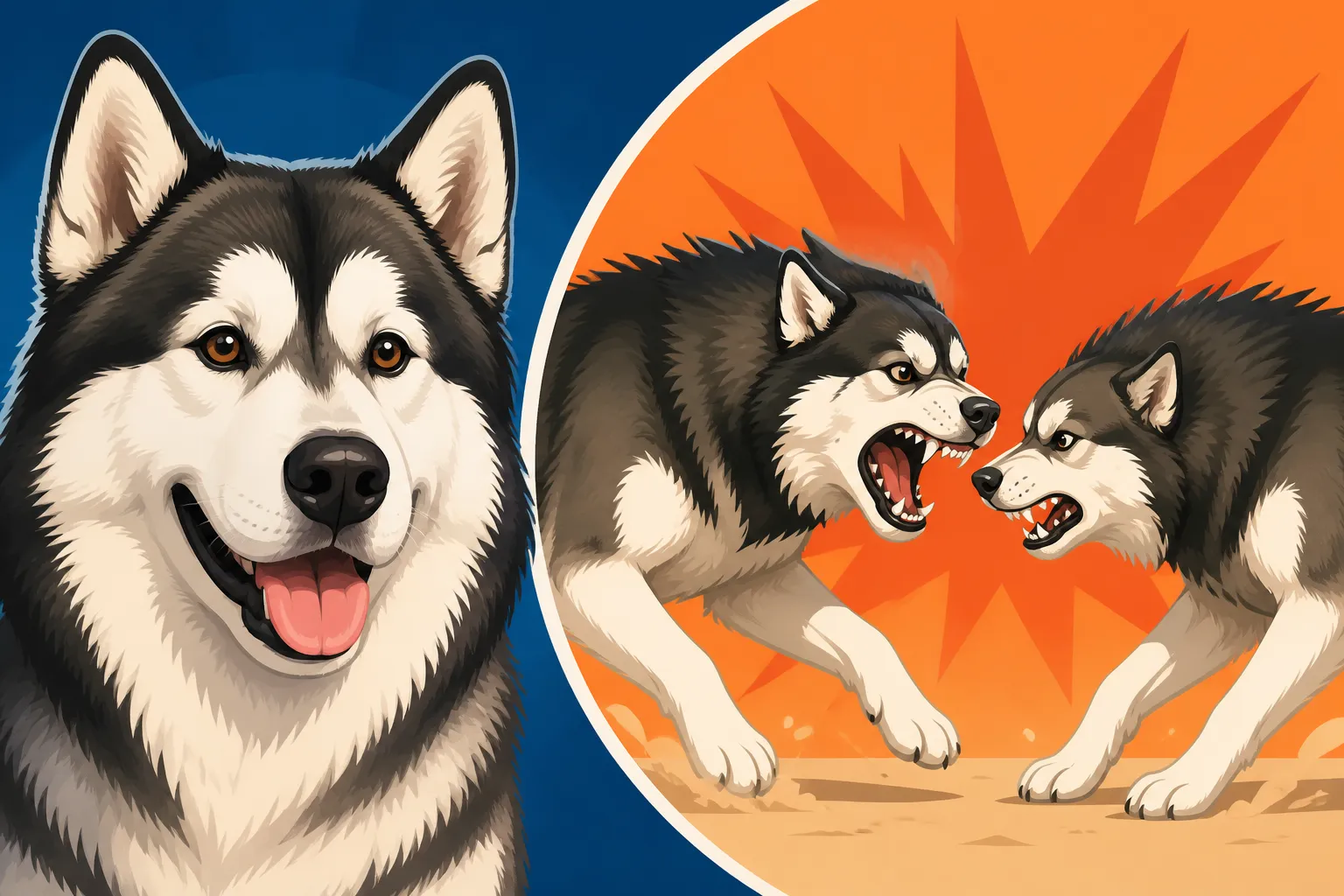
Consider the dynamic between two intact male Malamutes, for example. In the wild or historical working environment, there would typically be one alpha male, or at least a very clear understanding of who leads and who follows. Modern pet life often throws two or more males together, sometimes intact, sometimes neutered, with varying levels of socialization and differing personalities. The inherent drive for a clear hierarchy, coupled with the sheer power and territoriality of a Malamute, can lead to explosive confrontations when both dogs believe they have the right to assert their will. The same applies to females, though sometimes their conflicts can be even more intense, more calculated, and harder to break up once they start. This is why understanding Same Sex Aggression in a Pack Bred Alaskan Malamute is so vital for owners.
The Role of Genetics and Early Experiences
While environment and training play a huge role, genetics are undeniably at the foundation of a Malamute’s predisposition to same-sex aggression. Some lines may simply be bred with a stronger intolerance for challengers, a lower threshold for frustration, or a more assertive personality. A puppy's early experiences are also crucial. A Malamute puppy that isn't adequately socialized with a variety of other dogs, or one that has negative encounters during its formative months, may develop fear-based or anxiety-driven aggression that can mimic or exacerbate true same-sex aggression as they mature.
However, even a perfectly socialized puppy from excellent lines can still develop SSA because, for many Malamutes, it's not purely a training issue; it’s a hardwired trait that surfaces with maturity. Think about it: you can train a dog to perform complex tasks, but you can't train away its prey drive entirely, nor can you completely erase thousands of years of evolutionary history that favored certain social traits. This is why even experienced Malamute owners find themselves asking Why Malamutes Fight Dogs of the Same Sex. It’s a complex interplay of nature and nurture, where genetics set the stage, and early experiences either mitigate or amplify the inherent tendencies. Responsible breeders strive to produce dogs with stable temperaments, but the underlying instinct for same-sex intolerance can still emerge.
When the Switch Flips: Age of Onset for Same-Sex Aggression
The age at which same-sex aggression typically appears in Alaskan Malamutes is one of the most disheartening aspects for owners, because it often happens after the dog has passed the cute, cuddly puppy stage and seems to be a well-adjusted member of the family. It's not usually a sudden overnight transformation, but rather a gradual increase in intolerance that culminates in overt aggression. This makes it particularly challenging, as owners might miss the early, subtle cues before things escalate.
Generally, you can expect to see same-sex aggression begin to manifest during adolescence and into early adulthood. This period, roughly between 12 to 36 months, is a critical time for Malamutes. Just like human teenagers, they are testing boundaries, figuring out their place in the world, and often becoming more confident and assertive in their own skin. This newfound confidence, combined with hormonal shifts and an inherent drive for social clarity, can trigger the onset of SSA. It’s when their inner "wolf" truly comes to the surface, demanding respect and challenging perceived threats from their peers. It's a prime example of The Adolescent Malamute That Rewrites the Rules at Fourteen Months.
The Adolescent Awakening: The 12-36 Month Window
For many Malamutes, the window for the onset of same-sex aggression commonly falls between 12 and 24 months of age. This is often described as the "adolescent awakening" because it's when their adult personality and instincts solidify. They're no longer the playful, sometimes oblivious puppies who might tolerate rude behavior from other dogs. They’ve matured physically and mentally, and their tolerance for perceived challenges or disrespect from same-sex individuals diminishes significantly.
Some Malamutes might show very subtle signs as early as 9-10 months, perhaps a stiff body posture, an intense stare, or a low growl when another dog pushes their boundaries. However, full-blown, undeniable aggression—lunging, snapping, or fighting—is far more common around the 18-month mark, and can extend up to three years of age. For instance, you might have a male Malamute who was perfectly happy at puppy class, playing politely with other young males. Then, around 18 months, he suddenly snaps at another male dog at the park for seemingly no reason, or perhaps a stare-down escalates into a full-blown scuffle. This is the period when owners often realize that the dynamic has irrevocably shifted.
| Age Range (Months) | Typical Behavioral Changes | Warning Signs for SSA |
|---|---|---|
| 0-12 (Puppyhood) | Generally playful, curious, learning social cues. | Occasional rigid body language, resource guarding, intense staring. |
| 12-24 (Adolescence) | Increased confidence, testing boundaries, hormonal shifts, developing adult personality. | Stiffening, lip curls, growling at same-sex dogs, refusing to back down, escalating confrontations. |
| 24-36 (Early Adulthood) | Full maturity, stronger territorial instincts, established social preferences. | Overt aggression, lunging, snapping, fighting with minimal provocation from same-sex dogs. |
| 36+ (Adulthood) | Established patterns, less prone to sudden new onset of SSA, but existing SSA may intensify. | Consistent intolerance, no longer able to share space with same-sex dogs, requires strict management. |
Subtle Signs Versus Overt Conflicts
Before an all-out brawl, Malamutes often give a multitude of subtle signals that many owners, especially those new to the breed, might miss. These early indicators are crucial because recognizing them can help prevent escalation. Look for changes in body language: a stiffening of the body, a hard stare, raised hackles, a low growl or "rumble" that isn't quite a bark, or a sudden refusal to engage in play with a specific dog. Your Malamute might attempt to block another dog's access to you, a toy, or a space, or might subtly nudge them away with their body.
For example, your female Malamute, Luna, who used to greet every dog with a wagging tail, might start doing a wide arc around other female dogs on walks, or give a prolonged, unblinking stare that makes the other dog uncomfortable. If the other dog doesn't respond by backing off, Luna might escalate to a snarl or a quick lunge as a warning. These are not unprovoked attacks; they are often the culmination of a series of ignored signals. Recognizing these early, subtle cues is paramount to managing the behavior. If you notice these shifts, especially in the 12-36 month age range, it's a huge red flag that same-sex aggression is starting to manifest, and you need to take proactive steps immediately to prevent more serious incidents.
Navigating the Challenges: Managing Same-Sex Aggression
Discovering that your beloved Malamute has same-sex aggression can feel like a punch to the gut. It changes how you walk them, how you socialize them, and even how you view dog parks forever. The key is to understand that while you might not be able to "cure" it, you absolutely can manage it effectively to ensure the safety of your dog and others. This isn't about shaming; it's about being realistic and proactive. Many owners find themselves isolated, feeling like they can't take their dog out anymore, but there are indeed ways to navigate this.
The first step in management is always prevention. This means setting your Malamute up for success and avoiding situations where aggression is likely to occur. It’s also about understanding that management is often a lifelong commitment. You might hear advice to "socialize them more," but for a Malamute with true same-sex aggression, simply throwing them into a dog park with unknown dogs of the same gender is a recipe for disaster. Instead, focus on controlled, positive interactions and strict management strategies.
Proactive Strategies for Prevention
Prevention starts early, even before you bring your Malamute puppy home. Choosing a responsible breeder who screens for temperament and health can significantly reduce the likelihood of extreme aggression. Once home, early, positive socialization is critical, but it needs to be quality socialization, not just quantity. This means exposing your puppy to a wide variety of sights, sounds, people, and well-behaved, stable adult dogs of all sexes, in controlled, positive environments. The goal isn't just play, but learning appropriate greetings and body language.
As your Malamute enters adolescence, this type of careful socialization becomes even more important. If you notice any of those subtle stiffening or staring behaviors towards same-sex dogs, immediately manage the situation by creating distance. Avoid off-leash dog parks entirely, as these are often chaotic environments where you have little control. Instead, seek out supervised playdates with known, friendly, and tolerant dogs, or focus on parallel walks where dogs walk alongside each other at a distance without direct interaction. Whether a Malamute Should Be an Only Dog is a question many people with SSA Malamutes ultimately grapple with, as it often simplifies household management greatly.
Living with and Mitigating Aggression
Once same-sex aggression has truly manifested, the focus shifts to mitigation and living safely with the behavior. This usually involves a combination of strict management, consistent training, and often, professional help. A certified professional dog trainer or veterinary behaviorist specializing in aggression can provide invaluable guidance, helping you understand your individual dog's triggers and develop a tailored management plan. They can also differentiate between true SSA and other forms of reactivity. BAXTER & Bella, for instance, offers online training programs and resources that can help owners understand canine body language and positive reinforcement techniques, which are crucial even for managing challenging behaviors.
A fundamental aspect of living with SSA is managing expectations. You may need to accept that your Malamute might never be a "dog park dog." Instead, focus on enriching their life in other ways: regular exercise, training for focus and obedience (like a solid "leave it" or "attention"), and individual play. This often means carefully planning walks to avoid common dog areas or using gear like a sturdy harness and a double-ended leash for better control. For males, neutering might sometimes help reduce the intensity, but it's not a guaranteed fix, especially if the aggression is already well-established. Whether Neutering Calms an Alaskan Malamute is a common question, but the answer is complex and varies greatly.
The Importance of Safe Spaces and Management Tools
Creating safe spaces within your home and having the right management tools are non-negotiable for a Malamute with same-sex aggression, especially if you have multiple dogs or frequent visitors. This might mean "crate and rotate" if you have another dog of the same sex, ensuring they are never unsupervised together. Heavy-duty crates are essential; you can find excellent options on Amazon, designed to withstand a powerful Malamute. How Crate and Rotate Works With Two Malamutes provides a detailed guide for this crucial management strategy.
Muzzles are another critical tool that every Malamute owner should consider, especially those dealing with aggression. A well-fitted basket muzzle, introduced positively, allows your dog to pant, drink, and take treats, while preventing bites. It's a safety tool, not a punishment, and it can significantly reduce stress during necessary interactions or vet visits. Learning Why Every Malamute Should Be Muzzle Trained is an empowering step, giving you confidence and control in potentially high-stress situations. Remember, living with same-sex aggression is challenging, but with the right knowledge, tools, and commitment, you can ensure your Malamute lives a full and happy life while keeping everyone safe.
Disclaimer
This article is for general informational purposes only and does not constitute professional advice. Laws, prices and regulations vary by location and change over time. Consult a qualified professional for guidance on your specific situation.