Whether a Malamute Should Pull in Warm Weather
The joy of seeing your Alaskan Malamute in harness, eagerly pulling, is unmatched. It's what they live for, a deep-seated instinct passed down through generations. However, that powerful drive also comes with a significant responsibility: ensuring their safety, especially when the weather isn't perfectly crisp and cold. Many Malamute owners grapple with the dilemma of wanting to provide their dogs with this essential activity while simultaneously fearing the dangers of overheating. This guide will walk you through the realities of pulling with your Malamute in warmer weather, helping you understand their physiology, recognize warning signs, and implement crucial safety measures to protect your beloved companion.
Understanding the Alaskan Malamute's Unique Physiology for Cold Weather Work
Alaskan Malamutes are magnificent animals, bred over centuries by the Mahlemut people of the Arctic for hauling heavy loads over long distances in brutal cold. Every aspect of their physical design, from their dense coat to their metabolism, is optimized for survival and work in frigid environments. This incredible adaptation, however, becomes their greatest vulnerability when temperatures rise.
The Double Coat: An Insulating Powerhouse
Think about their coat for a moment. It's not just thick; it's a marvel of natural engineering. Malamutes possess a dense, oily outer guard coat that repels snow and ice, creating a protective barrier. Beneath that lies an incredibly thick, woolly undercoat that acts as phenomenal insulation, trapping a layer of warm air close to their body. In winter, this is literally life-saving, allowing them to sleep comfortably in the snow Whether a Malamute Sleeps in the Snow by Choice. But in warm weather, this same magnificent coat works against them. It effectively traps heat, making it incredibly difficult for their bodies to cool down.
It's a common misconception that shaving a Malamute will help them in summer. This is absolutely not true and can be detrimental. Their coat actually helps create an air barrier that can protect them from direct sun, and shaving removes this protection, exposing their delicate skin to sunburn and hindering their natural ability to regulate temperature. A properly maintained coat, free of mats and dead undercoat (especially during the dreaded "coat blow" The Malamute Coat Blow That Fills a Vacuum in an Afternoon), is essential for even passive cooling.
Metabolic Efficiency: Fueling a Cold-Weather Engine
Beyond their fur, Malamutes have an incredibly efficient metabolism. Their bodies are designed to conserve energy and generate heat, converting food into warmth and sustained power rather than burning through calories quickly. This is fantastic when they're pulling a sled across an icy tundra, but it means their internal furnace is always stoked. When they exert themselves, especially by pulling, this metabolic efficiency kicks into overdrive, generating even more internal heat.
Unlike humans who sweat profusely to cool down, dogs primarily cool themselves by panting. While panting is effective, a Malamute's heavy build and dense coat mean they have a smaller surface area relative to their body mass for heat exchange, and their deep chest cavity holds more warm air. This means they have to work significantly harder than many other breeds to dissipate heat, and this system can quickly become overwhelmed. This efficient, heat-generating metabolism is Why an Alaskan Malamute Eats Less Than Expected in milder conditions, as they don't need as many calories to maintain body temperature.
Why Overheating is a Major Concern
Given these physiological traits, overheating isn't just a risk for a Malamute; it's a constant threat that demands vigilance from their owners. A dog that overheats can rapidly progress from mild discomfort to severe heat exhaustion, and then to life-threatening heatstroke. The internal body temperature rises to dangerous levels, causing organ damage, neurological issues, and even death if not addressed immediately.
The consequences are severe and often irreversible. It's a heartbreaking reality that Summer Is the Season That Kills Alaskan Malamutes, and often it's due to well-meaning owners pushing them just a little too far in conditions that seem mild to a human but are dangerously warm for a Malamute. Their sheer enthusiasm for pulling can also mask their discomfort until it's too late, as they often push themselves to please their handler or simply because the instinct to work is so strong.
Defining "Warm Weather" for an Alaskan Malamute: More Than Just the Thermometer
When we talk about "warm weather" for an Alaskan Malamute, it's crucial to understand that their threshold is far lower than what a human would consider warm. What feels like a pleasant spring day to us can be a serious health risk for them. It's not just the ambient air temperature, but a combination of factors that contribute to their overall thermal load.
Temperature and Humidity: The Deadly Duo
For an Alaskan Malamute, temperatures typically above 60°F (15°C) begin to warrant extreme caution, especially if they are exercising. Once the mercury hits 70°F (21°C) or higher, the risks become substantial, and sustained pulling activity should generally be avoided altogether. But temperature isn't the only player; humidity is arguably just as critical, if not more so.
High humidity significantly impairs a dog's ability to cool itself through panting. When the air is saturated with moisture, the evaporative cooling process from their breath becomes far less efficient. Imagine trying to cool down by sweating in a sauna – it's incredibly difficult. This means that a relatively moderate temperature, say 65°F (18°C), with high humidity can be more dangerous for a Malamute pulling a load than a dry 70°F (21°C). Always check the humidity levels, not just the temperature, before considering any strenuous activity. Signs an Alaskan Malamute Is Too Hot can be subtle initially, but humidity exacerbates them quickly.
Ground Temperature: A Hidden Hazard
While you might be focusing on the air temperature, don't forget the ground. Asphalt, concrete, and even dark-colored dirt can absorb and radiate a tremendous amount of heat. On a sunny 70°F (21°C) day, asphalt can easily reach 120-140°F (49-60°C). Imagine walking barefoot on that! Your Malamute's paw pads, while tough, are not impervious to such extreme heat. Overheated paw pads can lead to burns, blistering, and immense pain, which is not only an injury in itself but also a significant contributor to overall body temperature.
Always perform the "five-second rule" test: place the back of your hand on the pavement for five seconds. If it's too hot for your hand, it's too hot for your dog's paws. This simple test is a crucial habit, especially when considering any activity outside. Remember, even if the air feels okay to you, the ground could be a dangerous skillet under their feet.
Reading Your Malamute's Subtle Signals of Discomfort
Malamutes are stoic and incredibly eager to please, often pushing themselves beyond their limits for their owners. This means you cannot rely on them to tell you they're too hot. You must become an expert at reading their body language. Early signs of discomfort might include:
- More frequent or heavier panting than usual for the level of exercise.
- A frantic, open-mouthed pant with the tongue flattened and wide.
- Seeking shade or slowing down (though some will fight this instinct).
- Changes in gum color from healthy pink to a darker red or even pale.
- Thick, ropy saliva.
- Looking back at you with a worried or confused expression.
It's vital to know these Signs an Alaskan Malamute Is Overheating and act before they progress to stumbling, disorientation, vomiting, or collapse, which are signs of severe heatstroke. Early intervention is key to preventing a life-threatening emergency.
Strategies for Safe Pulling in Marginal Conditions
When conditions aren't ideal but aren't prohibitively hot, careful management and thoughtful preparation are absolutely essential. This isn't about pushing boundaries, but about mitigating risks to allow for some activity.
Adjusting Your Schedule and Route
The easiest and most effective way to manage warm-weather pulling is to adjust when and where you go. Forget midday excursions. The coolest parts of the day are typically before sunrise and after sunset. An early morning hook-up, as the sun is just beginning to lighten the sky, or a late evening run once the pavement has cooled down, are your best bets. Even then, you must constantly monitor conditions.
Consider the route itself. Opt for shaded trails, wooded paths, or areas with natural ground cover like grass or packed dirt, which retain less heat than asphalt or concrete. Avoid open fields or roads where there's no relief from direct sunlight. Shorten the duration and intensity of your pull significantly. Instead of a long, sustained pull, consider shorter bursts with frequent, extended rest stops in the shade. It’s a completely different approach than a winter freight run, and their enthusiasm for the job means you, the owner, need to be the responsible party setting the limits. This selective training can still tap into their natural desire to work Why a Pet Malamute Still Needs to Pull.
Essential Gear for Heat Management
While gear can never replace common sense and caution, certain items can help in marginal conditions.
- Cooling Vests: These vests, often soaked in water, provide evaporative cooling as the water slowly evaporates. Ensure it fits well and doesn't restrict movement or airflow unnecessarily. You can find a wide selection of these by searching online retailers like Amazon.
- Paw Protection: Dog booties can protect paws from hot surfaces, though they can also trap heat around the paws, so their use requires careful monitoring. Consider them for brief stretches over unavoidable hot spots.
- Plenty of Water: This is non-negotiable. Carry ample fresh, cool water for both you and your dog. A portable water bowl is a must. Offer water frequently during breaks, not just at the end of the activity. How to Cool an Overheated Alaskan Malamute often starts with immediate, controlled hydration.
- Harness Choice: Ensure your pulling harness is well-fitting and made of breathable materials. Avoid harnesses with excessive padding or restrictive designs that could trap heat or rub when wet.
Remember, no amount of gear can make pulling safe in truly hot conditions. These are aids for marginal weather, not solutions for dangerous heat. Even the most robust gear will fail if the underlying conditions are unsafe.
Hydration and Rest: Non-Negotiables
Hydration isn't just about offering water; it's about making sure your Malamute is actually drinking it and allowing their body to process it. Encourage frequent, small drinks of water during breaks. If your dog isn't keen on drinking, sometimes adding a little ice or even a tiny splash of low-sodium broth can entice them.
Rest stops are just as critical as the activity itself. These aren't just for you to catch your breath; they're for your Malamute to recover, pant off excess heat, and rehydrate. Seek out shady spots for these breaks. During rest, gently check your dog's gums and overall demeanor. Observe their panting rate. If their panting remains heavy and frantic even after several minutes of rest in the shade, it's a clear sign they're struggling to cool down, and it's time to stop. These careful observations are part of the critical bond you build with your dog, understanding their needs, a skill often emphasized in comprehensive training programs. Even if it's not specific to pulling, general training resources like BAXTER & Bella can help owners develop a deeper understanding of their dog's behavior and signals.
When to Absolutely Put the Harness Away: Prioritizing Your Malamute's Health
There are times when no amount of adjustment or gear will make pulling safe. Recognizing these critical junctures and making the tough decision to postpone or cancel the activity is the hallmark of a responsible Malamute owner. Their lives depend on your judgment.
Recognizing the Early Signs of Heat Stress
It bears repeating: your Malamute's willingness to work is not an indicator of their comfort level in the heat. Their drive can be so strong that they will push themselves into danger. Therefore, you must be hyper-aware of the subtle shifts that indicate heat stress.
- Excessive Panting: While normal after exercise, if it becomes rapid, shallow, and difficult, even during rest, it's a red flag.
- Bright Red Gums: A healthy Malamute's gums are pink. If they become very dark red or even blue/purple, it indicates poor circulation and oxygenation.
- Thick, Ropy Saliva: Normal saliva is clear and watery. Thick, foamy, or stringy saliva is a sign of dehydration and overheating.
- Lack of Coordination: Stumbling, weakness, or disorientation are severe signs that require immediate action.
- Seeking Water or Shade Obsessively: While normal, an urgent, frantic search for water or shade is a sign of extreme discomfort.
If you observe any of these signs, stop immediately. Get your Malamute to the coolest, shadiest spot available. Begin cooling efforts gently and swiftly, such as offering water, applying cool (not ice cold) water to their paw pads and armpits, and getting them into an air-conditioned car if possible.
The Dangers of Heatstroke: A Life-Threatening Emergency
Heatstroke is not just "being hot"; it's a medical emergency where the body's core temperature rises to dangerous levels, typically above 104°F (40°C). At this point, cellular damage begins to occur, impacting vital organs like the kidneys, liver, brain, and heart. The symptoms become much more severe:
- Collapse or inability to stand.
- Vomiting and diarrhea (which can be bloody).
- Seizures.
- Unconsciousness.
- Extremely rapid heartbeat.
- Glassy eyes.
If your Malamute shows any signs of heatstroke, cooling efforts are paramount, but immediate veterinary attention is absolutely critical. Whether a Malamute Recovers From Heat Stroke depends heavily on how quickly and effectively treatment is initiated. Do not delay. Heatstroke can lead to permanent organ damage or be fatal within minutes to hours.
Making the Tough Decision: Listening to Your Dog
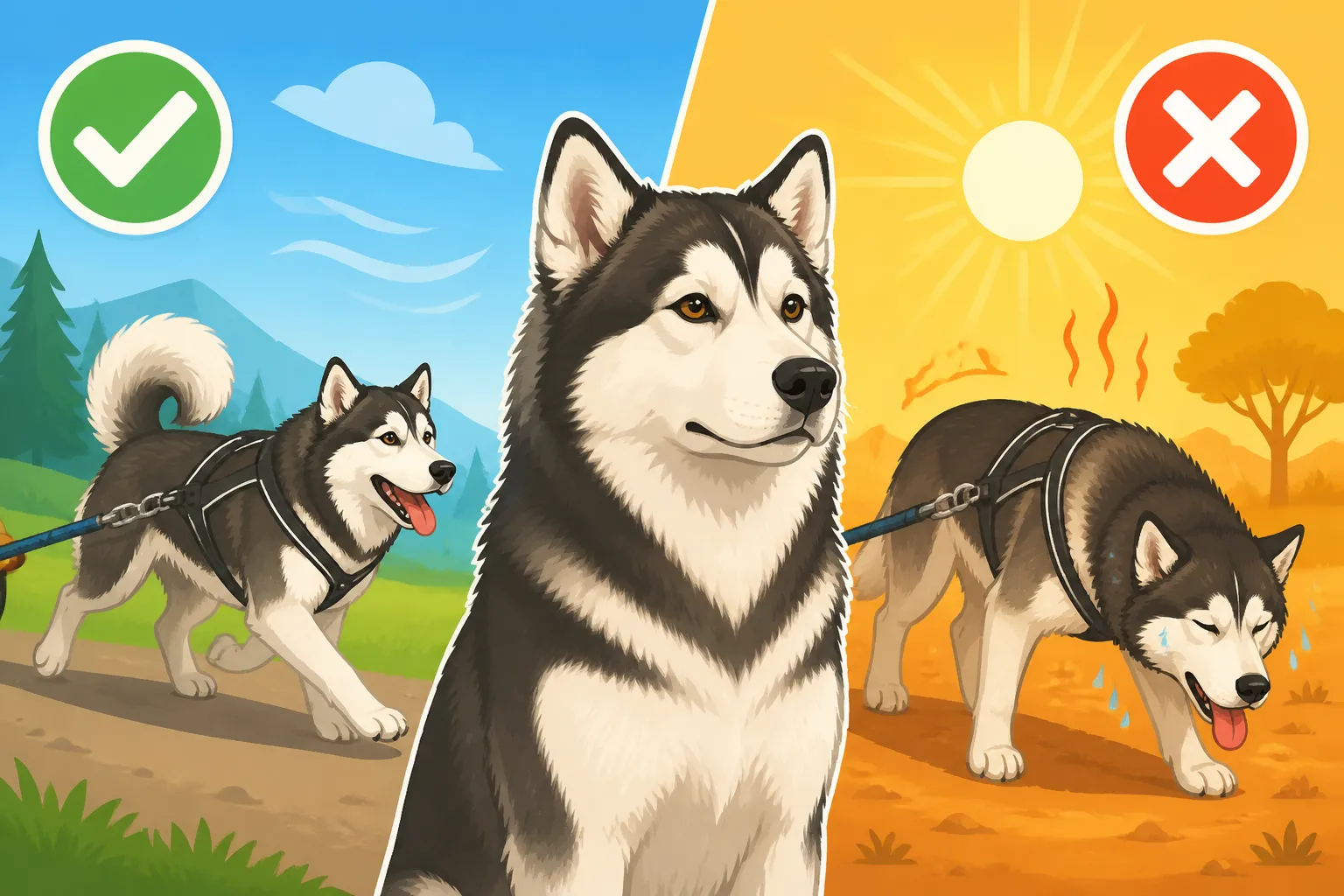
Ultimately, the decision of whether to pull in warm weather rests solely with you. It requires a realistic assessment of the environmental conditions, a deep understanding of your Malamute's individual tolerance, and an unwavering commitment to their safety above your desire for them to work. A general guideline table can help inform your decisions:
| Air Temperature (F/C) | Humidity Level | Activity Level for Malamutes | Precautions and Risk Level |
|---|---|---|---|
| Below 40°F (4°C) | Any | Full activity, long duration | Low risk, ideal conditions |
| 40-55°F (4-13°C) | Low-Moderate | Moderate activity, good duration | Low to Moderate risk, monitor |
| 55-65°F (13-18°C) | Low | Light activity, short duration | Moderate risk, vigilant monitoring |
| 55-65°F (13-18°C) | Moderate-High | Very light activity, very short duration or none | Moderate to High risk, extreme caution |
| 65-70°F (18-21°C) | Low | Minimal activity, shade only | High risk, consider postponing |
| 65-70°F (18-21°C) | Moderate-High | No pulling activity | Extreme risk, do not pull |
| Above 70°F (21°C) | Any | No pulling activity, minimal outdoor time | Life-threatening risk, avoid activity |
This table is a general guide; individual Malamutes will have different tolerances based on age, fitness level, coat density, and overall health. Some older Malamutes, for instance, might be less tolerant of heat Caring for an Alaskan Malamute Past Eight. Always err on the side of caution. It's far better to have a disappointed Malamute who misses a pull than one fighting for their life. Your dog loves you unconditionally, and part of that love is trusting you to make wise choices for their well-being.
Disclaimer
This article is for general informational purposes only and does not constitute professional advice. Laws, prices and regulations vary by location and change over time. Consult a qualified professional for guidance on your specific situation.