An Alaskan Malamute in a Home With Cats or Small Dogs
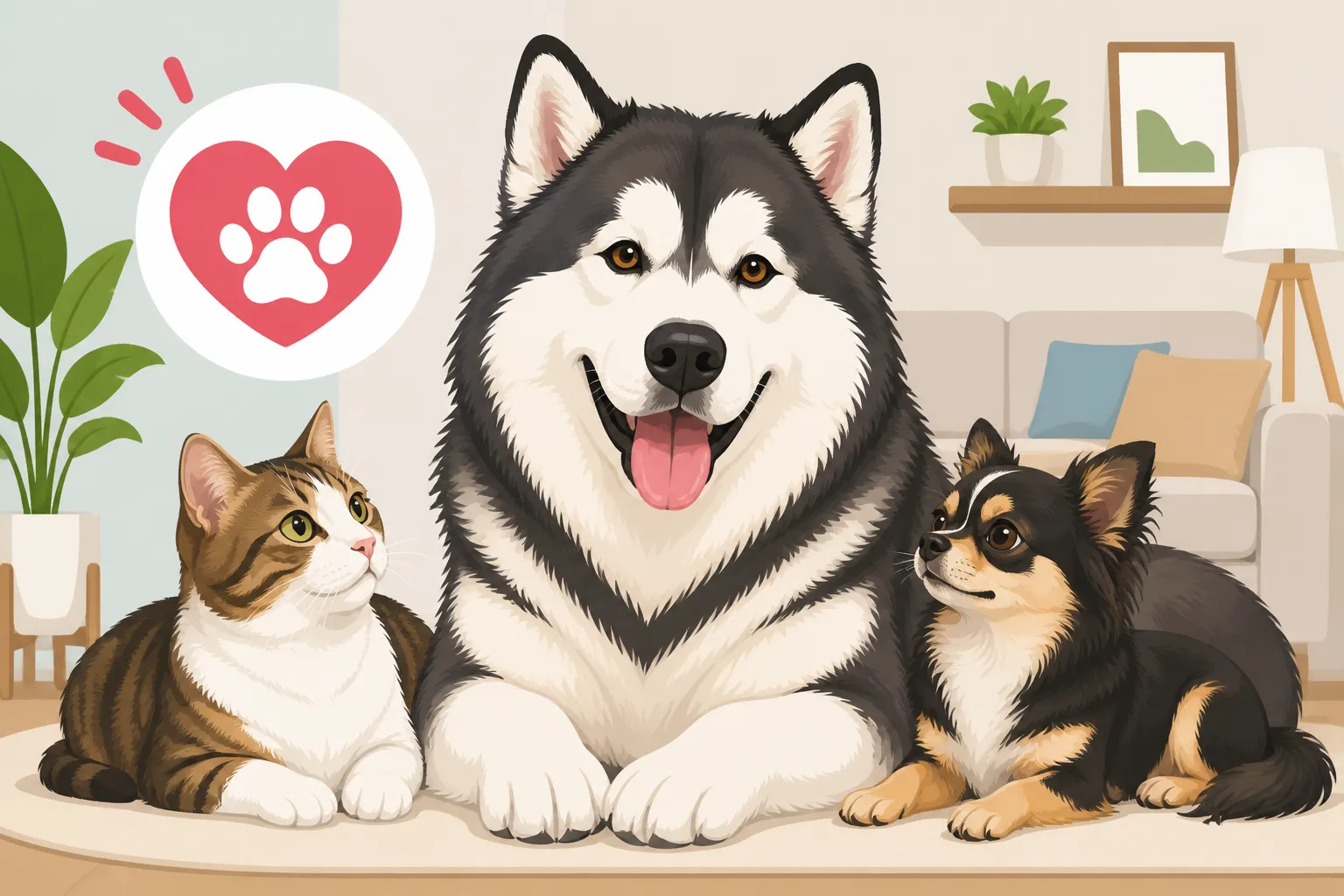
It’s a heartbreaking scenario, but one that plays out in many homes: you adore your Alaskan Malamute, that magnificent, loyal, and often goofy giant, but you also have a beloved cat or a tiny dog, and you're constantly living with a knot of anxiety about them coexisting. The truth is, while we wish all our furry family members could live in perfect harmony, the Malamute’s deep-seated instincts often put smaller animals at profound risk. This guide will realistically explore the challenges, the management strategies, and the hard truths of having an Alaskan Malamute in a home with cats or small dogs.
Understanding the Alaskan Malamute's Innate Prey Drive
To truly understand why an Alaskan Malamute and smaller household pets can be a challenging, if not dangerous, combination, we have to go back to their roots. These incredible dogs were not bred to be gentle companions with small, furry creatures; they were bred for survival in harsh arctic conditions, where hunting was a necessity.
The Ancestral Hunt for Survival
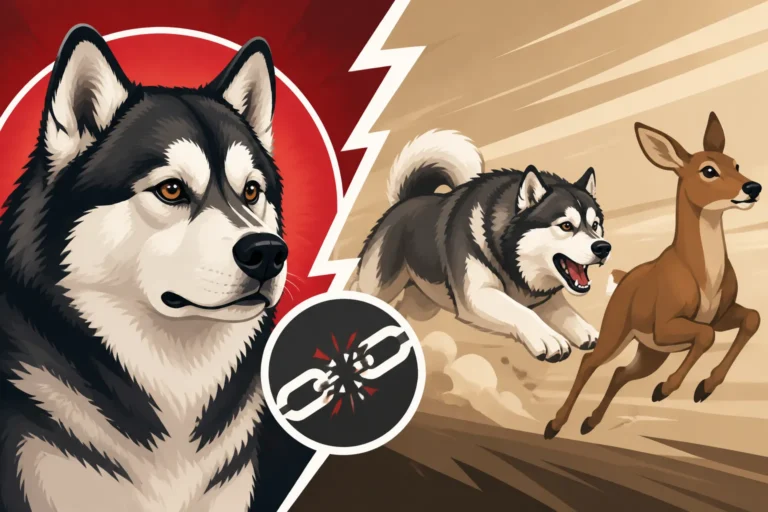
Imagine the Mahlemut people, for whom the Alaskan Malamute was developed. Their lives, and the lives of their dogs, depended on successfully hunting for food and freighting vital supplies across vast, unforgiving landscapes. This wasn't a casual stroll; it was a matter of life and death, requiring immense strength, endurance, and an incredibly keen predatory instinct. These dogs were bred to spot, chase, and capture prey, sometimes working in concert with humans to bring down large game like seals and even bears. A Malamute Was Bred to Hunt Bears and It Has Not Forgotten. This isn't a behavior that can simply be "trained out" like house-training or leash pulling; it's deeply ingrained, part of their genetic makeup, hardwired into their very being over centuries of selective breeding. It's the engine that drove their survival, and consequently, the survival of the people who depended on them.
What this means for your modern-day Malamute is that the sight, sound, or even just the sudden movement of a small, scurrying animal can trigger an almost involuntary, powerful predatory response. It’s not aggression in the typical sense; it’s a functional, instinctive drive. Your Malamute isn't being "mean" or "disobedient" when it fixates on the neighbor's cat or tries to stalk your chihuahua; it's simply being what it was bred to be. We tend to anthropomorphize our dogs, thinking they should understand our domestic rules, but some instincts run far deeper than any command we can teach.
Recognizing the Signs of Prey Drive
Many owners mistakenly believe that if their Malamute isn't actively chasing, it doesn't have a high prey drive. However, the signs can be far more subtle, and recognizing them early is absolutely crucial for the safety of your smaller pets. It starts with an intense focus: the ears might prick forward, the body might stiffen, and the gaze becomes unblinking, locked onto the small animal. There might be a low growl or a whine, or even absolute silence, which can be even more chilling.
You might notice stalking behavior – a low crouch, slow deliberate movements, almost like a wolf in the wild. The tail might be held low or wagging with a specific, tight intensity, not the loose, happy wag of greeting. Some Malamutes might even let out a soft "woo" sound, which might seem innocuous, but when coupled with other behaviors, it's a clear signal of arousal and intent. This isn't just curiosity; it’s an active engagement of their predatory sequence. Ignoring these early warning signs and hoping for the best is a gamble you simply cannot afford to take, as the escalation can be terrifyingly swift. It's essential to understand How Strong a Malamute's Prey Drive Is.
Why Training Alone Isn't Enough
This is often the hardest pill for Malamute owners to swallow, and it’s a source of immense frustration and guilt. Many invest countless hours, dollars, and emotional energy into training, believing that with enough consistency, their Malamute will learn to ignore a cat or a small dog. While training can absolutely help manage certain behaviors and build a strong relationship with your Malamute, it fundamentally cannot erase instinct. You can teach a Malamute a rock-solid "leave it" command for a dropped treat, but that's a world away from asking them to override the primal urge to pursue a perceived prey animal.
The problem isn’t a lack of intelligence or willingness on the Malamute's part; it’s the sheer power of the drive. In a moment of high arousal, all the training in the world can dissolve in an instant, replaced by that overwhelming instinct. Think of it like trying to teach a human not to flinch when something flies at their face – it's an involuntary response. For a Malamute, the sight of a fleeing small animal can trigger a similar, powerful, and often unthinking reaction. This isn't to say training is useless; quite the opposite. But it must be understood as a management tool to mitigate risk, not a cure for a deeply embedded trait. For more on what these dogs were bred to do, consider What an Alaskan Malamute Was Bred to Hunt.
The Challenges of Malamutes and Cats
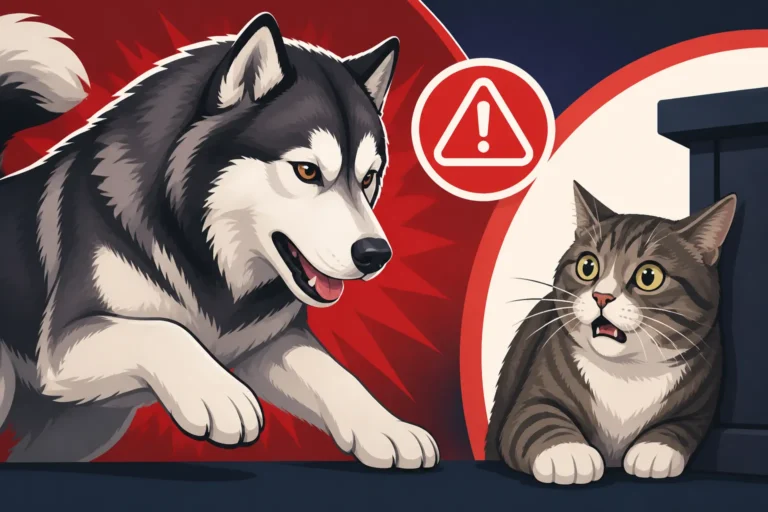
The dynamic between an Alaskan Malamute and a cat is perhaps the most classic example of interspecies tension in a household. Cats are typically small, fast-moving, and have a natural inclination to flee when startled, all of which are powerful triggers for a Malamute's prey drive.
The "Raised Together" Myth
One of the most persistent myths is that if a Malamute puppy is raised with a cat, they will automatically be safe companions for life. While early exposure can certainly lead to a degree of tolerance or even a bond with that specific cat, it does not magically extinguish the Malamute's underlying prey drive. Many stories abound of Malamutes who lived peacefully with the family cat for years, only to suddenly, and without warning, turn on them. The triggers can be varied: a sudden loud noise, a territorial dispute over food, or simply a moment where the cat's natural movement (a sprint across the room, a climb up a curtain) suddenly flips a switch in the Malamute's brain.
This isn't malicious intent; it's instinct taking over. The Malamute might see the family cat as "part of the pack" or "not prey" most of the time, but that instinct is always simmering beneath the surface. It's like having a loaded gun in the house – even if it's usually safe, the potential for an accident is always there. Relying solely on the "raised together" theory can lead to a false sense of security, and it's a risk too great for the cat's life. Owners need to understand that How Safe a Malamute Raised With a Cat Is often depends more on constant vigilance than on early socialization alone.
Managing the Risk: Constant Vigilance
Given the inherent risks, owning an Alaskan Malamute with a cat means accepting a life of constant, proactive management. This isn't about letting them "work it out"; it's about creating an environment where a dangerous interaction can never happen. This means physical separation is paramount. Your cat needs safe zones the Malamute cannot access – high shelves, cat trees, cat flaps leading to Malamute-free rooms, or even entire floors of the house that are off-limits to the dog. Baby gates and closed doors become your best friends.
Feeding times must be separated, ideally with the cat eating in a high place or a different room. Never leave them unsupervised, even for a moment. This includes when you step out to grab the mail, or if you're engrossed in a movie. Many tragic incidents happen in moments of perceived safety or brief distraction. You also need to consider outdoor spaces. Is your yard secure enough to prevent the Malamute from chasing outdoor cats, or worse, escaping to hunt them? It's a huge commitment, and it requires a complete shift in how you view your home and your pets' interactions.
When Coexistence Isn't Possible
Despite best efforts, there are times when the risk is simply too high, or the stress of constant management becomes unbearable. If you live in a small space, or if your Malamute shows an intense, unyielding fixation on the cat, then a truly safe coexistence might not be realistic. You might find yourself in a perpetual state of anxiety, and that's not fair to you, your Malamute, or your cat. It's an incredibly painful decision, but sometimes, for the safety and well-being of all animals involved, rehoming one of them becomes the most humane choice.
This isn't a failure on your part, but a recognition of biological realities. Prioritizing the life of your cat over your desire for a mixed-species household is a responsible act. Sometimes, the love we have for our pets means making the hard choice that gives one of them a better, safer life elsewhere, or preventing a tragedy from occurring. These decisions are never easy, and they often lead to immense guilt, but the alternative can be far more devastating.
Malamutes and Small Dogs: A Different Kind of Risk
While cats often trigger the pure predatory sequence, introducing a small dog to a Malamute can present a different, yet equally dangerous, set of challenges. It's not always about explicit hunting; sometimes it's simply a catastrophic mismatch in size, play style, and social dynamics.
Size Disparity and Play Styles
Imagine two children trying to play: one is a strapping teenager, the other a toddler. Even if the teenager is gentle and means no harm, an accidental bump or a clumsy step could seriously injure the smaller child. The same principle applies, perhaps even more so, to dogs of vastly different sizes. A Malamute, even in innocent play, can inflict severe injury on a small dog. A playful paw swat meant to engage another large dog could crush a tiny chihuahua. A "friendly" body slam could lead to broken bones or internal injuries.
Furthermore, their play styles are often incompatible. Malamutes engage in rough, physical play – body checking, mouthing, wrestling, and chase. Small dogs, while they can be feisty, are simply not built for this kind of interaction. What the Malamute perceives as a fun game, the small dog experiences as terrifying and potentially fatal. The risk isn't always outright aggression; it's the potential for accidental injury during moments of high energy or excitement. Owners need to be acutely aware of The Risk a Malamute Poses to a Small Dog.
Pack Dynamics and Territoriality
Malamutes are pack animals, and while they are generally friendly with humans, their interactions with other dogs are often nuanced and can be complex, especially with those outside their immediate "pack" or those they perceive as weak or challenging. Small dogs can sometimes trigger a Malamute's territorial instincts or even a dominance display. A small dog yapping or charging at a Malamute might be seen as an annoying pest or, worse, an insolent challenge, especially to an intact male or a strong-willed female.
While Malamutes are not typically known for being overtly aggressive towards all other dogs (they can often be quite tolerant of larger, confident dogs), a small dog's frantic energy or high-pitched barking can escalate a situation quickly. The Malamute might not view the small dog as prey in the same way it views a cat, but it might view it as an irritant or something to be "put in its place." The consequences of a Malamute deciding to correct a small dog can, of course, be fatal for the smaller animal.
Introducing a Small Dog to an Existing Malamute
If you already have a Malamute and are considering bringing a small dog into your home, you are facing an uphill battle that requires immense planning and patience. This is not a casual introduction; it's a careful, controlled, and potentially months-long process. You cannot just put them in a room together and hope for the best.
- Initial Separation: For weeks, perhaps even months, the small dog and Malamute should be kept completely separate. This means separate rooms, separate outdoor times, and only supervised interactions through barriers like baby gates.
- Scent Swapping: Introduce their scents to each other by swapping bedding or toys. This allows them to become familiar with each other's presence without direct interaction.
- Parallel Walks: Once comfortable with scents, try walking them on separate leashes, far apart, in the same area. Gradually decrease distance, always ensuring both are calm and responsive to your commands.
- Muzzle Training: Your Malamute should be fully muzzle-trained before any direct, even brief, interaction. This isn't a punishment; it's a safety tool. A comfortable, well-fitting basket muzzle allows the Malamute to pant, drink, and even take treats, but prevents bites. You can find excellent muzzles on platforms like Amazon. For more on this, check out When a Malamute Should Wear a Muzzle and Why Every Malamute Should Be Muzzle Trained.
- Short, Supervised, Muzzled Interactions: Start with very short, controlled interactions, with the Malamute muzzled and both dogs on leashes held by separate, strong handlers. Focus on calm behavior, rewarding both dogs for ignoring each other or for calm attention to you.
- Constant Supervision and Management: Even if they seem to tolerate each other, never leave them unsupervised. The same strict management rules that apply to cats will apply here: gates, crates, and separate spaces are essential for the long term. This is an immense commitment, and for many, the risk is simply too high.
Implementing Strict Management Strategies for Safety
When you have an Alaskan Malamute living with smaller animals, "management" isn't a suggestion; it's the absolute bedrock of safety. This isn't about being overprotective; it's about being realistic and proactive to prevent tragedy.
Physical Barriers and Confinement
Your home must become a fortress of safety for your smaller pets. This means strategically placed physical barriers are non-negotiable.
- Baby Gates: Heavy-duty, pressure-mounted baby gates are excellent for sectioning off areas of the house. You can create "cat-only" zones or rooms where your small dog can retreat without fear. Ensure these gates are tall and sturdy enough that your Malamute cannot jump over them or knock them down. Malamutes are surprisingly adept at breaching barriers, so invest in quality.
- Crates: Crates are not just for training; they are invaluable safety tools. Your Malamute should have a comfortable, appropriately sized crate where they can relax when you cannot actively supervise them. Similarly, your small dog should have a safe crate or playpen that the Malamute cannot access. This allows both animals to have their own secure space.
- Secured Rooms: Designate certain rooms as off-limits to the Malamute. Install robust door locks or use sturdy, permanent gates. Ensure these rooms are truly Malamute-proof, meaning no possibility of them chewing through doors or finding ways to manipulate handles. This creates sanctuaries for your smaller pets, places where they can eat, sleep, and simply exist without the constant threat of the Malamute's presence. Remember, cats often thrive in vertical spaces, so cat trees, shelves, and window perches in their designated safe zones are crucial.
It might feel like you're living in a maze, but this level of physical separation is the single most effective way to prevent incidents. It means never having to say, "Oh, I just turned my back for a second." That "second" is all it takes for instinct to prevail.
Leash and Muzzle Protocols Indoors
This might sound extreme to some, but in homes with high-risk combinations, indoor leashing and muzzling are critical safety measures, especially during initial integration or for Malamutes with a particularly strong prey drive.
- Leash Indoors: Keeping your Malamute on a leash, even inside the house, when the small animal is present, gives you immediate control. A simple house leash (a lightweight leash that can be worn or dragged) allows you to intervene instantly if you see any signs of fixation or escalation. This ensures you can redirect your Malamute's attention or physically separate them before an incident occurs. This is not about punishment but about responsible risk management.
- Muzzle Use: As mentioned earlier, a properly fitted basket muzzle is a non-negotiable tool for initial introductions or any time you anticipate potential close proximity where an incident could occur. A basket muzzle allows the dog to pant, drink, and take treats, so it's humane. It simply removes the biting component of a predatory strike. It's a temporary measure to build confidence and allow for controlled exposure, not a permanent solution for unsupervised living. Brands like Amazon offer various durable and comfortable muzzle options.
Implementing these protocols requires a shift in mindset. It's not about trusting your Malamute "not to do it"; it's about acknowledging their nature and putting in place layers of protection.
Rotating Schedules and Supervision
For many multi-pet households, a rotation schedule becomes the norm. This means that your Malamute and your smaller pets are rarely, if ever, in the same open space at the same time without direct, active supervision.
- Designated "Out" Times: Your Malamute might have designated times to be in the living room or yard, while your cat or small dog is secured in another part of the house. Then, they switch. This ensures both animals get freedom and exercise without risk.
- Active Supervision: When they are in the same general area, your attention must be 100% on them. No phone scrolling, no reading a book, no getting engrossed in TV. You are an active participant, ready to intervene at the slightest sign of trouble. This is exhausting, and it's a significant burden, but it's the reality of preventing tragedy.
- Walks and Exercise: Ensure both your Malamute and your smaller dog (if applicable) receive adequate exercise separately. A well-exercised Malamute is a calmer Malamute, less likely to be bored and seek "entertainment" in chasing a smaller animal. Regular, vigorous exercise is vital for their mental and physical well-being.
- Professional Help for Complex Cases: If managing this rotation feels overwhelming or if you're constantly battling near-misses, it’s time to seek help from a certified professional dog trainer or behaviorist. They can offer tailored strategies and help you evaluate the safety of your setup. Whether an Alaskan Malamute Needs a Professional Trainer is a valid question, and in these complex situations, the answer is often a resounding yes.
Training and Enrichment: Supporting, Not Curing
While we've established that training can't erase instinct, it can absolutely play a vital role in managing your Malamute's behavior and channeling their natural drives in safe, constructive ways. This is about building a strong relationship and giving them outlets, not trying to change who they fundamentally are.
Impulse Control and "Leave It" Training
Developing rock-solid impulse control is paramount. Your Malamute needs to learn to control their immediate urges, especially when presented with exciting stimuli.
- "Leave It" Command: This is perhaps the most critical command in a multi-pet household. Practice "leave it" constantly, starting with low-value items and gradually increasing the distraction. Reward heavily when they choose to disengage. This skill needs to be practiced hundreds, if not thousands, of times in various environments, eventually working up to distractions that mimic a small, moving object. The goal isn't just for them to look away, but to actively disengage and look to you for direction.
- "Stay" and "Wait" Commands: These commands reinforce patience and the ability to hold still. Practice long "stays" and "waits" while you move around, drop items, or even have other people walk by. This builds their capacity to remain calm and responsive to your cues, even when their instincts might be telling them to do something else. For instance, Teaching an Alaskan Malamute to Wait at a Threshold is a fantastic impulse control exercise that prevents them from bolting.
- "Place" or "Go to Mat": Teach your Malamute to go to a designated spot and stay there calmly until released. This provides a clear boundary and a safe "off switch" when things get too exciting, or when a small pet needs to pass through an area. Consistent practice of this command with high-value rewards will make it a reliable tool. BAXTER & Bella, for example, offers excellent online programs that emphasize foundation behaviors like impulse control, which can be invaluable for Malamute owners.
Remember, consistent, positive reinforcement is key. Malamutes are intelligent but can be stubborn; make it worth their while to comply.
High-Value Reinforcement and Consistent Practice
Malamutes are often food-motivated, but not for just any treat. For intense training, especially when competing with instinct, you need to pull out the big guns.
- High-Value Treats: Forget bland kibble. Think cooked chicken, cheese, hot dogs, or liver treats. These irresistible rewards are what will capture and hold your Malamute's attention when their prey drive is being triggered. The higher the distraction, the higher the value of the reward needs to be.
- Consistency is King: Training isn't a one-and-done event. It's a lifelong commitment. Practice impulse control and other critical commands every single day, in various settings, with different distractions. The more reliable these commands become, the safer your household will be. Short, frequent training sessions are often more effective for Malamutes than long, drawn-out ones, as they can get bored easily.
- Timing and Delivery: Your reward needs to be delivered immediately (within 1-2 seconds) after the desired behavior. This helps your Malamute clearly understand what they are being rewarded for. Use verbal praise and physical affection in addition to treats, but for critical behaviors, food is often the most powerful motivator.
This constant reinforcement helps strengthen the neural pathways that lead to desirable behavior, making it more likely that your Malamute will choose to look to you rather than act on their impulse.
Mental and Physical Stimulation
A bored Malamute is a destructive Malamute, and one whose natural drives are likely to find inappropriate outlets – like chasing the cat. Providing ample mental and physical stimulation is crucial for their overall well-being and for managing their prey drive.
- Physical Exercise: These are working dogs! They need vigorous, consistent exercise every single day. Long walks, runs, hiking (on leash, always!), and opportunities for them to pull a cart or sled if you're involved in those activities. A physically tired Malamute is a much calmer Malamute. Remember that they thrive in colder weather; adjust exercise intensity and time during warmer months to prevent overheating.
- Mental Challenges: Malamutes are smart and need to use their brains. Incorporate puzzle toys, sniff walks, and scent work into their routine. Hide treats around the house for them to find. Teach them new tricks. These activities tap into their problem-solving abilities and can be incredibly tiring.
- Structured Play: Engage them in appropriate, structured play that satisfies their chasing and "catching" instincts in a safe way. Flirt poles (a long stick with a lure at the end) can be a fantastic way to let them chase and "kill" a toy, providing a controlled outlet for their predatory sequence without involving live animals. Just ensure the toy is robust and the session is structured and ends before over-arousal.
By providing plenty of appropriate outlets for their energy and intelligence, you can reduce the likelihood of them seeking that stimulation through dangerous interactions with your smaller pets.
What to Do When Things Go Wrong (and How to Prevent It)
Even with the most rigorous management and training, accidents can happen. It's vital to know how to react in a crisis and, more importantly, to implement every possible preventative measure to avoid those heart-stopping moments.
Recognizing Escalation Signals
The best way to handle a dangerous situation is to prevent it from ever happening. This requires a keen eye and an understanding of the subtle body language signals that indicate a Malamute's prey drive is escalating.
- Malamute Signals: Look for the tell-tale signs: stiffening body, fixed stare, ears forward, tail held stiffly or with a rapid, tight wag. A lowered head, a slight crouch, or a shift in weight as if to spring. A low growl or whine, or intense silence. Any deviation from relaxed, loose body language should be a red flag. What an Alaskan Malamute Does to Small Animals often starts with these subtle signals.
- Small Pet Signals: Pay attention to your cat or small dog as well. Are they frozen in fear? Are their ears flattened back? Are they trying to hide or escape? Is their tail tucked? These are clear indicators that they feel threatened and the situation is not safe. If your small pet is constantly stressed, even without direct confrontation, it indicates the living arrangement is taking a toll on their well-being.
- Intervention: At the first sign of any of these escalation signals, immediately and calmly intervene. Use your "leave it" command, call your Malamute to you for a reward, or physically separate them. The key is to act before the situation spirals out of control. Do not wait for a full-blown chase or attack.
Emergency Protocols for Breakdowns in Management
Despite all efforts, sometimes things can go wrong. A gate might be left open, a door unlatched, or a moment of distraction leads to a sudden confrontation. Having an emergency plan can save lives.
- Immediate Separation: Your absolute first priority is to separate the animals safely. This might mean leashing the Malamute, shooing the cat into a secure room, or picking up the small dog (if safe to do so without putting yourself in danger). Use loud, sharp commands if necessary, but avoid hitting or startling the Malamute, as this could escalate aggression.
- Leash or Crate: Get the Malamute on a leash immediately and into their crate or a secured room. Allow them to calm down completely before any further interaction or assessment.
- Check for Injuries: Once both animals are safely separated, thoroughly check the smaller animal for any injuries, even minor ones. Malamutes have powerful jaws, and even a playful nip can cause significant damage. If there are any signs of injury, contact your veterinarian immediately. Do not assume a small scratch or bruise is harmless.
- Re-evaluate: After an incident, it's crucial to calmly, but honestly, re-evaluate your management strategy. What went wrong? Was there a lapse in supervision? A weak barrier? A trigger you didn't anticipate? This is a critical moment to decide if the current living situation is truly sustainable or if more drastic measures are needed.
Considering Professional Help
If you are struggling to manage the situation, if incidents are occurring, or if the stress of constant vigilance is overwhelming, it is not a sign of failure to seek professional help. It is a sign of responsible pet ownership.
- Certified Professional Dog Trainer (CPDT-KA): A good trainer can help you refine your management strategies, strengthen your Malamute's impulse control, and teach you how to read their body language more effectively. Look for trainers who use positive reinforcement methods and have experience with powerful breeds like Malamutes.
- Certified Dog Behaviorist (CDBC/DACVB): For more severe cases, especially if there has been actual aggression or serious injury, a veterinary behaviorist (DACVB) or a certified dog behavior consultant (CDBC) is your best resource. These professionals have a deeper understanding of animal behavior, can help identify underlying issues, and develop a comprehensive behavior modification plan, sometimes including medication if appropriate. They can also help you make difficult decisions about the long-term viability of your living situation.
- Online Resources: While not a substitute for in-person help, online platforms like BAXTER & Bella offer structured training courses that can build foundational skills and reinforce good behavior. However, for a high-risk situation involving prey drive, direct professional intervention is usually recommended.
Never hesitate to seek help. An experienced professional can provide an objective assessment and guide you through the complexities of managing a Malamute with a high prey drive in a multi-pet home.
Realistic Expectations and Making Tough Decisions
Ultimately, living with an Alaskan Malamute and smaller pets requires a deep dive into reality. It demands an honest assessment of capabilities, risks, and the emotional toll it takes on everyone involved.
The Burden of Constant Management
Let's be blunt: managing a Malamute with a high prey drive alongside a cat or small dog is exhausting. It means a lifetime of never letting your guard down. You can't just relax on the couch and let them roam free. Every door, every gate, every interaction has to be consciously managed. Holidays, guests, house-sitters – they all become logistical nightmares, as you have to meticulously explain and enforce your safety protocols.
This constant vigilance can lead to significant stress and anxiety for you, the owner. It can impact your ability to travel, to have a social life, or even just to enjoy quiet moments in your own home. It's a huge emotional and practical burden, and it's okay to acknowledge that it's tough. The mental load of always being on high alert can wear you down over time, and it's a critical factor to consider when evaluating the long-term sustainability of your household dynamics.
Prioritizing the Safety of All Animals
As pet owners, we have a fundamental responsibility to ensure the safety and well-being of all the animals in our care. This means putting their needs above our desires. Wanting a Malamute and a cat to be best friends is a lovely sentiment, but if their natural instincts make that inherently dangerous, then our responsibility is to mitigate that danger, even if it means uncomfortable choices.
It's not just about preventing physical harm; it's also about preventing psychological stress. A small cat or dog living in constant fear of a larger predator, even if incidents are rare, is not living a quality life. They deserve to feel safe and secure in their own home. Similarly, a Malamute constantly being corrected or confined for natural behaviors is not living its best life either. This is a balancing act, and sometimes, the balance simply isn't achievable.
When Rehoming is the Kindest Option
This is the hardest conversation, and it often comes with immense guilt and heartbreak. But if, despite your best and most consistent efforts, you cannot guarantee the safety of your smaller pets, or if the stress of managing the situation is significantly impacting your quality of life or the quality of life for your animals, then rehoming might be the most humane and responsible choice.
No one wants to give up a beloved pet. But sometimes, love means acknowledging that another home, one without tempting small animals, might be better suited for your Malamute's instincts. Or, perhaps, a home where the smaller pet can truly relax and thrive, free from constant threat. How Often a Malamute Goes Back to Its Breeder or to a rescue often stems from these very challenges. Alaskan Malamute rescues are well-versed in these dynamics and can help find appropriate homes, though it can be a long process, especially for adult dogs with a known prey drive. They screen potential adopters very carefully, often asking about existing pets, because they understand the breed's inherent traits.
Making such a decision is never easy, but it comes from a place of deep compassion and a commitment to animal welfare. It's about preventing a preventable tragedy and ensuring all creatures have the chance to live safe, happy lives.
Disclaimer
This article is for general informational purposes only and does not constitute professional advice. Laws, prices and regulations vary by location and change over time. Consult a qualified professional for guidance on your specific situation.