Whether a Malamute Team Hauled a Thousand Pounds
It’s a truly awe-inspiring thought, isn't it, to imagine a team of majestic Alaskan Malamutes hauling a load as heavy as a thousand pounds? Many of us hear whispers of their incredible strength and endurance, but the sheer scale of such a feat makes you wonder if it's legend or truth. This guide will unpack the historical capabilities of these magnificent dogs, exploring the realities behind their freighting prowess and whether a Malamute team truly could move such a colossal weight.
The Historical Reality of Malamute Freighting
The Alaskan Malamute, as we know and love them today, wasn't just bred for show or companionship – they were literally bred for survival and sustenance by the Mahlemut people of the Kotzebue Sound region in Alaska. Their very existence revolved around their ability to move heavy loads over long distances, often through incredibly harsh arctic conditions. This wasn't about speed, like a racing husky; it was about steady, relentless power. They were the original heavy-duty utility vehicle of the Arctic.
What the Mahlemut Used Their Malamutes For
The Mahlemut people relied entirely on their dogs for transportation, hunting, and even communication between remote settlements. Imagine living in a world where your very survival depended on your dogs' ability to bring back food, move your camp, or transport trade goods. These weren't pets in the modern sense; they were partners in every sense of the word. They were used for pulling sleds laden with fresh game, hauling firewood, and transporting supplies necessary for daily life. The loads could be substantial, reflecting the bounty of a successful hunt or the resources needed to sustain a family through a long winter. These dogs were literally lifelines, their strength a measure of their owner's prosperity and survival. We often forget that these dogs were vital tools, not just beloved companions, and their design reflects that deep, functional bond. What the Mahlemut Used Their Malamutes For gives you a deeper insight into this incredible partnership.
Typical Loads and Team Sizes in Traditional Use
In traditional settings, the exact weight a Malamute team pulled would vary wildly depending on factors like the number of dogs, the type of snow, the terrain, and the duration of the journey. A small family might use two or three dogs for daily tasks, while a larger group or an expedition might employ a dozen or more. A common figure often cited for a single freighting Malamute is the ability to pull 500 pounds or more, particularly over short distances or in ideal conditions. However, this isn't a sustained daily workload. Think of it more as their maximum potential for a single heave.
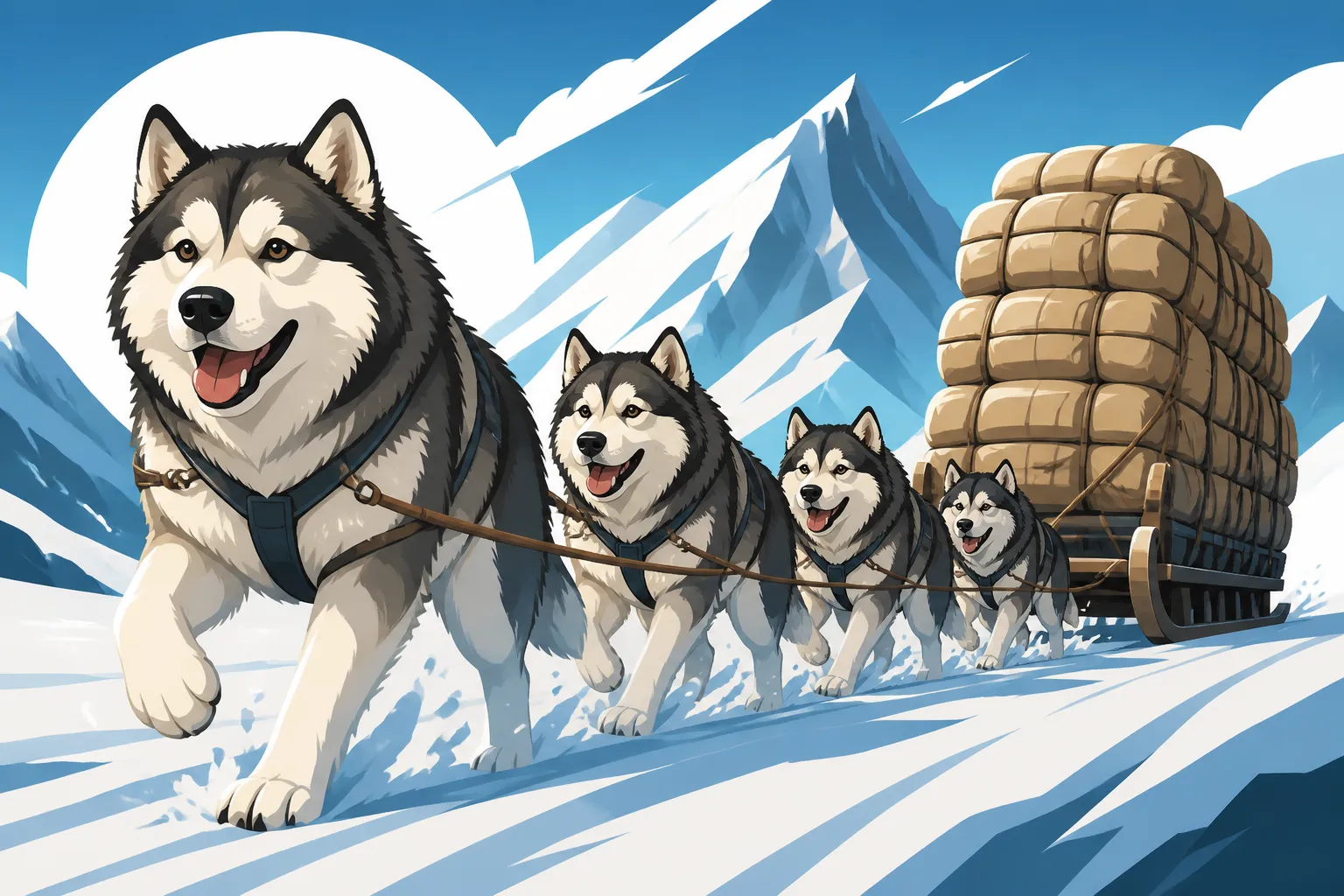
Historically, a team of Malamutes might haul 500 to 1,000 pounds per sled, not per dog, over typical distances. If a team consisted of 4-6 dogs, then each dog would effectively be contributing 125-250 pounds to the overall pull. This kind of consistent, heavy freighting was their specialty. It wasn't about a single, dramatic thousand-pound pull from one dog, but rather the collective, sustained effort of a well-matched team working together. This distinction between individual dog capacity and team capacity is crucial when we talk about large numbers. The article How Many Malamutes a Freight Team Used offers more detail on how teams were typically structured.
Unpacking the "Thousand Pounds" Question
So, could an Alaskan Malamute team haul a thousand pounds? The short answer is yes, absolutely. But it's vital to understand the context, conditions, and team dynamics that would make such a feat possible. This isn't just about raw strength; it's about the physics of pulling, the environment, and the incredible design of the Malamute itself.
The Role of Team Size and Snow Conditions
A thousand-pound load is significant. For a Malamute team to haul this, we're likely talking about a minimum of four to six well-conditioned dogs, but ideally more for sustained travel. The more dogs in the team, the more the load is distributed, making it manageable. Imagine a team of six dogs; each dog is then responsible for roughly 166 pounds of the load. While still substantial, this is well within the capabilities of a strong Malamute, especially when factoring in their incredible natural pulling instinct.
Snow conditions are perhaps the most critical variable. Fresh, deep powder presents immense drag, making any pull harder. Conversely, packed snow or ice, especially if slightly glazed, can allow even incredibly heavy loads to glide with surprising ease. A thousand pounds on dry ground is a monumental task, but a thousand pounds on a properly waxed sled runner over firm, well-packed snow is a different challenge altogether. The sled itself also plays a huge role; traditional freighting sleds were designed to distribute weight and glide efficiently. You can see why Freight, Not Speed: What Separates a Malamute From a Racing Dog is such an important distinction here. These dogs weren't built for a sprint; they were built for the long haul, literally.
Sustained Travel vs. Short Hauls
When we talk about a thousand pounds, it’s important to distinguish between a sustained journey and a short, powerful haul. A team might be able to move a thousand pounds a short distance – say, from a frozen lake shore up to a camp – through sheer brute force and collective effort. This kind of short, intense pull demonstrates their maximum capacity.
However, moving a thousand pounds day after day, for miles on end, would require an exceptionally well-conditioned, larger team (perhaps 8-12 dogs) and near-perfect trail conditions. Historical accounts from early expeditions often describe freight teams moving loads of this magnitude, but these were typically large, experienced teams pushing the limits of endurance, often with multiple handlers. The dogs would be specifically bred and trained for this kind of work, a far cry from a pet Malamute.
| Factor | Impact on Pulling Capacity |
|---|---|
| Team Size | More dogs distribute the load, increasing overall capacity. |
| Snow/Ice Conditions | Packed snow/ice reduces friction, making heavy loads easier to move. Deep powder increases drag. |
| Terrain | Flat, even terrain is best. Uphills, brush, and uneven ground significantly reduce capacity. |
| Sled Design | Efficient, well-maintained runners and a balanced load reduce effort. |
| Dog Conditioning | Well-muscled, trained dogs have higher stamina and strength. |
| Handler Skill | Experienced handlers optimize team effort, navigate terrain, and manage pace. |
| Temperature | Cold weather allows Malamutes to work longer without overheating. |
Physical Prowess and the Art of Pulling
The Alaskan Malamute is a marvel of evolutionary design for heavy freighting. Every aspect of their physical structure and mental makeup contributes to their ability to pull substantial weight, demonstrating why What an Alaskan Malamute Actually Weighs is so relevant to understanding their power.
Built for Strength and Endurance
Look at a Malamute, and you immediately see power. They have a deep chest, powerful shoulders, and a heavily muscled body. Their bone structure is robust, not delicate like a racing sled dog. This sturdy build provides the leverage and stability needed to lean into a harness and move heavy objects. Their broad, well-padded feet offer excellent traction in snow, acting like built-in snowshoes.
Their double coat, famously thick and insulating, protects them from the bitter cold, allowing them to exert themselves without freezing. This allows them to sustain activity in temperatures that would quickly incapacitate other breeds. When you consider their efficient metabolism that allows them to draw maximum energy from their food, it’s clear they are a living, breathing pulling machine. Why a Malamute Shows Nothing Until It Cannot Work perfectly describes their stoic nature and immense drive.
The Mechanics of Freighting
Pulling isn't just about brute force; it's a learned skill and an innate instinct for Malamutes. The harness distributes the pulling force across their chest and shoulders, allowing them to use their entire body weight and muscle power efficiently. Their gait is a powerful, steady trot, designed for endurance rather than speed. They lean into their collars, dig their paws in, and simply go.
They instinctively understand how to work as part of a team, responding to vocal commands and the subtle cues of the lead dog. This cooperative spirit is a testament to their heritage as pack animals and working partners. When you put a Malamute in a proper harness, their instinct often kicks in, and they just know what to do. Even a pet Malamute often enjoys the opportunity to pull a cart or a person on skis.
Modern Weight Pull and the Spirit of the Malamute
While traditional freighting teams are less common now, the spirit of the Malamute lives on in the sport of weight pulling. This modern competition gives us a scientific, measurable way to see just how much an individual Malamute or a small team can truly haul.
Modern Weight Pulling Competitions
In modern weight pulling, dogs are typically hitched to a cart or sled on rails, which significantly reduces friction compared to a traditional sled on snow. This allows for truly astonishing weights to be moved. It's not uncommon for a single well-trained Malamute to pull over 1,000 pounds in competition, and sometimes even considerably more, especially on carpeted surfaces that offer maximum traction without significant drag.
These competitions are highly regulated, focusing on the dog's welfare and proper technique. They showcase the incredible strength and determination of these dogs in a controlled environment. The goal is to move the loaded cart a specific distance, usually 16 feet. While the conditions are optimized, it still takes immense power and will from the dog. This is where you truly see the raw, unadulterated strength that was historically harnessed for freighting. You can often find specialized harnesses and training equipment for weight pulling on sites like Chewy, helping owners safely engage their dogs in this activity.
The "Thousand Pounds" Revisited
So, yes, a Malamute team can haul a thousand pounds, and individual Malamutes can even pull that much (or more) in competitive settings. The difference is largely in the conditions and purpose. Historically, it was a practical necessity, often done in challenging terrain and variable snow, requiring a larger team for sustained journeys. Today, in competitive environments, the goal is to maximize the weight pulled under ideal conditions, often with fewer dogs or even just one.
The essence, however, remains the same: the Alaskan Malamute is a powerful, tenacious, and incredibly strong dog built for moving heavy loads. Their ancestors demonstrated this capacity daily, and their modern counterparts continue to impress in weight pulling arenas. If you're looking for gear for your Malamute's daily walks or to introduce them to pulling, a good quality, well-fitting harness from a retailer like Chewy is essential. Remember, How Much a Malamute Can Pull can depend heavily on consistent training and proper equipment. Even if your Malamute isn't hauling a thousand pounds, engaging them in appropriate pulling activities helps fulfill their innate drive, and Why a Pet Malamute Still Needs to Pull explains why this instinct is so important to acknowledge.
Nurturing the Pulling Instinct
For many Malamute owners, even if they aren't engaging in competitive weight pulling, providing an outlet for this natural instinct is incredibly important for their dog's well-being. This could be through recreational mushing, skijoring, bikejoring, or even pulling a utility cart for chores around the yard. It's a fantastic way to bond with your dog, provide essential exercise, and tap into their historical purpose. Products like appropriate harnesses and leads, often available on platforms like Chewy, are crucial for safely engaging in these activities. It's about respecting their heritage and giving them a job, even if that job is simply bringing a smile to your face as they proudly pull.
Disclaimer
This article is for general informational purposes only and does not constitute professional advice. Laws, prices and regulations vary by location and change over time. Consult a qualified professional for guidance on your specific situation.