Whether a Malamute’s Eyes Must Be Brown
A Malamute’s eyes should be brown under the breed standard, and darker brown is preferred. Blue eyes may catch your attention in a puppy or an adult dog, but eye color alone does not tell you whether a dog can see well or whether it is purebred. This guide explains what the standard means, what can change as a puppy grows, and when an eye-color difference deserves veterinary attention.
What the Alaskan Malamute standard says about eye color
Brown eyes are the accepted standard
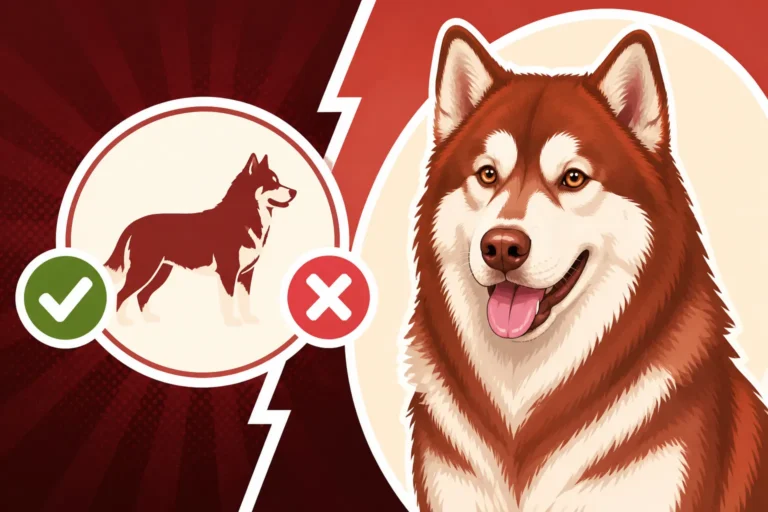
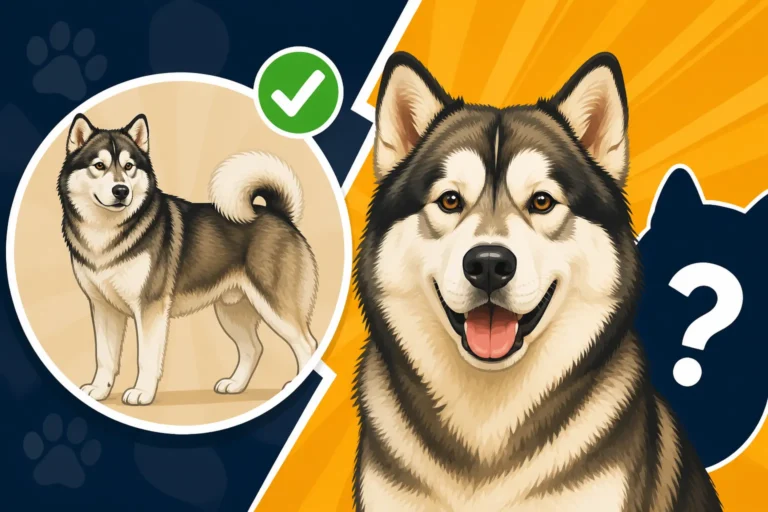
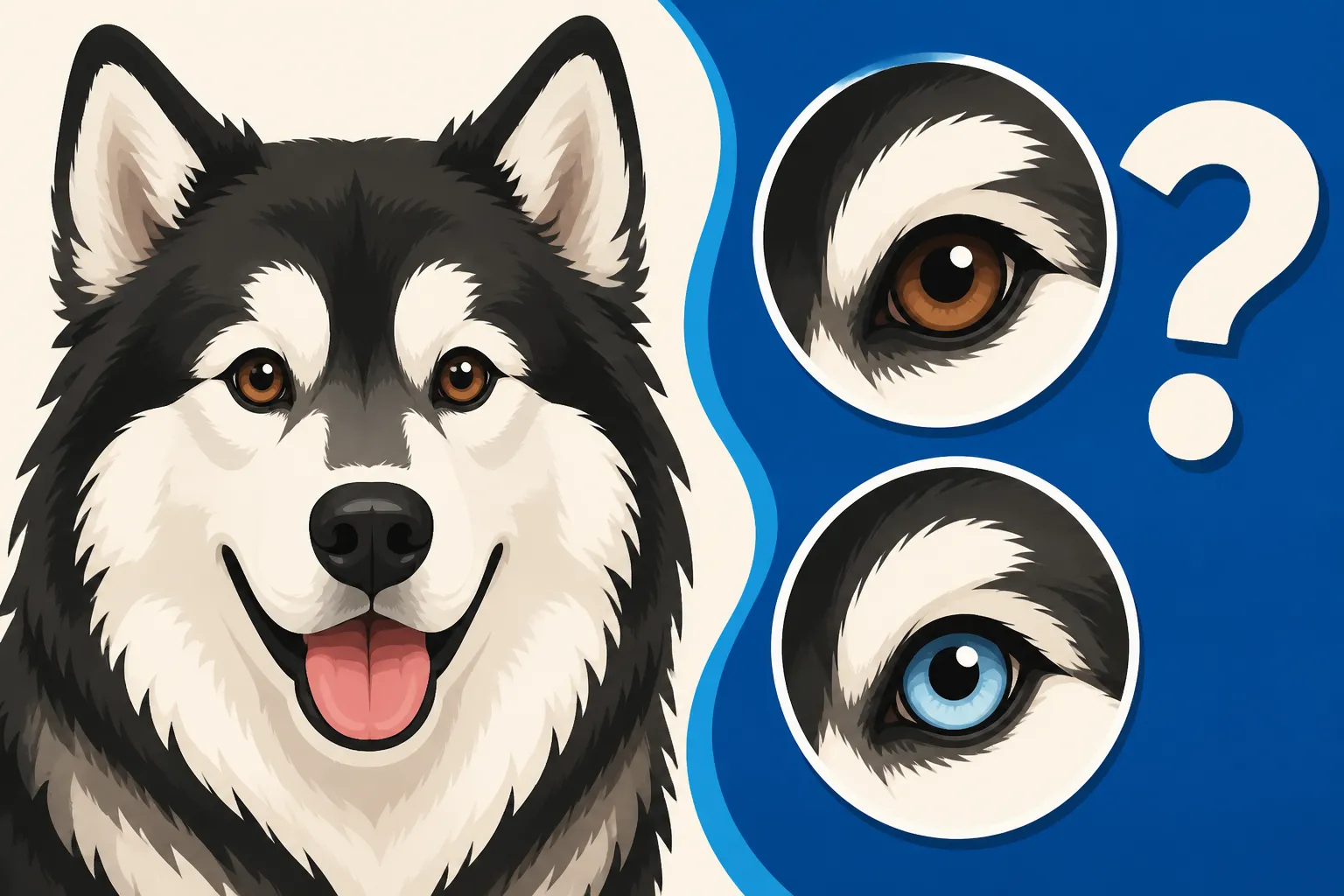
The Alaskan Malamute standard describes the eyes as brown, almond-shaped, and of medium size, with darker brown preferred. Blue eyes are a disqualification in the conformation ring. That means a blue-eyed dog does not meet the standard for competition in conformation, where judges assess how closely a dog matches its breed’s written description.
The standard is about appearance and breed type, not a diagnosis of eye health. A Malamute with brown eyes can still develop an eye problem, while a dog with blue eyes may be able to see normally. Those are separate questions, and it helps to keep them separate if you are looking at a puppy, assessing an adult dog, or discussing a breeder’s claims.
If you are wondering specifically about why the rule exists, Why Blue Eyes Disqualify an Alaskan Malamute explores the standard issue in more detail. The practical takeaway is straightforward: brown eyes are expected in a standard-conforming Malamute, but eye color by itself does not establish the dog’s health or ancestry.
Eye color does not prove whether a dog is purebred
Blue eyes are unusual in the breed and are not accepted by the standard. Still, a blue-eyed dog is not automatically a Husky cross based on that single trait. Appearance can raise a reasonable question, but it cannot confirm a dog’s pedigree on its own. Reliable pedigree records and, where appropriate, DNA testing provide more useful evidence than guessing from eye color.
This distinction can matter when a seller advertises a “rare blue-eyed Malamute” as a special or valuable variety. Blue eyes are not a recognized standard feature of the breed. If you are considering a puppy, ask for the parents’ registration details, health-screening information, and a clear explanation of the puppy’s background rather than relying on a color claim.
For more on the ancestry question, see Whether a Blue Eyed Malamute Is a Husky Cross. If you are comparing appearance with show eligibility, Whether a Blue Eyed Malamute Can Be Registered addresses a different issue: registration and qualification for conformation are not always the same thing.
Eye color is not the same as eye health
A dog’s iris is the colored part of the eye. A blue iris is a color difference; a cloudy-looking eye may instead reflect a change in the cornea, lens, or another part of the eye. It can be difficult to tell the difference in a photograph, especially when glare, flash, or low lighting changes how the eye looks.
A sudden change deserves more attention than a lifelong, stable color. If one eye becomes cloudy, looks red or painful, or appears different from the other, arrange a veterinary examination. Squinting, pawing at the face, excessive tearing, or bumping into familiar objects are also reasons to seek professional advice. Whether a Blue Eyed Malamute Has Vision Problems covers the distinction between eye color and eyesight.
What to expect from a Malamute puppy’s eyes
Puppy eye color can look different at first
Puppies’ eyes may look blue-gray when they first open, and their color can change as they mature. That early appearance does not necessarily predict the adult eye color. Pigment develops over time, so a young puppy’s eyes may darken during the weeks after opening.
If you are meeting a very young litter, avoid treating a temporary shade as a final color. Ask the breeder how old the puppies are and whether the eye color has begun to settle. If the color remains unusual as the puppy grows, the breeder can explain what they have observed in the litter and what the parents’ eyes look like. You can also read Whether a Malamute Puppy's Color Changes for more context on how puppy coloring develops.
A puppy’s eye appearance should be considered alongside its overall health and behavior. Normal play, comfortable movement, and responding to people and surroundings are reassuring observations, but they do not replace an eye examination if something looks wrong. If a puppy holds an eye shut, has marked discharge, or seems bothered by light, contact a veterinarian rather than waiting to see whether the color changes.
Take clear notes instead of relying on memory
Eye color can be surprisingly hard to describe consistently. A photo taken outdoors may make an eye look lighter than it does indoors, while flash can add glare that obscures the iris. If you are tracking a puppy’s eyes, take occasional photographs in similar natural light and note the date. Avoid shining bright lights into the eyes to get a clearer picture.
For a breeder conversation, ask direct, neutral questions: What color are the parents’ eyes? Have the puppies’ eyes changed since they opened? Has a veterinarian examined the litter? A responsible answer should focus on records and observations, not pressure you to pay extra for an unusual feature.
If you are buying routine grooming supplies, Chewy may be one place to compare dog-specific eye-area wipes, but read the label and keep products out of the eye itself. Wipes do not change iris color or treat an eye disease. If there is irritation, discharge, or a persistent stain, ask your veterinarian what is appropriate before trying a product.
When an unusual eye color needs a closer look
Stable color differences and sudden changes are not alike
A stable blue or partially blue eye is different from an eye that recently became cloudy, pale, red, or noticeably different from its usual appearance. A lifelong trait may be a question about breed-standard appearance; a sudden change may signal a health issue that needs assessment. You do not need to determine the cause yourself before calling a clinic.
Use a simple checklist when you notice a change:
- Compare both eyes in ordinary daylight, without flash.
- Note whether the change is in the colored iris or whether the whole eye looks hazy.
- Watch for squinting, rubbing, tearing, redness, or changes in navigation.
- Record when you first noticed it and whether it is getting worse.
- Contact your veterinary clinic for guidance, especially if the change is sudden or the dog seems uncomfortable.
Do not use human eye drops or leftover pet medication unless a veterinarian has told you to. An eye that looks mildly irritated can have several possible causes, and the wrong product may delay the right care.
Eye color does not replace regular eye care
Brown eyes do not guarantee that a Malamute will never have an eye condition. Like other dogs, Malamutes can develop eye changes over time, so it is useful to mention new symptoms during routine veterinary visits. An examination may be recommended sooner if your dog has persistent redness, discharge, cloudiness, discomfort, or a change in vision.
If you are deciding how often your dog should have its eyes checked, Whether a Malamute Should Have a Yearly Eye Exam offers a related overview. Other topics, such as Cataracts in an Alaskan Malamute and Whether a Malamute Gets Corneal Dystrophy, can help you understand why a cloudy appearance should not simply be assumed to be an eye-color quirk.
For everyday care, gently wipe away dirt or dried discharge from the fur around the eyes with a clean, damp cloth, using a separate area of cloth for each eye. Do not scrub the eyeball or use a product unless it is intended for that purpose and is appropriate for your dog. Chewy may offer dog grooming products for the area around the eyes; check the packaging carefully and ask your veterinarian before using anything on an irritated eye. If you are unsure whether a product is suitable, a clinic can help you choose a safe approach.
Signs that call for prompt veterinary advice
Some eye changes are more urgent than questions about color. Seek prompt veterinary advice if your Malamute suddenly squints, keeps an eye closed, repeatedly paws at its face, develops pronounced redness or swelling, or seems to lose vision. Sudden cloudiness, unequal pupils, an injury, or a rapidly worsening appearance also deserves timely attention.
When contacting the clinic, describe what changed and when you first noticed it. Mention whether one or both eyes are affected and whether your dog is eating, moving, and behaving normally. If you have photos from before the change, bring them along; a comparison can help the veterinary team understand how quickly the appearance shifted.
For routine shopping, Chewy can help you find labeled grooming supplies, but product descriptions and customer reviews cannot determine why an eye looks different. When the concern is the eye itself rather than fur around it, veterinary advice is the more useful next step.
| What you notice | What it may mean | A sensible next step |
|---|---|---|
| Brown, almond-shaped eyes | Matches the breed standard’s expected eye color | Continue routine care and mention changes at checkups |
| Blue-gray eyes in a very young puppy | Color may still be developing | Ask the breeder about age and observe as the puppy matures |
| Stable blue eyes in an older dog | Unusual and outside the conformation standard, but not proof of poor vision or mixed ancestry | Discuss pedigree questions with the breeder and seek an eye check if symptoms are present |
| New cloudiness, redness, or squinting | May indicate an eye problem rather than a color variation | Contact a veterinarian promptly |
| Discharge or staining around the fur | Could have several causes; appearance alone does not identify them | Keep the area gently clean and ask a veterinarian if it persists or worsens |
Questions to ask a breeder or veterinarian
If you are choosing a puppy
Ask the breeder what eye color the parents have, what they have observed as the litter matures, and whether the puppies have received a veterinary examination. You are not being difficult by asking. Eye color is only one small part of a puppy’s story, and clear answers about health records and parentage are more helpful than claims that an unusual feature makes a puppy special.
Be cautious if someone says blue eyes are a standard Malamute trait or presents them as proof of exceptional quality. The standard calls for brown eyes, with darker brown preferred, and blue eyes are disqualifying in conformation. That does not automatically tell you what the dog’s vision is like, but it does give you a clear way to assess claims about breed appearance.
For a broader look at how eye testing fits into preventive care, Whether a Malamute Should Have a Yearly Eye Exam is a useful related topic. Keep the conversation focused on records, health, and the dog’s needs rather than color alone.
If you already own a blue-eyed Malamute
You do not need to panic simply because your dog has blue eyes. If the color has been stable and your dog is comfortable and navigating normally, the immediate question may be about breed-standard appearance rather than an emergency. Still, mention the color at your next veterinary visit and ask whether an eye examination is appropriate for your dog’s age and history.
If the eye color is new, or the eye looks cloudy, painful, or irritated, do not assume it is a harmless pigment difference. A veterinarian can examine the eye and distinguish a stable iris color from a change in another part of the eye. That is especially important when only one eye looks different or when the change happened quickly.
The short answer is that a standard Alaskan Malamute should have brown eyes, but the color alone does not diagnose eyesight or establish pedigree. Brown is expected; blue is outside the breed standard. For any sudden or uncomfortable-looking change, focus less on whether the eye is “the right color” and more on getting it checked.
Disclaimer
This article is for general informational purposes only and does not constitute professional advice. Laws, prices and regulations vary by location and change over time. Consult a qualified professional for guidance on your specific situation.