Whether an Agouti Malamute Is Recognized
An agouti Alaskan Malamute can look strikingly wolf-like, but the word “agouti” can mean different things in casual descriptions, registration records, and show conversations. The short answer: agouti is a familiar coat appearance, not usually a separate color named in the breed standard. Here’s how to tell what the label means and what it does—and does not—say about a dog.
Is an agouti Malamute recognized by the breed standard
What the standard says about Malamute colors
The Alaskan Malamute standard describes a range of acceptable coat colors, including shades from gray through black, sable, and sable to red. Combinations are acceptable, and white is an important part of the breed’s typical markings. The standard’s wording does not usually list “agouti” as a separate, standalone color category.
That distinction can be confusing if you see a breeder, owner, or enthusiast call a dog agouti. They may be describing the way its hairs are banded and its coat is patterned, rather than naming a formal color category. In other words, a coat can look agouti while the dog’s official description uses another color term.
A useful way to get oriented is to compare the term with the standard’s broader language. Which Colors the Alaskan Malamute Standard Allows gives more context on how the standard describes colors and combinations. For a broader overview of the shades and patterns owners commonly discuss, see The Colors an Alaskan Malamute Comes In.
What recognition means in practice
“Recognized” can refer to several different things: whether a coat appearance is accepted by the breed standard, whether a registry has a matching color label, or whether people in the breed community use a term for it. Those are related questions, but they are not interchangeable.
An agouti-looking coat is not automatically a fault simply because the standard does not give “agouti” its own line as a named color. For show purposes, the dog is evaluated against the full standard, not just the label a seller used. A coat’s overall color and markings are only part of that assessment; structure, movement, temperament, and other breed characteristics matter too.
Registration forms may offer a limited set of color choices, and the available wording can vary. A dog described as agouti by its breeder may be recorded under a broader color description. If the exact label matters for a pedigree or registration record, ask the registry or the breeder how that dog’s color was entered rather than assuming the informal term will appear on the paperwork.
How an agouti coat looks on an Alaskan Malamute
Banded hairs create the agouti impression
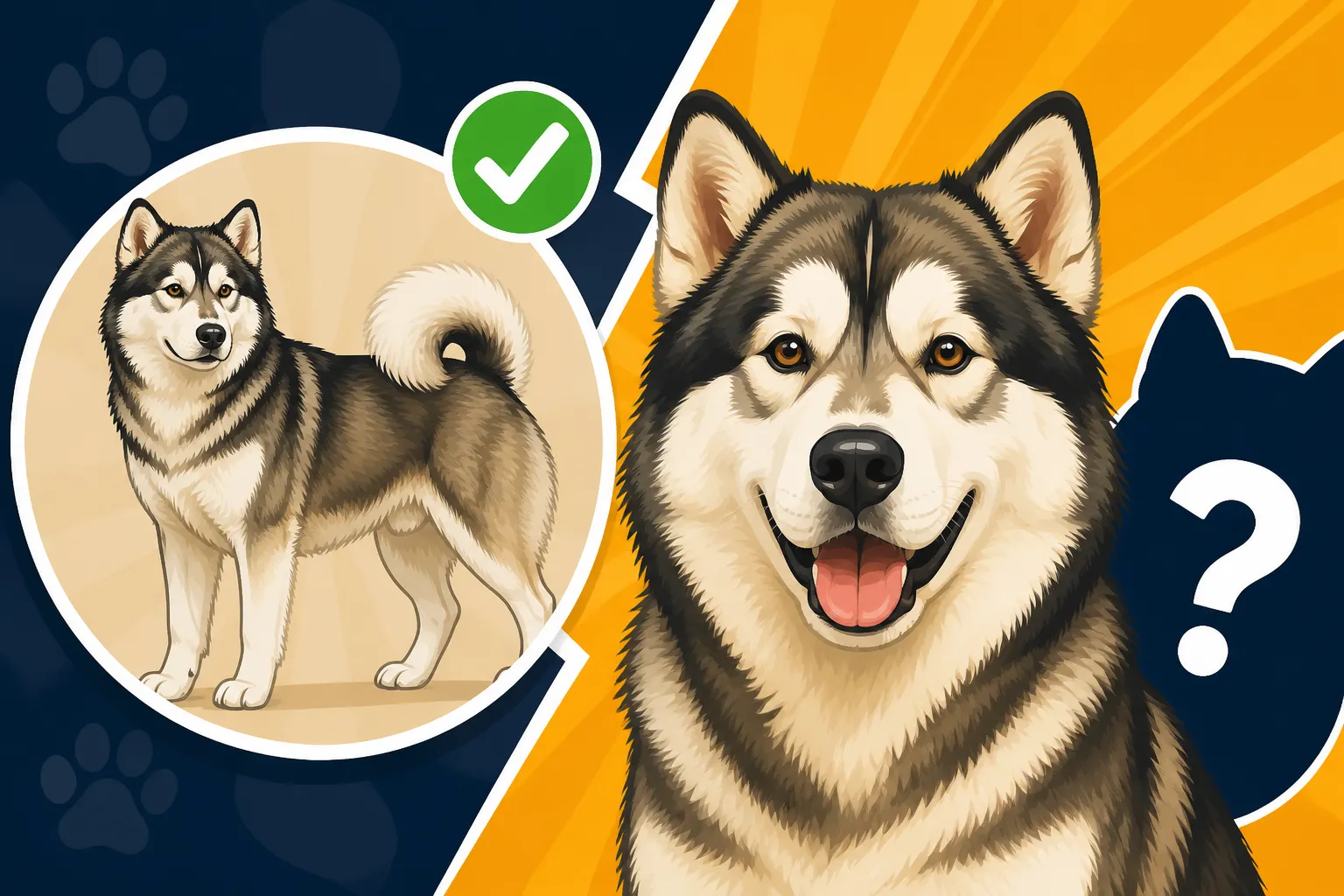
Agouti usually refers to a coat in which individual hairs have bands of different colors. Viewed across the dog, those banded hairs can create a layered, shaded appearance rather than a uniform block of color. Depending on the dog, the result may look smoky, dark, or somewhat wolf-like.
The pattern can be especially noticeable on the back, shoulders, and sides, where darker guard hairs may contrast with lighter areas. The undercoat and the dog’s markings also affect the overall impression. Two Malamutes described as agouti may not look identical, and photographs can make the difference seem even greater because lighting changes how dark or warm a coat appears.
This is why the word “agouti” should be treated as a description, not proof of a precise genetic result. Coat color is influenced by inherited factors, and appearance alone cannot reliably establish a dog’s full genetic makeup. If a breeder uses the term, ask what they mean by it and whether they are describing the puppy’s visible coat, the parents’ coats, or a particular result from a genetic test.
Agouti is not the same as a face marking
Malamutes can have distinctive facial markings, including caps and bars. Those describe markings on the face, not the banding of hairs across the coat. A dog might have an agouti-looking body coat and a particular face pattern, but one term does not confirm the other.
A puppy’s face markings can also be visually prominent enough to distract from the subtler shading on its body. If you are comparing dogs, look at the coat in natural light and notice both the individual hair colors and the larger pattern across the body. What a Malamute's Cap Marking Looks Like and What a Malamute's Bar Marking Looks Like explain those facial terms separately.
| Term | What it generally describes | What it does not establish |
|---|---|---|
| Agouti | A banded or layered appearance created by hairs with more than one color | A separate official color category on every registry form |
| Gray | A broad coat-color description used in breed color terminology | That the dog has a particular hair-banding pattern |
| Sable | A color description involving darker shading over lighter areas | That the coat will look identical to every other sable Malamute |
| Cap or bar | A facial marking pattern | The color genetics of the dog’s body coat |
How to confirm what a breeder means by agouti
Ask about appearance and paperwork separately
When a listing says “agouti Malamute,” ask the breeder to explain whether they are using the term as a visual description or as a formal entry on registration documents. Request clear photographs of the puppy and, if possible, its parents. Photos taken outside in indirect daylight are often more helpful than heavily edited images or indoor pictures under warm lighting.
Then check the paperwork. Ask what color is recorded on the pedigree or registration application and whether the breeder has selected a broader standard color description. The goal is not to challenge the breeder over vocabulary; it is to make sure you understand what the puppy is likely to look like and what information will appear in its records.
It can help to keep three questions separate: What does the coat look like now? What color term does the breeder use? What color term will appear in official records? Those answers may overlap, but they do not have to match word for word. A clear, patient explanation is a good sign that the breeder understands both the dog and the terminology.
Be careful with claims based on color alone
A distinctive coat can attract attention, and sellers sometimes use unusual-sounding color descriptions to make a puppy seem rare. Treat claims about rarity, value, or special lineage cautiously unless they are backed by meaningful documentation. A color label by itself does not establish that a dog is healthier, more purebred, or more desirable as a companion.
Ask about the parents’ health testing, temperament, and the breeder’s plans for the litter. Those details matter more to a future owner than whether a coat is described as agouti, gray, or sable. If you are choosing a puppy, it is also useful to understand the breed’s background and variation. Whether Every Malamute Traces to Kotzebue or M'Loot explores the history behind commonly discussed Malamute lines, but a color description alone cannot tell you which line a dog comes from.
What an agouti coat means for owners
Coat color does not change everyday care
An agouti coat does not, by itself, mean a Malamute needs a different diet, exercise routine, or grooming schedule. The double coat still needs regular brushing, and seasonal shedding can be substantial regardless of the color label. Pay attention to the dog’s skin and coat condition rather than expecting a particular routine based on the word agouti.
For grooming, choose tools that reach through the dense undercoat without scraping or irritating the skin. Owners often compare brushes and shedding tools at retailers such as Chewy, but the right tool depends on the dog’s coat texture and how comfortable the dog is with brushing. Introduce grooming gradually, especially with a young puppy, and keep sessions calm rather than trying to remove every loose hair at once.
If you are shopping for grooming supplies, Chewy may be one place to compare basic options, while a groomer familiar with double-coated breeds can demonstrate technique. A brush that works well on one Malamute may not work as well on another, so focus on whether it reaches the undercoat gently and whether your dog tolerates it. For more on changing puppy coats, see Whether a Malamute Puppy's Color Changes.
Choose the dog, not the color label
Some owners fall for the dramatic look of an agouti coat, while others prefer a lighter or more evenly shaded Malamute. Either preference is understandable, but appearance should be only one part of choosing a dog. Consider whether the breed’s size, exercise needs, shedding, training style, and independent temperament suit your home and daily life.
If a seller uses “agouti” as the main selling point, ask the same practical questions you would ask about any puppy: what health checks have been completed, how the puppies are being socialized, and what support the breeder provides after placement. You can also ask whether the puppy’s coat is expected to change as it matures. Some coats appear different after puppy fur gives way to an adult coat, so a current photo may not show the final look.
It is equally important not to assume a dog is agouti—or any other color—based on one image. Camera settings, shadows, wet fur, and seasonal coat changes can all affect appearance. If the color matters to you, meet the dog when possible, view it in natural light, and ask for unedited pictures of both parents. That gives you a more grounded sense of the coat without turning a descriptive label into a promise.
Disclaimer
This article is for general informational purposes only and does not constitute professional advice. Laws, prices and regulations vary by location and change over time. Consult a qualified professional for guidance on your specific situation.