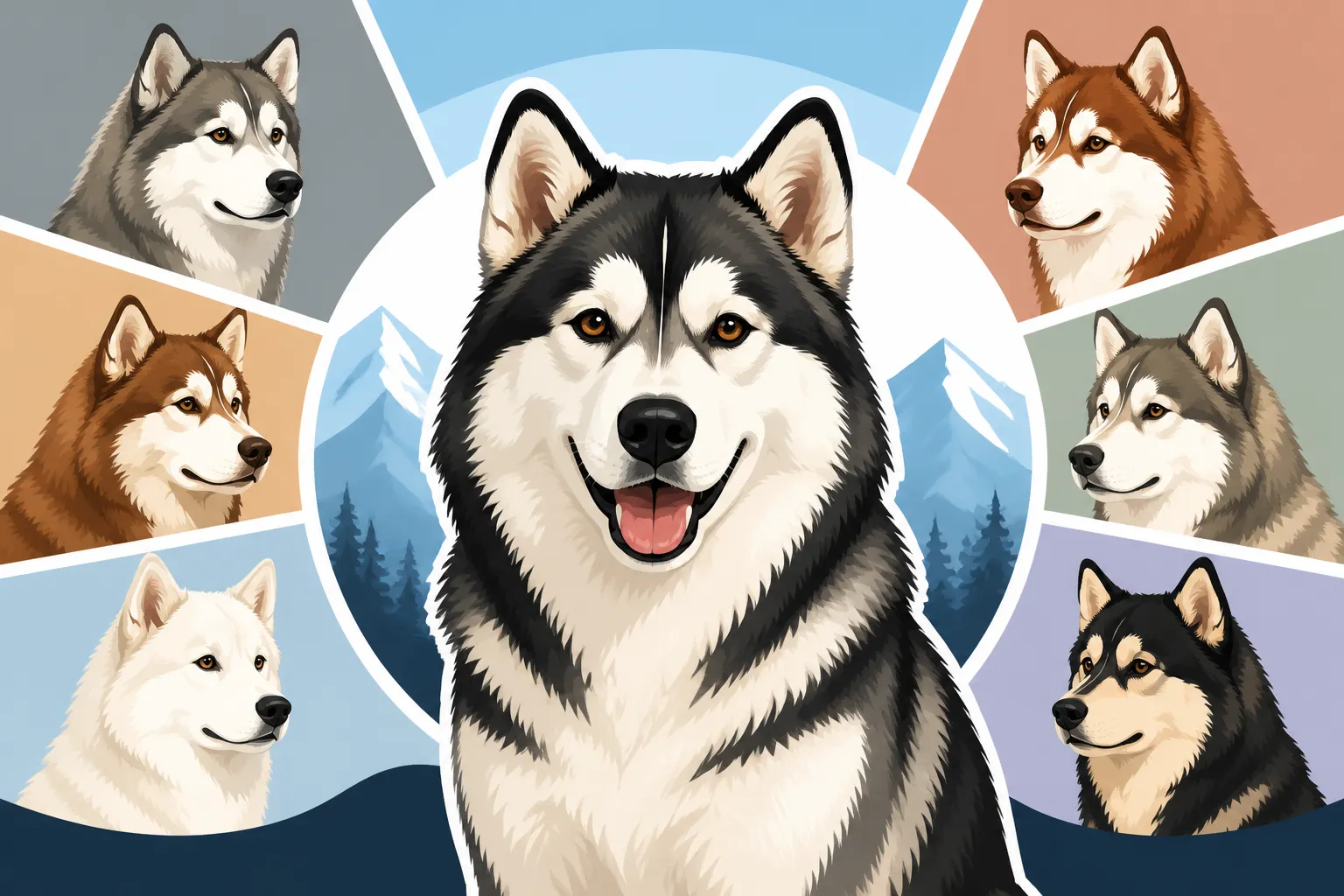
The Colors an Alaskan Malamute Comes In
One of the most exciting, and sometimes confusing, parts of bringing an Alaskan Malamute into your life is discovering the incredible variety of colors and markings they come in. It's easy to get lost in the nuances of "grey and white," or wonder if that stunning red dog you saw is truly a Malamute. This guide is here to walk you through the rich tapestry of colors accepted within the breed standard, explaining what makes each one special and what to look for, so you can appreciate the beauty of this magnificent breed.
Understanding the Malamute Color Standard
When you start looking at Alaskan Malamutes, you'll quickly realize there's more to their coats than just "black and white." The breed standard, set by kennel clubs, isn't just about what's pretty; it's about preserving the historical look and function of the breed. It describes the ideal Malamute, and color plays a significant role in that description.
Why the Breed Standard Matters
For many new owners, the phrase "breed standard" might sound like something only for show dog enthusiasts, but it's actually incredibly important for every Malamute. The standard is essentially a blueprint. It outlines the physical characteristics, temperament, and health predispositions that define a purebred Alaskan Malamute. When breeders adhere to the standard, they're working to ensure the consistency, health, and predictability of their puppies. This includes color. While a pet Malamute's color won't affect its ability to be a loving companion, understanding the standard helps you recognize well-bred dogs and appreciate the intentionality behind their appearance. A reputable breeder will always be breeding to the standard, even if their puppies are destined for pet homes rather than the show ring. It reflects their commitment to the breed's integrity.
The Range of Acceptable Colors
The Alaskan Malamute breed standard allows for a surprisingly broad palette of colors, all with white markings, usually on the undersides, legs, feet, and part of the mask. The official description typically mentions various shades of grey, black, sable, and red, all with white. Solid white is also an accepted color. What's crucial to understand is that the base color can range significantly within these categories. For instance, "grey" isn't just one grey; it can be light silver, a deep steel grey, or anywhere in between. The richness and depth of these colors often depend on the individual dog's genetics, the presence of black tipping on the guard hairs, and even the color of their undercoat. These variations are what make each Malamute uniquely beautiful, even within the confines of the standard.
The Classic Greys and Blacks
The image of an Alaskan Malamute often conjures up a majestic dog in shades of grey and white, or striking black and white. These are indeed the most common and classic colorations, reflecting the breed's origins in the Arctic.
Silver to Black & White: A Spectrum of Greys
The grey and white Malamute is, without a doubt, the most iconic representation of the breed. But when you look closely, you'll discover that "grey" is far from a singular shade. It's a vast spectrum, ranging from the palest, almost platinum silver, all the way to a dark, deep steel grey that can sometimes appear nearly black. The magic of these grey coats lies in the individual hairs. Typically, the guard hairs (the longer, coarser outer coat) are black-tipped, and it's this black tipping over a lighter grey or white undercoat that creates the illusion of various grey shades. The denser and longer the black tips, the darker the grey appears.
For example, a light silver Malamute might have just a whisper of black on the tips of its guard hairs, allowing the bright white undercoat to shine through, creating an ethereal, icy appearance. Conversely, a dark grey Malamute will have a much heavier concentration of black tips, sometimes making its back and saddle look almost solid black against the crisp white belly and leg markings. It's also worth noting that a Malamute puppy's color can be a bit of a guessing game. It's fascinating to watch how their coats develop from birth. What an Alaskan Malamute Puppy's Color Changes is a common question among new owners, as puppies often start out looking quite different from their adult selves, with colors deepening or lightening over their first year or two.
The "black and white" designation usually refers to Malamutes with such a dark, rich black overlay that the grey is barely discernible, often appearing as a crisp contrast between true black and bright white areas. These dogs often have very dramatic facial markings and a stark division between their colored topcoat and their white underparts. Regardless of the specific shade, all grey and black and white Malamutes share the characteristic black nose, eye rims, and lips, which provides a striking contrast against their fur.
Solid Black: A Rarity and Often a Fault
While "black and white" is a common and accepted color, a truly solid black Alaskan Malamute, without any discernible white markings, is exceedingly rare and generally considered a disqualifying fault by most breed standards. When you see a dog advertised as "solid black Malamute," it's often either a very dark grey Malamute with minimal white markings that are hard to spot, or it might be a crossbreed. The essence of the Malamute's traditional appearance includes white markings, usually on the legs, feet, parts of the muzzle, and belly. These white areas are part of the breed's genetic makeup and are almost always present.
Sometimes, what appears to be solid black might be a "seal" colored Malamute. Seal refers to a very dark brown or black coat where the white markings are still present, but the colored areas have an almost reddish or brownish tint that can be seen in certain lights, especially on the tips of the guard hairs. This is different from a pure, unadulterated black. True solid black often raises questions about the dog's purebred status or suggests an unusual genetic anomaly not typical for the breed. It's not necessarily a health concern, but it deviates significantly from the established visual characteristics that define an Alaskan Malamute. When encountering such a claim, it's always wise to ask for parentage verification and look closely for any faint white markings, as a truly purebred Malamute will almost certainly have them.
The Warm Hues: Sables and Reds
Beyond the classic greys and blacks, Alaskan Malamutes also come in stunning warm tones that can turn heads and capture hearts. These variations offer a different kind of beauty, with their rich, earthy hues.
Sable: The Dynamic Coloration
Sable is one of the most intriguing and dynamic colors in the Alaskan Malamute palette. A sable Malamute typically features guard hairs that are reddish-brown, tan, or yellowish at the base, with distinct black tips. This combination creates a beautiful, multi-tonal effect that gives the coat incredible depth and texture. The overall impression can range from a light, sandy sable to a very rich, deep mahogany sable, often with striking black accents on the ears, muzzle, and tail. The "shadowing" effect created by the black-tipped hairs can make the dog appear darker in certain areas, particularly along the back and across the shoulders, while other parts of the coat glow with warmth.
The undercoat of a sable Malamute can also vary, contributing to the overall appearance. It might be cream, tan, or even a pale grey, further influencing how the light plays on their fur. This dynamic nature means that two sable Malamutes can look quite different from each other. Sometimes, people are surprised to learn that sable is an accepted color because it's less common than grey. Whether a Sable Malamute Exists is a question that pops up, and the answer is a resounding yes! They are absolutely stunning. The pigment for their nose, eye rims, and lips will typically be black, providing a strong contrast to their warm coats. Maintaining the vibrancy of a sable coat involves regular grooming to keep the fur healthy and free from mats, which can dull the appearance. You might find a wide selection of grooming tools, from undercoat rakes to force dryers, at pet retailers like Chewy to help keep these beautiful coats in top condition.
Red and White: Striking and Distinctive
Red and white Alaskan Malamutes are truly a sight to behold, standing out with their vibrant, warm coloration. The "red" in a Malamute can encompass a range of shades, from a light, almost golden fawn to a deep, rich liver or chestnut red. What makes a red Malamute particularly distinctive is its pigmentation. Unlike grey or black Malamutes, which have black noses, eye rims, and lips, red Malamutes are characterized by liver-colored pigment in these areas. This soft, brownish-red pigment perfectly complements their fiery coats, creating a harmonious and striking overall appearance.
The white markings on a red Malamute follow the same patterns as other colors, typically appearing on the belly, chest, legs, feet, and parts of the face. The contrast between the brilliant red and crisp white is incredibly eye-catching, making these dogs quite memorable. For those wondering, Whether a Red Alaskan Malamute Is Purebred is often asked, and the answer is unequivocally yes, provided they meet all other breed standards including the liver pigmentation. It's important to distinguish a true red Malamute from a sable that might have a very reddish tint; the key differentiator is the nose and lip pigment. A sable will have black pigment, while a red will have liver. Owners of red Malamutes often love to show off their dog's unique color, and keeping their coat healthy and gleaming can involve ensuring a good diet, sometimes supplemented with omega fatty acids, which you can find a great selection of on Chewy.
The Pristine White Malamute
Among the variety of colors, the solid white Alaskan Malamute holds a special place. Their pristine, snowy coats evoke images of vast Arctic landscapes, making them incredibly striking.
All White: A Coat of Snow
An all-white Alaskan Malamute is truly a magnificent sight, often appearing like a living snowdrift. This color is genetically a dilute form of red or sometimes a very light cream, where the base color is so pale it appears pure white. However, a true all-white Malamute is not an albino. Albinism involves a complete lack of pigment, resulting in pink eyes and nose. A proper white Malamute will always have pigment, usually black or liver, for its nose, eye rims, and lips, though sometimes these can lighten to what's known as "snow nose" in winter. Whether an All White Malamute Is Correct is a common question, and yes, it is an accepted color within the breed standard.
The absence of color on the body allows the Malamute's powerful physique and thick, plush coat to take center stage. Their expression, often framed by dark eyes and a dark nose, becomes even more prominent. Owners of white Malamutes often find themselves answering questions about their dog's breed, as the lack of typical markings can sometimes lead to confusion with other white breeds. Despite the lack of color, the white Malamute still possesses the classic double coat that is so characteristic of the breed, providing essential insulation in cold climates.
Understanding Pigmentation in White Malamutes
While an all-white coat is beautiful, it's crucial to understand the role of pigmentation in these Malamutes. As mentioned, a true white Alaskan Malamute is not an albino. Albinism, characterized by pink eyes and a total lack of pigment, is a genetic anomaly and is not an accepted color. Instead, a healthy, purebred white Malamute will have dark pigment on its nose, eye rims, and lips. This pigment can be either black or liver-colored, depending on the underlying genetic predisposition for color (e.g., if it's a dilute red, the pigment would be liver).
The only exception to the consistently dark pigment is a phenomenon called "snow nose" or "winter nose." This is a harmless condition where a Malamute's black nose can lighten to a brownish or pinkish hue during the colder months, often returning to black in the summer. It's quite common in many northern breeds and is not considered a fault. However, a nose that is always completely pink or lacking any dark pigment would be a cause for concern regarding the dog's genetic health or purebred status. This adherence to proper pigmentation helps maintain the Malamute's robust appearance and differentiates it from other conditions or crossbreeds.
Markings and Patterns
Beyond the base coat colors, Alaskan Malamutes are also defined by their distinctive markings and patterns, especially on their faces. These details contribute immensely to the breed's iconic look and expressive nature.
Cap and Bar: Classic Malamute Face Markings
When you picture an Alaskan Malamute, chances are you're envisioning the classic "cap and bar" facial markings. This pattern is perhaps the most recognizable feature, defining the Malamute's intelligent and often mischievous expression. The "cap" refers to the colored area that covers the top of the dog's head, extending from just behind the ears down to the forehead. This cap can be any of the accepted Malamute colors – grey, black, sable, or red. Directly beneath the cap, running between the eyes and down the bridge of the nose, is the "bar," which is typically white. This white bar creates a striking contrast against the darker cap and the colored areas around the eyes.
This cap and bar combination gives the Malamute a hooded appearance, almost like they're wearing a little cap on their head. It accentuates their dark, almond-shaped eyes and strong muzzle. What a Malamute's Cap Marking Looks Like is a question about a specific part of this pattern, and it essentially defines the colored top of their head. Similarly, What a Malamute's Bar Marking Looks Like refers to the white stripe that separates the cap from the eye and muzzle areas. These markings are not just aesthetic; they are deeply ingrained in the breed's genetic blueprint and are highly valued in the breed standard for their contribution to the Malamute's characteristic look.
Other Markings and "Open" Faces
While the cap and bar are quintessential, Alaskan Malamutes can exhibit a variety of other markings and facial patterns. Some Malamutes have broader white blazes that extend further up their forehead, or even full white collars that encircle their necks. Others might have "open" faces, where the cap and bar are less distinct, or even entirely absent, resulting in a face that is predominantly white with colored patches around the eyes or ears. For example, Whether a Malamute Can Have a Full Mask is a query that comes up, and while a full mask (where the face is almost entirely colored, like some huskies) is less common and often not preferred in the Malamute standard, variations do occur.
It's important to remember that these variations in markings are generally accepted as long as the dog otherwise conforms to the breed standard. Just like human fingerprints, no two Malamutes have exactly the same markings, even within the same litter. These unique patterns add to the individual character of each dog. A less defined cap and bar doesn't make a Malamute any less of a Malamute; it simply highlights the natural diversity within the breed's genetic expression. The overall balance and quality of the dog are always more important than the exact specifics of their markings.
Disqualifying Colors and Genetic Health
While the Alaskan Malamute comes in a beautiful array of accepted colors, there are certain colorations and traits that are considered disqualifying faults. These are important for prospective owners and breeders to understand, as they often relate to breed purity and health.
The Blue Eye Controversy
Perhaps one of the most significant and often misunderstood disqualifying faults in the Alaskan Malamute is the presence of blue eyes. Many people, accustomed to the striking blue eyes of Siberian Huskies, assume that this trait is also common or desirable in Malamutes. However, for an Alaskan Malamute, blue eyes are a serious disqualifying fault according to every major kennel club standard. This is not just a cosmetic preference; it's a critical differentiator between the two distinct breeds. Why Blue Eyes Disqualify an Alaskan Malamute boils down to maintaining the integrity and traditional appearance of the Malamute.
The Alaskan Malamute standard calls for brown eyes, preferably dark brown, which convey an expression of warmth and intelligence. Blue eyes are a hallmark of the Siberian Husky, and their presence in a Malamute can suggest mixed ancestry or a genetic mutation that is considered undesirable for the breed. Whether a Blue Eyed Malamute Is a Husky Cross is a valid question, as this is often the case. While a blue-eyed Malamute isn't inherently unhealthy, it is outside the breed standard and signals that the dog should not be bred if the goal is to produce purebred Malamutes that conform to the established type. Therefore, if you're looking for a purebred Malamute from a reputable breeder, you will only encounter dogs with brown eyes.
Understanding Unacceptable Colors and Patterns
Beyond blue eyes, there are other colors and patterns that are considered unacceptable or disqualifying in the Alaskan Malamute breed standard. These often include heavily mottled or spotted patterns (like piebald), or any color combination that deviates significantly from the recognized shades of grey, black, sable, red, or solid white with their corresponding white markings. The emphasis is on natural, classic patterns that are characteristic of the breed's heritage as a powerful freighting dog.
The reason these "unacceptable" colors are frowned upon isn't always about health. Sometimes, it's about breed purity. For instance, if a Malamute exhibits a piebald pattern (large, irregular patches of color and white), it might suggest recent outcrossing with another breed that carries such a gene. While the dog might be perfectly healthy and make a wonderful pet, it wouldn't be considered a true representative of the Alaskan Malamute breed. Whether a Blue Eyed Malamute Can Be Registered is another common inquiry, and typically, a dog with a disqualifying fault like blue eyes would not be eligible for registration as a purebred Alaskan Malamute with major kennel clubs, or if registered, would be marked as disqualified in conformation events. Responsible breeders will avoid breeding dogs that carry these unacceptable traits to preserve the health, temperament, and appearance that define the Alaskan Malamute.
The Beauty of the Malamute Coat Beyond Color
While color is captivating, the Alaskan Malamute's coat is magnificent in its entirety, serving a vital function that goes far beyond mere aesthetics. Understanding its structure helps appreciate the breed even more.
The Double Coat's Importance
No matter the color, every Alaskan Malamute boasts an incredible double coat, which is perhaps its most defining physical characteristic and absolutely essential for its original purpose. This coat is designed for extreme cold, providing unparalleled insulation and protection. It consists of two distinct layers: a dense, woolly undercoat that can be anywhere from one to two inches deep, and a coarser, longer outer coat of guard hairs that project through the undercoat. The undercoat acts like a thermal blanket, trapping warm air close to the body, while the guard hairs are water-resistant, shedding snow and moisture to keep the undercoat dry.
This formidable coat is what allows the Malamute to thrive in freezing temperatures, sleeping comfortably outdoors even in harsh winter conditions. It's also why grooming is such a significant undertaking for Malamute owners, especially during "coat blow" season, when they shed their entire undercoat. The Malamute Coat Blow That Fills a Vacuum in an Afternoon is not an exaggeration – it's an annual event that requires dedication! The density and texture of this coat also influence how colors appear, often giving them a rich, multi-dimensional quality that single-coated breeds lack. It's also why you should never, ever shave an Alaskan Malamute. Why an Alaskan Malamute Must Never Be Shaved is a crucial piece of advice, as shaving damages the protective layers and can lead to overheating and skin issues.
Color Change Over Time
It's a common misconception that a Malamute's color is fixed from puppyhood. In reality, a Malamute's coat color can subtly, or sometimes dramatically, change throughout its life. As mentioned earlier, puppies often have softer, sometimes lighter, colors that deepen and strengthen as they mature and their adult coat comes in. This is particularly true for greys and sables, where the black tipping on the guard hairs can become more pronounced. Environmental factors also play a role; sun exposure, for example, can lighten a dark coat, causing black areas to develop a reddish tinge over time, especially during warmer months.
Even seasonal changes can affect appearance. Many Malamutes experience "snow nose," where their black nose pigment lightens in winter. Their overall coat may also appear slightly different in winter versus summer, due to the density of the undercoat. And, of course, with age, some Malamutes will experience a natural greying around the muzzle and eyes, similar to humans. Whether a Malamute's Coat Silvers With Age is a testament to this natural process. This evolving palette is part of the charm of owning a Malamute; you get to watch their beauty mature and change with them through the years. Regular brushing and a healthy diet, perhaps with supplements from Chewy, can help maintain coat health and vibrancy regardless of these natural shifts.
Alaskan Malamute Color Variations
To help you visualize the beautiful array of Alaskan Malamute colors and their defining characteristics, here's a quick overview:
| Color Type | Primary Hue Description | Nose/Lip/Eye Rim Pigment | Common Facial Markings | Key Characteristics |
|---|---|---|---|---|
| Grey & White | Shades from light silver to dark steel grey, with white. | Black | Cap & Bar | Most common; black-tipped guard hairs over lighter undercoat; classic "wolfy" appearance. |
| Black & White | Rich, deep black contrasting with crisp white. | Black | Cap & Bar | Often a very dark grey, appearing solid black in certain areas; strong color definition. |
| Sable & White | Reddish-brown, tan, or yellowish guard hairs with black tips; white markings. | Black | Cap & Bar, sometimes more open | Multi-tonal, dynamic; black points on ears/tail; warm, earthy tones. |
| Red & White | Light fawn to deep liver or chestnut red, with white. | Liver (brownish-red) | Cap & Bar | Distinctive liver pigment sets it apart; vibrant, warm hue. |
| Solid White | Pure, unadulterated white coat. | Black or Liver | Minimal or none | No markings; must have dark pigment on nose/lips/eye rims (not albino); striking appearance. |
Disclaimer
This article is for general informational purposes only and does not constitute professional advice. Laws, prices and regulations vary by location and change over time. Consult a qualified professional for guidance on your specific situation.