Whether a Malamute’s Coat Silvers With Age
An Alaskan Malamute’s coat may look paler or more silver as the dog grows, but that change does not always mean the coat is truly “turning gray.” Puppy coat transitions, seasonal shedding, lighting, and age-related whitening can all affect appearance. This guide explains what changes are usually normal, how to tell them apart, and when a coat change deserves a veterinarian’s attention.
Why an Alaskan Malamute’s Coat Can Look More Silver
Puppy coat changes can alter the shade
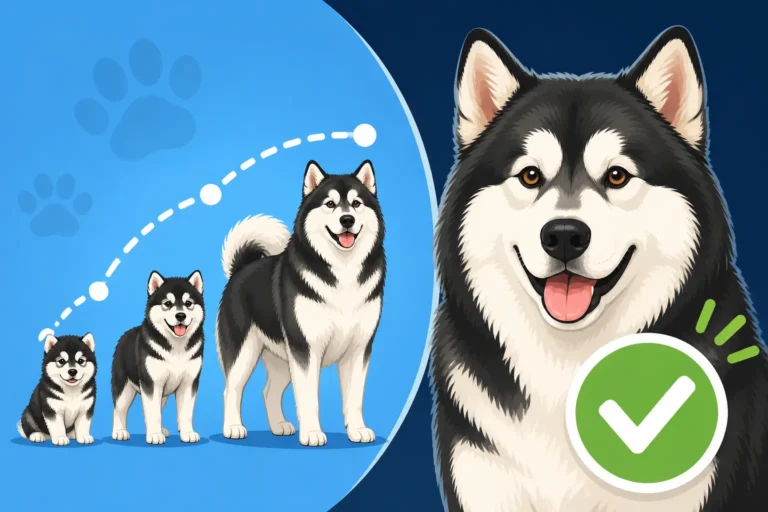
Malamute puppies do not always keep the exact coat color they had as tiny pups. As the soft puppy coat gives way to a denser adult coat, the dog’s markings and overall shade can look different. A dark puppy may develop lighter guard hairs, while pale areas can become more defined or appear to shift as the coat fills in.
The change may be especially noticeable on the face, shoulders, back, and sides, where the guard hairs create the visible outer color. The undercoat can also make a difference: when it shows through, it may give the coat a softer, lighter, or more silvery cast. That does not necessarily mean the dog has acquired a new color; it may simply be the adult coat revealing a different balance of hair and pigment.
If you are comparing a puppy photo with the dog standing in daylight a year or two later, remember that the pictures may not be showing the same coat at all. Puppy softness, camera exposure, wet fur, and the timing of a shed can all change how the color reads. For a closer look at this transition, see Whether a Malamute Puppy's Color Changes and The Colors an Alaskan Malamute Comes In.
“Silver” is often a description, not a separate color
Owners commonly use “silver” to describe a pale gray appearance. In practice, that look may come from gray or black guard hairs mixed with lighter undercoat, white areas, or hairs with less visible pigment. A coat can look distinctly silver in one light and more charcoal or gray in another.
It helps to describe what you see rather than assume that “silver” identifies a formal coat category. Malamute coats can vary in shade and pattern, and a lighter-looking dog is not automatically a different breed type or a sign of a health problem. Breed color descriptions and everyday descriptions do not always line up perfectly. Which Colors the Alaskan Malamute Standard Allows offers more context on how coat colors are categorized.
Lighting is an easy source of confusion. A dog photographed outdoors under bright, cool daylight may look silvery, while the same dog indoors can appear darker or warmer. A bath can also temporarily change the effect: clean, fluffed guard hairs reflect light differently from a coat that is damp, packed with loose undercoat, or coated in ordinary household dust.
Seasonal coat changes can create a temporary silver effect
Malamutes shed heavily, and the coat’s appearance can shift as loose undercoat comes out. When old undercoat lifts or the guard coat separates, patches may look lighter, uneven, or less dense. A dog partway through a coat blow can look like its color is changing when the real change is the distribution of the hair.
For example, imagine a dark-backed Malamute in the middle of a spring shed. Loose pale undercoat may be visible between the guard hairs, while other areas still hold thick winter coat. The back may appear streaky or washed out, and the sides can look lighter than usual. Once the shed is complete and the coat settles, the overall impression may change again.
If the change appears during a shed and the skin underneath looks healthy, it is reasonable to monitor it while keeping up with gentle grooming. Avoid trying to “fix” the color by shaving the coat; shaving does not restore pigment and can interfere with the coat’s normal growth and protective function. Read When an Alaskan Malamute Blows Its Coat and How Long a Malamute's Coat Blow Lasts for more on seasonal shedding.
What Age-Related Graying Usually Looks Like
Whitening around the muzzle and face
Like many dogs, a Malamute may develop gray or white hairs as it gets older. These are often most noticeable around the muzzle, chin, eyebrows, or other areas of the face. The change tends to look like new pale hairs appearing in particular places, rather than the whole body coat suddenly changing color at once.
Some dogs show facial graying earlier or more prominently than others. Genetics and the dog’s original coloring affect how visible it is: white hairs are easy to spot on a dark muzzle, while the same change may be subtle on a pale face. The pace can also differ from one individual to another, so a silver muzzle alone does not tell you precisely how old a dog is or how healthy it is.
A gradual, even spread of pale hairs with otherwise normal skin and coat is usually a different pattern from sudden discoloration accompanied by hair loss or irritation. If you are concerned, take a clear photo in consistent lighting every few weeks. Comparing images is often more useful than relying on memory, especially when the change is slow.
Guard hairs and undercoat do not age in the same way
The long outer guard hairs and the dense undercoat contribute differently to a Malamute’s appearance. Guard hairs create much of the visible pattern and can reflect light, while the undercoat provides insulation and can show through when the outer coat parts or sheds. A shift in the balance between them can make the dog look paler without any dramatic change in pigmentation.
This is one reason a coat may seem to “silver” in patches along the back or sides. The hairs may be lighter toward their tips, the undercoat may be more visible, or a seasonal shed may have thinned the coat temporarily. It is worth checking whether the change follows the coat’s natural pattern and whether the hair is still growing in normally.
Routine brushing helps you inspect the coat and remove loose hair, but it should not be harsh or aimed at stripping out healthy guard hairs. If you are choosing a brush or undercoat rake, select a tool suited to a double coat and use light pressure. Chewy carries a range of grooming tools, but the useful choice is the one that works gently for your dog’s coat and comfort. For basic upkeep, see How Often an Alaskan Malamute Needs Brushing.
A silver-looking coat does not prove a dog’s age
A lighter coat is not a reliable age test. A young Malamute may have a naturally pale gray appearance, while an older dog may retain a dark-looking coat. Puppy coat transitions and seasonal shedding can also make a younger dog appear different from one season to the next.
When estimating age, consider the broader picture rather than focusing on color alone. Changes in activity, muscle condition, dental wear, vision, and veterinary history may provide additional context, but none should be used by itself to establish a dog’s exact age. If you have adopted an adult Malamute with limited records, a veterinarian can assess general health and discuss age-related care without treating coat shade as a definitive clue.
Owners sometimes worry that a newly pale patch means the dog is “going gray” unusually fast. If the skin is normal, the hair remains present, and the change is gradual, it may simply be a variation in coat appearance. If the change is abrupt or comes with other symptoms, treat it as a coat or health concern rather than an age question.
How to Tell Normal Color Changes From a Coat Problem
Look at the skin and the pattern of change
A normal color shift usually leaves the skin comfortable and the coat reasonably intact. In contrast, a veterinary check is sensible if a lighter area is also bald, scaly, crusted, inflamed, persistently itchy, or unpleasant-smelling. Notice whether the change is symmetrical, whether it is spreading, and whether the dog is licking or scratching the area.
A quick home check can be simple: part the coat in a few places, look at the skin in good light, and run your fingers gently over the area. Do not scrape at crusts or apply human hair products. Take photos from the same angle and note when you first saw the change. This gives your veterinarian a clearer timeline if you need an appointment.
A sudden change can have several possible explanations, including skin irritation, infection, hormonal problems, or nutritional issues. Coat appearance alone cannot identify the cause. Malamutes can be affected by zinc-responsive skin disease, which may involve crusting, hair loss, or changes around areas such as the muzzle and paws. Learn more in Zinc Responsive Dermatosis in an Alaskan Malamute and What a Malamute's Crusty Skin Means Zinc Deficiency.
Notice other changes in your dog
A silvering coat by itself is less concerning than a coat change paired with a change in how the dog feels or behaves. Pay attention to persistent itching, recurrent skin infections, low energy, changes in weight, altered appetite, or unusual hair thinning. These signs do not point to one diagnosis on their own, but they help a veterinarian decide what to examine.
For instance, a pale patch that appears during a coat blow while the dog remains comfortable may be a grooming and seasonal issue. A similar-looking patch that expands, becomes crusted, or is accompanied by persistent scratching calls for a different response. The important clue is not simply “the hair looks lighter,” but what else is happening at the skin and across the dog’s health.
Do not begin zinc supplements or change the diet solely because the coat looks silver. Excess supplementation can be harmful, and a color change does not establish a deficiency. If you suspect a dietary or skin problem, ask your veterinarian about an appropriate evaluation before adding supplements or making a major food change.
When to contact a veterinarian
Arrange a veterinary visit if the coat change is sudden, keeps spreading, involves significant hair loss, or comes with visible skin inflammation, sores, odor, pain, or persistent itch. Contact a clinic promptly if your dog seems unwell in other ways, such as marked lethargy or a sudden change in normal behavior. A veterinarian can examine the skin and coat, review diet and medications, and decide whether testing is appropriate.
Before the appointment, write down when you first noticed the change, whether it followed a bath or shed, and whether you have changed food, grooming products, or supplements. Bring photos if the appearance varies with lighting or has changed over time. This can help distinguish a slow, cosmetic shift from a developing skin problem.
For a routine silvering pattern with healthy skin, you generally do not need to treat the color itself. Focus on gentle coat care, regular checks, and your dog’s overall comfort. If you need a brush, comb, or dog shampoo, Chewy is one place owners may find grooming supplies; product choice should depend on coat type and any guidance from your veterinarian, especially when the skin is irritated.
Caring for a Malamute Whose Coat Looks Lighter
Groom gently and avoid trying to change the color
Brushing helps remove loose undercoat and lets you see what is happening beneath the dense fur. Work in manageable sections, pause if your dog becomes uncomfortable, and avoid forceful scraping or repeatedly raking the same spot. If the coat is heavily shedding or tangled, a professional groomer familiar with double-coated breeds can help without taking the coat down to the skin.
Do not bleach, dye, or use human color-correcting products on a Malamute. These products can irritate the skin, and changing the visible shade does nothing to address the reason for a coat change. Shaving is also not a color solution. A Malamute’s double coat has a protective role, so clipping it closely should be discussed with a veterinarian or an experienced groomer when there is a medical reason.
If you are comparing grooming tools on Chewy or another retailer, check that the tool is intended for a dense double coat and that it can be used gently. A tool that pulls, scratches, or makes your dog avoid brushing is not a good fit, even if it removes a lot of hair quickly. See Why an Alaskan Malamute Must Never Be Shaved for more on preserving the coat.
Keep a simple coat-change record
A short record can prevent a lot of second-guessing. Take a monthly photo in similar natural light, note major coat blows, and jot down any changes in skin condition or grooming routine. This makes it easier to see whether the coat is gradually lightening, cycling through a shed, or developing a new patch that warrants attention.
A record is especially useful for owners whose dogs have mixed gray, black, white, or sable coloring. With a richly patterned coat, small changes can be hard to spot day to day. Comparing the same area over time gives you a more reliable view than checking under different indoor lights or after every brushing session.
Keep the notes practical rather than trying to diagnose from appearance. Record what you see: “pale hairs around muzzle,” “loose undercoat on flanks,” or “new crusted patch near paw.” That description is more useful at a veterinary appointment than a guess that the dog’s coat is “turning silver because of age.”
Use the dog’s comfort as your guide
If your Malamute’s coat is simply lighter but the dog is comfortable, eating normally, and has healthy-looking skin, there may be nothing to correct. Continue regular grooming and routine veterinary care, and let the coat be the coat. A silver cast can be a normal effect of color, age, or seasonal coat change rather than a problem requiring treatment.
If you are shopping for a gentle brush or coat-care supplies, Chewy may be convenient, but the product label and your dog’s response matter more than the retailer. For a dog with recurring crusts, itching, or other skin symptoms, ask your veterinarian before trying medicated shampoo or supplements. A product that suits one Malamute may not suit another, particularly when a medical skin condition is involved.
In short, look for the pattern: gradual lightening with healthy skin is often cosmetic; abrupt change with hair loss or irritation deserves closer attention. That distinction helps you avoid both unnecessary worry and the temptation to overlook a genuine skin problem.
Disclaimer
This article is for general informational purposes only and does not constitute professional advice. Laws, prices and regulations vary by location and change over time. Consult a qualified professional for guidance on your specific situation.