When an Alaskan Malamute Blows Its Coat
The sight of your Alaskan Malamute's majestic double coat, so beautiful and insulating, can quickly turn into a source of dread when you realize a "coat blow" is imminent. Suddenly, your home transforms into a blizzard of fur, sticking to everything, finding its way into every nook and cranny. This guide is here to walk you through the phenomenon of an Alaskan Malamute's coat blow, explaining why it happens, what to expect, and how best to survive (and even thrive!) through this fluffy, challenging period.
Understanding the Alaskan Malamute's Double Coat
Your Malamute's incredible coat isn't just for show; it's a marvel of natural engineering, perfectly adapted to the harsh Arctic environments their ancestors thrived in. Before we talk about the "blow," it's crucial to grasp what this coat is made of and why it functions the way it does. It's this unique structure that makes the shedding period such a monumental event for any Malamute owner.
The Double Coat Demystified
Unlike many breeds with single coats, Alaskan Malamutes sport a luxurious, dense double coat. This isn't just extra fur; it's two distinct layers working in harmony. The outer coat, often called the guard hairs, consists of coarser, longer, and somewhat stiff hairs. These guard hairs are water-repellent, shedding snow and moisture, and protecting the softer undercoat from damage. They're the visible beauty of your Malamute, giving them their iconic wolf-like appearance. Think of them as the durable, weatherproof outer shell of a high-performance winter jacket; they stand out from the body, creating an insulating air pocket.
Beneath this protective layer lies the true unsung hero: the undercoat. This layer is astonishingly soft, dense, and woolly, almost like cashmere or thick cotton. Its primary job is insulation – keeping your Malamute warm in sub-zero temperatures by trapping air close to the body, and surprisingly, helping to keep them cool in milder weather by creating a barrier against heat. When you run your fingers through your Malamute's coat, it's the plush, cloud-like texture of the undercoat you're feeling. It's this undercoat, in all its abundant glory, that creates the legendary "Malamute Tumbleweeds" when it starts to shed.
Why the "Blow" Happens: A Biological Imperative
The term "coat blow" describes the dramatic and rapid shedding of the entire undercoat. It’s not just a little hair here and there; it’s a full-on expulsion of old, dead undercoat. This biological event is driven by a combination of genetics and environmental factors, primarily changes in daylight hours and temperature. As the seasons shift, your Malamute's body signals that it's time to adapt its insulation. In preparation for warmer weather, they need to shed the incredibly thick winter undercoat to prevent overheating. Conversely, as winter approaches, a lighter summer coat will be shed to make way for a denser, warmer winter coat. This process is absolutely essential for their well-being and temperature regulation.
Imagine trying to wear a heavy winter parka in the middle of summer—you'd be miserable, right? Your Malamute feels the same way about their undercoat. Shedding allows their skin to breathe and prepares them for the upcoming climate. It's not a sign of illness (unless accompanied by other symptoms like patchy hair loss, itching, or skin irritation, which would warrant a vet visit), but rather a completely normal and healthy physiological process. The intensity of the blow can also be influenced by factors like hormones, with intact females often experiencing a more significant blow after a heat cycle or pregnancy, a phenomenon often referred to as Whether a Spayed Malamute Blows Coat Differently.
The Seasonal Rhythm of a Malamute's Coat Blow
Understanding when your Malamute is likely to blow their coat can help you prepare and manage the deluge of fur. While there's a general pattern, individual Malamutes can vary based on their environment, genetics, and even their unique hormonal cycles. It's rarely a surprise, but it's always a challenge!
The Months an Alaskan Malamute Blows Its Coat
For most Alaskan Malamutes, you can expect two significant coat blows annually. The most notorious, and arguably the most dramatic, occurs in the spring. As the days lengthen and temperatures begin to rise, your Malamute will start to shed their heavy winter undercoat. This typically happens from late winter into spring, peaking as spring turns into early summer. This is when you'll truly understand the meaning of "fur storm." The sheer volume of soft, fluffy undercoat that comes out during this period is astonishing; it can feel like you're brushing out an entire second dog.
The second, usually less intense, coat blow happens in the autumn. As summer fades and the days shorten, they'll shed their lighter summer undercoat to make way for the dense winter protection. While still a noticeable shedding event, the autumn blow often feels more manageable because the undercoat being replaced isn't quite as heavy as the one shed in spring. However, if your Malamute lives in a very consistent indoor environment with artificial lighting and controlled temperatures, their natural shedding cycle might become less defined or even somewhat continuous, making it seem like Whether an Alaskan Malamute Sheds All Year. This consistent indoor living can confuse their body's natural cues.
Environmental and Hormonal Influences
The primary drivers of the coat blow are photoperiod (the amount of daylight) and ambient temperature. Our Malamutes' bodies are hardwired to respond to these ancient signals. Longer days trigger the shedding of the winter coat, while shorter days prompt the growth of a new, thicker winter coat. However, living indoors with artificial lighting and central heating can sometimes slightly alter or extend these cycles. A Malamute kept in a more natural outdoor environment might have more distinct, shorter, but more intense, blowing periods compared to a pampered indoor dog whose body gets mixed signals.
Beyond environmental cues, hormones play a significant role. Intact female Malamutes, for example, often experience a massive coat blow about 2-3 months after each heat cycle. The hormonal shifts following estrus can trigger a complete shedding of their undercoat. Similarly, a spayed female or neutered male might have a slightly different shedding pattern than an intact dog, sometimes resulting in a continuous, less dramatic shed, or a "spay coat" that is notoriously thick and hard to manage. Regular vet check-ups can ensure there are no underlying health issues contributing to excessive or unusual shedding, especially if you notice bald patches or skin irritation where A Malamute's Bald Patch Needs a Vet might be a concern.
What to Truly Expect During the Coat Blow
You've heard the stories, perhaps you've even seen pictures online, but nothing quite prepares you for the reality of an Alaskan Malamute's coat blow. It's a full-on commitment, requiring patience, consistent effort, and a good sense of humor. Prepare yourself, because you're about to become intimately familiar with every strand of fur your dog owns.
The Sheer Volume of Fur
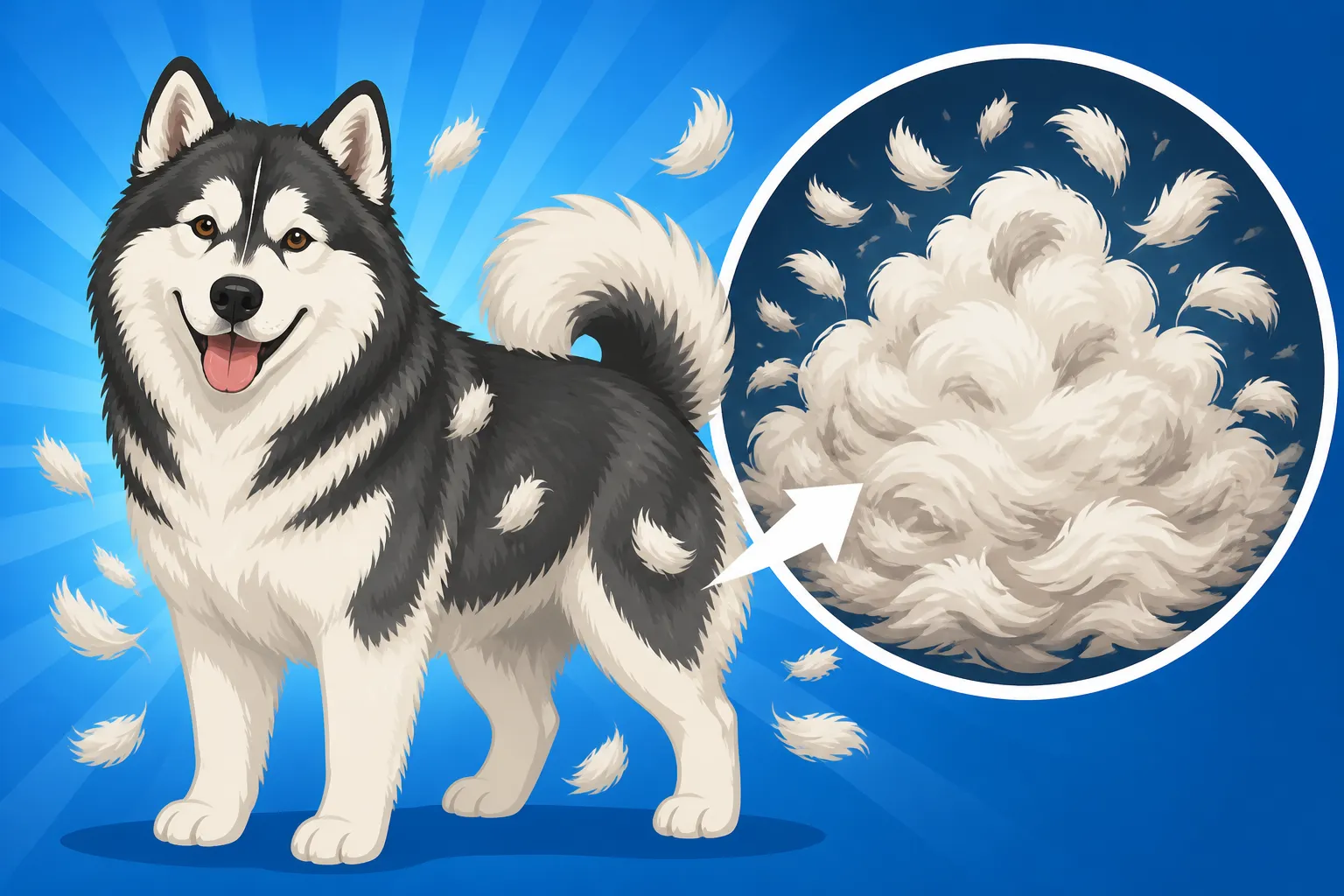
When we say "shedding," we're not talking about a few stray hairs on the sofa. We're talking about entire tufts, clumps, and clouds of soft, cotton-like undercoat liberating themselves from your Malamute's body. It will appear on your clothes, in your food, clinging to your furniture, and dancing across your floors like furry tumbleweeds. Many Malamute owners joke about being able to build another dog with the amount of fur they collect. During the peak of the blow, you could literally pull handfuls of undercoat off your dog with minimal effort. This process is crucial, as allowing the dead undercoat to remain trapped can lead to matting, skin irritation, and even hot spots.
The volume of fur can be overwhelming, especially for first-time Malamute owners. It's not uncommon to fill several grocery bags with shed fur over a week or two. Your vacuum cleaner will become your most-used appliance, and you'll quickly learn the limitations of even the most powerful models. I remember one spring thinking my house was clean, only to find a perfectly formed, dog-sized outline of fur under the sofa. It makes you realize just How Much Undercoat Comes Off an Alaskan Malamute. Investing in a good quality, pet-specific vacuum is less a luxury and more an absolute necessity if you plan to keep your sanity and a semblance of cleanliness.
Duration and Intensity
The duration of a full coat blow can vary. Generally, a significant blow can last anywhere from 3 to 6 weeks, though some Malamutes might take a bit longer, especially if they are particularly dense-coated or if there are hormonal factors at play. The intensity will fluctuate throughout this period. You'll likely experience a peak week or two where the fur seems to detach itself with alarming speed, followed by a gradual tapering off. It’s important to understand that this isn’t a one-and-done event; it’s a sustained effort over several weeks.
During the most intense phase, daily (sometimes twice daily) grooming is not just recommended, it's virtually mandatory to stay on top of the shedding. Skipping even a day can result in a buildup of loose undercoat that becomes increasingly difficult to remove and can start to matt, especially behind the ears, under the legs, and around the tail. Imagine trying to untangle a sheep's fleece if it hadn't been shorn in months—that's what you're trying to avoid! The consistent effort helps your Malamute stay comfortable and prevents skin issues. You might find yourself saying, "Is it over yet?" more times than you can count, only to realize the answer is "not quite." This persistent shedding is exactly why it's worth reading How Long a Malamute's Coat Blow Lasts.
Mastering the Art of Coat Blow Management
Navigating a Malamute's coat blow effectively requires the right tools, consistent effort, and a healthy dose of patience. It’s a job, but one that’s essential for your dog’s comfort and health, and your home’s cleanliness.
Brushing, Brushing, and More Brushing
This is your number one weapon against the fur onslaught. Regular, thorough brushing is the most effective way to remove dead undercoat before it has a chance to settle on your furniture or form mats on your dog. During a coat blow, "regular" means daily, and often for 30-60 minutes at a time. The goal is to get all the way down to the skin, not just skim the surface.
You'll need several tools for this, which we'll discuss shortly. Start by line brushing or pin brushing, carefully separating the coat and working through small sections at a time. You'll be amazed at how much fur comes out. Many Malamute owners take their dogs outside for brushing sessions to contain the mess, or invest in large tarps to collect the fur. The collected fur can even be spun into yarn, if you're so inclined, but most of us are just happy to see it gone! A structured routine of brushing makes the whole experience much more manageable for both you and your Malamute, and understanding How Often an Alaskan Malamute Needs Brushing is key.
The Power of a Professional Bath
While regular brushing is paramount, a well-timed bath can significantly aid in shedding loose undercoat, especially when performed by a professional or with the right equipment at home. A good bath uses warm water to help loosen dead hairs, followed by a thorough rinse. The real magic, however, happens during the drying process. Professional groomers often use high-velocity force dryers. These aren't just blow dryers; they are powerful machines designed to literally blast water (and loose fur) out of the coat.
A force dryer can remove an incredible amount of undercoat that brushing alone might miss. It speeds up drying time dramatically, preventing skin issues that can arise from a coat that stays damp for too long. If you don't have access to a professional groomer, or if you prefer a DIY approach, investing in your own force dryer can be a game-changer. These can be found on online retailers like Amazon or Chewy, and while they are an upfront cost, they can save you money on professional grooming in the long run and make the coat blow far less daunting. Believe me, the difference a proper blow-out makes is astronomical, as you'll realize after reading What a Force Dryer Does for a Malamute's Coat Blow. You will also quickly discover How Rarely an Alaskan Malamute Needs a Bath outside of these seasonal deep cleans.
Essential Tools for Home Grooming
To effectively manage your Malamute's coat blow at home, you'll need a toolkit specifically designed for double coats. Don't skimp on these; quality tools make a huge difference in efficiency and your dog's comfort.
| Tool Type | Purpose | When to Use |
|---|---|---|
| Undercoat Rake | Reaches deep into the undercoat to pull out loose, dead hair. | Daily during coat blow, weekly during lighter shedding. |
| Slicker Brush | Good for general brushing, removing surface mats, and fluffing the coat. | For detangling guard hairs and light finishing. |
| Pin Brush | Detangles longer guard hairs and stimulates skin. | For overall coat health and comfort, gentle on the skin. |
| Force Dryer | Blasts loose undercoat out of the coat after bathing. | Essential after a bath, or for a dry blow-out during heavy shedding. |
| Grooming Table/Restraint | Keeps your Malamute steady and at a comfortable height for grooming. | For all significant grooming sessions. |
A good quality undercoat rake, often with rotating teeth, is your primary weapon. It's designed to go through the guard hairs and gently pull out the dead undercoat without damaging the topcoat or irritating the skin. Follow up with a slicker brush to smooth the coat and remove any remaining loose hairs on the surface. For severe tangles or mats, a de-matting comb can be useful, but always use extreme caution to avoid pulling your dog's skin. You can find robust options for these tools on sites like Chewy or Amazon. Remember, investing in quality grooming tools is a long-term commitment that will benefit both you and your Malamute for years, making the chore of grooming much easier. These are truly Which Tools a Malamute Owner Buys Once.
Debunking Common Myths and Avoiding Costly Mistakes
In an effort to cope with the monumental shedding, many Malamute owners consider drastic measures or fall for common misconceptions. It's important to separate fact from fiction to ensure your Malamute's health and coat integrity.
The Shaving Fallacy
One of the most persistent and damaging myths about Malamute coat blows is that shaving them will solve the problem. Let me be unequivocally clear: never shave an Alaskan Malamute. This is a critical mistake that can have serious, long-lasting negative consequences for their coat and skin health. Their double coat isn't just about keeping warm; it's a finely tuned natural system that is essential for their well-being.
When you shave a Malamute, you disrupt this system in several ways. Firstly, you remove their natural insulation. While it might seem counterintuitive, that dense undercoat helps to trap cool air in warmer weather, preventing overheating. Without it, their skin is directly exposed to the sun's harsh UV rays, increasing the risk of sunburn and skin cancer. Secondly, shaving can permanently damage the growth cycle of the coat. The guard hairs and undercoat grow at different rates. When shaved, the softer undercoat often grows back faster and coarser than the guard hairs, leading to a "woolly" or "cottony" texture that is much harder to manage, mats easily, and no longer provides proper insulation or weather protection. This condition, often called "coat change" or "post-clipping alopecia," can be irreversible. This is why Why an Alaskan Malamute Must Never Be Shaved is a crucial piece of advice. Instead of solving a problem, you create a much bigger, potentially lifelong one for your dog.
Diet and Supplements: What Helps, What Doesn't
Many owners wonder if specific diets or supplements can reduce the intensity or frequency of a coat blow. While a healthy, balanced diet is fundamental for overall coat health, there's no magic food that will stop a Malamute from blowing its coat. Good nutrition provides the building blocks for healthy hair growth, which means a stronger coat that sheds less when it's not blowing, and grows back better. Look for high-quality dog foods with good sources of protein and essential fatty acids (like Omega-3s and Omega-6s). Some owners find that adding fish oil supplements (available from trusted retailers like Chewy or Amazon) can improve coat luster and skin health, potentially reducing dryness and making shedding easier.
However, be realistic: these are aids to overall health, not a cure for the coat blow itself. The coat blow is a natural, genetic process driven by environmental cues, not simply a nutritional deficiency. While certain deficiencies (like zinc, which is a particular concern for Malamutes, as discussed in Feeding an Alaskan Malamute for Zinc It Cannot Absorb) can lead to poor coat quality and excessive, unhealthy shedding, addressing these issues will result in a healthy coat that sheds naturally, not one that suddenly stops blowing out. Always consult your vet before adding significant supplements to your Malamute's diet.
Living With the Legacy: Year-Round Coat Care and Beyond
Even outside of the main coat blow seasons, your Alaskan Malamute's coat demands attention. Proactive, consistent care throughout the year can make the intense shedding periods more manageable and ensure your dog remains comfortable and healthy.
Year-Round Maintenance for a Healthy Coat
While the spring and fall are the peak shedding seasons, Malamutes do shed year-round, albeit at a much lower intensity. Think of it as a constant, low-level flurry rather than a full-blown blizzard. Establishing a consistent year-round grooming routine is crucial. This means brushing your Malamute at least 2-3 times a week, even when they're not actively "blowing." These regular sessions help to remove dead hair, prevent minor matting from forming, distribute natural skin oils, and keep the skin healthy.
Regular maintenance also helps you bond with your Malamute and allows you to check their skin for any unusual lumps, bumps, or irritations early on. It makes the transition into a heavy coat blow much smoother, as you're already on top of a significant amount of the loose hair. A good quality deshedding tool can be used periodically during these in-between times to keep the undercoat from building up too much. Consistent care will also dramatically reduce the amount of fur that ends up on your floors, a constant battle that makes you realize The Malamute Coat Blow That Fills a Vacuum in an Afternoon.
Recognizing Other Coat Issues
While a coat blow is normal, it's important to distinguish it from other coat-related issues that might signal an underlying health problem. If you notice excessive shedding outside of the typical seasonal blows, or if the shedding is accompanied by other symptoms, it's time to consult your veterinarian.
Signs of concern include:
- Patchy hair loss or bald spots: This is not normal for a coat blow and could indicate allergies, parasites (like fleas or mites), fungal infections, or even more serious conditions like hypothyroidism.
- Red, inflamed, or irritated skin: If your Malamute is scratching excessively, or if their skin appears red, bumpy, or scaly, they might have a skin infection or allergic reaction.
- Dull, dry, or brittle coat: A healthy Malamute coat should have a natural luster. If it looks dull or feels unusually dry and brittle, it could point to nutritional deficiencies or other health problems.
- Strong odor: While Malamutes are generally quite clean dogs with minimal "doggy" odor, a strong, unpleasant smell from their coat or skin could indicate a bacterial or yeast infection.
Always err on the side of caution and get any unusual changes in your Malamute's coat or skin checked out by a vet. Early detection can prevent minor issues from becoming major problems, and ensure your magnificent Malamute stays healthy and happy year-round. Taking proactive steps and knowing the difference between normal shedding and something more concerning is part of being a responsible Malamute owner. Caring for an Alaskan Malamute Past Eight often involves increased vigilance for such signs.
Disclaimer
This article is for general informational purposes only and does not constitute professional advice. Laws, prices and regulations vary by location and change over time. Consult a qualified professional for guidance on your specific situation.