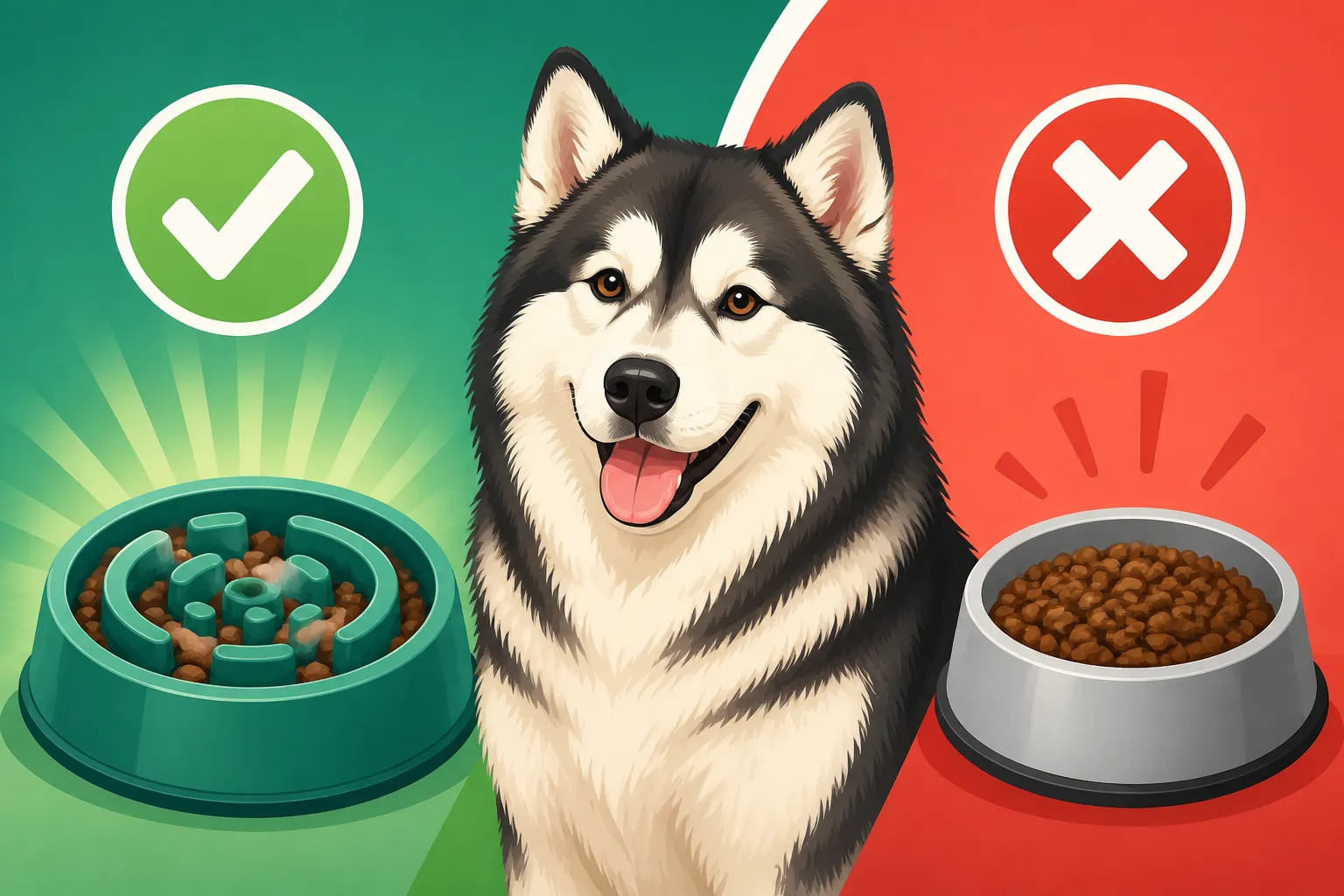
Whether a Slow Feeder Suits an Alaskan Malamute
It's a familiar scene for many Alaskan Malamute owners: you put down a carefully measured bowl of food, and within what feels like mere seconds, it's gone. Your magnificent Malamute inhales it, then looks at you with those soulful eyes, practically asking for more. This frantic eating isn't just a bit messy; it can lead to serious health concerns, especially for a large, deep-chested breed like ours. This guide will dive deep into why Malamutes eat so fast, the risks involved, and whether a slow feeder is truly the answer to protect their health and make mealtime a more mindful experience.
Why Alaskan Malamutes Eat So Fast
Before we can tackle the solution, we need to understand the root cause. It's not usually about being rude or ungrateful; it's often a deeply ingrained instinct passed down through generations. Our Malamutes carry the history of their ancestors, powerful working dogs built for survival in harsh, unforgiving environments.
The Ancestral Drive to Gorge
Imagine living in the Arctic, where food was a precious, often scarce resource. The Mahlemut people, who originally bred our beloved Malamutes, relied on these dogs for their very existence, often working them in extremely cold conditions that demanded immense caloric intake. When food was available, dogs learned quickly that waiting meant missing out. To ensure survival and to get enough energy for their demanding work, they had to eat quickly and efficiently, gorging themselves when the opportunity arose. This wasn't a choice; it was a necessary survival mechanism.
This primal drive is still very much alive in our modern Malamutes. Even though your Malamute probably gets a consistent, nutritious diet from a trusted brand, that ancient programming whispers to them: "Eat it all, eat it fast, before it's gone." It's a genetic echo of a time when every calorie counted, and waiting could mean starvation or losing your share to another dog in the pack. This isn't just about appetite; it's about deep-seated instincts. Many owners are surprised by The Efficient Metabolism That Surprises Every New Malamute Owner and how little food their large dog actually needs compared to other breeds, but that doesn't lessen the drive to eat it quickly.
Competition Instincts
Even if your Malamute is the only furry companion in your home, the instinct for competition can still play a role in their rapid eating. In a multi-dog household, it's even more pronounced. Dogs, by nature, are often opportunistic scavengers and will eat quickly to prevent others from taking their meal. This can be seen even with puppies vying for a mother's milk. While it might seem irrational in the safety of your kitchen, the primitive part of their brain might still perceive other household members – human or animal – as potential competitors for their meal.
This isn't necessarily a sign of aggression or resource guarding, though it can sometimes escalate to that if not managed. More often, it's simply a carryover from their pack mentality, a desire to secure their portion quickly. You might notice that if you have other pets, your Malamute eats even faster. This competitive edge, combined with their ancestral drive to gorge, creates a powerful urge to eat their meal in record time, often leading to them Whether an Alaskan Malamute Bolts Its Food.
The Risks of Fast Eating for Your Malamute
While it might seem endearing or even a little funny how quickly your Malamute can make their bowl disappear, there are significant health risks associated with rapid eating that every owner needs to be aware of. These aren't just minor inconveniences; some can be life-threatening.
Bloat (Gastric Dilatation-Volvulus) Concerns
This is perhaps the most terrifying risk for owners of large, deep-chested breeds like Alaskan Malamutes. Gastric Dilatation-Volvulus, commonly known as bloat, occurs when a dog's stomach fills with gas, food, or fluid, and then twists on itself, effectively trapping everything inside and cutting off blood supply. Rapid eating is a well-known contributing factor because dogs tend to gulp down a lot of air along with their food when they eat too quickly. This trapped air, combined with food, creates immense pressure.
Bloat is an acute, life-threatening emergency that requires immediate veterinary intervention, often surgery. The symptoms can come on quickly and include a distended abdomen (which can be hard to spot under a Malamute's thick coat until severe), unproductive retching, pacing, restlessness, and signs of pain. Without swift treatment, it can be fatal within hours. Anything we can do to reduce the risk of bloat, like slowing down eating, is a crucial step in responsible Malamute ownership. Understanding Bloat in an Alaskan Malamute is paramount for any owner.
Digestive Upset and Poor Nutrient Absorption
Even if your Malamute never experiences bloat (and we all hope they don't!), fast eating can still wreak havoc on their digestive system. When food is swallowed whole or barely chewed, it puts an extra burden on the stomach and intestines. This can lead to a host of less severe but still uncomfortable issues, such as:
- Vomiting or Regurgitation: Eating too fast can cause them to bring up undigested food shortly after a meal because their stomach simply can't handle the sudden influx.
- Excessive Gas: Gulping air contributes not only to bloat risk but also to uncomfortable gas buildup, leading to burping and flatulence.
- Indigestion and Diarrhea: The digestive system has to work harder to break down larger pieces of food, which can lead to inefficient digestion, stomach upset, and sometimes diarrhea.
- Poor Nutrient Absorption: For food to be properly digested and its nutrients absorbed, it needs to be broken down mechanically (chewing) and chemically (with enzymes in saliva and stomach acid). When food is rushed through the system, the body has less time to extract all the valuable vitamins, minerals, and proteins, meaning your Malamute might not be getting the full benefit from their nutritious diet. This is especially important if your Malamute has specific dietary needs, such as Feeding an Alaskan Malamute for Zinc It Cannot Absorb.
How Slow Feeders Work and Their Benefits for Malamutes
This is where slow feeders step in as a practical, everyday solution to mitigate the risks associated with fast eating. They are designed to engage your Malamute's brain and body, transforming mealtime from a race into a more thoughtful activity.
Types of Slow Feeder Bowls
The basic premise of a slow feeder bowl is to introduce obstacles that prevent your dog from taking large gulps of food at once. Instead of an open basin, these bowls feature various designs:
- Ridges and Mazes: These are perhaps the most common type. The bowl has elevated ridges or intricate maze-like patterns that force your Malamute to navigate around them, picking up smaller portions of food with each lick or bite. This significantly extends mealtime, slowing them down from mere seconds to several minutes.
- Pillars or Pegs: Some designs incorporate a series of pillars or pegs that stand up from the bottom of the bowl. Your Malamute has to reach between these obstacles to get to the kibble. These can be particularly effective for dogs who try to "scoop" food.
- Divided Sections: Less common for extreme fast eaters, but some bowls have separate small compartments for food, forcing the dog to move its head between sections.
Slow feeder bowls come in various materials, including durable plastics, heavy ceramics, and stainless steel. When browsing options on platforms like Chewy or Amazon, you'll see a wide array of choices, so consider your Malamute's size and eating style when selecting one. The goal is to make it challenging enough to slow them down without being so frustrating that they give up.
Beyond the Bowl: Creative Slow Feeding Methods
While dedicated slow feeder bowls are excellent, the concept of slowing down eating can extend far beyond just a special bowl. Many creative methods can turn mealtime into an enriching puzzle, especially useful for intelligent breeds like Malamutes who thrive on mental stimulation.
- Puzzle Feeders: These toys dispense food only when your Malamute solves a small puzzle, like batting it around, pushing a lever, or rotating a compartment. They can range from simple roll-and-dispense balls to more complex treat-dispensing toys. They provide both physical and mental exercise.
- Snuffle Mats: These are fabric mats with many strands or pockets where you can hide kibble. Your Malamute has to "snuffle" and use their nose to find the food, simulating natural foraging behavior. They're excellent for mental enrichment and slowing down meals.
- Spreading Food Out: For a low-tech solution, simply spread your Malamute's kibble across a large, clean baking sheet. This forces them to walk around and pick up individual pieces, preventing large gulps. You can also scatter kibble across a clean floor or even in the yard (if safe and weather permits) for a true "hunt."
- Kong or Treat-Dispensing Toys (Frozen): Stuffing a Kong or similar durable rubber toy with your Malamute's meal (kibble mixed with a little wet food, plain yogurt, or peanut butter, and then frozen) can make mealtime last for a considerable duration. They have to lick and work at the frozen contents, providing a long-lasting challenge. This is a great option for meal planning if you use fresh food diets from companies like Ollie, where you can mix their ingredients with some plain yogurt and freeze it.
- Two-Bowl Method: Simply divide your Malamute's meal into two separate regular bowls, placing them a short distance apart. They'll have to eat some from one, then move to the other, breaking up the continuous gorging. This can be a good stepping stone before a full slow feeder.
By offering variety in slow feeding methods, you not only address the fast-eating issue but also provide valuable mental enrichment, which is crucial for a breed as smart and active as the Alaskan Malamute. They thrive on having something to "do," even if that "do" is simply working for their dinner.
Choosing the Right Slow Feeder for Your Alaskan Malamute
Selecting the perfect slow feeder isn't a one-size-fits-all situation, especially when you're dealing with a powerful and intelligent breed like the Alaskan Malamute. You need something that can withstand their enthusiasm and genuinely achieve its purpose.
Durability and Material Matters
Alaskan Malamutes are robust dogs, and their strength extends to their jaws and paws. A flimsy slow feeder bowl might become a chew toy or simply be tossed aside in frustration within minutes. Investing in a durable, high-quality feeder is crucial.
- Stainless Steel: Often considered the most durable and hygienic option. Stainless steel bowls are typically heavy enough to prevent tipping and chewing, and they are easy to clean. They don't absorb odors or harbor bacteria. However, their patterns might not be as intricate as plastic ones, so ensure the design is still effective at slowing down your specific Malamute.
- Ceramic: These bowls are heavy and can be effective if they have the right maze design. The weight helps prevent them from being pushed around. However, ceramic can chip or break if dropped or if your Malamute is particularly prone to picking up and dropping their bowl. If you opt for ceramic, ensure it's a sturdy, thick piece.
- Hard, Food-Grade Plastic: Many slow feeders are made from plastic. The key here is to choose a hard, robust, BPA-free, food-grade plastic. Avoid thin, flexible plastics that your Malamute can easily chew through. Look for designs that are sturdy and have a good weight to them. While some Malamutes may be notorious chewers (and will chew through What a Malamute Destroys Before It Turns Two), a well-made plastic slow feeder can still be a good option if your dog isn't an aggressive chewer of their food bowls.
Always check for non-slip bases on any slow feeder you choose. Rubber feet or a silicone ring on the bottom will prevent the bowl from sliding across the floor as your Malamute works at their food, reducing frustration and potential spills. Read reviews on sites like Amazon or Chewy, specifically looking for feedback from owners of large, strong breeds, to gauge the product's actual durability.
Cleaning and Maintenance Considerations
The intricate designs that make slow feeders effective can also make them a bit more challenging to clean than a standard dog bowl. Good hygiene is paramount to prevent bacteria buildup, especially if you're feeding wet food, fresh food, or anything beyond dry kibble.
- Dishwasher Safe: This is a major convenience. Many plastic and stainless steel slow feeders are dishwasher safe, making cleanup a breeze. Always check the manufacturer's instructions.
- Ease of Hand Washing: If hand washing is necessary, consider the design. Deep crevices or narrow channels can be difficult to reach with a sponge. Brushes specifically designed for bottles or intricate kitchenware can be helpful.
- Material Porosity: Stainless steel and ceramic are non-porous and generally easier to keep hygienically clean. Some plastics, over time, can become scratched, creating tiny surfaces where bacteria can hide. Regularly inspect plastic bowls for deep scratches and consider replacing them if they become too worn.
Regular cleaning prevents unpleasant odors and ensures your Malamute is eating from a sanitary surface. Incorporating the slow feeder into your regular dish-washing routine, perhaps with specific What an Alaskan Malamute Needs Every Day for their bowls, will make it less of a chore.
Here's a quick comparison of common slow feeder types:
| Type | Design Characteristics | Best Material(s) | Durability (Malamute Suitability) | Cleaning Ease | Primary Benefit |
|---|---|---|---|---|---|
| Traditional Bowl | Ridges, mazes, elevated obstacles | Stainless Steel, Hard Plastic, Ceramic | Medium to High (depends on material) | Medium | Direct, consistent slowing of meal consumption |
| Puzzle Feeder | Compartments, levers, dispense mechanism | Hard Plastic, Rubber | Medium (can be chewed) | Low to Medium | Mental stimulation, very slow consumption |
| Snuffle Mat | Fabric strands, pockets | Fabric (washable) | Low (not chew-proof) | High (machine wash) | Foraging behavior, scent work, mental engagement |
| Stuffable Toy | Hollow, durable rubber | Hard Rubber | High | High | Extended licking, great for wet/frozen food |
| Scattering | No specific product, food spread out | N/A | N/A (no product to damage) | N/A | Very low-cost, encourages natural foraging |
Introducing a Slow Feeder to Your Malamute
Bringing a new feeding tool into your Malamute's routine should be a positive experience. Remember, these dogs are smart, and while they can be stubborn, they also respond well to clear, consistent, and positive guidance.
Gradual Introduction and Positive Reinforcement
Some Malamutes will take to a slow feeder immediately, but others might initially be confused or even frustrated by the change. It's essential to introduce it gradually and make it a rewarding experience.
- Start Simple: If you're using a slow feeder bowl, begin with a design that's not overly complex. As your Malamute gets used to it, you can gradually move to more intricate patterns.
- Mix and Match: In the beginning, you might place a portion of their meal in their old bowl and a portion in the new slow feeder. This allows them to get used to the concept without feeling deprived or overly challenged.
- Positive Association: Always be cheerful and encouraging when introducing the new feeder. Praise your Malamute when they engage with it, even if it's just a few licks. You want them to associate the slow feeder with good things – tasty food and your approval. Avoid showing frustration if they're struggling, as this can create negative associations.
- Show Them How: For some puzzle feeders, you might need to demonstrate how it works a few times. Roll the ball so a treat falls out, or gently nudge a lever. They're intelligent dogs, and they'll catch on. This can be especially important during The First Year With an Alaskan Malamute Puppy as they learn new routines.
The key is patience. Malamutes thrive on routine, but new things can take a moment to adjust to. Keep the atmosphere light and positive, and they'll likely adapt quickly. Remember, the goal is to reduce stress and improve digestion, not to create a new source of anxiety around mealtime. Also, consider the total amount of food. If you're curious about How Many Meals a Day an Alaskan Malamute Needs or How Much an Adult Alaskan Malamute Should Eat, these factors play into how you portion out their meals in a slow feeder.
Monitoring and Adjusting
Once you've introduced the slow feeder, don't just set it and forget it. Observe your Malamute closely during and after meals.
- Watch for Frustration: If your Malamute is showing signs of extreme frustration – barking, pawing aggressively at the bowl, flipping it over, or giving up entirely – the slow feeder might be too challenging. You may need to try a simpler design or switch to a less restrictive method, like spreading food on a baking sheet, before reintroducing a bowl.
- Check Eating Time: The ideal slow feeder should extend mealtime significantly, but not excessively. Aim for them to finish their meal in anywhere from 10 to 20 minutes, depending on the volume of food. If it still only takes them a minute, the feeder isn't effective enough. If it's taking them 45 minutes and they're becoming overly agitated, it might be too difficult.
- Monitor Digestion: Pay attention to their post-meal behavior. Are they still burping excessively? Are they still vomiting? Is their stool normal? The slow feeder should ideally lead to improved digestion. If problems persist, consult your vet.
- Adapt as Needed: Your Malamute's needs might change. As they get older, their enthusiasm for complicated puzzles might wane, or their appetite might shift (especially for Caring for an Old Alaskan Malamute or if you notice How a Malamute's Appetite Changes After Neutering). Be prepared to adjust the type of slow feeder or feeding method to suit their evolving preferences and abilities.
Ultimately, a slow feeder can be an incredibly beneficial tool for an Alaskan Malamute, reducing the risks of serious health issues like bloat and improving overall digestion. By understanding their inherent drives and patiently implementing these tools, you can help your Malamute enjoy their meals safely and healthily for years to come.
Disclaimer
This article is for general informational purposes only and does not constitute professional advice. Laws, prices and regulations vary by location and change over time. Consult a qualified professional for guidance on your specific situation.