What a Force Dryer Does for a Malamute’s Coat Blow
If you're an Alaskan Malamute owner, you know the coat blow isn't just "shedding"; it's an event. It's a furry apocalypse that descends upon your home, leaving tumbleweeds of undercoat in its wake and turning your vacuum cleaner into a sputtering, wheezing shadow of its former self. This guide is here to walk you through exactly what a force dryer does for a Malamute's coat blow and how this powerful tool can transform your grooming routine from a nightmare into a manageable reality.
Understanding the Malamute Coat Blow: A Seasonal Deluge
Let's be honest, living with an Alaskan Malamute means living with fur. A lot of fur. But then, twice a year, sometimes more, your Malamute decides it's time to shed its entire winter or summer wardrobe, and that's when things get truly epic. This isn't just stray hairs; it's a dense, fluffy undercoat that seems to multiply exponentially.
The Biology Behind the Blizzard of Fur
Alaskan Malamutes are double-coated dogs, built for extreme cold. They have a coarse, protective outer coat (guard hairs) that repels water and snow, and underneath that, a thick, woolly undercoat that provides incredible insulation. This undercoat is what allows them to sleep comfortably in the snow by choice, even in bitter temperatures. When the seasons change, particularly from winter to spring and sometimes from summer to fall, their bodies naturally adjust by shedding this insulating layer. This process is known as "blowing coat," and it's a perfectly natural, healthy function for your Malamute. It's just… a lot. Owners often describe it as feeling like a never-ending snowstorm of white, grey, or black fluff, coating every surface in your home. It’s not uncommon to pull what feels like another whole dog off of your Malamute during these times, leaving you wondering How Much Undercoat Comes Off an Alaskan Malamute.
Imagine your Malamute is wearing a giant, thick wool sweater. When it gets warm, they need to take that sweater off. But instead of neatly folding it, they essentially unravel it all over your living room. And then, once the "sweater" is off, they grow a thinner, lighter one for summer, only to repeat the process in reverse as winter approaches. This cyclical nature is why the coat blow is such a significant part of owning one of these magnificent dogs. It’s a testament to their heritage and how perfectly adapted they are to their original purpose.
Why Traditional Brushing Falls Short
When faced with the sheer volume of fur during a coat blow, many owners understandably reach for their trusty slicker brush or undercoat rake. And while these tools are absolutely essential for regular grooming and maintenance, they often struggle to penetrate the dense, matted undercoat that's actively shedding. You might spend an hour brushing, filling several grocery bags with fur, only to find more coming out the moment your Malamute shakes.
The problem is that traditional brushes often only skim the surface, pulling out the loose hairs that are already near the top. The truly matted, impacted undercoat, especially close to the skin, remains stubbornly attached. This isn't just an aesthetic issue; trapped undercoat can lead to skin irritation, hot spots, and make it harder for your Malamute's skin to breathe, especially in warmer weather. It’s a vicious cycle where you brush, feel like you're making progress, but the core of the problem persists. It's frustrating, time-consuming, and often leaves both you and your Malamute exhausted and still covered in fur. That's why many Malamute owners feel like they're fighting a losing battle, and it's also why a different approach is often needed to really get to the root of the problem. You might find yourself brushing How Often an Alaskan Malamute Needs Brushing only to feel like you're not making a dent.
Enter the Force Dryer: Your Secret Weapon Against Shedding
This is where the force dryer steps in as an absolute game-changer for Malamute owners. If you've never used one, prepare to be amazed. It's not just a fancy hairdryer; it's a powerful tool designed specifically for pet grooming, and it tackles the Malamute coat blow head-on.
How a Force Dryer Works Its Magic
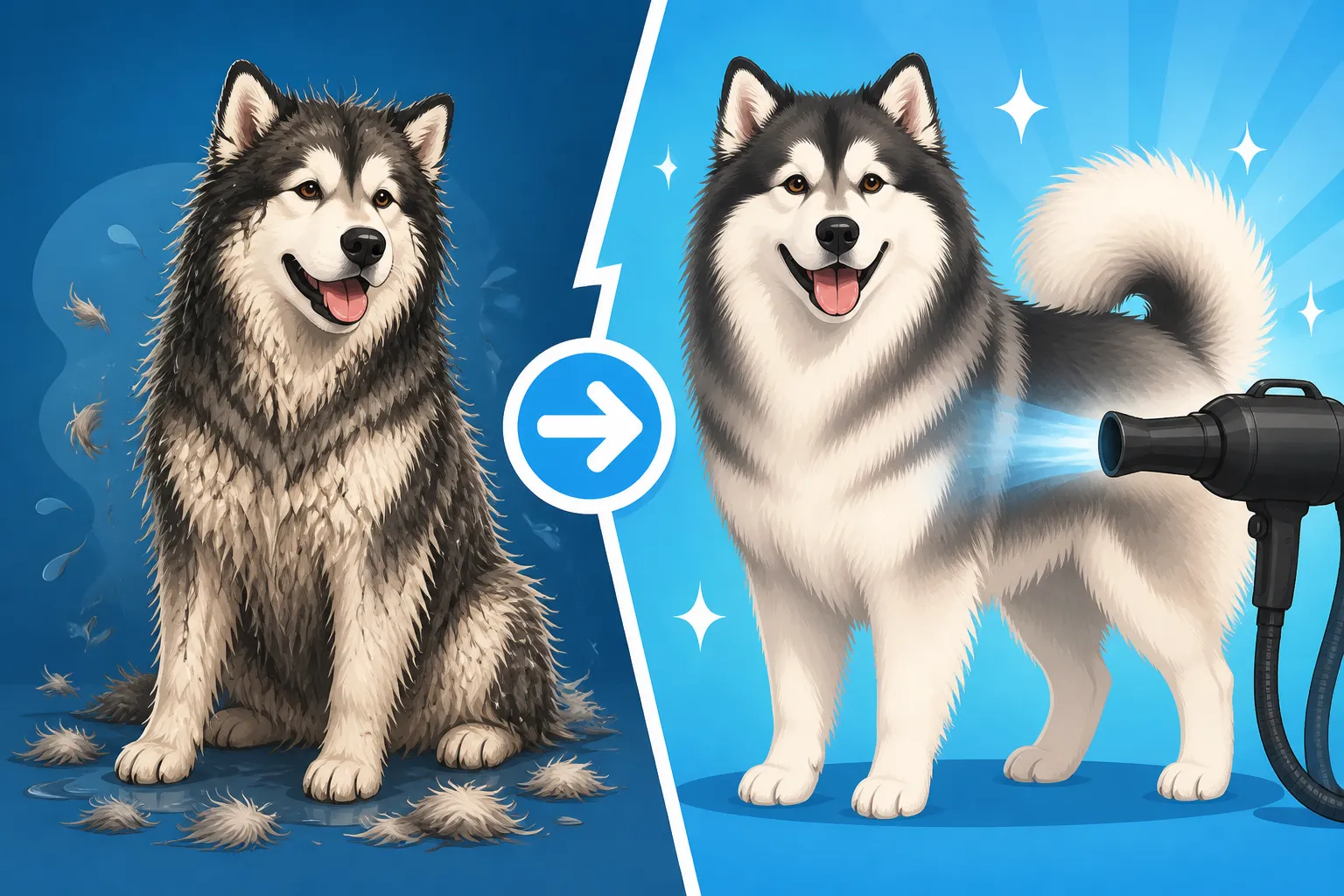
Unlike a human hairdryer, which uses heat to evaporate moisture, a force dryer primarily uses a high volume of unheated air. This powerful blast of air literally "forces" its way through your Malamute's dense double coat, separating the individual hairs. As the air penetrates, it dislodges loose undercoat from the skin, blowing it out of the coat in impressive, sometimes shocking, quantities. It's like having a miniature hurricane specifically designed to de-shed your dog.
The sheer force of the air gets right down to the skin, reaching those impacted layers that brushes struggle to access. It's incredibly effective because it's not just pulling hair; it's blasting it out. This means you're removing more loose fur in a fraction of the time compared to brushing alone. It's also an excellent way to dry your Malamute after a bath, pushing water out of the coat rather than relying on heat, which is crucial for preventing skin issues and ensuring thorough drying for a double-coated breed.
The Benefits Beyond Just Removing Hair
The primary benefit, of course, is the massive reduction in shedding. You'll see a significant decrease in the amount of fur floating around your house, clinging to your clothes, and clogging your vacuum. But the advantages of using a force dryer extend far beyond just cleanliness:
- Healthier Skin and Coat: By removing dead undercoat, you allow your Malamute's skin to breathe properly. This can prevent matting, reduce the risk of skin infections, and improve overall coat health. A well-maintained coat is less prone to tangles and feels softer and cleaner.
- Reduced Grooming Time: While the initial force drying session might seem intense, it drastically cuts down on the total time you spend managing your Malamute's coat blow throughout the shedding period. One thorough session can remove what might take days or weeks of traditional brushing.
- Improved Airflow and Cooling: In warmer months, a thick, impacted undercoat can trap heat, making it very uncomfortable for your Malamute. Force drying removes this insulating layer, allowing for better air circulation and helping your dog stay cooler. Remember, Summer Is the Season That Kills Alaskan Malamutes, and helping them regulate their temperature is vital.
- Cleaner Dog: Force dryers are excellent for blowing out dirt, dust, and dander that might be trapped deep within the coat, leaving your Malamute cleaner and smelling fresher. It’s amazing what can hide in that thick fur!
- Less Stress for Your Malamute (Eventually): While some Malamutes might be hesitant at first due to the noise, many quickly learn to tolerate, and even enjoy, the sensation. It can be less irritating than constant brushing, especially if they have sensitive skin or matting. Over time, it becomes part of their routine, and they learn that relief from the itchy, heavy undercoat is coming.
Choosing the Right Force Dryer for Your Malamute
Investing in a good quality force dryer is crucial. This isn't a purchase to skimp on if you're serious about tackling your Malamute's coat. Here are some factors to consider:
- Power: Look for a dryer with strong airflow. Measured in CFM (Cubic Feet per Minute) or FPM (Feet Per Minute), higher numbers generally mean more power. For a Malamute, you'll want something robust. Many popular models, like those you might find on Amazon or Chewy, offer adjustable speed settings, which is fantastic for getting your dog accustomed to the sensation and for tackling different areas of the body.
- Noise Level: Force dryers are loud, there's no way around it. However, some are designed to be quieter than others. Read reviews to get an idea of the noise output. Some Malamutes are more sensitive than others, so a slightly quieter model can make a big difference in their comfort.
- Heat Settings: Most force dryers come with a "no heat" setting, which is what you'll use primarily. Some offer a low heat option, which can be useful in very cold environments for faster drying, but always be cautious with heat on a double-coated breed like a Malamute to avoid overheating.
- Hose and Nozzles: A flexible, durable hose is important. Look for dryers that come with various nozzles – a flat, wide nozzle is great for general de-shedding, while a cone nozzle can provide more directed airflow for stubborn spots.
- Portability and Durability: Consider where you'll be using and storing the dryer. If you plan to move it around, a more portable model is good. And since it's an investment, look for robust construction that will last for years. Brands frequently stocked by retailers like Chewy often have solid warranties and good customer service.
| Feature | Human Hair Dryer | Force Dryer (Pet Grooming) |
|---|---|---|
| Primary Function | Evaporate water with heat | Blast water/loose hair with air |
| Air Speed | Low to moderate | Very high |
| Heat Output | High, for quick drying of hair | Low or no heat, to protect skin |
| Noise Level | Variable, but generally moderate | Often loud, high-pitched |
| Purpose | Styling & drying human hair | De-shedding, drying pet coats |
| Effect on Coat | Can burn skin, damage pet hair | Separates coat, removes undercoat |
Mastering the Art of Force Drying Your Malamute
Using a force dryer effectively takes a little practice, but it's not rocket science. With the right approach, you can make the process less stressful for both you and your furry companion.
Essential Preparation for a Smooth Session
Before you even plug in the dryer, a little groundwork can go a long way.
- Exercise First: A tired Malamute is a more cooperative Malamute. Take them for a good, long walk or run before grooming. This will help them be calmer and more amenable to standing still.
- Brush Out Mats: While the force dryer is great for loose undercoat, it's not a magic wand for severe mats. If your Malamute has any significant tangles or mats, gently brush them out before force drying. Trying to blast air through a matted clump can be uncomfortable and ineffective. You might want to use a good Which Brush Gets Through a Malamute's Undercoat to get a head start.
- Choose Your Location Wisely: This is crucial. Fur will fly. Seriously. Do this outside if the weather permits, or in a garage, basement, or bathroom that is easy to clean. If doing it indoors, prepare for a cleanup mission afterwards – sweeping, vacuuming, and potentially wiping down surfaces. Remember How Much Undercoat a Malamute Puts Into a House.
- Gather Your Supplies: Have treats ready (high-value ones!), ear protection for yourself (and possibly your Malamute, if they're very sensitive), a towel, and the force dryer with its appropriate nozzles.
- Introduce Gradually: If your Malamute has never experienced a force dryer, start slowly. Let them sniff the machine while it's off. Turn it on at its lowest setting in another room so they get used to the sound. Then, bring it into the same room, keeping it far away at first, gradually moving closer. Offer lots of praise and treats throughout. You’re building a positive association.
Step-by-Step Guide to Effective Force Drying
Once your Malamute is prepped and the area is ready, it's time to get to work.
- Start with a Bath (Optional but Recommended): A thorough bath with a de-shedding shampoo can really help loosen the undercoat. Make sure to rinse thoroughly, as any soap residue can irritate the skin. Using the force dryer to dry them after the bath is an incredibly efficient way to remove water and dislodge loose fur simultaneously.
- Ear Protection: If your Malamute is sensitive to noise, consider using cotton balls in their ears (just placed gently inside the ear canal, not pushed deep) or a snood/ear muff designed for dogs. Always be mindful of their comfort.
- Start Low and Slow: Begin with the dryer on its lowest setting, directing the airflow away from their face. Start on a less sensitive area, like their back or hindquarters. Observe your Malamute's reaction.
- Work in Sections: Don't try to do everything at once. Focus on one area, holding the nozzle a few inches away from the coat. You'll literally see the undercoat fly out in clouds. Work in short, overlapping strokes, moving with the growth of the hair.
- Lift and Separate: Use your free hand to gently lift sections of the coat against the direction of growth. This helps the air penetrate deeper and get to the roots of the shedding undercoat. This technique is particularly effective around the denser areas like the shoulders, rump, and neck.
- Be Gentle Around Sensitive Areas: Always be extra careful around their face, ears, and genitals. Reduce the air speed and hold the nozzle further away. Many Malamutes dislike air directly in their face.
- Take Breaks: If your Malamute seems stressed or restless, take a short break. Offer a treat, give them some praise, and let them relax for a moment before resuming.
- Brush as You Go: Some groomers like to follow up force drying with a quick brush-through, or even brush during the process, to help pull out any remaining loosened hairs. This can also help you see where you still need to focus.
- Finish Strong: End the session on a positive note. Lots of praise, a favorite treat, or a short playtime will reinforce that grooming time leads to good things.
Safety First: Tips to Protect Your Malamute and Yourself
Safety is paramount when using powerful grooming tools.
- Avoid Direct Heat: As mentioned, avoid using high heat settings. The goal is powerful airflow, not drying with heat. Malamutes can overheat quickly, especially during stress or exertion.
- Protect Eyes and Ears: Always avoid directing the air directly into your Malamute's eyes, ears, or nose. The force can be uncomfortable and potentially harmful.
- Monitor for Overheating: Watch for signs of overheating such as excessive panting, drooling, or lethargy. If you notice these, stop immediately, move your Malamute to a cooler area, and offer water.
- Wear Ear Protection: Force dryers are loud. Prolonged exposure can be damaging to human hearing. Invest in good earplugs or noise-canceling headphones for yourself.
- Secure Your Malamute: If your Malamute is prone to wiggling or trying to escape, consider using a grooming loop or having another person help hold them gently. Never tie them in a way that could cause injury if they spook.
- Check the Cord: Ensure the power cord is out of the way to prevent tripping or your Malamute chewing on it.
- Clean the Dryer Filters: Regularly clean the air intake filter on your force dryer. This prevents hair and debris from building up, which can reduce efficiency and cause the motor to overheat. Most manufacturers provide clear instructions for this simple maintenance.
Integrating Force Drying into Your Malamute's Grooming Routine
A force dryer isn't just for the dreaded coat blow; it can be a valuable tool year-round if used correctly. Understanding when and how often to use it will optimize your grooming efforts.
How Often to Use a Force Dryer
During peak shedding seasons – which often feel like The Malamute Coat Blow That Fills a Vacuum in an Afternoon – you might find yourself using the force dryer once a week, or even more frequently for short sessions, to keep up with the deluge. The initial session might be longer, perhaps 30-60 minutes, depending on the severity of the blow. Subsequent sessions can be shorter, focusing on maintaining a clear coat.
Outside of these intense shedding periods, a monthly force drying session can still be beneficial. It helps to remove any accumulating loose undercoat that standard brushing might miss, preventing minor matting and keeping the skin healthy. If your Malamute gets particularly dirty from an outdoor adventure, a quick blow-out with the force dryer can work wonders for dislodging dirt and debris before a bath or simply as a clean-up. This proactive approach can make the next coat blow less intense because you've been consistently removing dead hair, rather than letting it build up. Think of it as preventative maintenance that saves you a huge headache down the road.
When Professional Grooming Might Still Be Best
While a force dryer is a powerful tool for home use, there are certainly times when a professional groomer is still your best bet.
- Severe Matting: If your Malamute has developed severe mats, especially those tight to the skin, a professional groomer has the expertise and specialized tools to safely remove them. Attempting to de-mat these at home with a force dryer or brush can be painful for your dog and lead to skin damage. A groomer might even recommend shaving certain areas if the matting is too severe to brush out, which, though generally discouraged for Malamutes, is sometimes necessary for health and comfort. Why an Alaskan Malamute Must Never Be Shaved in general still stands, but sometimes matting necessitates a localized shave.
- Complex Grooming Needs: For things like precise nail trims, anal gland expression, or thorough ear cleaning, professional groomers often have the experience to do it efficiently and safely.
- Time Constraints or Lack of Confidence: If you simply don't have the time, space, or confidence to handle a full force drying session yourself, a professional groomer offers a convenient solution. They have the equipment, the space, and the knowledge to get the job done right. They’re also experts at reading dog behavior and making the experience as stress-free as possible. Many groomers offer specific "de-shedding" packages that are built around force drying for double-coated breeds, understanding exactly What a Groomer Adds for a Malamute's Undercoat. Using a reputable, Malamute-experienced groomer can be invaluable, especially if you're feeling overwhelmed by the sheer volume of fur. You can often find pet supplies and grooming aids at stores like Chewy, or even find local groomer reviews through services like Yelp or Google, helping you decide if you want to tackle it yourself or call in the pros.
By understanding what a force dryer does and how to use it, you're not just buying a piece of equipment; you're investing in a more manageable life with your beloved Alaskan Malamute, ensuring their comfort and keeping your home a little less furry.
Disclaimer
This article is for general informational purposes only and does not constitute professional advice. Laws, prices and regulations vary by location and change over time. Consult a qualified professional for guidance on your specific situation.