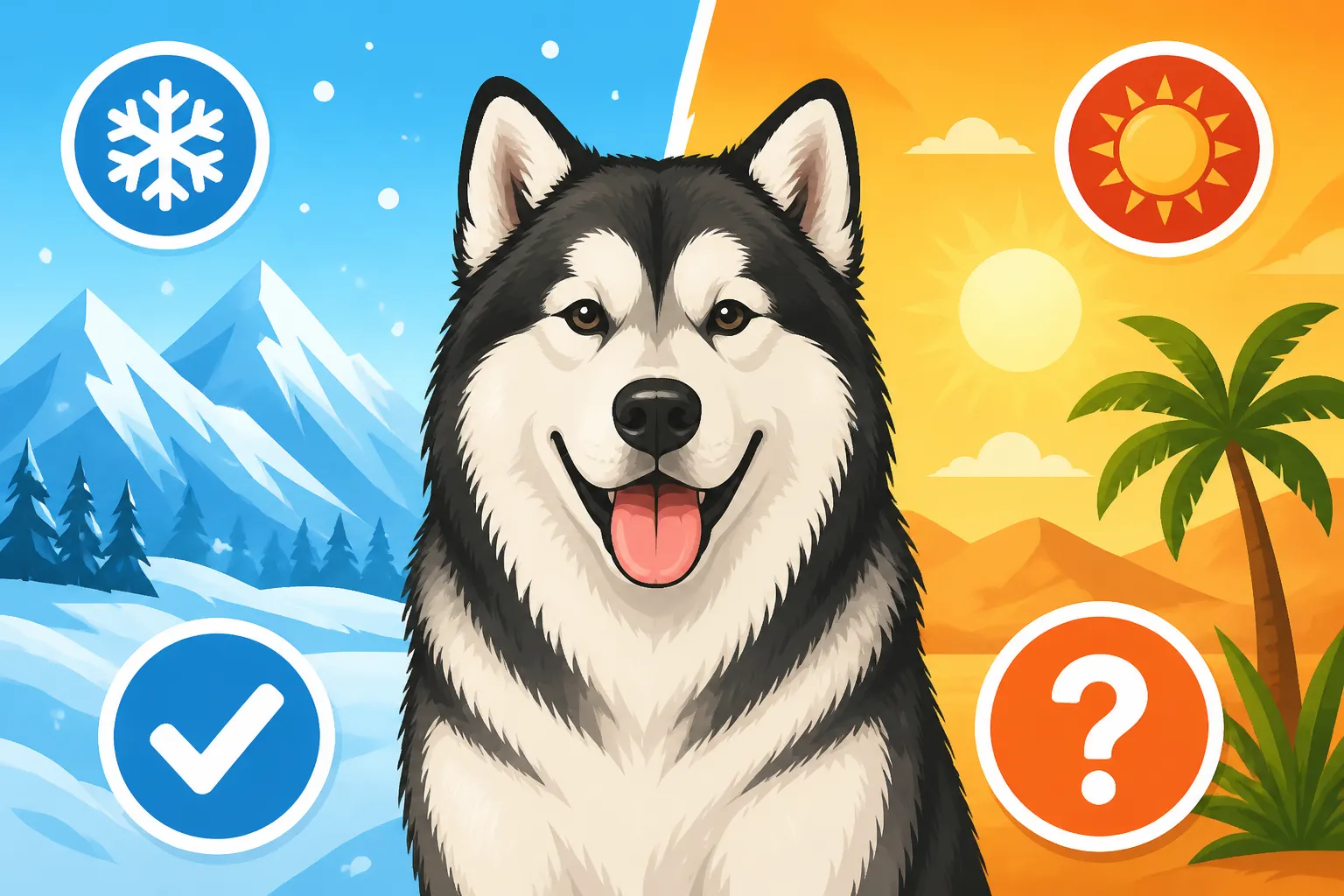
Whether an Alaskan Malamute Suits a Hot Climate
An Alaskan Malamute can live in a hot climate, but the arrangement asks more of the owner than it does in a cool region. Long, sunny walks, a warm backyard, and limited indoor cooling can quickly become unsafe. This guide explains what daily life may look like, how to reduce heat risk, and when a different breed may be a better fit.
Can an Alaskan Malamute Live in a Hot Climate
The short answer depends on the home and routine
A Malamute is not automatically unable to live somewhere warm. Some do well in warm regions when they spend the hottest parts of the day in a cool home, exercise during cooler hours, and have reliable access to water and shade. But the breed’s thick double coat, substantial build, and working-dog heritage make heat management a serious, year-round responsibility.
Think about the difference between a cool-climate household and a home in Phoenix, Houston, or Miami. In the first, a dog may be able to enjoy more of the day outdoors for much of the year. In the second, walks and outdoor play may need to happen before sunrise or after sunset for long stretches, and an air-conditioned indoor space may be essential. The dog’s individual health, age, body condition, and activity level matter too.
A warm climate is easier to manage when the household schedule can flex around the weather. It is harder if everyone is away during the day, the dog must stay outside, or the only available walking route is exposed pavement. For a broader sense of the breed’s needs and background, see The Household an Alaskan Malamute Was Built For.
A double coat is not a substitute for cooling
The Malamute’s dense coat helps protect the dog from harsh weather, but that does not mean the dog is immune to heat. A coat can offer some protection from direct sunlight, yet it also holds warmth and can make heat loss more challenging during exertion. Coat condition matters: packed or matted undercoat can interfere with airflow, while a neglected coat can make routine grooming more difficult.
Do not shave a Malamute to make summer easier. Shaving can remove protection from sun exposure and may affect how the coat grows back. Instead, keep the coat clean and brushed so loose undercoat can come away, and ask a veterinarian or experienced groomer for advice if the coat is heavily impacted or matted. The goal is a healthy, maintained coat—not a short one.
Climate fit also involves more than the dog’s fur. A Malamute may be energetic and eager to move even when conditions are unsuitable. Owners need to notice when enthusiasm is turning into strain and end an outing before the dog is in trouble. For a closer look at living with the breed in warmer regions, read Whether an Alaskan Malamute Belongs in a Warm Climate and Whether an Alaskan Malamute Should Live in the South.
What Hot-Weather Care Needs to Look Like
Make the home a dependable cool refuge
A Malamute in a warm climate needs somewhere cool to recover, not just a patch of shade outdoors. That usually means access to a temperature-controlled indoor area, fresh water, and a quiet place to lie down. A garage, enclosed porch, or kennel can become uncomfortably hot, even when it seems cooler than the yard. Check the space itself rather than assuming it is safe because it is out of direct sun.
Shade and water still matter whenever the dog is outside, but they do not replace indoor cooling during very hot conditions. Avoid leaving a Malamute outdoors for long periods when heat and humidity are high, and never leave one in a parked vehicle. Cars can become dangerously hot quickly, including on days that feel merely warm to a person.
Keep water bowls easy to reach and check them regularly, especially after exercise. If your dog drinks enthusiastically after a walk, offer opportunities to drink and rest rather than encouraging more activity straight away. Some owners compare cooling mats, fans, or other summer supplies at retailers such as Chewy; whatever you choose, check that the item is appropriate for your dog and follow its care and use instructions.
Shift exercise to the coolest part of the day
In hot weather, the clock matters as much as the route. Walks may need to move to early morning or later evening, and strenuous exercise may need to be reduced or paused during the hottest part of the day. Even a familiar route can become unsafe when the sun is high, humidity is heavy, or pavement has absorbed heat. See How Early a Malamute Should Be Walked in Summer and Why a Malamute Should Not Walk at Midday for more on planning outings.
Use the dog’s behavior as well as the weather to guide decisions. A short, calm sniff-walk in a cooler hour may be a better choice than trying to preserve the usual distance. Choose shaded routes where possible, carry water, and turn back if your dog begins to slow, seek shade, or show signs of discomfort. A Malamute’s willingness to keep going is not proof that the conditions are safe.
Outdoor activity can still be meaningful without a long walk. On very hot days, use indoor training, scent games, food puzzles, and short sessions of calm enrichment. These activities will not replace every kind of exercise, but they can help prevent boredom while reducing heat exposure. If you are comparing cooling mats or other rest-area supplies, Chewy may be one option to browse; prioritize a cool room and water over any accessory.
Use cooling products as support, not permission to overdo it
Cooling gear can be useful, but it does not make a hot-weather workout safe. A cooling mat may provide a more comfortable resting spot, while a cooling vest or similar item may suit some dogs during limited, supervised outings. Products vary, and some dogs dislike wearing them. Introduce new equipment gradually at home and watch for discomfort, rubbing, or attempts to chew it.
A paddling pool or access to safe water may appeal to some Malamutes, though not every dog enjoys swimming. Supervise water play, provide a clear way in and out, and avoid forcing a dog into water. Wetting a dog may offer temporary comfort, but it is not a substitute for moving to a cool place if the dog is overheating. Avoid wrapping a dog in a wet towel for extended periods without veterinary guidance, since the towel can warm up and hold heat.
When shopping for cooling gear, Chewy can be a place to compare product types, but assess fit, material, ease of cleaning, and safe use for your individual dog. A fan, shade, and a cool indoor resting area may be more useful than several specialized products. The key is building a routine that keeps the dog from overheating in the first place.
Recognizing Heat Stress and Responding Quickly
Learn the signs that mean an outing should stop
Panting is a normal way for dogs to cool themselves, so panting alone does not tell the whole story. Pay attention to whether it settles with rest and a cooler environment, and look for changes in the dog’s behavior. Heavy or persistent panting, excessive drooling, weakness, unsteady movement, vomiting, confusion, or collapse can indicate a medical emergency.
A Malamute may also start lagging behind, repeatedly lie down, seek shade, or seem unusually reluctant to move. Those changes deserve attention even if the dog is still responsive and eager to please. Do not wait for dramatic symptoms before changing plans. Stop activity, move the dog out of the heat, offer small amounts of water if the dog is alert and able to drink, and contact a veterinarian for guidance if you are concerned.
If the dog is weak, confused, collapsing, vomiting, or otherwise seriously unwell, seek emergency veterinary care immediately. Heat illness can become life-threatening, and a dog that seems to improve after resting may still need professional assessment. Keep the clinic’s contact details accessible before summer outings rather than searching for them in a panic. More detail on warning signs is available in Signs an Alaskan Malamute Is Too Hot.
Cool an overheated dog while arranging veterinary help
If you suspect overheating, get the dog to a cooler area and call a veterinarian or emergency clinic promptly. Follow their directions. Gentle cooling with cool—not icy—water and airflow may be advised while you arrange care, but do not delay a veterinary visit to try home remedies. Avoid forcing water into a dog that is weak or not fully alert.
Do not use ice baths or place ice directly on the dog unless a veterinary professional specifically directs you to. Rapid or inappropriate cooling can create additional problems, and the dog may need monitoring even after appearing more comfortable. Be ready to tell the clinic what happened, how long the dog was exposed to heat, what symptoms you saw, and what you did in response.
It helps to decide in advance where you would go if an outing turned into an emergency. That is especially useful if you travel, hike, or live outside a town with a nearby clinic. For a step-by-step discussion of immediate cooling considerations, see How to Cool an Overheated Alaskan Malamute.
Deciding Whether the Climate Is a Good Fit
Consider the practical trade-offs before choosing the breed
A Malamute may be manageable in a warm region if the household can provide a cool indoor refuge, plan activity around weather, maintain the coat, and adjust expectations during hot spells. That may mean fewer midday outings, less outdoor play for part of the year, and more enrichment inside. It also means being willing to cancel a planned hike or training session when conditions are not safe.
The fit is less favorable if the dog would be expected to spend most of the day outdoors, if reliable cooling is unavailable, or if the household schedule makes cooler-hour exercise unrealistic. A fenced yard alone does not solve the problem; hot ground, humidity, direct sun, and a lack of supervision still matter. Consider the dog’s whole routine, not just whether the property has shade.
| Household situation | What it may mean for a Malamute |
|---|---|
| Cool indoor space available during hot periods | A major help for rest and recovery |
| Flexible schedule for early or late exercise | Makes safer activity planning more realistic |
| Outdoor-only housing or a hot enclosed area | A serious concern, especially during heat waves |
| Regular access to shade and clean water | Important, but not a replacement for cooling indoors |
| Owner willing to shorten or skip outings | Helps avoid pushing the dog in unsafe conditions |
| Dog with health or mobility concerns | Requires individualized veterinary advice |
Be honest about the dog’s comfort, not just your intentions
People often choose a Malamute because they admire the breed’s strength, striking coat, and northern history. Loving the breed is not the same as being able to offer the right daily conditions. Before bringing one home, picture an ordinary hot week: when will the dog go out, where will it cool down, who will supervise, and what happens if the air conditioning fails?
It is also worth considering the local pattern of heat. A region with occasional warm afternoons may present a different routine from a place with long, humid summers or repeated heat waves. Humidity can make it harder for dogs to cool themselves through panting, so temperature alone does not tell you the whole story. A veterinarian familiar with your dog and local conditions can help you make a sensible activity plan.
For some owners, the adjustments are workable and the dog thrives with careful management. For others, the restrictions are difficult or the home cannot stay cool enough. That is not a failure; it is a practical question of welfare and fit. If the climate and schedule do not allow safe daily care, another breed may be a kinder choice.
Build a summer routine before the first heat wave
Do not wait until the first oppressive week to figure out where your Malamute will cool off or how you will exercise safely. Set up the indoor resting area, check that water is always available, and identify shaded routes or indoor enrichment options. Practice calm leash walks at cooler times before the schedule becomes urgent, and keep grooming consistent so coat maintenance does not become a last-minute scramble.
You can also keep a simple log of walks, weather conditions, and how your dog responds. If the dog pants heavily on a particular route or seems tired after a short outing, use that information to make future plans more conservative. If your dog has a medical condition, is very young or old, or has previously struggled in heat, ask your veterinarian what precautions are appropriate.
The most realistic answer is that an Alaskan Malamute can sometimes live in a hot climate, but it is not a low-effort match. Comfort depends on dependable cooling, careful timing, close observation, and a willingness to change plans. Those daily choices—not just the climate label on a map—determine whether the arrangement is fair to the dog.
Disclaimer
This article is for general informational purposes only and does not constitute professional advice. Laws, prices and regulations vary by location and change over time. Consult a qualified professional for guidance on your specific situation.