Which Colors the Alaskan Malamute Standard Allows
When you're looking at Alaskan Malamutes, it's easy to get caught up in their stunning good looks and powerful presence. But for many aspiring owners, the array of coat colors can be a bit confusing. You might see terms like "sable" or "seal" and wonder what's truly acceptable according to the breed's official standard, especially since some colors can actually indicate mixed breeding or even health concerns. This guide is here to demystify the beautiful palette of the Alaskan Malamute, helping you understand what colors are recognized, what they actually look like, and why these standards matter.
The Foundation of Malamute Color: Understanding the Standard
Navigating the world of purebred dogs often means delving into breed standards, which can feel a bit like reading ancient texts. But for a magnificent breed like the Alaskan Malamute, understanding these guidelines, especially concerning coat color, is incredibly important. It's not just about aesthetics; it's about preserving the breed's historical look and ensuring certain genetic traits associated with health and authenticity are maintained.
The Purpose of a Breed Standard for Color
Think of the breed standard as the blueprint for an ideal Alaskan Malamute. It describes everything from their powerful build and distinct temperament to their ear set, tail carriage, and, of course, their coat colors. For color, the standard isn't meant to limit beauty but to define the traditional appearance that has served the breed for centuries in the harsh Arctic environment. These colors are functional, providing camouflage or helping with thermal regulation, and they reflect the Malamute's ancient lineage. Deviations from these standards might not always be about health, but they can indicate a departure from the characteristics that make a Malamute, well, a Malamute.
The standard helps reputable breeders ensure they are producing dogs that are true to type, both in form and function. When you look at a Malamute, its coat color should immediately tell you a story of its heritage. It's a way to ensure consistency and prevent the introduction of traits that could weaken the breed or confuse it with other northern breeds. For someone bringing a Malamute into their home, knowing these standards means you're more informed about what constitutes a healthy, well-bred dog that aligns with the breed's established characteristics.
General Color Descriptors: What "Gray" or "Black" Really Means
When the breed standard talks about colors like "gray" or "black," it's rarely a single, solid shade. Malamute coats are complex, typically featuring a blend of colors and often a lighter undercoat. For instance, "gray" isn't just one type of gray; it can range from light silver to a darker, almost charcoal gray, often with a white or cream undercoat that gives the overall impression of depth and texture. This variation is what makes each Malamute unique while still adhering to the standard.
Similarly, "black" Malamutes aren't usually raven black all over. They tend to have softer black guard hairs with lighter undercoats, often gray or white, which creates a striking contrast. It's this beautiful interplay of colors within a single strand or across layers of fur that really defines the Malamute's coat. Understanding these nuances helps us appreciate the depth and natural beauty of their coats, rather than expecting a monolithic block of color. It's these subtle variations that give the Malamute its iconic, wild-yet-majestic appearance.
A Spectrum of Allowed Shades: From Light to Dark
The Alaskan Malamute breed standard allows for a beautiful range of colors, all designed to blend seamlessly with their powerful build and working heritage. It’s not just about a single shade, but often a combination of guard hairs and undercoat that creates the final effect. Each color variant has its own unique charm while still embodying the unmistakable Malamute essence.
The Classic Greys and Sables
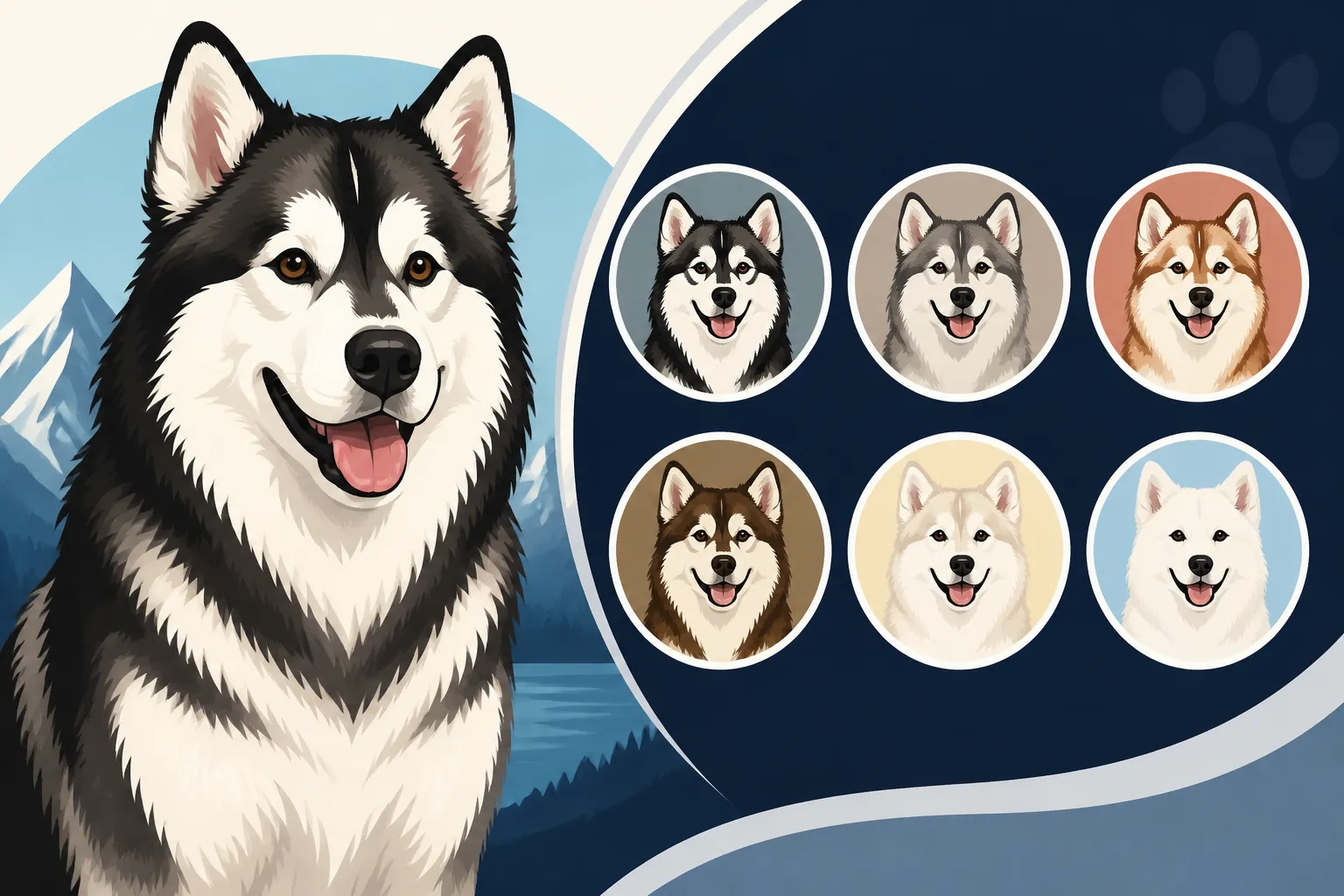
Perhaps the most iconic Malamute colors fall within the gray spectrum. These can range from a very light, almost silver-gray, to a medium or dark gray. What makes these coats truly captivating is the interplay of the gray guard hairs with a lighter, often white or cream, undercoat. This creates a wonderful depth and texture, especially when the dog is in full coat. You’ll notice the gray often appears in varying shades across the body, with lighter points on the legs and undercarriage.
Sable is another beautiful variation often seen in Malamutes, and it's essentially a type of reddish-brown or reddish-gray color, sometimes with black tipping on the guard hairs. This gives the coat a richer, warmer tone than a traditional gray. The undercoat for sables can range from cream to a deep reddish hue. When you look at a sable Malamute, you might see hints of red, brown, and even black, all blending together to create a truly stunning, natural appearance that almost glows in certain light. These colors reflect the rugged beauty of their ancestral homes.
Striking Blacks and Whites
While not as common as the grays, black and white Malamutes are truly striking. The black in a Malamute's coat is typically a rich, dense black in the guard hairs, contrasted beautifully with a lighter undercoat, often white or silver-gray. This isn't a solid, uniform black like you might see in some other breeds; rather, it has a depth and variation that adds to the Malamute's rugged appeal. Often, these dogs will have a prominent black 'cap' over their head and ears, and a 'bar' running down their spine, contrasting sharply with their white chest and legs.
Pure white Malamutes are also recognized and are quite breathtaking. These dogs have entirely white guard hairs and undercoat, presenting a pristine, snow-white appearance. While stunning, it's important to differentiate a true pure white Malamute from an albino, which would also have pink skin and blue or pink eyes—a highly undesirable and disqualifying trait. A true white Malamute will have dark pigmentation around their eyes, nose, and lips, indicating proper coloration despite the lack of pigment in their coat. These beautiful, stark white dogs are like living snowdrifts, perfectly suited to their Arctic heritage.
The Pure White Malamute: A Special Case
The pure white Alaskan Malamute holds a special place in the breed's color spectrum, representing a stunning, almost ethereal appearance. These dogs are entirely white, from the tips of their guard hairs down to their dense undercoat, with no patches or shading of other colors. When you encounter a truly white Malamute, their coat shimmers, reminiscent of the pristine snowfields they were bred to traverse. It’s a breathtaking sight, and perfectly acceptable within the breed standard, provided they meet all other criteria.
However, it's crucial for prospective owners to understand that a pure white Malamute should still possess proper pigmentation in their eyes, nose, and lips. Their nose should be black, their eye rims dark, and their eyes a rich shade of brown. A lack of this dark pigmentation, known as albinism, is a distinct genetic condition that can be associated with health issues and is a disqualifying fault in the breed standard. So, while "white" is celebrated, "albino" is a clear red flag. This distinction is vital when assessing a white Malamute's authenticity and health. For those seeking durable toys for a white Malamute that might get dirty quickly, brands like Chewy offer a great selection of easily washable options.
Red Malamutes: A Warm and Distinctive Hue
Red Malamutes are among the most distinct and beautiful variations within the breed standard, offering a warm contrast to the more common grays and blacks. The term "red" in Malamutes can encompass a range of shades, from a light golden or ginger tone to a rich, deep liver or rust color. What defines a red Malamute is the warm, often reddish-brown pigment in their guard hairs, typically paired with a cream or lighter reddish undercoat. This creates a vibrant, earthy hue that is truly eye-catching.
Like other Malamute colors, red often presents with variations across the body, with lighter areas on the undercarriage and legs, and sometimes darker shading along the back or ears. The nose and eye rims of a red Malamute are usually brown or liver-colored, harmonizing with their coat. It's important to note that while red is an allowed color, the intensity and exact shade can vary widely. These dogs carry a distinct charm, and their striking appearance often draws a lot of attention, highlighting the diverse beauty permissible within the Alaskan Malamute breed.
Patterns and Markings: Beyond Solid Hues
Alaskan Malamutes are rarely, if ever, a solid, uniform color from head to tail. Their coats are typically a canvas of fascinating patterns and markings that contribute significantly to their unique and expressive appearance. These aren't just random splashes of color; they're integral to the breed's aesthetic and are explicitly described in the breed standard.
The Importance of the Undercoat
Many people only focus on the outer guard hairs when considering a Malamute's coat color, but the undercoat plays an equally, if not more, crucial role. The Alaskan Malamute has a dense, woolly undercoat that acts as their primary insulation against the brutal cold of the Arctic. This undercoat is typically lighter in color than the guard hairs, often cream, white, or a lighter shade of the main coat color (e.g., silver-gray under a dark gray coat, or cream under a red coat). It’s this contrast between the outer coat and the undercoat that gives the Malamute its characteristic depth and richness of color.
For example, a "black and white" Malamute isn't just black on top and white underneath; the lighter undercoat shows through, particularly around the neck and flanks, adding texture and preventing the coat from looking flat. This dual-layer system is a hallmark of the breed, emphasizing their working origins where insulation was paramount. The quality and color of the undercoat are just as important as the outer coat for evaluating a Malamute against its breed standard, reflecting not just aesthetics but functional integrity.
Facial Markings: Caps, Bars, and Blazes
The facial markings of an Alaskan Malamute are incredibly distinctive and contribute greatly to their "wolf-like" appearance. The breed standard specifically mentions these patterns, with the "cap and bar" being particularly characteristic. A cap refers to the darker coloring that covers the top of the head and extends down over the ears, contrasting with a white muzzle and forehead. This cap can range from gray to black or red, depending on the dog's primary coat color.
The "bar" is a strip of white, or sometimes lighter colored fur, that typically runs up the center of the forehead, dividing the darker cap. This creates a striking, often symmetrical, pattern that frames their intelligent brown eyes. Some Malamutes may also have a "blaze," which is a broader white marking on the forehead, or even an open-faced look with less dark pigment on the face overall. These markings are not just beautiful; they are part of the traditional Malamute look, and deviations or lack of clear markings can sometimes be considered less desirable in the show ring, though they don't affect a pet's quality of life. For more on what these markings look like, you might want to read What a Malamute's Cap Marking Looks Like.
White Markings on the Body
Beyond the face, white markings are a fundamental part of the Alaskan Malamute's overall appearance and are specified within the breed standard. It's rare, almost unheard of, to find a Malamute that doesn't have at least some white. Typically, a Malamute's legs, feet, and the lower part of its body, including the chest and often parts of the neck, are white. This extensive white patterning gives the Malamute a sharp, clean look that contrasts beautifully with their primary body color.
The breed standard explicitly states that white is always the predominant color on the underside of the body, parts of the legs, and feet. White markings can also appear as a collar, or partially around the neck, and sometimes as a patch at the tip of the tail. While certain specific white patterns are expected, the exact distribution can vary from dog to dog. However, large, irregular white patches on the main body where solid color should be are generally considered less desirable or even faults, as they deviate from the classic Malamute silhouette. It’s the balance and clean demarcation of these white areas that contribute to the breed’s distinguished appearance.
When Color Veers Off Course: Disqualifying and Undesirable Traits
While the Alaskan Malamute comes in a gorgeous array of recognized colors, there are specific traits that are considered serious faults or even disqualifications according to the breed standard. These aren't arbitrary rules; they often relate to preserving the breed's authenticity, lineage, and sometimes even health. Understanding these can help you identify a well-bred Malamute versus one that might not strictly adhere to the established type.
The Blue Eye Controversy: Why It's a Disqualification
Perhaps one of the most striking and debated disqualifying faults in the Alaskan Malamute is the presence of blue eyes. While undeniably beautiful and often highly sought after by some puppy buyers, blue eyes are explicitly stated as a disqualification in the breed standard. This isn't just a preference; it's a critical distinguishing characteristic between the Alaskan Malamute and its close cousin, the Siberian Husky, which can have blue eyes. Malamutes are required to have brown eyes, with darker shades generally preferred.
The historical reason for this distinction ties back to breed purity and origin. The Malamute was developed by the Mahlemut people for heavy freighting, and their lineage has traditionally been associated with dark eyes. Blue eyes in a Malamute can suggest outcrossing with other breeds, most commonly the Siberian Husky, at some point in its ancestry. While a blue-eyed Malamute can still make a wonderful pet, it cannot be shown in conformation events, and reputable breeders meticulously screen against this trait to maintain the integrity of the breed. It's a key indicator for preserving the Malamute's distinct identity. For more on this, you might find Why Blue Eyes Disqualify an Alaskan Malamute helpful.
Other Disqualifying Colors and Markings
Beyond blue eyes, the Alaskan Malamute breed standard outlines other specific colors and markings that are considered disqualifying faults. Any color or combination of colors not expressly permitted in the standard falls into this category. This generally means very unusual colors that suggest a deviation from the traditional Malamute genetic makeup. For instance, solid colors other than pure white are typically not allowed. A solid black Malamute without any white markings, or a solid red one, would be highly atypical and likely a disqualification.
Furthermore, markings that significantly distort the expected pattern, such as extensive spotting or patches of color in areas that should be white, can also be considered faults. The standard emphasizes a balanced and natural appearance. While specific nuances can be debated in the show ring, the general rule is that colors and patterns should align with the functional and aesthetic traits developed over centuries. It's all about ensuring the Malamute remains true to its historic type, reflecting its utilitarian role rather than mere novelty.
Common Misconceptions About Rare Colors
In the world of dog breeding, "rare" often gets conflated with "desirable" or "special," and this can lead to many misconceptions, particularly with Malamute colors. You might encounter breeders or advertisements promoting "rare" silver, "unique" wolf-gray, or even "extreme" black Malamutes, sometimes with inflated price tags. The reality is that many of these so-called rare colors often fall squarely within the recognized spectrum of gray, black, or even sable, but are simply described in a more flamboyant way to attract buyers.
True genetic rarities that fall outside the standard are usually disqualifying faults, not desirable traits. For example, a "silver" Malamute is likely just a very light gray, which is perfectly acceptable. A truly unusual color like a "chocolate" or "brindle" Malamute would be a strong indicator of mixed breeding and a definite disqualification. Buyers should be wary of any breeder marketing colors as "rare" that don't align with the accepted standard, as this can sometimes be a tactic to sell puppies that are not true to type or may even come from questionable breeding practices. Always consult the official breed standard and reputable breeders when researching Malamute colors.
The "Why" Behind the Colors: History and Function
The Alaskan Malamute's coat colors aren't just for show; they tell a deep story of their ancient heritage and the functional requirements of their life in the Arctic. Every shade and marking was, in some way, selected and refined over centuries to aid their survival and working capabilities in one of the planet's harshest environments.
How Ancestry Shaped Malamute Colors
The Malamute's ancestors, the dogs of the Mahlemut people of Alaska's Kotzebue Sound, were bred for strength, endurance, and utility in freighting heavy loads across vast, icy landscapes. Their coat colors were not chosen for arbitrary beauty, but for practicality. The most common colors—various shades of gray, black, sable, and white—provided natural camouflage against the snowy and rocky terrains. Imagine a team of gray and white Malamutes disappearing against a backdrop of snow-dusted mountains and bare rock; this ability was crucial for working and survival.
Over generations, the Mahlemut people selectively bred dogs that thrived in their environment, and coat characteristics were an important part of that selection. The dense double coat, designed for insulation, naturally lends itself to these layered, variegated colors. The consistency of these color patterns across the breed today is a testament to this careful ancestral breeding and the emphasis on preserving traits that made the Malamute an indispensable partner in the Arctic. This rich history is why breed standards place such importance on maintaining these traditional appearances. If you're curious about their origins, Who the Mahlemut Who Bred the Malamute Were offers fascinating insights.
Practicality of Coat Color in the Arctic Environment
Beyond camouflage, the colors of the Alaskan Malamute's coat served other practical purposes in the extreme Arctic environment. The combination of lighter undercoats and darker guard hairs, particularly in the grays and sables, helps with thermal regulation. Darker colors can absorb more solar radiation, which is beneficial on clear, cold days, while the lighter undercoat and white markings can help reflect some heat, preventing overheating when actively working. Though a Malamute will always struggle in warm climates, these coats are perfectly designed for the cold.
The robust, weather-resistant outer coat, combined with the insulating undercoat, protects against snow, ice, and wind. The contrast between colors and the distinctive facial markings also likely played a role in visual communication within a dog team or between dogs and their human handlers, making them easier to spot against the stark white landscape. Every aspect of the Malamute's appearance, including its specific range of colors, is a functional masterpiece, honed by centuries of working in one of the world's most unforgiving climates. Even today, understanding this heritage helps us appreciate the breed's incredible resilience and adaptability.
Living with a Malamute: Practicalities of Coat Color
While the aesthetic appeal of a Malamute's coat color is undeniable, there are also practical considerations for owners. From routine grooming to how their coat might change over time, understanding these aspects can help you provide the best care for your furry companion, regardless of their specific shade.
Coat Maintenance Across Different Colors
One common misconception is that different coat colors require vastly different grooming routines. The truth is, regardless of whether your Malamute is gray, black, red, or white, their fundamental grooming needs are the same due to the shared characteristics of their double coat. All Malamutes will blow their coat at least once, often twice, a year, a process that sheds an incredible amount of undercoat. During these periods, intensive brushing, often daily, is absolutely essential. A good undercoat rake is a Malamute owner's best friend.
However, lighter colored Malamutes, especially pure whites, might show dirt and stains more readily. You might find yourself needing to bathe them slightly more often or spot-clean their white legs and chests if they love to roll in mud. Conversely, darker coats can sometimes hide dirt a little better, but the shedding volume remains the same. Regardless of color, regular brushing is key to keeping their skin healthy, preventing matting, and managing the sheer volume of fur that will inevitably make its way into every corner of your home. You can find excellent grooming tools, including deshedding shampoos for all coat colors, at pet supply retailers like Chewy. For tips on managing the shedding season, check out The Malamute Coat Blow That Fills a Vacuum in an Afternoon.
Color Fading and Changes with Age
It's completely normal for an Alaskan Malamute's coat color to change subtly, or sometimes quite dramatically, as they age. Puppies often start with softer, sometimes muddier, versions of their adult colors, which then clarify as they mature. For instance, a gray puppy might appear quite dark initially and then lighten to a beautiful silver-gray over its first year. Conversely, some puppies might have very light markings that darken slightly as their adult coat comes in.
As Malamutes enter their senior years, it's also common to see a "silvering" of the muzzle, much like humans get gray hair. Their darker coats might soften and show more white or lighter tones, and even the red pigments in sables can become less vibrant. Environmental factors, such as prolonged sun exposure, can also cause some fading, particularly in darker coats, making them appear slightly reddish or bleached. These changes are a natural part of aging and don't typically indicate any health concerns. Embracing these shifts is just another part of the journey with your beloved Malamute. If you're curious about how a Malamute's coat ages, reading Whether an Old Alaskan Malamute's Coat Thins might provide further context.
Alaskan Malamute Color Standard Quick Reference
Here's a quick overview of what the Alaskan Malamute breed standard generally permits and disqualifies regarding coat color and markings.
| Category | Allowed Colors/Traits | Disqualifying Colors/Traits |
|---|---|---|
| Primary Body Color | Various shades of gray (light to dark), black, sable (reddish-brown with black tipping), red, and pure white. | Any solid color other than pure white (e.g., solid black, solid red without white markings). Liver-colored in conjunction with non-red coats. |
| Undercoat | Typically lighter than guard hairs: white, cream, or lighter shade of primary color. | No specific undercoat disqualifications, but poor quality or lack of undercoat is a fault. |
| Markings | White on legs, feet, parts of the underbody, and often as a face mask or cap and bar. Darker markings (cap and bar) on the head. | Large, irregular white patches on the main body. |
| Eye Color | Brown, with darker shades preferred. | Blue eyes, partial blue eyes. |
| Nose/Lip Pigment | Black for all colors except red (may be brown/liver). | Pink (albino), Dudley nose (flesh-colored nose). |
| Overall | A combination of color and white, with white being the predominant color on the underbody. | Any color or combination of colors not recognized by the standard. |
Please note this table provides a general guide. For precise and official details, always refer to the specific breed standard published by recognized kennel clubs such as the AKC (American Kennel Club).
Disclaimer
This article is for general informational purposes only and does not constitute professional advice. Laws, prices and regulations vary by location and change over time. Consult a qualified professional for guidance on your specific situation.