Whether a Red Alaskan Malamute Is Purebred
It’s completely understandable to wonder about the purity of a beautiful red Alaskan Malamute. When you envision a Malamute, often the first image that springs to mind is a striking wolf-grey, black, or even a classic black and white dog with piercing brown eyes. So, when you encounter a Malamute puppy or adult with a rich red or cinnamon coat, it's natural to pause and ask, "Is this truly a purebred, or is there something else mixed in?" This guide will thoroughly explore the topic of red Alaskan Malamutes, delving into their genetics, breed standards, and what you need to know to confirm their purebred status.
Understanding the Alaskan Malamute Breed Standard
Before we dive into the specifics of red coats, let's lay the groundwork by understanding what defines a purebred Alaskan Malamute according to the accepted breed standards. This is the blueprint that responsible breeders strive to uphold and that kennel clubs use for registration.
What Constitutes a Purebred Malamute?
A purebred Alaskan Malamute isn't just a dog that looks like a Malamute. It's a dog with a documented lineage, traceable back through generations of other purebred Alaskan Malamutes. This lineage is recorded in a pedigree, typically maintained by a national kennel club. When a puppy is born, if both its parents are registered purebreds, and they meet specific health and conformation criteria often set by the breed club, the puppy can be registered as well.
The breed standard itself is a detailed description of the ideal Malamute. It covers everything from temperament and gait to skull shape, ear set, tail carriage, and of course, coat color and texture. It's a guiding document, designed to preserve the unique characteristics and working ability of the breed as it was originally developed by the Mahlemut people of Alaska's Kotzebue Sound. For these dogs, their utility as freighting animals was paramount, and their physical attributes reflected this demanding role. A true purebred Malamute is a product of this rich history and careful breeding, ensuring traits like strength, endurance, and that distinctive independent spirit remain.
Accepted Colors in the Breed Standard
Now, to the heart of the matter: what colors are actually allowed for a purebred Alaskan Malamute? The American Kennel Club (AKC) breed standard, for example, states that "The usual colors are various shades of gray and white, sable and white, black and white, or red and white. Combinations of colors are acceptable in the underparts of the body, parts of legs, and markings. A sole solid color is white. Undesirable are any other solid colors or uneven splashing of color over the body."
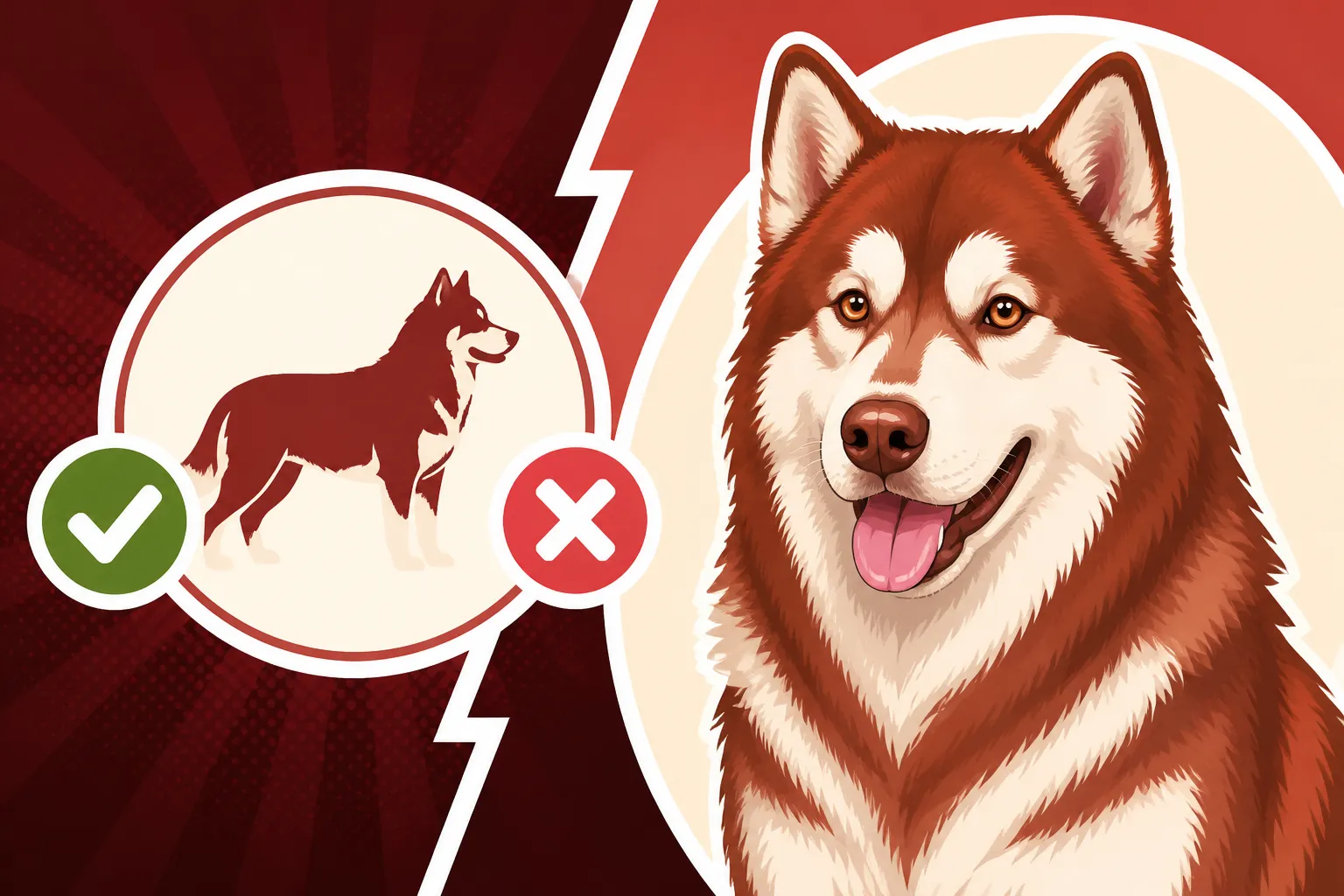
Notice that "red and white" is explicitly listed! This often surprises people who assume red is an unusual or non-standard color. So, yes, a red Alaskan Malamute can absolutely be purebred. The key is understanding what "red" encompasses within the breed and how it presents. The typical patterns involve a darker red over the back and shoulders, with white markings on the face, chest, legs, and underside. It’s not just a vibrant fire-engine red, but can range through various warm, earthy tones. Any solid color other than white is considered undesirable, meaning a solid red Malamute without white markings wouldn't fit the standard, even if genetically pure. This distinction is crucial for both conformation enthusiasts and those simply seeking a healthy, well-bred companion. You can learn more about this by reading Which Colors the Alaskan Malamute Standard Allows.
The Red Malamute: A Spectrum of Shades
The term "red" when applied to Alaskan Malamutes can be a bit broad, encompassing a beautiful range of warm hues. It’s not always the vivid, striking red some might imagine, but rather a more nuanced palette that is still very much within the purebred spectrum.
What "Red" Actually Means in Malamutes
When the breed standard mentions "red and white," it's not referring to a single, uniform shade like a cherry-red fire truck. Instead, it describes a spectrum of warmer coat colors that fall within the red pigment category. This can include anything from a deep, rich mahogany to a lighter, almost golden-sable hue, or a warm cinnamon-brown. Often, these red Malamutes will have liver-pigmented noses and lips, which contrast with the black pigment typically seen on grey or black Malamutes. This liver pigment often extends to the eye rims as well.
The exact shade of red can vary significantly. Some red Malamutes might appear almost orange in bright sunlight, while others have a deeper, more russet tone that is less common but still acceptable. The defining characteristic is the absence of black pigment in the coat itself, replaced by this spectrum of red. The white markings that typically accompany the red are just as important for meeting the breed's aesthetic standard. A purebred red Malamute will still have the distinct "cap and bar" markings on its head, white blaze, and white on the underside, legs, and tail plume, much like its grey or black counterparts. This combination creates a stunning visual that truly stands out from the more common grey or black variations.
Red Pigment and Masking Genes
The genetics behind coat color in dogs are fascinatingly complex, and Malamutes are no exception. The red coloring in an Alaskan Malamute is primarily controlled by the "E locus" gene, which determines whether a dog can express red pigment (phaeomelanin) in its coat. A dog with two recessive 'e' alleles at the E locus will be red, regardless of the other color genes it carries. This means that the black or grey pigment (eumelanin) is essentially "masked" or not expressed in the fur itself, allowing the red to shine through.
However, it's not quite as simple as just "red" or "not red." Other genes influence the shade of red, leading to the variety we see, from pale cream to deep mahogany. For example, some genes can dilute the red pigment, making it lighter, while others intensify it. The typical dark mask seen on many Malamutes (a black or grey muzzle and eye rims) is also affected. In red Malamutes, this mask will often be liver-colored instead of black, as the e/e genotype prevents black pigment expression in the hair, though it can still be expressed in the skin (nose, lips). Understanding these genetic nuances helps explain why red Malamutes are not an aberration but a natural, albeit less common, result of the breed's genetic blueprint. A reputable breeder will understand these genetics and can often provide insights into the color possibilities within their lines.
The History and Genetics of Red in Malamutes
Delving into the past of the Alaskan Malamute helps us appreciate the full spectrum of their appearance, including the captivating red variations. The breed's history is steeped in utility, and color often played a secondary role to working ability.
Historical Presence of Red Hues
The ancestors of the modern Alaskan Malamute, the working dogs of the Mahlemut people of the Arctic, were bred for strength, endurance, and survival in harsh conditions. Their coats were first and foremost functional: dense, weather-resistant, and insulating. While grey and white combinations were likely most prevalent for camouflage in the tundra, records and early photographs suggest that various shades of brown and reddish tones were also present among these indigenous dogs. These were not dogs bred for specific aesthetic "colors" in the way some modern breeds are, but for their ability to haul heavy freight and thrive.
As the breed gained recognition and formalized breeding programs began in the early 20th century, the existing genetic diversity, including the genes for red coats, was carried forward. Breeders focused on preserving the working type and temperament, with color being a recognized but not always primary characteristic. So, the presence of red in Malamutes is not a new phenomenon or a result of recent crossbreeding; it's a part of their ancestral heritage. It’s a natural expression of the gene pool that has been present in these magnificent dogs for centuries. This rich tapestry of colors helps tell the story of a breed shaped by necessity and environment, not just by human preference.
Kotzebue and M'Loot Lines and Color
The modern Alaskan Malamute breed descends primarily from two foundational lines: the Kotzebue line and the M'Loot line. Understanding their influence on coat color can offer further clarity on the prevalence and acceptance of red Malamutes. The Kotzebue line, championed by Eva Seeley, tended to be smaller, more uniform in type, and often featured the classic wolf-grey and white coats. They were known for their tight, compact build and consistent appearance.
The M'Loot line, associated with Paul Voelker, was generally larger, had a more diverse range of types, and often displayed a broader spectrum of colors, including various shades of black and white, sable, and yes, red. M'Loots were known for their impressive size and power, and their genetic diversity contributed significantly to the breed's overall robustness and variety. While the two lines were eventually merged to broaden the gene pool and prevent inbreeding after World War II, the legacy of their distinct characteristics, including color, remains. So, if you trace a red Malamute's pedigree, it's quite possible you'll find ancestry that leans more heavily into the M'Loot side, or simply a combination that allowed the recessive red gene to express itself. For more on these lineages, you can explore The Kotzebue and M'Loot Lines Behind Every Modern Malamute. The important takeaway is that red is not indicative of an "unpure" line but rather a natural part of the established genetic heritage.
Common Misconceptions and Concerns
The distinct appearance of a red Malamute can sometimes lead to misunderstandings, especially in an era where "rare" or "designer" colors are often marketed with inflated claims. Let's debunk some common myths.
Red Mal as a "Rare" or "Designer" Color
One of the most pervasive misconceptions circulating is that a red Alaskan Malamute is "rare" or a "designer" color, often accompanied by a higher price tag. This can be misleading and is sometimes used by unscrupulous breeders to justify inflated costs. While red Malamutes may be less common than the traditional grey and white or black and white, they are absolutely not rare in the sense of being an anomaly or a new, specially bred variation. As we've discussed, "red and white" is an explicitly accepted color in the breed standard. It's a natural genetic expression, not a recent "design."
True rarity in a breed usually refers to colors or patterns that fall outside the standard and are genuinely uncommon, sometimes even linked to health issues. For the Alaskan Malamute, however, red is simply one of the natural coat colors within the genetic spectrum. Responsible breeders focus on health, temperament, and adherence to the overall breed standard, rather than promoting one specific color as inherently superior or more valuable. Be wary of anyone trying to sell a "rare red Malamute" for an exorbitant sum, as this often indicates a breeder more interested in profit than in upholding the integrity and health of the breed. Instead, look for breeders who prioritize health testing and transparent communication, regardless of the puppies' colors.
Health or Temperament Differences in Red Malamutes
Another common concern revolves around whether a red coat color is linked to any particular health issues or temperament quirks. This is a resounding "no." Coat color in Alaskan Malamutes is purely an aesthetic trait controlled by specific genes and has no bearing on a dog's health or disposition. A red Malamute is just as likely to be healthy and possess the quintessential Malamute temperament – loyal, intelligent, stubborn, and often quite vocal with their "woo-woos" – as a grey or black one.
Any health concerns like hip dysplasia, inherited polyneuropathy, or zinc responsive dermatosis are genetic issues that are independent of coat color. Similarly, personality traits such as being prone to digging, possessing a strong prey drive, or exhibiting same-sex aggression are inherent to the breed as a whole, shaped by centuries of selective breeding for specific working roles, and are not tied to the color of their fur. Zinc Is the Thread Running Through Three Malamute Diseases is a good read if you're concerned about health. If you're considering a red Malamute, focus your questions to the breeder on health clearances, temperament of the parents, and overall conformation, rather than getting sidetracked by the superficial aspect of color. A healthy, well-socialized red Malamute will be every bit the magnificent companion its grey or black relative is.
Identifying a Purebred Red Malamute
So, you’ve seen a stunning red Malamute and want to confirm its purebred status. How do you look beyond the striking color and ensure you’re getting a true representation of the breed? It’s all about focusing on the big picture and the details that really matter.
Beyond Color: Look at Conformation and Type
When evaluating a red Alaskan Malamute for purebred status, or any Malamute for that matter, you need to look far beyond the coat color. The overall conformation and type are paramount. The breed standard describes a dog built for power, endurance, and heavy freighting. This means looking for a sturdy, well-muscled body, a deep chest, and strong, straight legs. The head should be broad and strong, with ears that are small in proportion to the head, set wide apart, and triangular. The tail should be well-furred and carried in a proud, sickle curve over the back, not tightly curled or snapped against the back.
The Malamute's characteristic gait should be powerful and tireless, not light or dainty. These are working dogs, and their structure reflects that. Even subtle variations from the standard in these areas can indicate a departure from the ideal Malamute type, regardless of how "red" or "grey" the coat might be. A reputable breeder will be knowledgeable about the entire breed standard and will happily discuss how their dogs measure up in all aspects, not just color. They understand that a beautiful coat is only one piece of the puzzle; the true beauty of an Alaskan Malamute lies in its form and function.
The Importance of Pedigree and Health Clearances
The most definitive way to confirm a red Alaskan Malamute's purebred status is through its pedigree papers, typically issued by a recognized kennel club like the AKC. These documents trace the dog's lineage back several generations, proving that both parents, grandparents, and so on, were also registered purebred Malamutes. If a breeder cannot provide verifiable registration papers or a detailed pedigree, proceed with extreme caution, as the "purebred" claim cannot be substantiated.
Equally as crucial as pedigree are health clearances. Responsible breeders perform extensive health testing on their breeding stock to screen for genetic conditions common in the breed, such as hip and elbow dysplasia, inherited polyneuropathy, and certain eye conditions. For instance, testing for issues like The DNA Test That Finds Malamute Polyneuropathy or The CNGB3 Test for Malamute Day Blindness is vital. These clearances demonstrate a commitment to producing healthy puppies, regardless of coat color. A breeder should be transparent about these test results and willing to share them with prospective buyers. Many health test results can be verified through public databases. A purebred red Malamute from health-tested parents with a verifiable pedigree is the gold standard, ensuring you're bringing home a healthy, true-to-type Malamute, rather than just a dog with a pretty coat. You can learn more about this by reading The Health Tests Both Alaskan Malamute Parents Should Have.
| Characteristic | Typical Red & White Malamute | Typical Grey & White Malamute |
|---|---|---|
| Main Coat Color | Shades of red (light golden, cinnamon, mahogany, russet) | Shades of grey (wolf grey, silver, black-grey) |
| Mask/Points Pigment | Liver (brownish-pink) nose, lips, eye rims. | Black nose, lips, eye rims. |
| Undercoat | Often lighter cream or white. | Often lighter grey or white. |
| White Markings | Standard white markings on face (blaze, cap & bar), chest, legs, underside, tail tip. | Standard white markings on face (blaze, cap & bar), chest, legs, underside, tail tip. |
| Breed Standard Status | Fully accepted color. | Fully accepted color. |
| Health Considerations | No direct link between red color and specific health issues; health is breed-wide. | No direct link between grey color and specific health issues; health is breed-wide. |
| Temperament | No difference in temperament due to color; reflects typical Malamute traits. | No difference in temperament due to color; reflects typical Malamute traits. |
Living with a Red Alaskan Malamute
Bringing any Alaskan Malamute into your life is an adventure, and owning a red one is no different. They come with all the same quirks, challenges, and immense rewards as their more commonly colored counterparts.
Grooming and Coat Care for Red Malamutes
The magnificent double coat of an Alaskan Malamute, regardless of its color, is one of its most defining features and also one of its biggest responsibilities. Red Malamutes, like all Malamutes, will shed – and when they blow their coat, they really blow it. This happens typically twice a year, resulting in massive amounts of undercoat coming out. The Malamute Coat Blow That Fills a Vacuum in an Afternoon is no exaggeration! During these periods, daily intense brushing with a slicker brush and an undercoat rake is absolutely essential. This not only keeps your house from being completely covered in fur but also helps prevent matting and keeps their skin healthy.
For red Malamutes, particularly those with lighter, golden-red shades, sun exposure can sometimes cause their coat to lighten further, or even develop a bleached appearance over time. This is generally harmless, but something to be aware of if you prefer a richer, deeper hue. Unlike some other breeds with very light coats, Malamutes generally don't have particular skin sensitivities linked to their red pigment. However, regular checks of their skin, especially during shedding seasons, for any dryness, redness, or irritation are always a good idea. Access to plenty of fresh water and a high-quality diet, perhaps fortified with omega fatty acids, can also contribute to a healthy, lustrous coat.
Enjoying Your Unique-Colored Purebred
At the end of the day, a red Alaskan Malamute is a purebred Alaskan Malamute, with all the wonderful and sometimes challenging traits that come with the breed. They are magnificent, powerful, intelligent dogs that require significant exercise, consistent training, and a dedicated owner. Their independent nature means that while they are incredibly loyal, they are not always eager to please, and their prey drive is strong.
Owning a red Malamute means you'll likely receive extra attention and compliments on your dog's striking appearance. People might stop you to ask about their unique color, which can be a fun conversation starter! But remember, the color is just the wrapping paper; the true gift is the incredible dog underneath. Focus on providing them with the proper mental and physical stimulation they need – perhaps exploring activities like weight pull, hiking, or even just long, engaging walks. If you're looking for quality food or accessories for your unique Malamute, stores like Chewy offer a wide array of options that cater to their specific needs, from durable toys to specialized brushes for that impressive coat. Embrace their distinct hue, but most importantly, embrace their Malamute spirit. They are beautiful, resilient, and utterly devoted companions who bring immense joy to the right home, no matter their shade of red. Chewy also has a great selection of high-quality dog foods that can support overall coat health.
Disclaimer
This article is for general informational purposes only and does not constitute professional advice. Laws, prices and regulations vary by location and change over time. Consult a qualified professional for guidance on your specific situation.