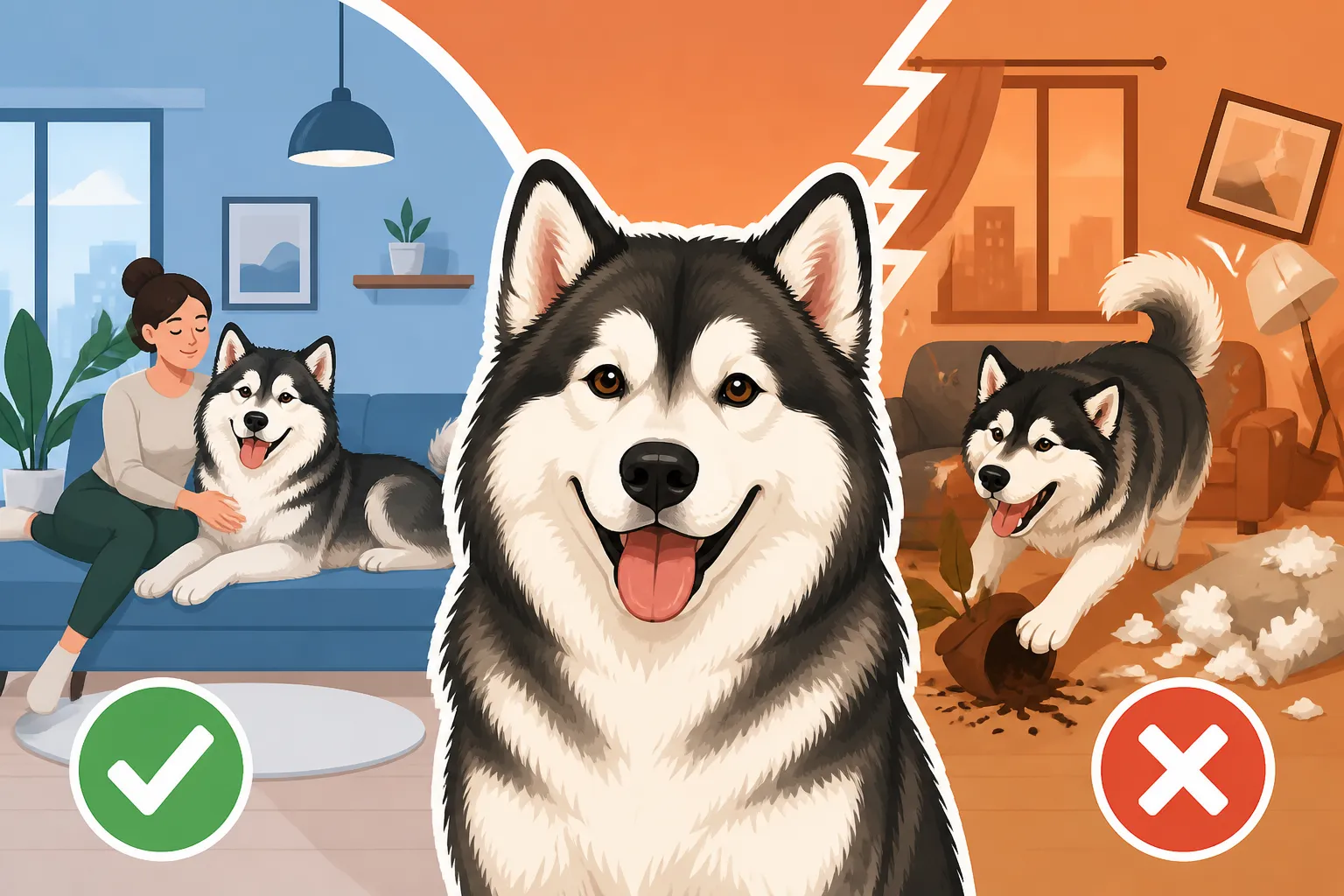
Whether an Alaskan Malamute Suits an Apartment Dweller
An Alaskan Malamute can live in an apartment, but it is rarely an easy match by default. The real challenge is not simply floor space: it is meeting a powerful dog’s exercise and companionship needs, managing shedding and noise, and keeping everyone safe in shared hallways. This guide explains what apartment life takes—and when another home may suit a Malamute better.
Can an Alaskan Malamute Live in an Apartment
Yes, some Malamutes do well in apartments, especially when their people have the time, routine, and practical setup to meet the dog’s needs. A large home is not automatically a better fit: a bored dog with a yard can still dig, howl, chew, or find a way out. But apartment living does add daily logistics, because outdoor exercise and bathroom breaks require you to go through doors, hallways, elevators, and shared spaces.
A quiet adult who is already comfortable indoors may adapt more easily than a young, energetic dog. Still, temperament varies. A building with thin walls, a long elevator ride, strict pet rules, or no nearby place for proper exercise can make the arrangement difficult, even for a well-loved dog.
Space matters less than routine
A Malamute does not need a huge living room to settle down, but it does need regular opportunities to move, sniff, explore, and spend time with its people. Inside, a clear resting place and room to stretch out are more useful than a maze of furniture. Keep walkways open, store food and tempting items securely, and choose a resting spot away from constant hallway traffic.
Think through an ordinary weekday before deciding. If you leave early, work a full day, and return too tired for more than a quick trip around the block, the dog may spend too many hours under-stimulated. A short potty break is necessary, but it is not a substitute for meaningful activity. For a fuller picture of breed expectations, see How Much Exercise an Alaskan Malamute Needs.
It helps to consider the dog’s age and history, too. A settled adult who has lived indoors may be comfortable resting while the household is busy. A puppy has a different schedule, with frequent bathroom trips, supervision, and gradual training. An adolescent may also test routines and boundaries. If you are choosing a dog for apartment life, ask a rescue or breeder about the individual Malamute’s behavior at home rather than relying on size or appearance alone.
The building and neighborhood are part of the decision
Before bringing a Malamute home, check your lease, building rules, and local requirements. Some buildings set limits on dog size or the number of pets, while others require dogs to use particular entrances or elevators. A pet-friendly listing does not necessarily mean every breed or dog is accepted, so get the rules in writing before making a commitment.
Visit the building at the times you would normally walk the dog. Notice whether the elevator is crowded, whether the lobby is narrow, and whether the route outside has busy traffic or a safe place to pause. In a dense part of Seattle or Manhattan, for example, a quick bathroom break may mean navigating sidewalks, crossings, and other dogs before reaching a quieter patch of ground. That is manageable for some owners, but it needs to fit their day.
Also ask how sound travels through the building. Malamutes can vocalize, and a dog that howls when left alone may disturb neighbors. A dog’s noise can carry more than an owner expects through a hallway or shared wall. How a Malamute's Noise Carries in a Neighborhood explains why this deserves attention before a complaint arrives.
What Apartment Life Requires From the Owner
The biggest question is not whether a Malamute can physically fit inside. It is whether the household can reliably provide exercise, company, training, and care on both convenient and inconvenient days. Rain, snow, heat, a delayed elevator, and a busy workweek do not remove those needs.
| Apartment factor | What to think about | A more workable setup |
|---|---|---|
| Daily exercise | A quick bathroom trip alone is not enough | Reliable walks and suitable enrichment built into the routine |
| Time alone | Long, unbroken absences can lead to distress or destructive behavior | Breaks from a trusted person, gradual alone-time training, and a realistic schedule |
| Noise | Howling may carry through floors and shared walls | Early training, neighbor awareness, and a plan for separation distress |
| Outdoor access | Stairs and elevators add time to every bathroom trip | A safe, predictable route and an owner who can manage the dog in shared spaces |
| Shedding | Loose undercoat can collect on floors, furniture, and clothing | Frequent brushing and a cleaning routine the household can maintain |
| Building rules | Size restrictions or lease terms may apply | Written approval before adopting or purchasing |
Exercise needs to fit real life
Apartment dogs still need an exercise plan, and a Malamute’s plan should include more than a short walk around the block. Walking, sniffing, training, and appropriate pulling or hiking activities can all contribute, depending on the dog’s age, health, conditioning, and the weather. The aim is not to exhaust the dog with one punishing outing; it is to provide regular, appropriate activity and a chance to use its mind.
A useful routine might include a substantial morning walk, a midday bathroom and sniff break, and another outing later in the day, with brief training or food puzzles at home. The exact routine should match the individual dog and veterinary guidance. Young dogs should not be pushed into strenuous exercise while they are still developing, and an older dog may need shorter, more frequent outings.
Apartment residents should also plan for weather. In Minneapolis, icy sidewalks and bitter winter conditions can change how long a walk takes; in a hot summer in Phoenix, exercise may need to happen during cooler hours. Malamutes are heavily coated, so watch for signs of overheating and avoid strenuous activity in hot conditions. How to Cool an Overheated Alaskan Malamute offers more detail on recognizing and responding to heat stress.
Company and alone time need a plan
A Malamute that is left alone for long stretches may become restless, vocal, or destructive. That is not a behavior you can count on solving by giving the dog more square footage or buying more toys. Consider your work schedule, commute, and backup options honestly. Can a trusted friend, dog walker, or sitter help when your day runs late? Is there a gradual plan for teaching the dog to relax alone?
Do not assume another pet will solve the problem. A second dog can bring its own needs, costs, and compatibility concerns; it does not replace human interaction or training. Malamutes may also have strong opinions about other dogs, so introductions and household compatibility matter. For a realistic look at whether a canine companion is a good answer, read Whether a Malamute Needs a Second Dog for Company.
For practical home enrichment, rotate safe chew items, use short training sessions, and offer appropriate food puzzles. Choose products that suit the individual dog and supervise anything that could be swallowed or broken. Chewy can be one place to browse ordinary supplies such as food puzzles or grooming tools, but equipment cannot make up for inadequate walks, company, or supervision.
The Hard Parts of Keeping a Malamute in a Flat
The apartment itself may not be the hardest part. Shared space, neighbors, grooming, and repeated trips outdoors are the details that can wear an owner down. They are easier to manage when considered before adoption, rather than after a dog is already pacing by the door or leaving undercoat across the sofa.
Noise and neighbor relationships
Some Malamutes are quieter than others, but no owner should assume that a dog will never howl or vocalize. A sudden siren, a dog passing in the hall, or being left alone can trigger noise. If the building has close neighbors, even occasional vocalizing may become a source of friction.
Build calm behavior gradually. Practice brief, low-pressure periods alone and return before the dog becomes distressed, increasing the time thoughtfully. Reward quiet settling, provide activity before predictable absences, and avoid punishing vocalization without understanding its cause. If the dog panics or cannot settle, consult a qualified trainer or veterinary professional rather than relying on a quick fix.
Introduce neighbors politely and manage shared spaces with care. Keep the dog on leash in halls and elevators, allow room for people who are uncomfortable around large dogs, and avoid forcing greetings. A well-managed dog is not guaranteed to be silent, but considerate routines can prevent many avoidable conflicts.
Shedding, cleanliness, and storage
A Malamute’s coat can be a significant adjustment in a compact home. Loose undercoat gathers on clothing, furniture, and floors, especially during seasonal coat blows. Regular brushing, a suitable vacuum, and a place to store grooming tools make the work more manageable. They do not make the coat low-maintenance.
Set up a brushing area that is easy to clean, and brush often enough that loose coat does not build into a large, frustrating task. A brush, rake, and other tools should suit the dog’s coat and be used gently. Chewy may be useful for comparing grooming supplies and storage basics, but no tool removes the need for consistent coat care. Avoid shaving a Malamute’s double coat unless a veterinarian recommends clipping for a medical reason.
Shared laundry rooms, narrow entryways, and small closets can make fur management more noticeable. Keep towels by the door for wet paws, store waste bags and leashes where you can grab them quickly, and clean high-traffic areas regularly. If you already feel overwhelmed by a small amount of pet hair, the seasonal coat blow may be a serious quality-of-life issue.
How to Decide Whether Your Apartment Is a Good Fit
A Malamute apartment home is most likely to work when the owner chooses the right individual dog and can consistently meet its needs. It is less likely to work when a lease prohibits the dog, the household is away for long stretches without backup, or the daily plan depends on a tiny courtyard replacing exercise.
Make an honest pre-adoption checklist
Before committing, answer these questions with specifics rather than good intentions:
- Does the lease or building policy allow this dog, and do you have written confirmation?
- Can you provide regular exercise and bathroom breaks, including on workdays?
- Who will help if you are sick, delayed, or traveling?
- Can you manage shedding, grooming, and cleaning in your available space?
- Is there a safe route outside, and can you handle the dog calmly in elevators and hallways?
- Do you have a plan for vocalizing, separation distress, or unexpected behavior?
- Can you keep the dog secure at the door and prevent escape in a busy building?
Door safety deserves special attention. Apartment entryways open directly onto hallways, streets, or parking areas, and a dog that slips through an open door can be difficult to catch. Use a leash before opening the door, teach a reliable pause at the threshold, and make sure visitors know not to leave the door standing open. The Malamute That Bolts Through an Open Door covers why this small daily habit matters.
If you are new to the breed, seek help early with training and management. Independent working dogs do not always respond the way a first-time owner expects, and a good plan is easier to build before frustration takes over. Whether an Alaskan Malamute Needs an Experienced Owner can help you assess how much preparation this breed may require.
Consider the individual dog, not just the breed label
Ask a rescue or breeder specific questions about the dog’s behavior indoors: Does it settle after exercise? How does it handle being alone? Has it lived in a building with shared walls? Does it react strongly to other dogs in close quarters? A thoughtful answer may be more useful than a general promise that the breed can adapt.
For a rescue dog, allow time for its habits and temperament to emerge in a new home. A dog may be unsettled at first, and its needs can look different once it has a predictable routine. Keep early outings calm, use secure equipment, and coordinate with the rescue about known triggers or behavior concerns. For a puppy, ask what support the breeder provides and plan for frequent supervision and bathroom trips.
Also be honest about alternatives. If your schedule is incompatible, your building rules are uncertain, or the only available outdoor route is unsafe, waiting may be kinder than trying to force the fit. A Malamute that is thriving in a suitable home is better off than one whose needs are treated as an inconvenience. Apartment living can work, but only when the arrangement works for the dog as well as the owner.
Disclaimer
This article is for general informational purposes only and does not constitute professional advice. Laws, prices and regulations vary by location and change over time. Consult a qualified professional for guidance on your specific situation.