Whether an Alaskan Husky Is a Malamute Cross
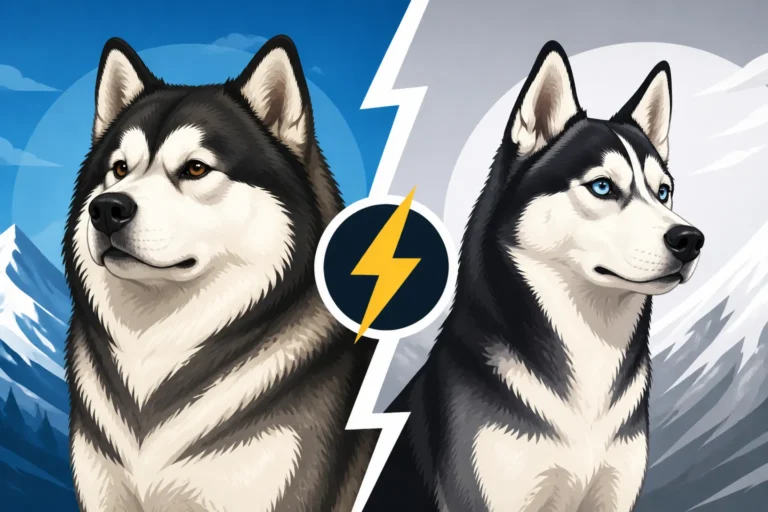
An Alaskan Husky may have Alaskan Malamute ancestry, but the name does not mean it is automatically a Malamute cross. “Alaskan Husky” usually describes a type of sled dog bred for performance, not a standardized pure breed. This guide explains what the label means, how Malamute ancestry might show up, and what evidence can actually help you assess a dog’s background.
Does Alaskan Husky Mean Malamute Cross
The name describes a working type
An Alaskan Husky is generally a sled dog bred for ability rather than a uniform appearance or closed pedigree. Breeders may select dogs for speed, stamina, pulling power, cold tolerance, temperament, or a particular team’s needs. As a result, Alaskan Huskies can vary widely in size, coat, build, and markings.
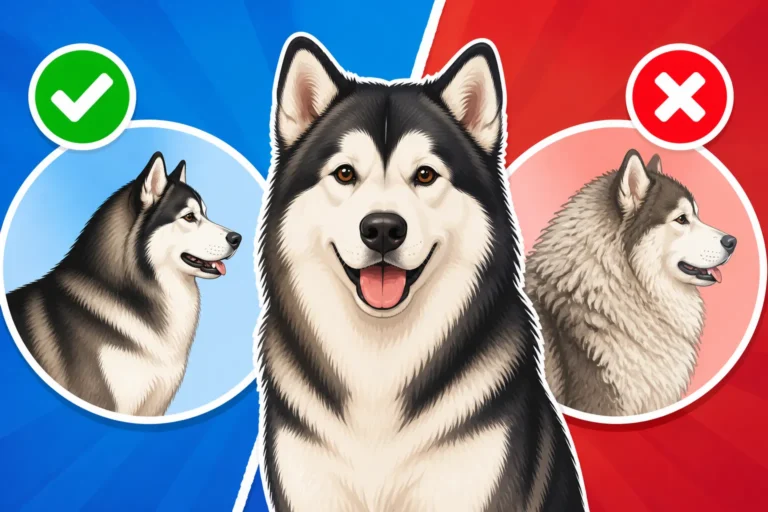
That variety is why the label can be confusing. Someone may see a large, thick-coated dog with a curled tail and assume it must be part Malamute. Another Alaskan Husky might be leaner, short-coated, and look more like a hound or pointer. Both can be called Alaskan Huskies because the term is about working type and lineage in a broad sense, not a fixed visual standard.
Unlike the Alaskan Malamute, the Alaskan Husky is not a standardized pure breed with one consistent breed description. A dog identified as an Alaskan Husky could have ancestors from several kinds of dogs, depending on the breeding program and the job the line was developed to do.
Malamute ancestry is possible, not guaranteed
Some Alaskan Huskies may have Malamute ancestry. That is especially plausible in lines where breeders value strength, freight-pulling ability, or endurance over a longer distance. But many Alaskan Huskies have no known Malamute ancestry, and the label alone does not establish that they do.
A useful distinction is between possible ancestry and documented ancestry. If the dog’s breeder or rescue has reliable family records naming a Malamute parent or ancestor, that is meaningful evidence. If the only clue is a broad head, heavy coat, or substantial build, the dog’s appearance can suggest a possibility but cannot confirm it.
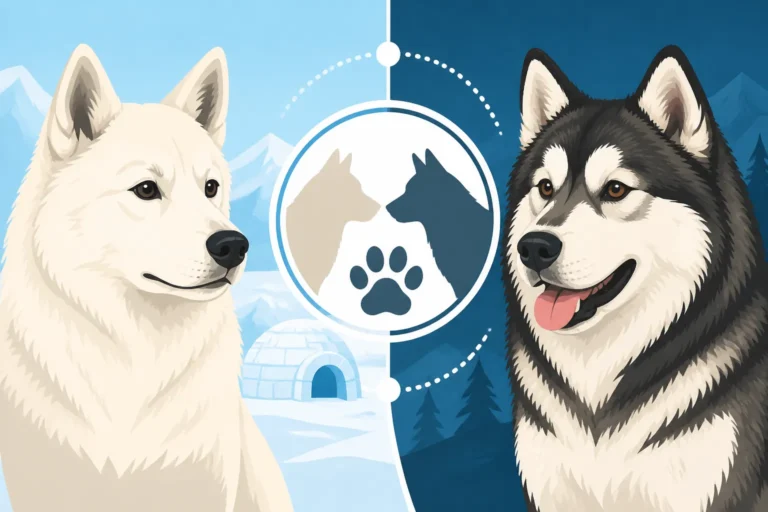
If you are trying to sort out the difference between the two northern breeds, The Alaskan Malamute Against the Siberian Husky offers useful background on how a recognized breed differs from other sled-dog types. Alaskan Huskies are another category again: their mixed and performance-focused backgrounds make simple visual comparisons less dependable.
A quick comparison
| Label | What it generally describes | Does the label prove Malamute ancestry? | What can vary |
|---|---|---|---|
| Alaskan Husky | A sled-dog type bred primarily for working ability | No | Size, coat, build, appearance, and ancestry |
| Alaskan Malamute | A recognized breed with a defined breed identity | It identifies the breed, not the dog’s individual pedigree | Individual size, coat, temperament, and working line |
| Malamute cross | A dog with at least one Malamute parent or documented Malamute ancestry | It indicates Malamute ancestry when supported by reliable records | The traits inherited from each parent |
The table is a guide to the labels, not a way to identify an individual dog. For a specific animal, records and a careful history are more useful than trying to match its face or coat to a category.
Why an Alaskan Husky Can Look Like a Malamute
Size and build can mislead
Malamutes are commonly associated with a sturdy, powerful build suited to hauling. Some Alaskan Huskies are also strong, substantial dogs, particularly when they come from lines selected for pulling or endurance. That overlap can make the two look similar at a glance.
But size is not a reliable ancestry test. A large Alaskan Husky may be large because of its immediate family, nutrition, sex, or general variation in working-dog lines. A smaller dog could still have a Malamute somewhere in its ancestry. Even among Malamutes, individuals do not all look identical.
Coat thickness is another easy trap. A dense double coat makes sense for a dog working in cold conditions, but it is not unique to Malamutes. Northern breeds and mixed sled dogs can share heavy coats, erect ears, broad faces, and bushy tails without having the same ancestry.
Working purpose shapes appearance
Alaskan Huskies are often bred with a particular kind of work in mind. A team that needs speed may favor a lighter, more streamlined dog. A program focused on hauling or challenging conditions may select for different qualities, including strength and durability. Breeding priorities differ, so the dogs can look quite different from one kennel or team to another.
Malamutes, by contrast, have a distinct breed identity and are historically associated with freight work. That history can help explain why some Malamutes and some Alaskan Huskies share a sturdy outline. It still does not make them interchangeable labels, nor does it prove a cross.
Malamute ancestry can also be harder to guess because several generations of breeding may soften or rearrange familiar traits. A mixed dog does not necessarily look like a neat half-and-half blend. A dog may inherit a particular coat or body shape from one side while showing little of another ancestor’s appearance.
A sled dog’s job is not its pedigree
A dog pulling a sled is not automatically a Malamute, and a dog that looks like a Malamute is not automatically a freight-line sled dog. Work, appearance, and ancestry are related but separate questions. Ask what the dog was bred to do, what its relatives were like, and whether anyone can document the family line.
For more context about where Malamute lines come from, What the Kotzebue Malamute Line Is and What the M'Loot Malamute Line Is explain historic line names within the breed. Those labels concern Malamute history; they do not establish that an Alaskan Husky belongs to either line. The topic of Whether Every Malamute Traces to Kotzebue or M'Loot can also help put those historical labels in perspective.
How to Check Whether a Dog Has Malamute Ancestry
Start with the breeder or rescue’s records
If you are considering a dog from a breeder, ask what they mean when they call it an Alaskan Husky. Do they have a pedigree, parent information, or a written account of the line’s working history? Ask whether any parent or grandparent was a registered Malamute, a known Malamute cross, or simply a dog with a similar appearance.
Good questions are specific and nonjudgmental:
- What are the parents’ names and backgrounds?
- Are there photos or records of the parents and grandparents?
- Is the dog being described as an Alaskan Husky because of its working line, or because it is a documented cross?
- Which traits are the breeder selecting for, such as speed, freight work, or endurance?
- Are there known health issues in the family?
A careful breeder may not have a formal pedigree for every Alaskan Husky, since working populations can be managed differently from registered show breeds. Still, they should be able to explain what they know, what they do not know, and how the dog fits into their program. Vague claims like “definitely part Malamute” without family details deserve follow-up.
For a rescue dog, ask whether the organization has intake notes, previous owner information, or records from a known breeder. A shelter’s breed label is often a practical guess based on appearance, not a verified family tree. That does not make the dog any less worth adopting; it just means the label should be treated as an estimate.
Consider a DNA test as one piece of evidence
A canine DNA test may provide clues about a dog’s ancestry, but results should be read as estimates rather than a perfect reconstruction of its family tree. Tests rely on comparison with reference populations, and working sled-dog populations can be mixed and less straightforward than a dog from a well-documented purebred line.
If a report suggests Malamute ancestry, that can support the possibility, but it does not necessarily tell you exactly which ancestor contributed it or how much that ancestry affects the dog’s behavior. If a test does not report Malamute, that does not make a breeder’s documented records disappear. For a mixed working dog, pair the test with family history and observable needs rather than treating one result as the whole story.
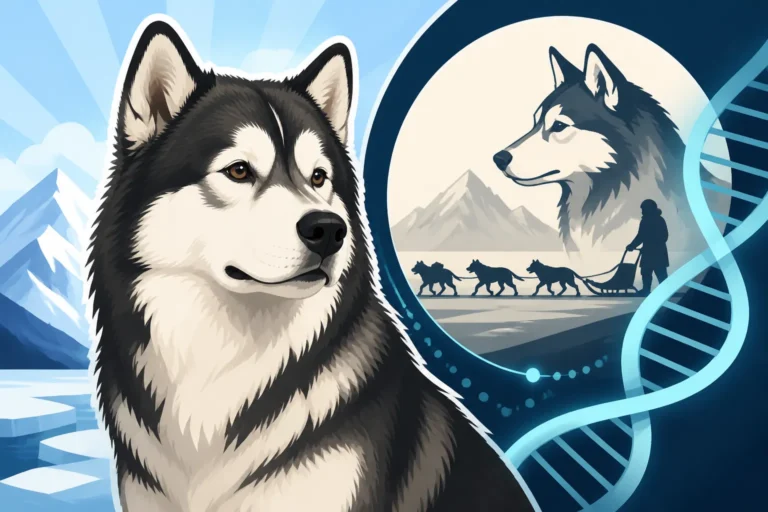
The broader question of breed identity and ancestry is explored in Whether a Malamute Is Closer to the Wolf Than Other Breeds. It is a helpful reminder that ancestry is complicated, and that one physical resemblance does not reveal a dog’s full genetic background.
Focus on the dog in front of you
Whether or not a dog has Malamute ancestry, its health, behavior, and care needs matter more day to day than the label. A thick-coated dog may need regular brushing and careful heat management. A powerful dog may need well-fitted equipment and safe, structured exercise. A dog with a strong chase instinct needs appropriate management around small animals, regardless of what a DNA report says.
If you are preparing for a newly adopted sled-type dog, you might compare everyday supplies at a retailer such as Chewy, but start with the dog’s actual size, coat, and routine rather than shopping based on a guessed breed mix. For coat care, a brush that reaches through the coat without irritating the skin is more useful than a product chosen because the dog is assumed to be a Malamute.
What to Ask Before Adopting or Buying One
Ask about temperament and daily routine
A dog’s background can offer useful context, but it does not guarantee a particular personality. Ask how the dog behaves with unfamiliar dogs, small animals, visitors, handling, and time alone. If the dog has worked in a sled team, ask about its experience with harnesses and group settings. If it has been a household pet, ask how it manages ordinary home routines.
For an adopted dog, allow time for behavior to emerge after the move. A quiet first few days do not necessarily predict how the dog will act once it settles. Likewise, an energetic or stressed arrival may become more relaxed when the dog has a predictable schedule, adequate exercise, and a secure environment.
If the dog is described as a Malamute mix, that label alone does not settle questions about prey drive or compatibility with other pets. Whether a Malamute Mix Keeps the Prey Drive addresses why ancestry is not a simple behavior forecast. A related discussion, Whether a Malamute Mix Still Digs, is useful for setting realistic expectations about common northern-dog habits without assuming every individual will behave the same way.
Ask about health and working demands
Before bringing a dog home, ask for available veterinary records and details about any known injuries or health concerns. For a dog from a working line, ask what kind of activity it has done and whether it has shown soreness, gait changes, or difficulty recovering after exercise. A dog that has pulled or run regularly may have different conditioning needs from one that has mostly lived as a companion.
Do not assume that a Malamute cross automatically needs the same exercise plan as a purebred Malamute, or that a lighter Alaskan Husky can safely handle intense work without gradual conditioning. Start with the dog’s age, health, current fitness, and response to activity. A veterinarian can help you plan safe exercise and assess concerns such as limping or trouble breathing.
When preparing the home, prioritize secure containment, a comfortable resting area, and suitable grooming tools. Chewy is one retailer people may consult when comparing routine pet-care supplies, but the right choices depend on the individual dog. Check fit and suitability carefully, especially for harnesses and other equipment used during pulling or hiking.
Keep the label in its proper place
“Alaskan Husky” does not automatically mean “Malamute cross.” It means the dog is generally being identified as part of a working sled-dog type, and its ancestry may vary. Some individuals may have Malamute heritage; others may not. Reliable records, a clear history, and cautiously interpreted DNA results offer better clues than appearance alone.
If you are choosing a dog, focus on what can be established and what you can responsibly provide: the dog’s health history, temperament, exercise needs, training, and living situation. A dog can be a wonderful fit whether its ancestry is precisely known or not. Chewy and other pet retailers may be useful for comparing general supplies as you prepare, but the dog’s actual needs—not an uncertain breed label—should guide those decisions.
Disclaimer
This article is for general informational purposes only and does not constitute professional advice. Laws, prices and regulations vary by location and change over time. Consult a qualified professional for guidance on your specific situation.