Whether a Malamute’s Tail Should Be a Plume
A Malamute’s tail is meant to look like a well-furred plume, usually carried over the back when the dog is alert or moving. It should not be confused with a tightly curled tail, and it may hang lower when the dog is relaxed. This guide explains what the breed’s tail should look like, what changes with age and coat, and when a change deserves attention.
What a Malamute’s plume tail should look like
The breed’s characteristic tail shape
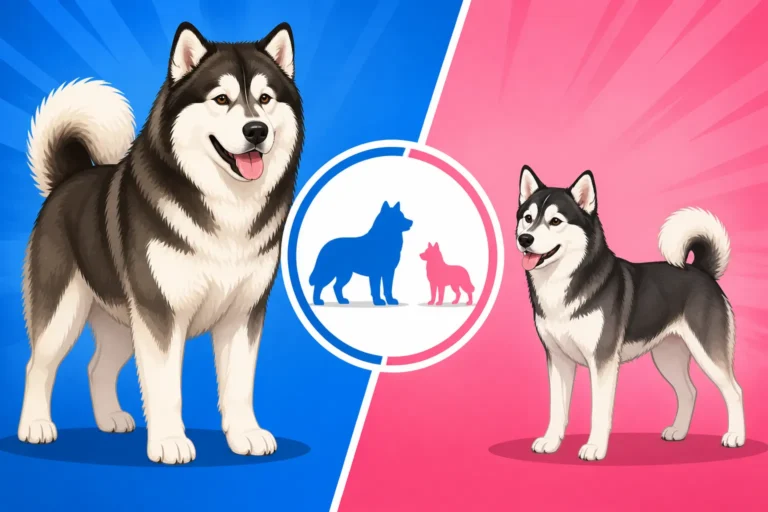
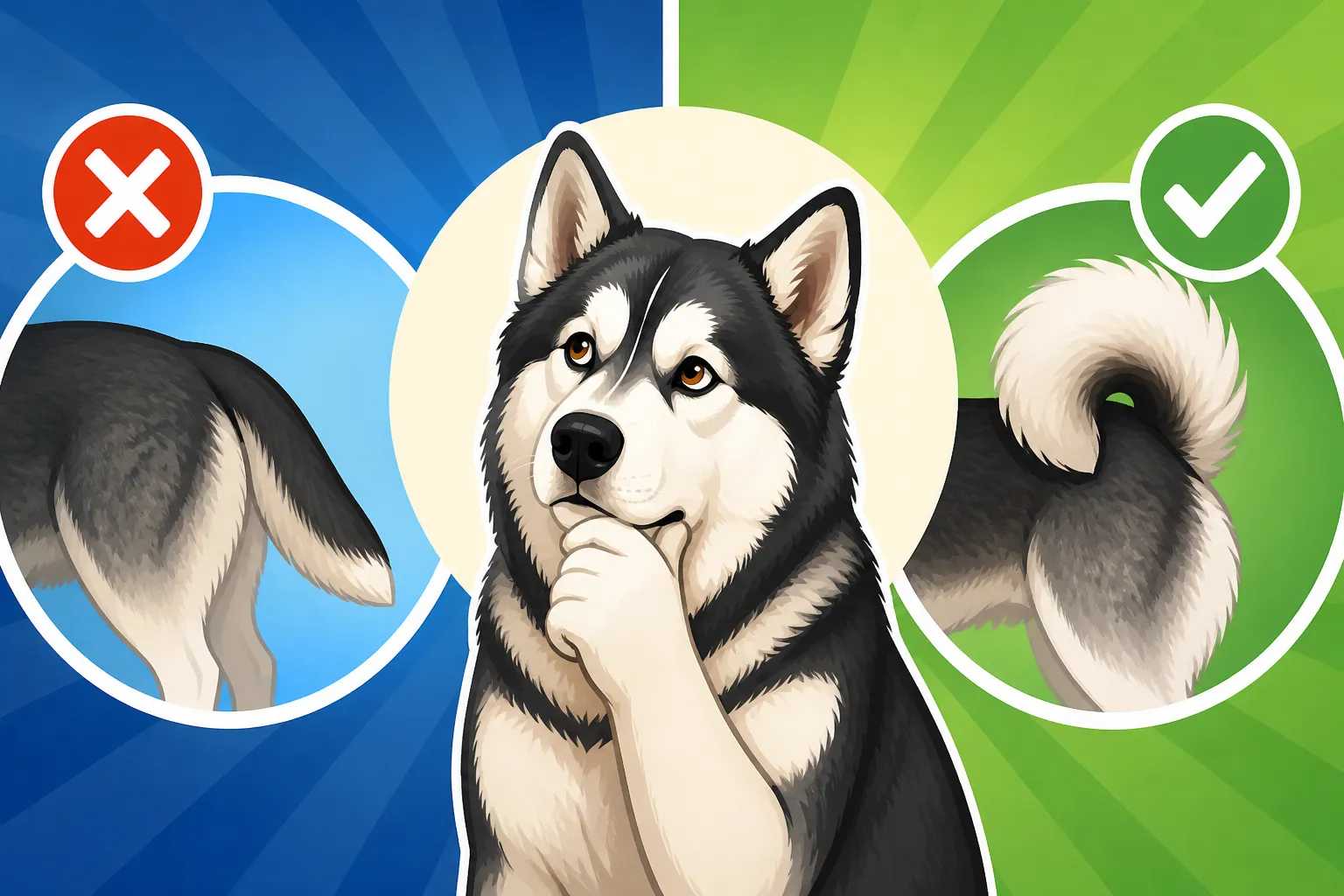
The Alaskan Malamute has a well-furred tail that is carried over the back when the dog is not working. “Plume” describes the abundant, soft-looking coat that gives the tail its full outline. The hair should create a natural, feathery appearance rather than a narrow, sparsely covered tail.
The tail’s shape is not a perfect circle or a tight spiral. It may curve gently over the back, rest against the back, or fall to one side, depending on the dog’s posture and movement. The key visual impression is a full, well-furred tail carried comfortably above the back—not a stiff curl held in a fixed position.
Breed standards describe an ideal, not a requirement that every pet Malamute hold its tail in exactly the same pose at every moment. A dog who is relaxed at home may let the tail hang down. When greeting someone, exploring a trail, or watching something interesting, the same dog may carry it higher. If you are comparing your dog with breed descriptions, remember that body language and coat condition affect what you see.
How a plume differs from a tightly curled tail
A Malamute’s tail often curves over the back, which can make it look curled in photographs. But a natural, loose curve is different from a tight ring or a tail pressed firmly into a small curl. The breed’s plume should look relaxed and well-furnished, not like a rigid coil.
Some variation in the curve is normal. One dog may carry the tail to the left, another to the right, and another may have a looser curve that shifts as the dog moves. A tail that occasionally drops while the dog is resting is not, by itself, a sign that something is wrong. For a closer look at this distinction, see Whether a Malamute's Tail Curls Over Its Back.
Appearance alone also cannot confirm a dog’s breed or pedigree. A curled tail, a loose tail, or a particular tail carriage should be considered alongside the dog’s overall structure, coat, movement, and history. If you are learning how Malamutes are typically built, What an Alaskan Malamute Actually Weighs offers useful context about the breed’s overall size and proportions.
Why a Malamute’s tail changes in appearance
Relaxed, alert, and moving positions
A tail is part of a dog’s body language, so its position can change from one moment to the next. A Malamute standing alert may carry the tail over the back, while a dog lying down or relaxing in the house may let it rest lower. During a walk, the tail may rise and fall as the dog changes pace, sniffs, or responds to the surroundings.
These ordinary shifts should look comfortable and coordinated with the dog’s general behavior. For example, a Malamute that lifts its tail when a familiar person comes through the door and lowers it while settling on a bed is showing different postures, not necessarily a change in the tail itself. A single snapshot can be misleading: photos taken while a dog is turning, stretching, or lying down may make a normal tail look unusually straight or curled.
Pay attention to the dog’s usual pattern rather than expecting a permanent pose. If the tail has suddenly become limp, seems painful, or is held in an unfamiliar position along with changes in movement or mood, that is different from ordinary posture variation. A veterinarian can assess whether an injury or another health issue may be involved.
Coat, season, age, and grooming
The plume can look fuller or thinner depending on the Malamute’s coat. During a seasonal coat blow, a dog may shed a substantial amount of undercoat, and the tail can temporarily look less plush. Once the coat grows back, the outline may appear fuller again. Differences in lighting, grooming, and the way the coat lies can also make the same tail look quite different in two photographs.
A young dog’s tail may not have the same mature fullness as an adult’s. Coat development takes time, and individual dogs vary in how quickly their adult coat becomes established. That means a puppy or adolescent with a less dramatic plume should not automatically be judged against the finished appearance of a mature show dog.
Brushing helps keep loose undercoat and tangles from obscuring the tail’s natural shape. Use a suitable brush or comb gently, especially around the feathering, where long hairs can catch. If you are choosing grooming tools, Chewy can be one place to compare brush styles, but select a tool that suits your dog’s coat and use it carefully. For more on coat care, see How Often an Alaskan Malamute Needs Brushing and Whether an Alaskan Malamute's Coat Is Self Cleaning. A full tail is part of the coat, not a reason to trim or reshape it for appearance.
| What you notice | Often a normal explanation | What to consider |
|---|---|---|
| Tail hangs lower while resting | Relaxed posture | Look for comfort and normal movement |
| Tail curves loosely over the back | Typical Malamute carriage | The curve may shift from side to side |
| Tail looks less full during shedding | Seasonal coat change | Check for skin irritation or unusual hair loss |
| Tail plume looks fuller after grooming | Coat has been brushed and arranged | Avoid pulling or aggressive brushing |
| Tail suddenly droops and seems painful | Possible injury or discomfort | Contact a veterinarian for guidance |
Caring for the tail plume
Gentle brushing and practical coat care
Brush the tail with patience rather than trying to make it look like a show-ring plume. Start with the outer coat, then work through small sections so you can spot loose undercoat, tangles, or debris without yanking the hair. If your Malamute dislikes having the tail handled, keep sessions short and reward calm cooperation. A dog who is comfortable with grooming is easier to check from nose to tail.
A tail can collect burrs, snow, leaves, or other debris after a walk, especially where the feathering is long. Check it when you brush the rest of the coat, and remove anything you can loosen gently. If a knot is tight against the skin or the dog reacts as though it hurts, do not tug hard or reach for scissors near the skin. Ask a groomer or veterinarian for help if you cannot safely clear it.
Chewy may be useful for comparing basic grooming supplies, such as combs and brushes, but the important part is choosing a tool that reaches through the coat without scraping the skin. You do not need to make the tail look perfectly rounded or symmetrical. Natural coat fullness and comfortable handling matter more than a polished outline. If you are also learning how Malamute colors and coat markings vary, The Colors an Alaskan Malamute Comes In can help put the plume in context.
Why trimming or shaping is usually unnecessary
A Malamute’s double coat has an insulating undercoat and protective outer coat. The tail’s feathering is part of that natural coat, so routinely cutting it into a different shape is not needed for ordinary care. Trimming can change the tail’s appearance, and careless cutting may leave an uneven outline or irritate the skin.
There are practical exceptions: a veterinarian may recommend clipping a small area for a medical procedure, or a groomer may need to address a painful mat or hygiene concern. Those are specific care situations, not reasons to shave or sculpt the whole tail. If a groomer suggests a substantial trim, explain that you want the Malamute’s natural coat preserved unless there is a clear welfare or medical reason to do otherwise.
It is also worth remembering that a dramatic tail plume is not the only sign of a healthy coat. Skin comfort, clean fur, and the absence of persistent irritation matter more than a particular silhouette. If you notice recurrent crusting, bald areas, or skin changes around the tail, ask your veterinarian rather than trying to solve the problem with extra brushing or supplements. The guide Reading a Malamute's Skin Before the Crusts Appear discusses why checking the skin beneath a thick coat is worthwhile.
When a tail change deserves attention
Normal variation versus a sudden change
A tail that looks different because the dog has changed position, shed undercoat, or just come in from wet weather usually does not call for alarm. Compare what you see with your Malamute’s normal behavior. Is the dog moving comfortably? Does the tail rise and lower as usual? Is the dog happy to have the area touched? These everyday observations can help you distinguish a temporary change in appearance from a possible problem.
A sudden change is more concerning when it comes with other signs. Examples include obvious pain when the tail or lower back is touched, swelling, a wound, persistent licking, difficulty sitting, or a tail that remains unusually limp. Changes in walking, appetite, energy, or behavior may also be relevant. These signs do not identify a specific cause, but they are good reasons to contact a veterinarian for an assessment.
Avoid testing a sore tail by repeatedly lifting, bending, or pulling it. That can make discomfort worse and does not tell you what caused the change. If the dog seems uncomfortable, keep handling gentle and describe what you noticed, when it began, and whether anything happened shortly beforehand, such as rough play or a fall.
Questions to ask a veterinarian or groomer
When something about the tail worries you, clear details are more helpful than trying to diagnose it at home. Note whether the change was sudden or gradual, whether the dog can wag or lift the tail, and whether the skin or coat looks different. A photo can help show how the appearance has changed, but it cannot replace an examination if your dog seems painful or unwell.
A veterinarian can assess pain, injury, skin changes, or other health concerns. A groomer can advise on routine coat care and help with tangles, but should not be expected to diagnose a medical problem. If the tail looks different after a grooming visit, ask what was trimmed and whether the change is simply in the coat outline. Chewy may offer grooming tools and supplies, but persistent pain, wounds, or sudden loss of tail movement call for professional care rather than a new brush or topical product.
The practical standard for a pet owner is simple: a Malamute’s tail should have a naturally full, plume-like coat and may curve over the back, but its position can vary with posture and mood. Compare your dog with their own normal pattern, keep the coat gently maintained, and get veterinary advice for sudden or painful changes. For more breed context, What Alaskan Malamute Owners Wish They Had Known offers a broader look at the everyday realities of living with this distinctive dog.
Disclaimer
This article is for general informational purposes only and does not constitute professional advice. Laws, prices and regulations vary by location and change over time. Consult a qualified professional for guidance on your specific situation.