Whether an Alaskan Malamute Is Safe With Children
Many families dream of the majestic Alaskan Malamute, picturing a loyal, fluffy companion who will adore their children and become a cherished member of the household. It’s an understandable fantasy, but the reality of bringing such a powerful, independent, and instinct-driven breed into a home with kids can be far more complex than the picture-perfect image. This guide aims to offer a candid, realistic exploration of whether an Alaskan Malamute can be truly safe with children, addressing the breed's unique traits and the immense commitment required from owners to ensure harmony.
Understanding the Malamute Temperament Around Children
The Alaskan Malamute is a magnificent breed, known for its strength, intelligence, and often, a gentle disposition towards humans. However, their interactions with children are a nuanced subject that requires deep understanding of their inherent traits, not just wishful thinking.
The Malamute's Pack Mentality and Its Family
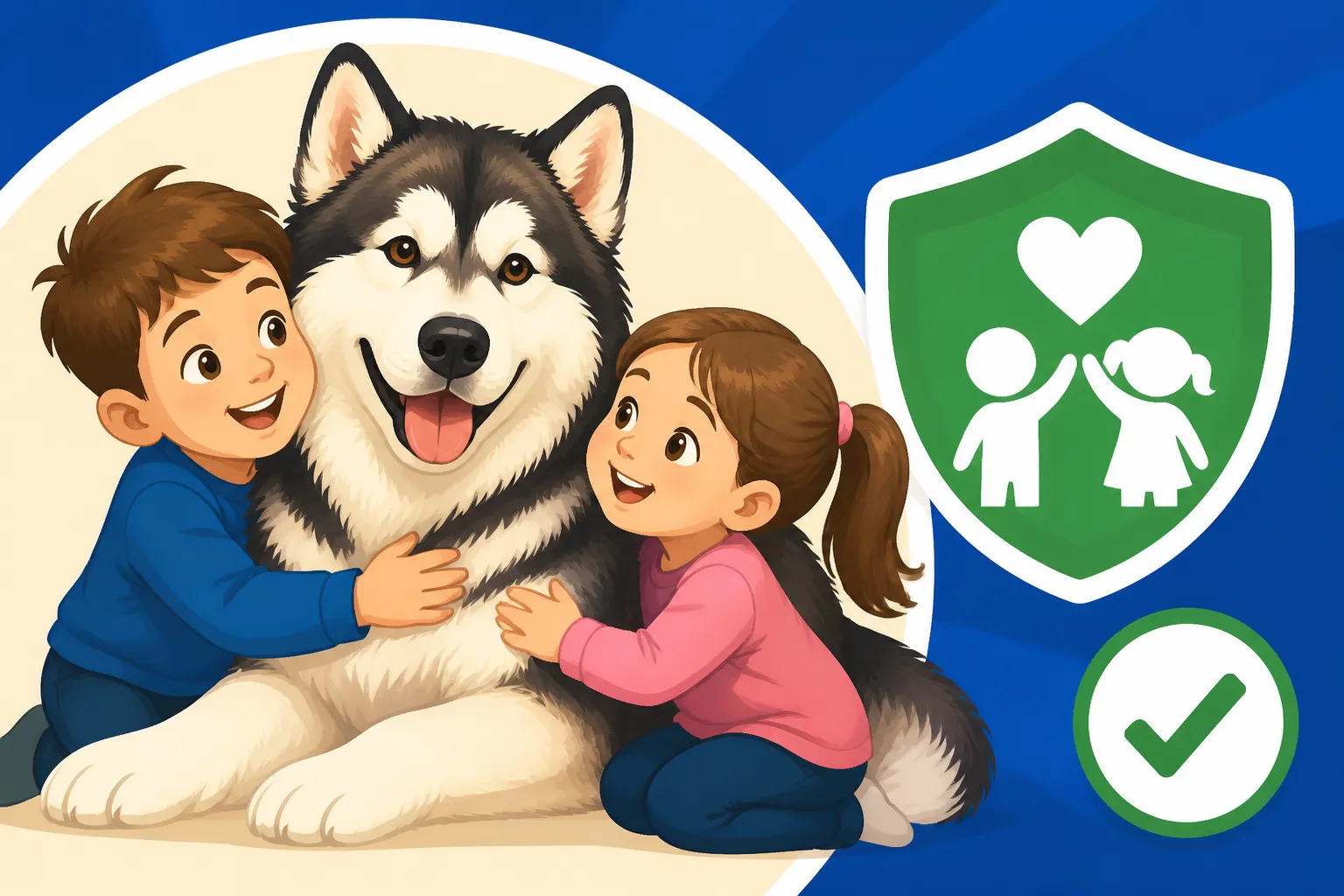
Malamutes are deeply ingrained with a pack mentality, and they typically view their human family as their pack. This often translates to a profound loyalty and affection towards all members, including children. They can be incredibly tolerant of the usual chaos that comes with kids – the loud noises, sudden movements, and sometimes, clumsy affections. It’s not uncommon to see a Malamute patiently enduring a child’s hug, even if it’s a bit overzealous. This tolerance is a huge plus, but it's important to recognize that it has limits.
However, their sheer size and strength mean that even well-meaning interactions can pose a risk. An excited Malamute, weighing anywhere from 75 to over 100 pounds, can easily knock over a small child, even if it's just trying to solicit play or get closer. They aren't always aware of their own brute force, and what might be a gentle nudge from a smaller dog can be a significant impact from a Malamute. This isn't aggression; it's simply a lack of understanding of a child's fragility. The foundation of safety begins with respectful interaction from both sides.
Furthermore, while generally good-natured with their human pack, individual Malamutes can, like any dog, develop resource guarding tendencies or react out of fear or frustration if pushed too far. A child unknowingly intruding on a Malamute's meal, favorite toy, or even its resting space can elicit a warning growl or snap if the dog feels threatened or its boundaries are repeatedly ignored. Early and consistent socialization, especially introducing the puppy to a variety of calm and supervised children, is paramount. You want them to associate kids with positive experiences from the start. It’s also important to consider Whether a Malamute Is Gentle With Its Own Family – generally, yes, but boundaries are still vital.
Size, Strength, and Inadvertent Harm
Let’s be honest, an adult Alaskan Malamute is a powerhouse. They are built for pulling heavy loads across vast distances, and their physical presence is substantial. This is perhaps one of the biggest, yet often overlooked, challenges when placing them in a home with children, especially toddlers or preschoolers. A Malamute running full tilt through the house during a burst of "zoomies" can easily flatten a small child without meaning any harm whatsoever. Their tails, thick and often carried high, can whip across a child’s face or body with surprising force.
Imagine this scenario: you're in the living room, and your Malamute, suddenly overcome with an urge to play, decides to do a few laps around the sofa. Your three-year-old is building a block tower on the rug. In an instant, the Malamute barrels through, not seeing the child, and knocks them sprawling. It’s not malicious, it's just pure, unadulterated canine energy in a confined space. This isn't about aggression, but about the sheer physics of a large, active dog and a small, unstable human.
It’s not just about running; even a happy jump can cause problems. A Malamute might jump up to greet an adult, a behavior that is already discouraged due to their size. If they do this to a child, it could result in scratches, a knocked-out tooth, or even a concussion. Teaching your Malamute strict manners around people, especially children, is not just about politeness; it's a critical safety measure. Every interaction needs to be managed, and both the dog and the child need to understand appropriate behaviors.
Guarding Instincts (or Lack Thereof)
One common misconception people have about large dogs is that they will naturally be protective guard dogs for the family, especially the children. While some breeds certainly possess strong protective instincts, the Alaskan Malamute is generally not one of them. They were bred to work cooperatively with humans, often in large packs, and their historical role didn't involve guarding property or livestock. Instead, they are typically friendly and outgoing, often greeting strangers with enthusiasm rather than suspicion.
This means that while a Malamute might look intimidating, they are unlikely to defend your child against an intruder or even a perceived threat from an unfamiliar person. They might alert you to someone's presence with a characteristic "woo-woo" or howl, but they are more likely to greet a stranger as a potential new friend than a foe. So, if you're looking for a dog to actively "guard" your children, the Malamute isn't the right fit. This is an important distinction, as relying on a Malamute for protection could lead to a false sense of security.
Instead, their non-guarding nature means you generally don't have to worry about them becoming overly territorial or aggressive towards visitors who approach your children in a friendly manner. This characteristic, in some ways, can contribute to their general safety around kids, as long as other factors like prey drive and proper management are addressed. It aligns with the idea that Why an Alaskan Malamute Guards Nothing is a defining trait of the breed.
Inherent Breed Traits and Potential Challenges
Beyond their general temperament, several deep-seated breed traits can present specific challenges when an Alaskan Malamute lives with children. Ignoring these natural instincts is a recipe for potential trouble.
Prey Drive and Small, Fast-Moving Targets
This is perhaps one of the most significant and often underestimated challenges with Malamutes in families with young children. Alaskan Malamutes were historically bred to hunt large game, like seals and bears, alongside their human companions, and to survive in harsh environments. This has instilled in them a powerful, inherent prey drive. While they are usually gentle with their human "pack," this instinct can be triggered by small, fast-moving, and high-pitched stimuli – precisely how young children often behave.
Imagine a toddler running across the yard, flapping their arms and squealing with delight. To a Malamute, whose instincts are wired to chase, catch, and investigate, this can look incredibly similar to small prey animals. It's not that the Malamute intends to harm the child out of malice; it's a primal, hard-wired response to a stimulus. A Malamute might "nip" to try and stop the movement, or tackle the child in an attempt to "catch" them. Even if it's intended as play, the sheer power of the dog can turn it into a dangerous incident.
This makes constant, active supervision absolutely non-negotiable. You cannot rely on a Malamute to "know" a child isn't prey. The risk is particularly high with infants and very young children who lack the understanding to interact calmly or predict a dog's reaction. Understanding that this isn't a behavior problem but an instinctual drive is crucial for prevention. This is why discussions about An Alaskan Malamute in a Home With Cats or Small Dogs are so important, as the underlying prey drive is the same, just directed at different potential "targets."
Independence and Stubbornness in Training
Alaskan Malamutes are renowned for their intelligence, but they are equally famous for their independence and stubborn streak. They are working dogs, bred to make decisions in harsh environments, not to slavishly obey every command. This means that while they can be trained, it requires immense patience, consistency, and a strong understanding of positive reinforcement. They will not respond well to harsh methods, and trying to force them into submission will often backfire, leading to resentment or a complete shutdown. This is why Why Force Fails on an Alaskan Malamute is a crucial concept for any Malamute owner.
How does this relate to children? If a Malamute is in a situation with a child, and the child's behavior (intentional or accidental) causes the dog discomfort or triggers an unwanted instinct, an independent Malamute might choose to ignore a "leave it" or "stay" command from an owner, especially if the owner's authority isn't consistently reinforced. They might prioritize their own reaction or comfort over compliance. This isn't defiance for the sake of it, but a manifestation of their independent nature.
This means that owners must have an exceptionally strong bond and clear communication with their Malamute, ensuring that commands are reliably obeyed even under distracting or stressful circumstances. If your Malamute isn't consistently trained and responsive to your cues, particularly when it comes to impulse control, the risk around children escalates significantly. A well-trained Malamute will look to its owner for guidance, but a poorly trained one will make its own choices, which might not always be the safest. This independence often becomes more pronounced during adolescence, as discussed in The Adolescent Malamute That Rewrites the Rules at Fourteen Months.
Energy Levels and Exercise Needs
A tired Malamute is a good Malamute, and a bored Malamute is a recipe for disaster. These dogs were bred for endurance and intense physical activity. They require significant daily exercise and mental stimulation to be calm and well-behaved companions. If a Malamute doesn't get enough physical outlets, that pent-up energy will manifest in undesirable ways – often through destructive chewing, excessive digging, or hyperactive behavior.
When a Malamute is under-exercised, they can become restless, demanding, and easily overstimulated. This is a dangerous combination when combined with the unpredictable energy of children. A Malamute bouncing off the walls from lack of activity is far more likely to accidentally knock a child over, jump on them, or engage in rough, inappropriate play. Their need for a "job," even if it's just daily long walks, runs, or mentally stimulating games, cannot be overstated. Neglecting this need isn't just unkind to the dog; it compromises the safety of everyone in the household.
Consider What an Alaskan Malamute Needs Every Day: beyond the physical, they thrive on mental engagement. Puzzle toys, training sessions, and interactive games can help channel their intelligence productively. Without this, their powerful minds can become destructive, and their powerful bodies can become a menace. A calm, well-exercised Malamute is far more likely to be patient and gentle with children than one buzzing with unspent energy.
Strategies for a Safe and Harmonious Home
Integrating an Alaskan Malamute into a family with children requires proactive, consistent, and unwavering strategies. It’s not about hoping for the best; it’s about creating an environment where both dog and children can thrive safely.
Early and Ongoing Socialization and Training
The moment you bring an Alaskan Malamute puppy home, your socialization and training journey begins, and it absolutely must be continuous. This isn't a one-and-done deal; it's a lifelong commitment. Exposing your puppy to a wide variety of sights, sounds, people, and well-behaved children in a positive, controlled manner is crucial. Each positive encounter helps build a robust, confident, and accepting temperament. Puppy classes are an excellent way to introduce them to new experiences and start foundational obedience. Online programs, such as those from BAXTER & Bella, can also provide structured guidance for new puppy owners, covering crucial socialization and basic obedience from day one.
Beyond puppyhood, continuing with advanced obedience classes, engaging in dog sports, or simply maintaining regular training refreshers keeps your Malamute's mind sharp and reinforces your role as a consistent leader. A well-socialized Malamute is less likely to be fearful or reactive, and a well-trained Malamute is more likely to listen to your commands when it matters most – especially when children are present. Remember, the goal is not just a compliant dog, but a dog that is comfortable and confident in various situations, including those involving the unpredictability of kids. This journey is comprehensively covered in resources like The First Year With an Alaskan Malamute Puppy.
Teaching Children How to Interact Respectfully
While training your Malamute is paramount, it’s equally, if not more, important to teach your children how to interact with the dog respectfully and safely. Children, especially young ones, often don't understand canine body language or the concept of personal space. This education is not optional; it’s essential for preventing incidents.
Key rules for children must include:
- "Leave the dog alone when it's eating, sleeping, or in its crate." A dog's crate or bed should be their sanctuary, a place where they are never bothered. This prevents resource guarding or startle-induced reactions.
- Gentle touches only. No pulling ears, tails, climbing on, or poking. Teach them to pet gently on the shoulders or chest, avoiding the face or tail.
- No running or screaming around the dog. As discussed with prey drive, sudden movements and loud noises can trigger unwanted instincts.
- Always ask permission. Children should be taught to ask an adult before approaching or petting any dog, including their own.
- Never feed the dog from the table or provoke it. This can lead to begging, jumping, and aggressive tendencies around food.
Parents must always supervise interactions, even if the dog is usually tolerant and the children are well-behaved. An adult should be a constant presence, ready to intervene, guide, and teach. This is particularly vital when considering Whether a Malamute Suits a Family With a Baby, where the child's complete lack of understanding makes supervision absolute.
Creating Safe Spaces and Boundaries
To foster a harmonious environment, both your Malamute and your children need their own designated safe spaces. For your Malamute, this means a comfortable crate or a specific dog bed in a quiet area where they can retreat and relax undisturbed. This is their sanctuary, and children must be taught to respect it. This area should be off-limits to kids, providing your dog with a much-needed break from the chaos of family life.
Utilizing physical barriers, such as baby gates, available from retailers like Amazon, is a highly effective way to manage interactions. Gates can be used to separate dogs from children when you can’t actively supervise, or to allow the Malamute quiet time in a separate room. This isn't about punishment; it's about prevention and management. It teaches both dog and child that not every space is shared space and that alone time is important. This also prevents accidental encounters that might trigger a prey drive response or lead to a child inadvertently bothering a resting dog.
Establishing clear boundaries for where the Malamute is allowed, and when, also helps. Perhaps the dog isn't allowed in the children's bedrooms, or certain play areas are designated "kid-only." These boundaries reduce opportunities for conflict and give the dog a predictable structure, which large, intelligent breeds often appreciate. A structured environment minimizes confusion and stress for everyone involved.
Consistent Supervision and Intervention
The golden rule for Malamutes and children, especially young ones, is never leave them unsupervised. Even if your Malamute is the most loving, gentle dog you’ve ever met, and your children are well-behaved, accidents can happen in a split second. A child's unexpected move, a dog's momentary lapse in judgment, or a sudden trigger can turn an idyllic scene into a regrettable incident. Active supervision means being fully present, not just in the same room scrolling on your phone.
Learn to read your Malamute’s body language. Dogs communicate constantly, and often their early warning signals are subtle: lip-licking, yawning when not tired, turning their head away, stiff body posture, whale eye (showing the whites of their eyes), or trying to escape the situation. These are signs of stress or discomfort. If you observe these signals, it’s your responsibility to intervene immediately by calmly separating the dog and child.
Early and calm intervention teaches your Malamute that you are in control and will handle situations, reducing the need for them to escalate. It also prevents the dog from feeling trapped or forced into a situation it doesn't like, which can lead to a reactive bite. Prevention is always better than reaction, and consistent, watchful supervision is your most powerful tool in ensuring a safe and harmonious home.
When to Seek Professional Guidance
Even with the best intentions and strategies, situations can arise where you need expert help. Knowing when to call in a professional can prevent small problems from becoming severe safety issues.
Recognizing Warning Signs and Stress Signals
It's absolutely critical to understand the full spectrum of canine communication, especially the warning signs your Malamute might be giving you. While we've touched on subtle stress signals, more explicit warnings should never be ignored or punished. Growling, snarling, snapping (even if it doesn't make contact), or baring teeth are clear indicators that your Malamute is highly uncomfortable, fearful, or feels threatened. These are not signs of a "bad" dog; they are communication from a dog in distress.
Punishing a growl teaches your dog not to warn you, but to go straight to biting without giving you any notice. Instead, if your Malamute growls, immediately and calmly remove the dog from the situation and reassess what triggered the behavior. Was a child too close to its food? Did they try to take a toy? Did they corner the dog? Understanding the trigger is the first step to modifying the environment or the interaction to prevent recurrence. These are serious indicators that should prompt immediate action and professional consultation. Resources like How Likely an Alaskan Malamute Is to Bite delve deeper into understanding these behaviors.
Beyond overt warnings, keep an eye out for changes in behavior that might indicate discomfort or stress: reluctance to be around children when they previously were fine, hiding, excessive licking, panting, or changes in eating or sleeping habits. Any persistent change that makes you uneasy should be a red flag.
The Role of Professional Trainers and Behaviorists
If you observe any persistent behavioral issues, especially those involving growling, snapping, or general anxiety around children, do not hesitate to seek professional help. Self-diagnosing or attempting to "fix" serious behavioral problems on your own, especially with a powerful breed like a Malamute, can be dangerous and worsen the situation.
A certified professional dog trainer or, for more serious issues, a veterinary behaviorist, can provide invaluable guidance. They can observe your Malamute's behavior in your home environment, identify triggers, assess underlying causes (which might include pain or medical conditions), and develop a tailored management and modification plan. They can teach you effective, humane techniques to improve your dog's comfort and behavior around children, and crucially, educate your entire family on safe interaction protocols.
Choosing the right professional is important. Look for trainers who use positive reinforcement methods and who are certified by reputable organizations. Avoid anyone who advocates for outdated dominance-theory tactics, as these are not only ineffective but can be harmful, particularly with an independent breed like the Malamute. Investing in professional help is an investment in the safety and well-being of both your dog and your children. Understanding Whether a Malamute Owner Needs a Professional Trainer becomes evident when dealing with complex inter-species dynamics.
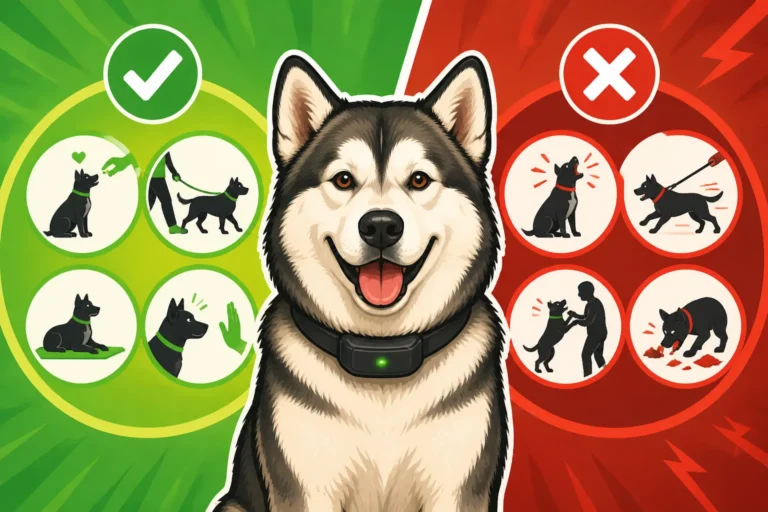
Here's a quick guide to Malamute-child interactions:
| Interaction Type | Do's | Don'ts |
|---|---|---|
| Supervision | Always maintain active, direct supervision. | Never leave children and Malamutes unsupervised, even for a moment. |
| Boundaries | Provide dog with a safe, private space (crate, bed). | Allow children to disturb the dog when it's eating, sleeping, or in its crate. |
| Child Behavior | Teach gentle petting on chest/shoulders. Teach calm movements and quiet voices. | Allow pulling ears/tail, climbing on the dog, or roughhousing. |
| Dog Training | Enroll in positive reinforcement classes. Practice impulse control regularly. | Use harsh corrections or methods that make the dog fearful. Ignore basic obedience. |
| Exercise | Ensure daily vigorous exercise and mental stimulation. | Neglect the Malamute's exercise needs, leading to pent-up energy. |
| Signals | Learn and respond to your Malamute's subtle stress signals. | Punish growls or warning signs; dismiss subtle signs of discomfort. |
Ultimately, having an Alaskan Malamute and children live safely together is possible, but it requires an extraordinary level of commitment, education, and vigilance from the adults in the household. It means understanding the breed's deep-seated instincts, providing consistent training, setting clear boundaries, and being prepared to intervene at all times. This truly is The Household an Alaskan Malamute Was Built For – one with dedicated, informed owners.
Disclaimer
This article is for general informational purposes only and does not constitute professional advice. Laws, prices and regulations vary by location and change over time. Consult a qualified professional for guidance on your specific situation.