Whether a Malamute Is Part Wolf
Many people, upon seeing the majestic, powerful build and often striking facial markings of an Alaskan Malamute, immediately jump to the conclusion that they must be part wolf. It’s a common misconception, fueled by their wild appearance and powerful presence, and it can lead to all sorts of misunderstandings about their nature and needs. This guide will delve deep into the Malamute's true ancestry, dispelling myths and revealing the fascinating reality behind this incredible breed.
The Deep Roots of the Alaskan Malamute: Tracing Ancestry Beyond the Wolf
The Alaskan Malamute is one of the oldest Arctic sled dog breeds, a true testament to the ingenuity and survival skills of the indigenous peoples who developed them. Their history is long and storied, going back thousands of years, far predating the modern concept of "breeds" as we know them today.
Developed by Indigenous Peoples, Not Crossed with Wolves
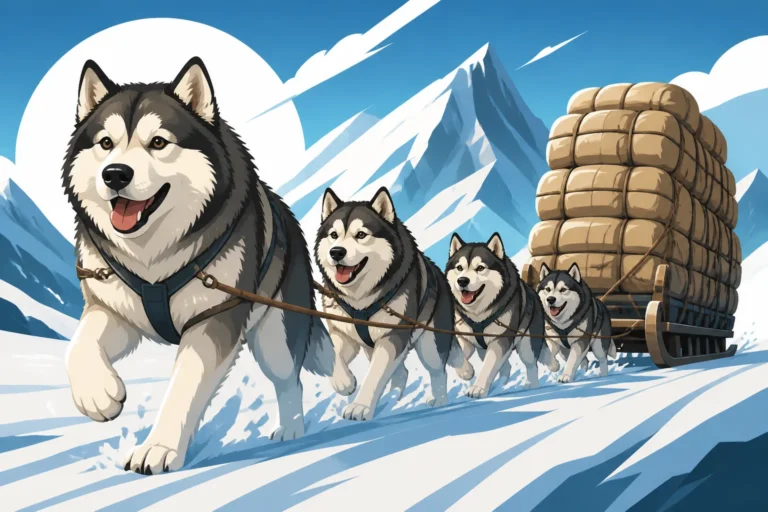
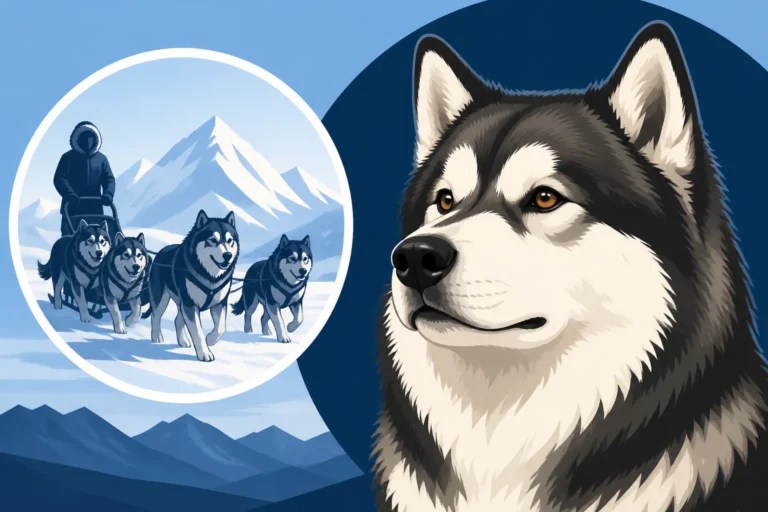
The Alaskan Malamute was painstakingly developed over millennia by the Mahlemut Inupiaq people of northwestern Alaska, primarily around the Kotzebue Sound region. These dogs were not the result of crossing domestic dogs with wild wolves; rather, they were selectively bred from a common ancestral canine lineage that existed alongside early human settlements. The Mahlemut relied on these dogs for their very survival, using them to haul heavy loads, assist in hunting large game like seals and polar bears, and even provide warmth in their homes. Every trait—from their dense double coat to their incredible stamina and strength—was carefully honed for utility in the harsh Arctic environment. The Mahlemut of Kotzebue Sound Bred the Alaskan Malamute
Think about it this way: if you’re depending on your dog team to bring food back to your family across miles of ice and snow, you need reliability, predictable temperament, and a willingness to work cooperatively. Introducing wild wolf blood would be counterproductive, bringing in unpredictable behaviors that could jeopardize human lives and livelihoods. The dogs the Mahlemut cherished were deeply integrated into their society, valued partners, not semi-wild hybrids. Their lives depended on these dogs being dogs, not wolves.
Divergence from the Wild Canine Lineage
All domestic dogs, including the Alaskan Malamute, share a common ancestor with wolves. However, this divergence happened tens of thousands of years ago. Dogs evolved from wolves through a process of domestication, where certain wolves with traits amenable to living with humans were naturally or intentionally selected. Over countless generations, these animals became distinct from their wild counterparts. The Malamute's ancestors were part of this ancient lineage of domesticated dogs that accompanied humans as they spread across the globe, including into the Arctic.
While they retain some superficial physical similarities to wolves, such as their thick fur, powerful build, and sometimes stoic expressions, these are convergent evolutionary traits for survival in similar environments, not evidence of recent interbreeding. Just as a polar bear and a grizzly bear share a common ancestor but are distinct species adapted to different niches, so too are Malamutes and wolves distinct. Their shared ancestry is ancient, not current. Whether Malamute DNA Shows Ancient Arctic Ancestry
Genetic Science: What DNA Tells Us About Malamutes and Wolves
In the modern age, we don't have to rely solely on history or visual cues to understand a dog's lineage. Genetic testing provides definitive answers, and the science is overwhelmingly clear: purebred Alaskan Malamutes are not part wolf.
No Recent Wolf Ancestry in Purebred Malamutes
DNA tests on Alaskan Malamutes consistently show that they are indeed purebred domestic dogs, Canis familiaris. While their genetic markers may indicate a very ancient lineage that places them closer to the root of the domestic dog family tree than some other breeds, this does not mean they have recent wolf ancestry. It simply confirms their status as one of the original, fundamental breeds that retain more of the genetic diversity found in early domesticated canines. There isn't a "wolf percentage" in their DNA beyond what is shared by all domestic dogs.
If a dog truly had recent wolf ancestry, genetic tests like those offered by companies such as Embark or Wisdom Panel would clearly identify wolf content. These tests are highly accurate and can detect even small percentages of wolf DNA. For purebred Alaskan Malamutes registered with kennel clubs, these tests consistently come back as 100% dog. Any Malamute marketed as a "wolf hybrid" or "part wolf" would immediately raise red flags for a reputable breeder, signaling either misinformation or a deliberate crossbreeding that deviates entirely from the breed standard and purpose.
The Genetic Difference Between Dogs and Wolves
While dogs and wolves can technically interbreed and produce fertile offspring (known as wolf-hybrids or wolfdogs), they are distinct subspecies. The genetic differences, though subtle enough to allow interbreeding, manifest in profound differences in behavior, temperament, and physical characteristics that have been shaped by thousands of years of separate evolutionary paths. Wolves are wild animals, perfectly adapted to hunt, survive, and reproduce in the wild without human intervention. Dogs, even those with strong independent streaks like Malamutes, have been molded by generations of living alongside humans.
The Alaskan Malamute's genetic makeup reflects its domestication. Genes influencing social behavior, diet, and even reproductive cycles differ from those in wild wolves. For instance, domestic dogs are better able to digest starches, a key adaptation to a human-provided diet, while wolves are primarily carnivorous. These aren't minor distinctions; they represent fundamental shifts in their biology that underscore their separate evolutionary journeys. Whether the Malamute Is Closer to the Wolf Than Other Breeds
Appearance vs. Ancestry: Why Malamutes Look Like Wolves
It's undeniable that Alaskan Malamutes possess a certain wild beauty, an aesthetic that often draws parallels to their lupine cousins. However, this is more a trick of evolution and shared environmental needs than a direct genetic link to wild wolves.
Adapting to the Arctic Environment
Both wolves and Malamutes evolved in harsh, cold environments, and this shared pressure led to similar adaptations. A thick, insulating double coat is essential for survival in sub-zero temperatures, whether you're a wild wolf hunting caribou or a Malamute pulling a sled. Strong, compact bodies, powerful legs, and broad paws designed for traction in snow are all advantageous traits in the Arctic, and both species developed them. Their thick fur, often in shades of grey, black, and white, with distinct facial markings, can easily contribute to the perception of a "wolf-like" appearance.
However, these are practical traits, not indicators of recent hybridization. Many Arctic breeds, such as Siberian Huskies and even Greenland Dogs, share some of these physical characteristics due to their similar environments and roles alongside humans. The key distinction is that while a wolf’s adaptations are purely for wild survival, a Malamute’s are also for working with humans in that environment. They were bred to freight, to pull heavy loads over long distances, a demanding task requiring specific physical and mental attributes distinct from a wild predator. Freight, Not Speed: What Separates a Malamute From a Racing Dog
Distinct Physical Features
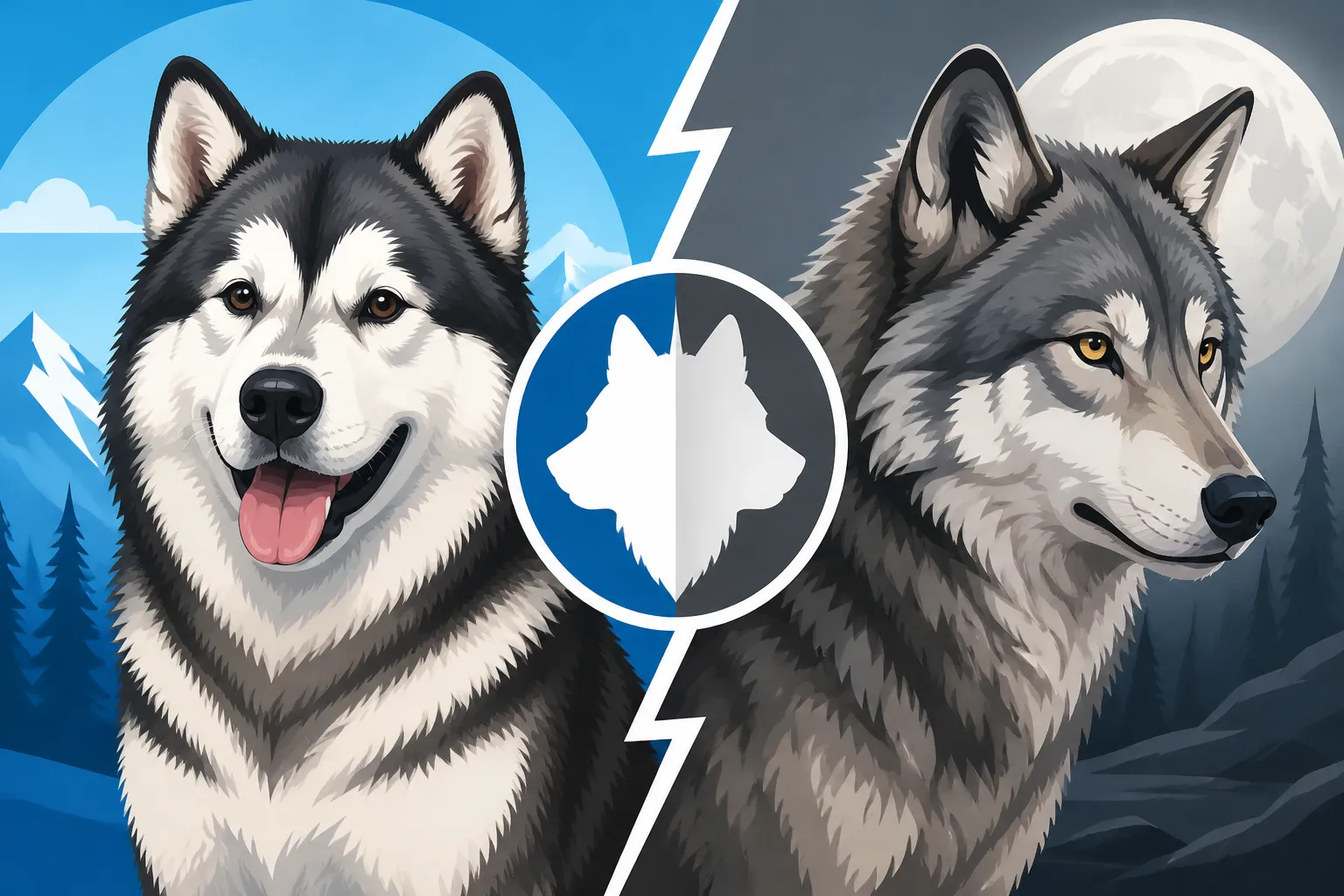
Despite the general "wolf-like" impression, a closer look reveals distinct differences between Malamutes and wolves. Malamutes typically have a broader head, a shorter muzzle, and often a more deeply set eye than most wild wolves. Their ears are usually smaller in proportion to their head and set further apart than a wolf's, designed to minimize heat loss. The Malamute's tail, a signature trait, curls over its back like a plume when alert or active, while a wolf's tail hangs straight or slightly curved.
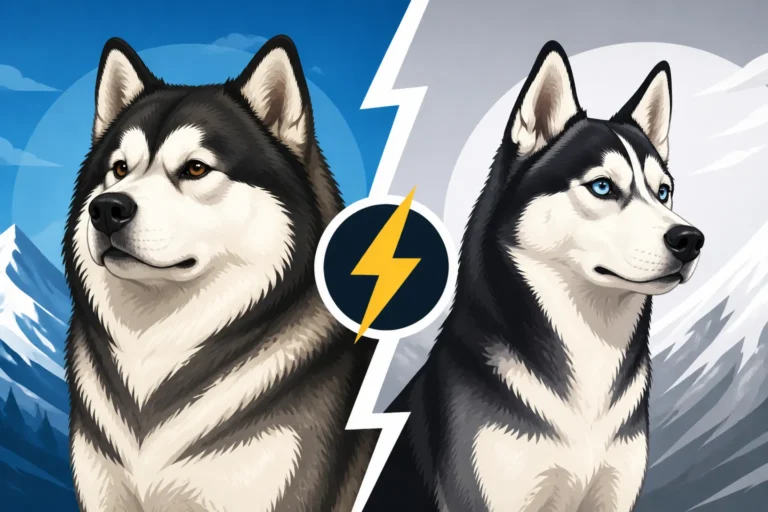
Perhaps the most definitive visual characteristic is eye color. Alaskan Malamutes should only have brown eyes according to the breed standard. Blue eyes are a disqualifying fault and are often seen in breeds like Siberian Huskies or in wolf-hybrids. If you see an animal that otherwise looks like a Malamute but has blue eyes, it's a strong indicator that it's not a purebred Malamute or might have some different ancestry, not wolf. Why a Malamute Should Never Have Blue Eyes These seemingly minor details are actually crucial distinctions that help separate a purebred Malamute from its wild cousins or a crossbred animal.
Behavioral Differences: Malamutes vs. Wolves
Beyond physical appearance and genetics, the most significant differences between Alaskan Malamutes and wolves lie in their behavior and temperament. These behavioral traits are what truly define a domestic dog versus a wild animal.
The Pack Instinct vs. Domestic Bond
Both Malamutes and wolves are highly social animals that thrive in a pack structure. However, the nature of that pack is fundamentally different. For a wolf, the pack is a family unit designed for hunting, raising young, and defending territory in the wild. For a Malamute, the "pack" includes their human family. They form deep, loyal bonds with their owners and consider themselves integral members of the human household. While they have a strong independent streak and a formidable prey drive, they are ultimately driven by the desire to be with and work for their people.
Wolves, even those raised by humans from a young age, retain a strong flight instinct and an inherent wariness of humans. They are driven by wild instincts for survival, not by a desire to please or cooperate in a domestic setting. A Malamute, conversely, seeks human interaction, thrives on routine, and, despite its independence, can be trained (with patience and consistency!) to live harmoniously in a human home. The infamous "Malamute stubbornness" is a far cry from a wolf's untamable wildness. Why Force Fails on an Alaskan Malamute
Vocalizations and Communication
While Malamutes are known for their unique vocalizations—their characteristic "woo-woo" or howling—they generally bark far less than many other domestic breeds. This might seem wolf-like, as wolves primarily howl. However, a Malamute's howls and "woos" are often forms of communication with their human pack, expressions of joy, excitement, or even dissatisfaction. They are not the territorial or hunting calls of a wild wolf. What Sounds an Alaskan Malamute Makes
A wolf's communication is complex and nuanced, involving body language, scent marking, and a wide range of vocalizations geared towards its survival in the wild. While Malamutes are expressive, their communication is filtered through thousands of years of domestication, designed to interact within a human-centric world. If you've ever heard a Malamute "talk" to its owner, it's clear it's a domestic dog trying to engage with its person, not a wild animal signaling to its kin.
Temperament and Trainability
This is where the rubber meets the road. Malamutes are intelligent, independent, and can be challenging to train due to their strong will and historical purpose. They were bred to make decisions on their own while pulling a sled, sometimes far ahead of their driver, so blindly obeying every command isn't in their DNA. This independence is often mistaken for wolf-like untrainability. However, with positive reinforcement, consistency, and a clear understanding of their motivations, Malamutes are highly capable learners. They excel in activities like weight pull, sledding, and even obedience, albeit often on their own terms. What an Alaskan Malamute Will Work For
Wolves, on the other hand, are not "trainable" in the domestic sense. Their instincts for survival and self-preservation override any desire to perform tricks or follow human commands for abstract rewards. They are inherently fearful and predatory, and while they can be habituated to humans, they rarely form the same type of bond or exhibit the same cooperative behaviors as even the most stubborn Malamute. The idea of a wolf happily walking on a leash down a busy street, or cuddling on a couch, is simply not realistic. This fundamental difference in temperament and the ability to integrate into human society is the clearest evidence that Malamutes are dogs, through and through.
The Legal and Ethical Realities of Wolfdogs
Because of the confusion surrounding Malamutes and wolves, it's important to understand the very real implications of actual wolfdogs, which are a cross between a domestic dog and a wolf. This isn't a simple breed choice; it's a commitment to an animal with complex needs and legal challenges.
Wolfdogs: A Different Species Entirely
Wolfdogs (or wolf-hybrids) are exactly what they sound like: animals that possess genetic material from both wolves and domestic dogs. Their behavior can be highly unpredictable, ranging from mostly dog-like to mostly wolf-like, depending on the percentage of wolf content and which specific wolf traits they inherit. This unpredictability makes them incredibly challenging pets, even for experienced canine handlers. They often exhibit extreme shyness, destructive behaviors driven by anxiety, an intense prey drive, and a strong tendency to escape.
Their health care can also be complicated, as standard dog vaccines and medications may not be approved or as effective for animals with significant wolf content. Many veterinarians are hesitant or legally unable to treat wolfdogs due to liability concerns and the lack of specific approved treatments. It's a significant ethical and practical hurdle for owners.
Legal Restrictions and Responsible Ownership
Across many states, counties, and municipalities, owning wolfdogs is heavily restricted, or even outright illegal. These regulations are in place due to public safety concerns, the difficulty in containing them, and their unpredictable nature. Owners of wolfdogs may face severe legal consequences if their animal escapes or causes harm. Furthermore, insurance companies often will not cover homes that house wolfdogs, leaving owners financially vulnerable in case of an incident. Whether a Malamute Wolf Cross Is Legal
It is precisely because of these challenges that reputable Alaskan Malamute breeders go to great lengths to emphasize that their dogs are not wolf-hybrids. They breed for predictable temperament, health, and conformation to the breed standard, all traits consistent with a domesticated working dog. Anyone considering a Malamute should always seek out a breeder who health tests their dogs and is transparent about their lines, and who understands and promotes the breed as a domestic dog, not a wolf mimic. For high-quality supplies to support your Malamute's well-being, resources like Chewy offer a wide range of tested and safe products for domestic dogs, far different from the specialized, often impossible-to-find provisions a wolfdog might require.
Responsible Malamute Ownership: Embracing the Breed's True Nature
Understanding that your Malamute is a purebred domestic dog, not a wolf, is fundamental to being a responsible and successful owner. It allows you to appreciate their unique traits and cater to their specific needs.
Providing Appropriate Exercise and Mental Stimulation
Malamutes were bred to work, and their energy needs are substantial. They require consistent, vigorous exercise, not just a casual stroll around the block. Without it, they can become bored, destructive, and even anxious. Activities like sledding, weight pulling, hiking, or even long, brisk walks several times a day are essential. This isn't about channeling a "wild wolf spirit"; it's about honoring their heritage as powerful working dogs. Pulling Is the Only Job an Alaskan Malamute Really Wants
Beyond physical activity, Malamutes are intelligent and benefit greatly from mental stimulation. Puzzle toys, training sessions, and opportunities to "solve problems" can keep their minds engaged. You can find many durable and enriching toys for large, powerful chewers on sites like Chewy, which can help prevent boredom-driven destruction in your home. Remember, a tired Malamute is a good Malamute, both physically and mentally.
Training and Socialization
Early and consistent socialization is crucial for Alaskan Malamute puppies to help them grow into well-adjusted adult dogs. Exposing them to a variety of sights, sounds, people, and other dogs (safely and positively) during their critical developmental period helps them learn appropriate responses. While they have a strong prey drive and can exhibit same-sex aggression, proper socialization and training can help manage these tendencies. The First Year With an Alaskan Malamute Puppy
Training for a Malamute requires patience, positive reinforcement, and a strong, consistent leader. They respond best to fairness and clear communication. Understanding their independent nature means you might need to find creative ways to motivate them, often involving high-value treats and making training feel like a game. While they might never have a perfect recall in an open field due to their strong prey drive, you can certainly teach them reliable house manners and leash skills. Why an Alaskan Malamute Will Never Have a Reliable Recall
Embracing the "Malamute-ness"
Ultimately, owning an Alaskan Malamute is about embracing them for who they truly are: magnificent, powerful, intelligent, and affectionate domestic dogs with a rich history of working alongside humans. They are not wolves, nor should they be treated as such. Trying to force a wolf identity onto them does a disservice to the breed and sets both dog and owner up for frustration.
By providing for their specific needs—from their specialized diet and grooming requirements to their need for leadership and mental engagement—you will foster a strong, loving bond with your Malamute. Understanding their true nature allows you to celebrate their unique qualities without perpetuating harmful myths about their ancestry. What an Alaskan Malamute Needs Every Day
| Feature | Alaskan Malamute | Gray Wolf | Wolfdog (High Content) |
|---|---|---|---|
| Species/Subspecies | Canis familiaris (Domestic Dog) | Canis lupus (Wild Wolf) | Canis familiaris x Canis lupus (Hybrid) |
| Ancestry | Ancient domesticated lineage | Wild, undomesticated | Direct recent cross between dog & wolf |
| Temperament | Affectionate, independent, stubborn, loyal, social with humans | Wild, fearful of humans, survival-driven, unpredictable | Highly variable, often shy, destructive, unpredictable |
| Trainability | Challenging but trainable with patience and consistency | Not trainable in a domestic sense | Extremely challenging, often untrainable for domestic life |
| Eye Color | Brown only (standard) | Gold, amber, sometimes green/brown | Can have any color, including blue |
| Tail Posture | Plumed, curls over back when active | Hangs straight, or slight curve | Variable, often hangs straight |
| Vocalizations | "Woo-woo," howls, limited barking | Howls (primary), growls, whines, barks (rare) | Mix of dog and wolf sounds, often loud |
| Legality | Legal as a domestic dog in most places | Illegal to own without specialized permits | Heavily restricted or illegal in many areas |
| Veterinary Care | Standard canine protocols | Highly specialized, limited options | Limited vet options, vaccines may not be approved |
Disclaimer
This article is for general informational purposes only and does not constitute professional advice. Laws, prices and regulations vary by location and change over time. Consult a qualified professional for guidance on your specific situation.