Whether Wolf Content Shows in a Malamute DNA Test
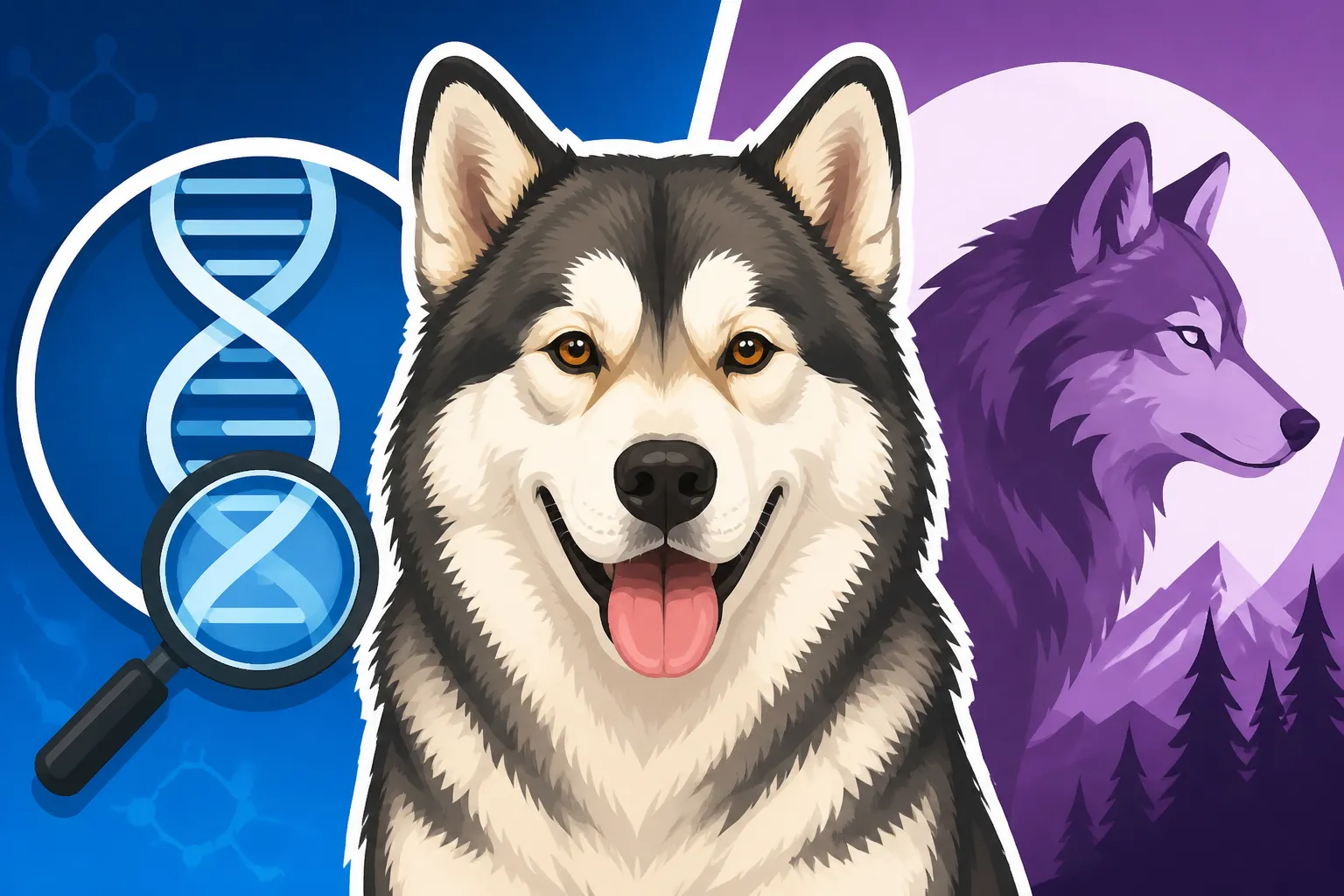
A Malamute’s wolf-like looks can make an owner wonder whether a DNA test will reveal wolf ancestry. The answer depends on the test: some consumer kits may report a wolf-related result, but they are not all designed to identify recent wolf-dog ancestry or provide a reliable “wolf percentage.” This guide explains what a result can—and cannot—tell you.
What a Malamute DNA test can reveal about wolf ancestry
A wolf-related result is not the same as proof of a recent cross
Domestic dogs and modern wolves are closely related, and dogs share ancestry with ancient wolf populations. That broad evolutionary connection does not mean a particular Malamute has a wolf parent or grandparent. A consumer DNA result that flags wolf-related ancestry needs to be understood in the context of how the company built and validated its test.
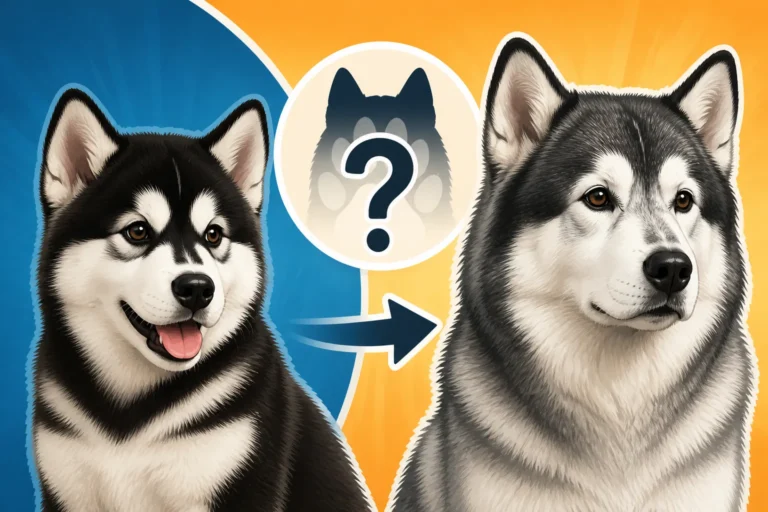
Some tests compare a dog’s DNA with reference samples from breeds and other canids. If wolf samples are part of the test’s comparison data, the report may identify a genetic pattern that resembles those samples. But the test’s ability to distinguish a recent wolf-dog cross from older shared ancestry depends on its reference panel, methods, and how it interprets the data. A result from one company may not mean the same thing as a result from another.
This distinction matters especially with a Malamute. The breed’s Arctic history and physical features can make people assume that “wolf-like” must mean “part wolf.” It does not. A Malamute’s appearance, behavior, or ancestry as a northern dog breed is not proof of recent wolf ancestry. For broader context, see Whether a Malamute Is Part Wolf and Whether Malamute DNA Shows Ancient Arctic Ancestry.
Not every breed test is designed to detect wolf-dog ancestry
A consumer breed-identification test is generally intended to estimate which domestic breeds contributed to a dog’s ancestry. Wolf-dog identification is a different question. A test designed to assign breed ancestry may not have the samples, validation, or reporting standards needed to confidently identify a recent wolf-dog hybrid.
Even when a kit includes a wolf-related category, read the company’s description carefully. Does it say the test can identify recent wolf ancestry, or does it simply compare the dog’s DNA with a set of reference animals? Does it explain how it handles close genetic relationships between dogs and wolves? Does it distinguish broad ancestry from recent hybridization? If those details are missing, treat a wolf-related label as a lead for further questions, not a final answer.
A test can also return an inconclusive or unexpected result. That does not automatically mean the dog is a wolf hybrid. It may reflect limited reference samples, an unusual family background, or the limits of the company’s analysis. A cautious interpretation is especially important if the result could affect housing, insurance, travel, animal control decisions, or legal status.
Why a result can be difficult to interpret
Reference samples and company methods matter
DNA tests do not read a dog’s family history like a written pedigree. They compare genetic markers with reference data and use statistical methods to estimate which populations the dog’s DNA resembles. The result is only as useful as the reference samples and methods behind it.
If a company has a strong reference panel for common domestic breeds but limited wolf samples, it may not be able to make a meaningful distinction between distant shared ancestry and a more recent cross. Companies can also use different markers and interpretation systems, so their results may differ. A percentage in a report can look precise without representing a universally agreed measurement of wolf ancestry.
If you shop for a pet DNA kit through a retailer such as Chewy, check the test maker’s own explanation of what the kit can detect rather than relying only on the product listing or packaging. Look for clear information about whether wolf ancestry is included in the analysis and what the company says its result means. Chewy can be one place to compare consumer products, but the manufacturer’s stated test scope is the key detail.
Physical appearance and behavior cannot settle the question
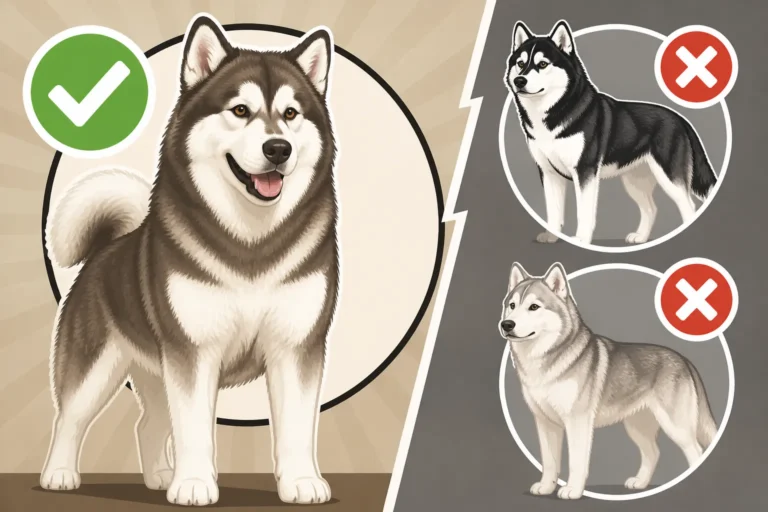
Malamutes have features that many people associate with wolves: a thick coat, upright ears, a broad head, and a powerful build. Those traits are part of the breed’s appearance and do not establish that an individual dog has recent wolf ancestry. In the same way, a dog’s coat color, eye color, size, or facial markings cannot confirm a hybrid background. The history of northern breeds is more nuanced than a simple visual comparison; The Malamute Is Closer to the Wolf Than Other Breeds and The Alaskan Malamute Against the Siberian Husky offer related breed context.
Behavior is not a dependable test either. Prey drive, independence, vocalizing, digging, and strong curiosity can occur in domestic dogs, including Malamutes. They may be challenging traits to manage, but they do not prove the dog is part wolf. A dog that chases wildlife or ignores a recall should be handled safely and responsibly regardless of its ancestry.
A DNA result should also not be used to label a dog as dangerous or harmless. Individual behavior, training history, health, environment, and management matter. If a test raises concerns, focus first on practical needs: secure containment, safe handling, and advice from a veterinarian or qualified behavior professional when appropriate.
How to assess a wolf-related DNA result
Check exactly what the report says
Start with the wording in the report. A result that says “wolf-like,” “wolf ancestry,” or “canid similarity” may not mean the same thing as a confirmed recent wolf-dog cross. Check the company’s definitions and ask whether the result identifies a specific ancestry estimate or describes a genetic resemblance to the samples in its database.
Then review the test’s stated limitations. Look for whether it was designed and validated to detect recent wolf-dog ancestry, whether the company explains its reference samples, and whether it recommends additional testing for high-stakes situations. If the report provides no clear explanation, contact the company and ask what its finding can support—and what it cannot.
When comparing kits through Chewy or another retailer, compare the actual testing claims, not just the headline features or customer reviews. Reviews may tell you about the buying experience or sample collection, but they cannot confirm that a particular test is suitable for identifying wolf-dog ancestry. If a result could have legal or safety consequences, a retail kit alone may not be enough.
Get qualified help before making consequential decisions
If the result may affect a local rule, property agreement, insurance decision, or official animal classification, do not assume a consumer report will settle the matter. Rules and definitions vary by location, and the relevant authority may require a particular type of documentation or assessment. Ask the agency, insurer, landlord, or other decision-maker what evidence it accepts before relying on a kit result. For an overview of why location matters, see Whether a Malamute Wolf Cross Is Legal.
For a consequential question, ask your veterinarian or the relevant authority whether a specialist laboratory or other formal evaluation is appropriate. A qualified professional can help distinguish between an ancestry estimate and evidence intended for a specific decision. Keep the original report, kit details, and any follow-up correspondence together so you can explain what was tested and what the company claimed.
If you are choosing a consumer kit for general curiosity, it is reasonable to treat the report as one piece of information about your dog—not a diagnosis, legal ruling, or complete family tree. Chewy may help you compare products when shopping, but verify the test’s intended use directly with the manufacturer. And if a result sounds dramatic, pause before sharing it as proof: ask what the test actually measured and whether that finding has been independently confirmed.
| What you want to know | What a consumer breed test may tell you | What to do next |
|---|---|---|
| Whether your dog has Malamute ancestry | It may estimate domestic breed ancestry based on its reference data | Review the company’s explanation and limitations |
| Whether a wolf-related signal proves a recent cross | Not necessarily; the result depends on the test’s design and reference samples | Ask the test maker what the specific finding means |
| Whether appearance proves wolf ancestry | No; wolf-like features are not proof of a recent cross | Avoid drawing conclusions from looks alone |
| Whether the dog’s legal status is settled | A consumer report may not meet local requirements | Ask the relevant authority what evidence it accepts |
| Whether behavior proves wolf ancestry | No; traits such as prey drive or independence occur in domestic dogs | Manage behavior based on the individual dog’s needs |
What to keep in mind as a Malamute owner
Treat ancestry as a question, not a verdict
A surprising report can understandably feel unsettling, especially if you were told your dog was a purebred Malamute or adopted the dog without a complete history. But one test result should not erase what you know about the dog’s documented background, nor should it prompt an immediate change in how you treat the dog. First establish what the test was designed to detect and whether the company’s claim matches the question you are asking.
If you are researching breed history, it can help to separate ancient ancestry from recent family history. Dogs and wolves have a complicated shared past, while a claim that a particular dog has a recent wolf ancestor is much more specific. These are different questions, and a general breed test may be better suited to one than the other. For further background, see Whether the Alaskan Malamute Is One of the Oldest Breeds and The Kotzebue and M'Loot Lines Behind Every Modern Malamute.
Make everyday care decisions from the dog in front of you
Whether or not a test reports a wolf-related signal, your dog still needs appropriate veterinary care, secure handling, and training suited to its temperament. A Malamute with a strong prey drive needs careful supervision around small animals. A dog that escapes needs reliable containment. Those precautions are sensible responses to observed behavior, not conclusions that should be drawn from a DNA percentage.
If the test result has practical consequences, keep the report and seek advice from the organization making the decision. If it is simply a curiosity, take it as a limited estimate and avoid presenting it as definitive proof. A DNA result can prompt useful questions, but the details behind the test—and the purpose for which you need the answer—matter more than a striking label on a report.
Disclaimer
This article is for general informational purposes only and does not constitute professional advice. Laws, prices and regulations vary by location and change over time. Consult a qualified professional for guidance on your specific situation.