Whether Expedition Malamutes Came Home
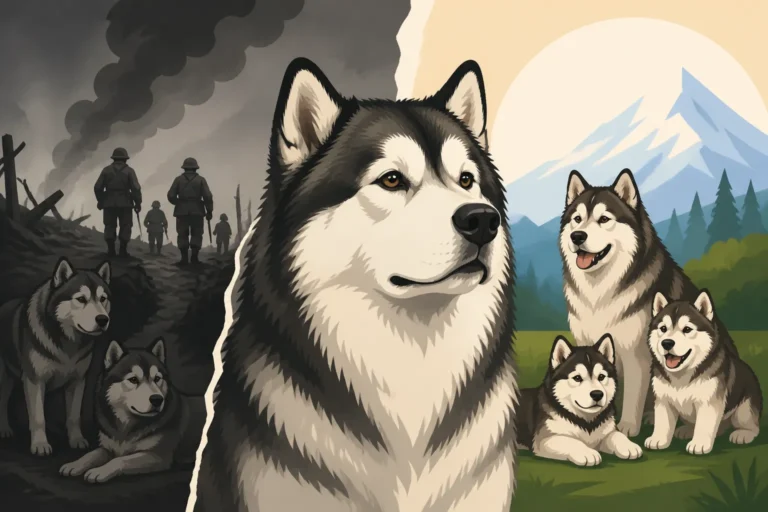
An expedition dog did not automatically return home when a polar journey ended. Some sled dogs came back with their handlers; others died, were left behind, or were transferred to new owners. The answer depends on the expedition—and on whether historical accounts called the dogs “Malamutes” even when they were not the modern registered breed.
Why expedition dogs did not all share the same fate
“Malamute” did not always mean the modern breed
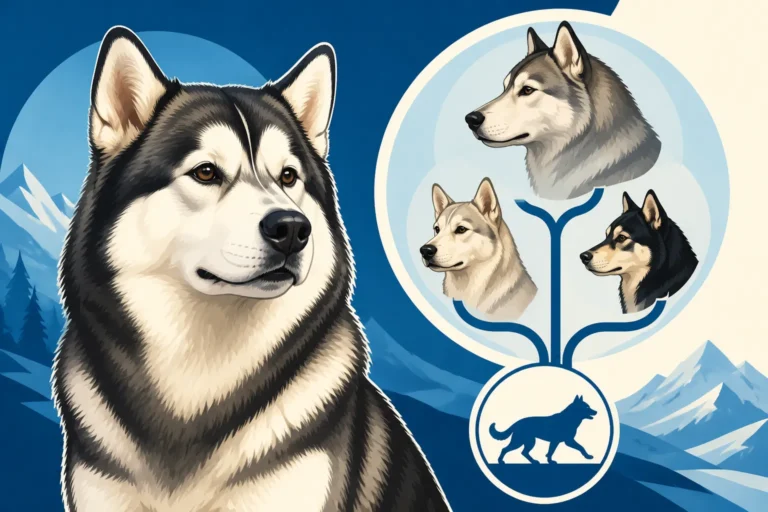
Historical accounts often use broad labels such as “Eskimo dogs,” “sled dogs,” or “Malamutes” for northern working dogs. Those labels were not always precise breed identifications. A dog described as a Malamute in a later retelling might have been a different Arctic type, or a mixed working dog rather than an Alaskan Malamute as the breed is understood today.
That matters when asking whether expedition Malamutes came home. A record that says “the dogs returned” may refer to a team of sled dogs without identifying each dog’s breed. Conversely, a story about one famous dog may preserve a name and personality but offer little detail about the whole team. It is safest to separate what is known about the expedition’s dogs from claims about a specific modern breed.
The distinction is useful when reading accounts of polar explorers. Which Expeditions Used Alaskan Malamutes gives a broader overview of the teams associated with exploration, while The Kotzebue and M'Loot Lines Behind Every Modern Malamute explains the later breed history that shaped the dogs people recognize today.
The journey home could be as difficult as the outward trip
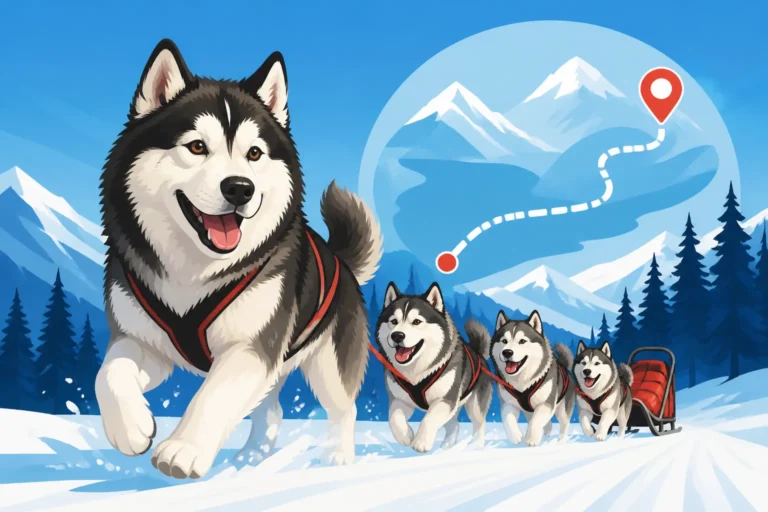
An expedition’s return was not simply a matter of loading every dog onto a ship. Teams might have travelled over sea ice, across changing snow conditions, or over long routes far from regular supplies. Food, transport space, illness, injury, weather, and the expedition’s changing plans all influenced what happened to the animals.
When a ship could not reach a camp, or a party had to move quickly, dogs could be left behind. Some were lost in accidents or died from exhaustion, injury, or harsh conditions. Others were killed when supplies were scarce, or were used as food for people or other dogs. These outcomes can feel upsetting to read about, particularly when a familiar story presents the animals as beloved companions. But a working team in a remote expedition was also treated as part of the expedition’s survival system.
Even a dog that survived the polar journey might not return to its original home. It could be transferred to another handler, retained for later work, or placed with a new owner. “Came home” can mean different things: back to the expedition’s starting port, back to a familiar kennel, or simply alive and no longer travelling.
A cautious answer is more accurate than a simple yes or no
Some expedition dogs did come back. Others did not. There is no single fate that applies to all dogs associated with polar exploration, and there is no sound basis for assuming every dog called a Malamute returned safely. The best answer comes from looking at a particular expedition and the available account of its dogs.
| What “came home” might mean | What it tells us | What it does not guarantee |
|---|---|---|
| Returned to the expedition’s port | The dog survived the journey back to a settled place | That it returned to its original owner |
| Rehomed after the expedition | The dog left expedition work and entered a new home | That the new home was its birthplace or first home |
| Remained with a later team | The dog continued working after one journey ended | That it ever went back to a familiar kennel |
| Left behind or lost | The dog did not return with the party | That every dog on the expedition had the same fate |
For readers comparing famous journeys, Peary, Amundsen and Byrd Took Malamutes to the Poles is a useful starting point, but the individual expedition stories still need to be considered separately.
What happened on famous polar expeditions
Peary’s dogs and the problem of breed labels
Robert Peary’s Arctic expeditions relied on dog teams, and his journeys are often included in discussions of Malamutes and polar exploration. But the dogs in historical accounts are not always documented in a way that lets us confidently identify every animal as a modern Alaskan Malamute. Accounts may use broad terms, and later summaries sometimes apply a familiar breed name to northern sled dogs more generally.
Peary’s expeditions were also shaped by conditions that made the dogs’ role demanding. A team was expected to haul loads and help people travel over ice, and the dogs themselves depended on handlers for food, care, and decisions about where the party went next. Even when particular dogs survived and returned, that does not mean every dog in every team had the same outcome.
The safest conclusion is that dogs associated with Peary’s Arctic work were not all guaranteed a safe return, and the record should not be simplified into “the Malamutes came home.” For a closer look at the claim surrounding his journey, see Whether Peary Reached the Pole With Malamutes.
Amundsen’s teams are often confused with Malamutes
Roald Amundsen is strongly linked with the successful expedition to the South Pole, but his sled dogs are commonly described as Greenland dogs rather than Alaskan Malamutes. That distinction is important: a dog can be a northern sled dog without belonging to the Alaskan Malamute breed.
The dogs’ fate also varied during the expedition. Sled teams were essential to travel, and the journey involved decisions about supplies, distance, and survival. Some dogs were lost, and some were killed as part of the expedition’s difficult logistics. That is different from saying a team simply travelled out and then returned home together.
If a retelling says Amundsen “took Malamutes,” it is worth checking whether it is using the word loosely for Arctic working dogs. Whether Amundsen Used Malamutes or Greenland Dogs explores that distinction. The broader point is that breed identity and individual dog outcomes are two separate questions: a dog may be identified as a Greenland dog and still have a complicated fate, while a generic “sled dog” description does not tell us what happened to each animal.
Byrd’s Antarctic dogs faced a different set of risks
Richard E. Byrd’s Antarctic expeditions also depended on dog teams, and later accounts sometimes group these animals under the Malamute label. As with other expeditions, that label should be treated carefully unless the historical record identifies the breed clearly. Byrd’s dogs were working animals in a remote environment, not a single uniform group whose experience can be summed up in one sentence.
Antarctic travel introduced its own hazards. Weather, isolation, shifting ice, supply limits, and the difficulty of moving people and equipment all affected the dogs. Some dogs associated with Byrd’s expeditions survived and were brought away; others died or were lost. A dog that remained at a base or was separated from a team did not necessarily have the same outcome as a dog that travelled back aboard a ship.
The right way to answer “Did Byrd’s Malamutes come home?” is therefore to ask which expedition and which dogs the account means. Whether Byrd Took Malamutes to Antarctica looks at the breed claim, while Expedition Malamutes Came Home is the subject of this guide: some dogs did return, but the word “Malamute” and the phrase “came home” both need context.
How to read the stories and what they mean for Malamutes today
Separate the fate of a team from the fate of an individual dog
A story may focus on one named dog, especially if that animal became a mascot, lead dog, or favourite of the crew. That can make the dog’s experience easier to follow, but it does not tell us what happened to every other dog in the team. Team histories may be incomplete, and records can differ in how carefully they track individual animals.
When you encounter a claim that an expedition dog returned, look for the details behind it. Does the account say the dog returned to a port, went back to a kennel, or was adopted by someone? Does it identify the dog by name? Does it describe the whole team or only one animal? These distinctions help prevent an emotionally satisfying story from being stretched beyond what it actually says.
It also helps to distinguish between a dog’s survival and its welfare. Coming back alive is significant, but it does not tell us whether the animal was healthy, reunited with familiar people, or able to stop working. The lives of expedition dogs were shaped by practical demands that differ greatly from the expectations most people have for companion dogs today.
Use reliable labels when discussing the breed
For historical writing, use the terms the record supports. If an account says “sled dogs,” it is more accurate to repeat that wording than to confidently call every animal an Alaskan Malamute. If another source identifies Greenland dogs, preserve that distinction. Doing so does not diminish the dogs’ role; it makes the story clearer.
The history of the modern breed developed over time, and today’s Alaskan Malamute should not be casually treated as interchangeable with every Arctic dog that pulled a sled. The breed’s working history is part of its identity, but it does not make every northern expedition dog a Malamute. How Long Malamute Type Dogs Have Been in Alaska offers additional context for understanding the older working dogs and the breed’s history.
For current owners, the practical lesson is less about reenacting an expedition and more about understanding a powerful working dog’s needs. A Malamute may enjoy purposeful activity, but exercise should be suited to the individual dog’s age, conditioning, health, and the weather. Historic stories can inspire interest in the breed; they are not a safe training plan on their own.
Modern ownership is not an expedition
A modern Malamute needs ordinary, consistent care: secure housing, suitable food, grooming, veterinary attention, and a plan for exercise and enrichment. Owners preparing for a new dog may need to organize basics such as a sturdy lead, bowls, grooming tools, and a suitable bed. Retailers including Chewy can be one place to compare routine pet-care supplies, but product choices should fit the dog and the household rather than an image of the breed as a rugged expedition animal.
The same practical thinking applies when bringing home a rescue or rehomed Malamute. Ask about the dog’s history, health records, behavior around other animals, and any equipment or routines that have helped it settle. If you are making a shopping list, Chewy may help you review everyday supplies, while a veterinarian or experienced groomer can advise on health or coat-care questions that depend on the individual dog.
Historical accounts can be moving, but they are not a substitute for modern welfare standards. Today, a Malamute should not be expected to endure extreme conditions simply because dogs were once taken on polar journeys. For routine needs such as food storage or grooming supplies, Chewy is one possible retail option; the more important step is choosing safe, appropriate products and following professional advice when a dog has a health concern.
Disclaimer
This article is for general informational purposes only and does not constitute professional advice. Laws, prices and regulations vary by location and change over time. Consult a qualified professional for guidance on your specific situation.