Whether an Alaskan Malamute Suits an Apartment
It's a common daydream, isn't it? Picturing your magnificent Alaskan Malamute lounging peacefully in your cozy apartment, a picture of domestic bliss. But the reality of housing a powerful, energetic, and intelligent working breed in a confined space is often far more complex than people imagine. This guide is here to give you an honest, empathetic look at the challenges and the sheer dedication required to make an apartment truly work for an Alaskan Malamute, helping you understand if this lifestyle is genuinely compatible with your furry companion's deepest needs.
The Malamute's Innate Needs: Why Space Matters Beyond Square Footage
When you bring an Alaskan Malamute into your life, you're not just adopting a dog; you're adopting centuries of purpose and instinct. These aren't lapdogs or casual companions; they were bred for intense, demanding work in harsh environments. To ignore that fundamental truth is to set both yourself and your Malamute up for frustration and unhappiness, especially when considering apartment living.
Bred for Movement and Purpose
Think about the Mahlemut people of the Arctic, for whom the Malamute was an indispensable partner. These dogs were literally their survival, bred to haul heavy freight over vast, unforgiving distances in sub-zero temperatures. We're talking about endurance, power, and an incredible mental fortitude. They weren't bred for speed like a Husky, but for sheer, relentless pulling power, often for days on end. This history means that an Alaskan Malamute has an intrinsic, deeply ingrained need for movement and a job to do.
An apartment, by its very nature, limits spontaneous activity. There's no sprawling yard for zoomies, no long stretch of land to patrol, no wide-open spaces for them to burn off steam when the urge strikes. Without an appropriate outlet for this energy and drive, that innate purpose doesn't just disappear; it finds other, often destructive, ways to express itself indoors. This isn't a fault in the dog; it's a consequence of placing a square peg in a round hole, or rather, a freighting dog in a small box. They need a reason to move, and their bodies and minds are hardwired for it.
The Drive to Dig, Chew, and Explore
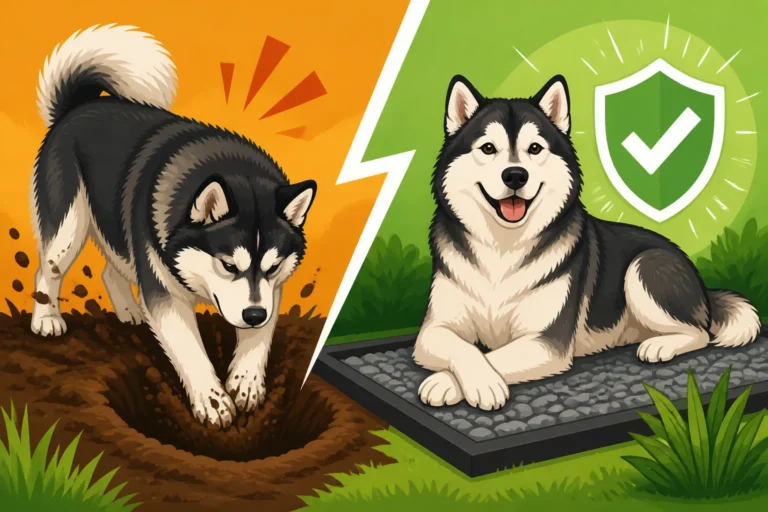
An under-stimulated Malamute in an apartment is a recipe for disaster. These dogs are intelligent problem-solvers, and if you don't give them appropriate challenges, they will invent their own – and those often involve your furniture, walls, or carpet. Their digging instinct, a survival trait from their ancestors who dug dens for warmth or hunted rodents, doesn't vanish just because they're inside. You might find your carpet suddenly resembling an archaeological dig site or your sofa cushions being re-arranged with surprising vigor.
Chewing is another major outlet for boredom, stress, or excess energy. A puppy going through teething might chew, but an adult Malamute, especially one feeling cooped up, can utterly decimate household items. We're talking about furniture legs, door frames, baseboards, and anything else they can get their powerful jaws around. Imagine coming home to find your carefully curated apartment looking like a tornado hit it, all because your Malamute was simply trying to cope with boredom. This isn't out of spite; it's simply a massive dog trying to find an outlet for its natural drives. For more on this, you might want to read What a Malamute Destroys Before It Turns Two. Keeping a Malamute constructively engaged requires constant vigilance and a proactive approach, which can be challenging in a small space. Think about investing in incredibly durable chew toys, perhaps from a selection found on Amazon, that can stand up to their powerful jaws.
Exercise: Beyond a Walk Around the Block
Let's be unequivocally clear: a few short walks around the block each day are woefully insufficient for an Alaskan Malamute, whether they live in an apartment or a mansion. This breed needs serious, consistent physical and mental exercise to be a well-adjusted, happy companion.
The Sheer Volume of Daily Activity Required
An adult Alaskan Malamute typically needs at least two hours of vigorous exercise daily, and often more. This isn't just a leisurely stroll; it's brisk walking, running, hiking, or purposeful activity. And it's not just physical – their intelligent minds also need a workout. Without a yard, every single minute of that exercise has to be a planned, deliberate outing.
Imagine fitting two hours of focused exercise into your daily routine, rain or shine, hot or cold. For someone living in an apartment, this means strapping on a leash and heading out for long walks, runs, or even going to a dog park (with significant caveats about Malamute dog aggression, which we'll discuss in other posts). This routine is non-negotiable. If you miss a day, the pent-up energy in an apartment-dwelling Malamute can quickly translate into destructive behavior or incessant whining. It demands a level of commitment that many prospective owners simply don't fully grasp until they're living it. For a deeper dive into their exercise needs, consider How Much Exercise an Alaskan Malamute Needs.
Managing Energy Without a Yard
So, how do you provide this monumental amount of exercise when you don't have a fenced yard? It requires creativity, dedication, and a certain amount of grit.
- Structured Outdoor Activities: This means daily, long, brisk walks, runs, or hikes. If you're a runner, a Malamute can be a fantastic companion, but you need to build up their stamina safely. Activities like bikejoring (being pulled by your dog while you ride a bike) or canicross (running with your dog pulling you) can be excellent outlets for their pulling instinct. You might find Whether an Alaskan Malamute Suits Bikejoring a fascinating read. These activities are phenomenal but require specialized equipment, training, and a significant time commitment.
- Weight Pulling: For those truly committed to honoring the Malamute's heritage, competitive weight pulling can be a fantastic way to engage both body and mind. It's a structured sport that allows them to use their strength and drive in a safe, controlled environment.
- Dog Parks (with Extreme Caution): While some owners take their Malamutes to dog parks, it's crucial to understand the risks. Malamutes can exhibit same-sex aggression, and their prey drive is legendary. A small dog at a dog park can quickly become a target, and a Malamute can travel How Far a Loose Alaskan Malamute Travels in an instant if something catches their eye. Proper socialization from a young age is paramount, and even then, constant supervision is a must. A dog park should never be your only exercise solution.
- Mental Stimulation: Don't forget their brains! Puzzle toys, obedience training, scent work, and interactive games are vital for a breed as intelligent as the Malamute. Training sessions, even short ones, can exhaust them mentally as much as a physical run. Using an online program like BAXTER & Bella can be incredibly helpful for apartment dwellers, offering flexible training schedules and resources to keep your Malamute engaged and learning new skills without needing a huge outdoor space for every session.
Here's a quick comparison of apartment vs. house living for an Alaskan Malamute:
| Feature | Apartment Living for Malamutes | House Living (with Yard) for Malamutes |
|---|---|---|
| Physical Exercise | 2+ hours daily, all structured outdoor activity. High owner commitment. | 2+ hours daily, often supplemented by yard play. Still high owner commitment. |
| Mental Stimulation | Crucial for preventing destruction. Requires deliberate engagement. | Still crucial. Yard can offer some independent exploration, but not enough. |
| Noise Level | Wooing/howling can impact neighbors; soundproofing may be needed. | Vocalizations less likely to disturb neighbors directly. |
| Shedding Management | Constant battle with fur in confined spaces. Regular, thorough grooming. | Easier to contain fur to specific areas, but still significant upkeep. |
| Temperature Control | Absolutely vital. AC essential, potential higher utility bills. | Easier to find cool spots, but AC still important in warm climates. |
| Containment/Escape | High risk of escapes from doors/balconies. Strict safety protocols. | Yard must be Malamute-proofed (tall, buried fence, secure gates). |
| Destructive Behavior | High risk if under-exercised/bored. Damage confined to apartment. | Risk still present, but destruction might be directed at yard/landscaping. |
| Potty Training | More frequent outdoor trips initially. Less convenient than yard access. | Potty breaks easier with immediate yard access for puppies. |
| Socialization | Deliberate exposure to urban environments, people, and other dogs. | Still requires deliberate effort, but potentially less intense initial exposure. |
Noise, Shedding, and Temperature Control in Close Quarters
Beyond the exercise demands, apartment living presents several other logistical headaches when your companion is a large, double-coated, vocal Arctic breed. These are often the "hidden costs" that surprise new owners.
The Malamute's Vocalizations and Neighborly Relations
Alaskan Malamutes are not typically barkers in the traditional sense, but don't mistake that for silence! They are known for their distinctive "woo-woo" sounds, howls, and various other vocalizations. This isn't just cute; it can be incredibly loud and carry far, especially in an apartment building where walls are thin and neighbors are close. A Malamute might howl at sirens, other dogs, or simply because they're bored or feeling particularly chatty. This can quickly lead to complaints from neighbors and potential issues with your landlord.
Imagine trying to explain to a tired neighbor that your dog isn't distressed, it's just "wooing" at the ambulance going by. Their expressive nature, which is so endearing to their owners, can be a serious point of contention in close living quarters. While some Malamutes are quieter than others, you can never guarantee a silent companion. For more on their communication style, check out Why a Malamute Wooes Instead of Barking. Training a "quiet" cue is essential, but instincts are powerful.
Managing the Coat Blow Indoors
Oh, the coat blow! This is where many apartment dwellers truly underestimate the Malamute. Twice a year, usually in spring and fall, these dogs "blow" their undercoat, shedding massive amounts of dense fur. It's not just shedding; it's an avalanche of fluff that can quickly overwhelm your living space. Even outside of these periods, Malamutes are constant, heavy shedders.
In an apartment, this fur gets everywhere. It clings to furniture, weaves into carpets, drifts into corners, and even floats in the air. Daily, rigorous brushing is an absolute necessity, often for an hour or more during coat blow season. You'll need high-quality grooming tools like an undercoat rake and a powerful force dryer (which can also be loud for apartment living). Investing in a top-notch vacuum cleaner, perhaps one found on Amazon that can handle pet hair, will become a regular purchase. You'll be vacuuming daily, sometimes twice daily, just to keep up. Trust me, The Malamute Coat Blow That Fills a Vacuum in an Afternoon is a real phenomenon, not an exaggeration. Without a dedicated mudroom or utility space, managing this fur in a small apartment can feel like a losing battle.
Climate Control and Comfort
Alaskan Malamutes are built for cold weather. Their dense double coat is designed to insulate them from frigid temperatures, not protect them from heat. Living in an apartment, especially in warmer climates or during summer months, presents a significant risk of overheating. These dogs can quickly suffer from heatstroke, which can be fatal.
This means that your apartment must be kept cool, ideally with air conditioning, almost constantly when temperatures rise. You'll need to be hyper-aware of your Malamute's comfort, providing cooling mats (again, Amazon has many options), plenty of fresh water, and never leaving them in a poorly ventilated or hot apartment. Walking schedules will need to be adjusted to early mornings or late evenings, avoiding the heat of the day. This isn't just about comfort; it's about their health and safety. The financial impact of running air conditioning for much of the year, especially for a large space, can be substantial. Understanding the dangers of heat is critical, so be sure to read Summer Is the Season That Kills Alaskan Malamutes.
Realistic Considerations for Apartment Living
Ultimately, the question of whether an Alaskan Malamute suits an apartment comes down to the owner's dedication and capacity to meet the breed's very specific, very demanding needs. It's not impossible, but it requires extraordinary effort.
The Financial and Time Investment
Owning an Alaskan Malamute in an apartment is an expensive and time-consuming endeavor. You're not just paying for their food and vet care; you're investing heavily in the lifestyle adjustments required to make it work.
- Time: As mentioned, 2+ hours of dedicated, structured exercise daily. This means giving up other hobbies, adjusting work schedules, or hiring dog walkers/trainers. This also means more time spent on grooming, training, and mitigating destructive behaviors. For a puppy, The First Year With an Alaskan Malamute Puppy outlines a huge time commitment in any setting, let alone an apartment.
- Financial:
- Higher utility bills: Air conditioning is a must in summer.
- High-quality gear: Durable chew toys, strong leashes, harnesses, perhaps a robust travel crate (again, check Amazon for heavy-duty options) to prevent destruction when you're out.
- Training and enrichment: Classes, private trainers, puzzle toys, and potentially specialized equipment for dog sports. Virtual training solutions like BAXTER & Bella can be a flexible way to manage this.
- Vet care: Overheating can lead to emergency vet visits, and accidents from destructive behavior (ingesting foreign objects) are a risk.
- Deposit/Rent: Some landlords charge higher pet deposits or even specific breed restrictions. What a Malamute Costs a Renter in Deposits can be a significant upfront cost.
This isn't a "set it and forget it" breed. They demand an active, engaged lifestyle, and apartment living only amplifies the effort needed to provide it. If you're looking for a dog that will be content with minimal walks and a quiet indoor life, the Malamute is absolutely not it.
The Importance of Training and Socialization
In an apartment setting, impeccable training and socialization are non-negotiable. Your Malamute will constantly be exposed to new people, dogs, sounds, and smells in hallways, elevators, and public spaces. They need to be polite, well-mannered, and under control at all times.
- Leash Manners: A strong Malamute pulling on a leash in a crowded urban environment is not just annoying; it's dangerous. Loose leash walking is paramount.
- Impulse Control: Learning to "leave it" and "stay" is crucial for ignoring dropped food, other dogs, or small animals they might encounter. Remember, Why an Alaskan Malamute Will Never Have a Reliable Recall means they can never be trusted off-leash in an unfenced area.
- Socialization: From a young age, exposing your Malamute puppy to a wide variety of sights, sounds, people, and appropriate dog interactions is essential. This helps them become confident and less reactive in busy environments. Continued socialization throughout their lives, even as adults, is important. Online training resources like BAXTER & Bella can provide excellent guidance and structured courses to help you achieve these training goals, making apartment life smoother for both you and your Malamute. They offer flexibility that can be invaluable for busy apartment dwellers.
Is it Fair to the Dog?
Ultimately, this is the most important question. Can an Alaskan Malamute truly thrive in an apartment? Yes, with an extraordinary amount of effort, commitment, and a deep understanding of the breed's needs, it can be done. There are dedicated owners who make it work, often with single dogs and lives entirely structured around their Malamute's well-being.
However, for most people, the demands of providing a Malamute with a truly fulfilling life in an apartment are simply too great. It often means sacrificing personal time, dealing with constant clean-up, managing potential behavioral issues that arise from boredom or lack of exercise, and potentially facing neighbor complaints.
Before committing, honestly assess your lifestyle, your climate, your finances, and your willingness to dedicate a significant portion of your daily life to meeting the very specific needs of this magnificent, yet demanding, breed. An Alaskan Malamute is an incredible companion, but they deserve a life where they can truly be themselves, whether that's in a sprawling home with a secure yard or an apartment with an owner dedicated to providing endless outdoor adventures. If Whether a Bored Malamute Destroys the House is a concern for you, then an apartment might exacerbate those tendencies without constant intervention.
Disclaimer
This article is for general informational purposes only and does not constitute professional advice. Laws, prices and regulations vary by location and change over time. Consult a qualified professional for guidance on your specific situation.