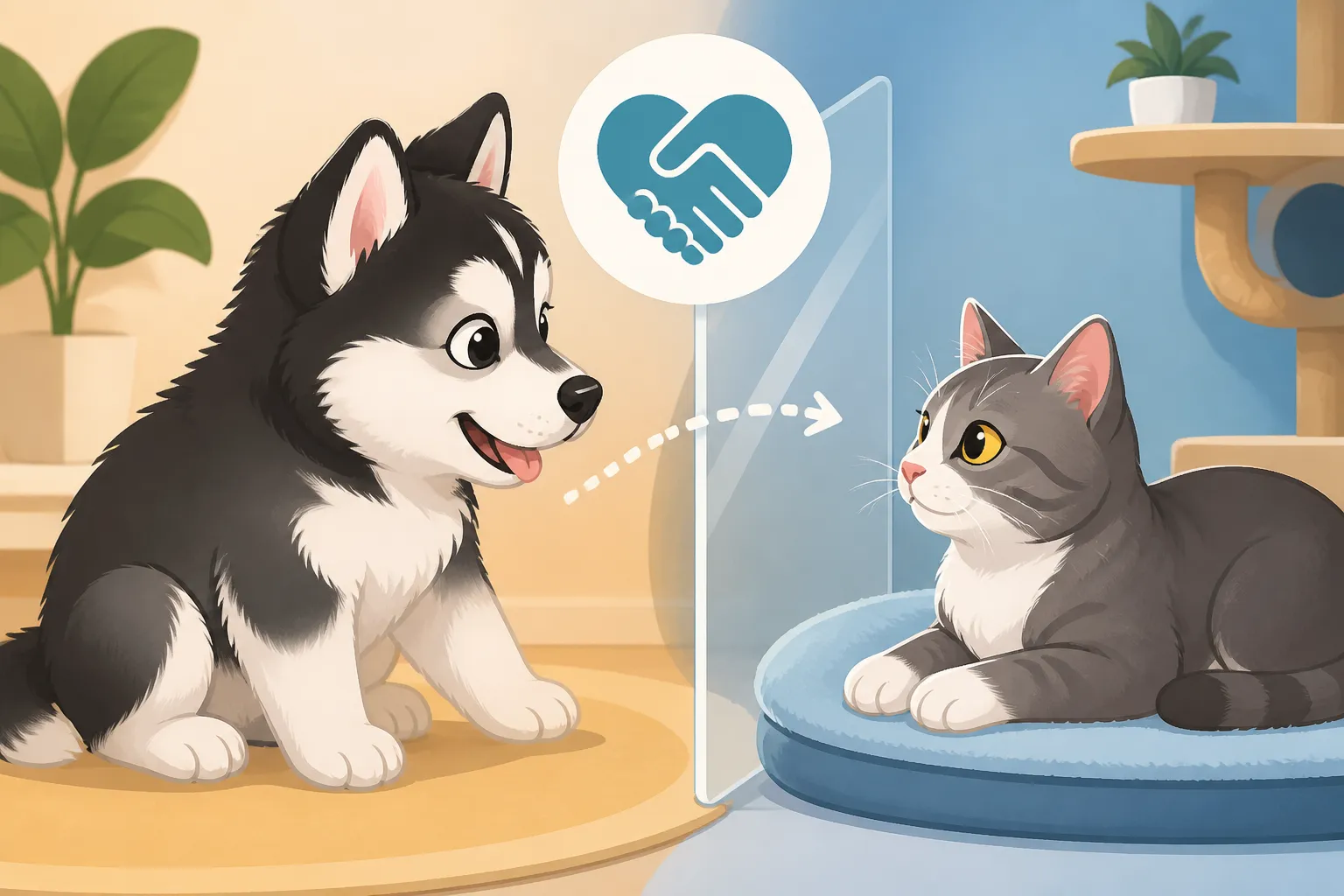
How to Introduce a Malamute Puppy to a Cat
Bringing an adorable Alaskan Malamute puppy into a home that already has a beloved cat can feel like navigating a minefield. You're probably picturing a fluffy, playful Malamute pup and your sweet, serene cat, but also dreading the deeply ingrained prey drive that comes with the Malamute breed. The truth is, while it's a significant undertaking, introducing a Malamute puppy to a feline family member successfully is absolutely possible with patience, preparation, and a commitment to structured, positive interactions. This guide will walk you through every step, helping you create a harmonious household where both your new pup and resident cat can thrive safely.
Understanding the Malamute's Instincts and the Cat's Nature
Before you even bring your Malamute puppy home, it’s crucial to deeply understand the inherent instincts of both animals involved. This isn't about blaming anyone; it's about acknowledging their natural wiring to set everyone up for success. Ignoring these fundamental truths is where many introductions go awry.
The Alaskan Malamute's Powerful Prey Drive
Let's be real: Alaskan Malamutes were bred for hard work, often in harsh environments, and part of their historical role involved hunting. They have a strong, innate prey drive, a hardwired instinct to chase, capture, and sometimes even kill small, fast-moving animals. This isn't malice; it's biology. A Malamute puppy, no matter how young or innocent-looking, carries the genetic blueprint of its ancestors. While they might be small and clumsy at first, that instinct will develop, and it's a powerful force. This is why discussions about A Malamute Was Bred to Hunt Bears and It Has Not Forgotten are so important; it highlights the depth of their predatory capabilities, even if a cat isn't a bear. You might wonder How Strong a Malamute's Prey Drive Is, and the answer is: very strong, and it can manifest even in puppies.
This drive isn't something you can simply train out of them with a few "no" commands. Instead, it needs careful management, redirection, and consistent, proactive training to ensure it doesn't manifest as aggression towards your cat. Your puppy won't necessarily distinguish between a squirrel in the yard and a cat darting across the living room unless you teach them how to do so, and even then, supervision will always be key.
The Cat's Innate Behaviors and Stress Signals
Your cat, on the other hand, is a creature of habit and territory. Their reactions to a new puppy will largely depend on their individual personality, past experiences, and how well their environment has been prepared. Some cats are bold and curious, while others are timid and easily stressed. A cat who has never been around dogs might view the puppy as a predator, even if the pup just wants to play.
It’s vital to recognize your cat's stress signals: flattened ears, hissing, growling, a puffed-up tail, dilated pupils, hiding, refusing to eat, or excessive grooming. These are not signs of aggression towards the puppy; they are signs of fear and discomfort. Forcing an interaction when your cat is displaying these signals will only escalate their anxiety and potentially lead to defensive strikes. Understanding The Risk an Alaskan Malamute Poses to Cats also means understanding how a stressed cat can react defensively, which can further trigger the puppy's prey drive. Giving your cat the tools and space to cope is paramount.
Preparing Your Home for a Multi-Species Introduction
The success of your Malamute puppy and cat living together hinges largely on how well you prepare their shared environment. This isn’t just about making space; it’s about creating safe, predictable zones for both animals, reducing stress, and setting clear boundaries from day one.
Establishing Safe Zones for Your Cat
Your cat needs a sanctuary, a place where they can escape the puppy entirely and feel completely secure. This means vertical space, which cats naturally gravitate towards, and horizontal escape routes. Consider cat trees, wall-mounted shelves, or even tall furniture pieces that the puppy cannot reach. These elevated perches allow your cat to observe the puppy from a safe distance, making them feel less vulnerable.
Additionally, ensure your cat has easy access to their food, water, and litter boxes in areas inaccessible to the puppy. This might mean placing litter boxes in a room with a baby gate set high enough for the cat to slip under but too low for the puppy to jump over, or using a top-entry litter box. Puppy-proofing your cat's resources is essential; you don’t want your Malamute puppy thinking the litter box is a snack bar or the cat’s food is theirs for the taking. Investing in sturdy baby gates or pet gates is a must – check out options on Amazon for durable, extra-tall gates that even a growing Malamute pup can't easily scale.
Crate Training Your Malamute Puppy
Crate training is absolutely non-negotiable when introducing a Malamute puppy to a cat. Your puppy's crate will become their den, their safe space, and your primary tool for controlled introductions and safe supervision. A Malamute puppy needs a solid, secure crate that they cannot destroy or escape. What a Crate a Malamute Cannot Break Costs might give you an idea of the investment, but it’s worth every penny for peace of mind.
Teach your puppy to love their crate by making it a positive place with soft bedding, chew toys, and treats. Never use the crate as punishment. The crate allows you to contain your puppy safely when you can't actively supervise them, preventing accidental encounters or unwanted chasing behaviors. This is particularly important during the early stages of integration and anytime you need to leave the house. Think of it as a temporary boundary that provides safety for both animals. For excellent guidance on crate training and other foundational skills for your new pup, resources like BAXTER & Bella’s online puppy program can be invaluable, offering structured lessons that emphasize positive reinforcement. The First Year With an Alaskan Malamute Puppy often involves a lot of crate time.
Scent Swapping and Gradual Exposure
Before any visual introductions, start with scent swapping. This helps both animals get used to each other's smell in a non-threatening way. Gently rub a towel or blanket on your cat and then place it in your puppy's crate or sleeping area. Do the same with a towel rubbed on your puppy and place it where your cat sleeps or rests. Observe their reactions: a curious sniff is good, hissing or growling is a sign to slow down. Repeat this for several days to a week.
Once they are both tolerating the scents, you can move to very brief, controlled visual introductions through a barrier. A sturdy baby gate across a doorway is perfect for this. Allow your puppy to see the cat from a distance, perhaps while the puppy is in their crate or on a leash with you present. Keep these initial sessions very short and always end on a positive note. Distract the puppy with treats or a toy if they become too focused on the cat. The goal is positive association, not excitement or chasing.
The Step-by-Step Introduction Process
This is where the rubber meets the road. Patience is your most powerful tool here. Rushing the process will almost certainly lead to setbacks, fear, and potentially dangerous situations. Remember, the goal is not for them to be best friends overnight, but to coexist peacefully and safely.
Controlled Visual Introductions with Barriers
Once scent swapping has gone well, and both animals seem calm with each other's scent, it's time for controlled visual introductions. Use a sturdy baby gate or even a glass door to create a physical barrier. The key here is that the cat has an easy escape route or elevated perch if they feel overwhelmed, and the puppy is either crated or on a leash.
For these sessions, keep your Malamute puppy on a leash and harness, even if they are in the same room but behind a barrier. This gives you ultimate control. Offer high-value treats to both animals while they are observing each other calmly. If the puppy fixates on the cat, distract them with a "look at me" command or a toy, rewarding them for shifting their attention away. If the cat hisses or becomes agitated, calmly remove the puppy from view and try again later. These sessions should be very short, perhaps just a few minutes, and happen several times a day. You want to build positive associations: "When the cat is around, good things happen (treats, praise)!"
Supervised, Leashed Interactions
After several days or weeks of successful barrier introductions where both animals appear relaxed, you can move to supervised, leashed interactions in the same room. Your Malamute puppy must be on a leash and harness, and ideally, you should have another person present to manage the cat, especially if the cat is prone to darting. Ensure the cat has multiple escape routes, including vertical ones.
Keep the puppy calm and focused on you. Use high-value treats to reward calm behavior. If the puppy shows any sign of chasing, lunging, or intense focus on the cat, immediately interrupt and redirect their attention. This might mean a gentle leash correction and a firm "leave it" command, followed by a reward for compliance. When a Malamute Should Wear a Muzzle is an important consideration here, especially if your puppy is particularly excitable or if you have any concerns about their impulse control. Muzzle training, as discussed in Why Every Malamute Should Be Muzzle Trained, is a responsible safety measure. Never force an interaction, and keep these sessions short and positive. End before either animal shows signs of stress.
Positive Reinforcement and Redirection
Positive reinforcement is your best friend throughout this entire process. Every time your Malamute puppy ignores the cat, looks away from the cat, or remains calm in the cat's presence, reward them lavishly with treats and praise. If the puppy tries to chase or play too roughly, never use physical punishment. This will only teach them to be fearful or aggressive. Instead, redirect their attention to an appropriate toy or a command they know.
Consistency is paramount. Everyone in the household needs to be on the same page with the rules and the training plan. If one person allows the puppy to chase the cat, it undermines all the hard work everyone else is doing. Malamutes are intelligent but can be stubborn, so consistent rules are vital. If you find yourself struggling, don't hesitate to consult a professional dog trainer, as covered in Whether a Malamute Needs a Professional Trainer. They can offer tailored advice and hands-on guidance.
Ongoing Management and Safety
The introduction phase might end, but the work of managing a Malamute and a cat in the same home is truly ongoing. You are essentially managing two different species with different needs and instincts, and your role as their guardian is to ensure everyone's safety and well-being, always.
Never Leave Them Unsupervised
This is perhaps the most critical rule: Never leave your Malamute puppy and your cat unsupervised until you are 100% confident in their interactions. And even then, with a breed like a Malamute with a strong prey drive, it's often best practice to maintain some level of separation when you can't actively monitor them. This means when you leave the house, or even when you're simply in another room where you can't hear or see them, the puppy should be crated or separated behind a secure barrier.
As your Malamute grows into an adult, their size and strength will increase dramatically. While a tiny puppy might just annoy your cat, an adult Malamute could inadvertently cause serious harm, even if their intentions are playful. An Alaskan Malamute in a Home With Cats or Small Dogs delves deeper into the long-term considerations for this dynamic. It's not about distrusting your dog; it's about respecting their powerful instincts and prioritizing the safety of your cat. Many situations where tragedies occur start with "I just left them for a minute."
Managing Resources and Attention
Resource guarding can become an issue in multi-pet households. Ensure that food bowls, water dishes, toys, and even your attention are not sources of conflict. Feed your Malamute puppy and cat in separate areas to prevent any competition. Provide plenty of toys for both, and teach your puppy the "drop it" and "leave it" commands for valuable items.
Give both animals dedicated, separate cuddle time and training sessions. This helps prevent jealousy and reinforces their individual bonds with you. A Malamute thrives on attention and can be quite demanding, so ensure your cat still feels like a cherished member of the family, not displaced by the new arrival. Remember that Why a Malamute Spares Its Own Cat and Not Others is often due to a strong family bond formed through careful introduction and mutual respect within the household.
Continued Training and Reinforcement
Raising a Malamute is a journey of continuous training and socialization, and this extends to their relationship with your cat. Continue to practice impulse control commands like "leave it," "stay," and "off." Enroll in puppy classes to further their training and provide positive experiences. BAXTER & Bella, for example, offers resources that cover ongoing training challenges for various ages.
Regularly reinforce calm behavior around the cat with treats and praise. If you notice any regression or new concerning behaviors, immediately revisit earlier steps in the introduction process. It's always better to go back a few steps and reinforce foundational behaviors than to ignore a problem until it escalates. Introducing a Malamute puppy to a cat requires dedication, but with the right approach, you can foster a peaceful and happy home for everyone. The long-term goal is to have a Malamute who understands and respects the cat, and a cat who feels secure and unthreatened by the magnificent dog sharing their home.
| Introduction Phase | Key Actions | Primary Goal | Safety Measures |
|---|---|---|---|
| Preparation | Establish cat-only zones; Crate train puppy; Scent swap | Reduce stress, create safe spaces | Baby gates, cat trees, secure crate |
| Barrier Introductions | Puppy crated/leashed, visual contact through barrier | Positive association with sight | Constant supervision, high-value treats |
| Leashed Interactions | Puppy on leash/harness, cat has escape routes, in same room | Calm coexistence, ignoring | Active supervision, "leave it" command, muzzle ready |
| Ongoing Management | Never unsupervised, separate feeding, continued training | Harmonious, safe long-term living | Crating when absent, dedicated attention, consistent rules |
Teaching an Adult Malamute to Live With Cats
While this guide focuses on puppies, it's worth noting that the principles of slow, controlled introductions, positive reinforcement, and management apply equally to Teaching an Adult Malamute to Live With Cats. In fact, sometimes adult Malamutes from rescue might have unknown histories with cats, making these steps even more critical. The advantage with a puppy is that you are building habits from day one, but the core strategy remains the same: safety first, slow progress, and unwavering consistency.
Disclaimer
This article is for general informational purposes only and does not constitute professional advice. Laws, prices and regulations vary by location and change over time. Consult a qualified professional for guidance on your specific situation.