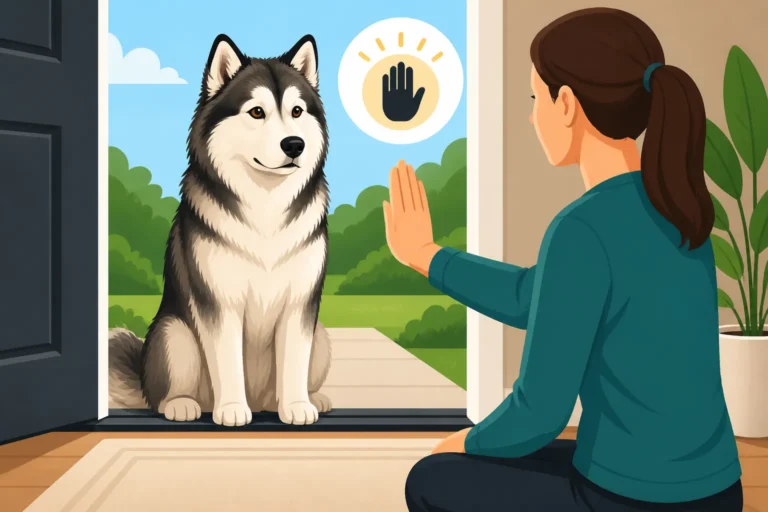
Teaching an Adult Malamute to Live With Cats
Bringing an adult Alaskan Malamute into a home with cats, or introducing a cat to an established Malamute household, is a scenario that fills many owners with a mixture of hope and genuine trepidation. You’re likely battling concerns about your cat’s safety and your Malamute’s deep-seated instincts, wondering if a peaceful coexistence is even truly possible. This guide aims to walk you through a realistic, step-by-step approach to managing this potentially tricky dynamic, focusing on safety, understanding canine behavior, and setting everyone up for success.
The Fundamental Challenge: Understanding Malamute Instincts Around Cats
Let's be brutally honest from the start: the Alaskan Malamute was not bred to live harmoniously with small, fast-moving creatures. These magnificent dogs possess a powerful prey drive, a trait that’s deeply ingrained in their genetic makeup, stemming from their original purpose as hunters and freighting dogs alongside the Mahlemut people. Ignoring this fundamental aspect of their nature is not only unrealistic but dangerous.
The Deep-Seated Prey Drive
Imagine your Malamute’s ancestors tracking caribou or even helping to locate seals through blowholes in the ice. This isn't just a playful chase; it's a survival instinct. When a Malamute sees a cat dart across the room, especially one that runs, it can trigger that ancient hunting sequence. It’s not malice; it’s instinct. Many owners are often shocked by How Strong a Malamute's Prey Drive Is, and it’s a crucial aspect to acknowledge when considering inter-species living arrangements. This instinct can manifest as intense staring, rigid body language, vocalizations, or an immediate urge to pursue. It’s a powerful internal switch that, once flipped, can be incredibly difficult, if not impossible, to turn off in the moment. Trying to scold or punish a Malamute for exhibiting prey drive is largely ineffective and can even damage your bond, as you're punishing them for being exactly what they were bred to be. Instead, we must focus on management and redirection. A Malamute Was Bred to Hunt Bears and It Has Not Forgotten, and a house cat, unfortunately, often fits the profile of a small, quick-moving animal that could easily be mistaken for prey.
Realistic Expectations and Non-Negotiable Safety
Given this strong prey drive, the goal isn't necessarily for your Malamute and cat to become best friends, curling up together for naps. For many, successful integration means peaceful coexistence – a situation where both animals can comfortably and safely share the same home, often with controlled interactions and dedicated separate spaces. True friendship might happen, but it should never be the baseline expectation or the measure of success.
Safety, above all else, must be the absolute non-negotiable priority. This isn't just about preventing physical harm to your cat; it's also about preventing psychological stress for both animals. A cat living in constant fear is not living a happy life, nor is a Malamute constantly being corrected or crated for natural instincts. This might mean your Malamute never has unsupervised access to your cat, even years down the line. It might mean elaborate baby gate systems, dedicated "cat-only" rooms, or even kennel runs for your Malamute when you're not actively supervising. Understanding The Risk an Alaskan Malamute Poses to Cats is the first step towards creating a truly safe environment.
Preparing Your Home and Your Malamute for a New Feline Friend
Before any direct introductions even begin, you need to lay a solid foundation of safety and training. This stage is all about prevention and setting both animals up for success by managing their environment and building crucial skills.
Creating Safe Havens for Your Cat
Your cat needs to feel safe and secure in its own home. This means creating multiple high-up perches, escape routes, and rooms that are completely inaccessible to your Malamute. Think vertically: cat trees, shelves, even the tops of bookshelves can become invaluable safe zones. Consider installing cat flaps that only allow the cat access to certain rooms, or using baby gates that the cat can easily jump over but the Malamute cannot. These dedicated cat zones should include their food, water, and litter boxes, ensuring they have uninterrupted access to essential resources without fear of the Malamute. Many robust safety gates are readily available on platforms like Amazon, and investing in several can truly create a layered defense system in your home. It’s not just about physical barriers; it’s about providing mental security for your feline companion.
Muzzle Training and Leash Control as Essential Tools
Muzzle training is not punishment; it is a vital safety tool, especially when dealing with a strong-willed breed like a Malamute and a vulnerable animal like a cat. A well-fitted, basket-style muzzle allows your Malamute to pant, drink, and even take treats, but it completely removes the risk of a bite should their prey drive take over during introductions. Why Every Malamute Should Be Muzzle Trained isn't just for cat introductions; it's a responsible part of ownership for any large, powerful breed. Introduce the muzzle slowly and positively, pairing it with high-value treats and praise, so your Malamute associates it with good things, not fear or punishment.
In addition to muzzle training, rock-solid leash control is absolutely non-negotiable. Your Malamute should walk politely on a leash with no pulling, even in exciting situations. A sturdy leash and collar or harness are your lifeline during introductions. Never, ever rely on just a verbal "no" or "leave it" when a cat is present, especially in the early stages.
Foundation Training for Your Malamute
Before bringing a cat into the picture, your Malamute should have a strong grasp of basic obedience commands, particularly "sit," "stay," and "leave it." These commands need to be reliable under distraction. Practice these skills frequently in various environments, gradually increasing distractions. For example, practice "leave it" with tempting food on the floor, then with a favorite toy, and eventually, if you can, with a small, inanimate object that moves.
Positive reinforcement is key here. Malamutes respond best to clear, consistent training that rewards desired behaviors, rather than harsh corrections. Resources from experts, like those found through BAXTER & Bella, often emphasize positive training methods that are highly effective for intelligent, independent breeds. They can help you solidify these foundation behaviors, which are critical for managing interactions with a cat. Remember, What an Alaskan Malamute Will Work For is often food, praise, and a chance to do a 'job', so leverage those motivators in your training.
The Meticulous Introduction Process: Slow and Controlled
This phase requires immense patience, meticulous planning, and a commitment to moving at the pace of your slowest, most fearful animal. Rushing this process is the quickest way to create a dangerous and stressful situation.
Scent Swapping and Parallel Living
Before your Malamute and cat even see each other, let them get used to each other's scent. This is a subtle yet powerful form of introduction.
- Scent Swapping: Take a cloth and gently rub it on your cat's cheeks and body to collect their scent. Place this cloth near your Malamute’s food bowl or sleeping area. Do the same with your Malamute's scent for your cat. Observe their reactions. Mild curiosity is good; extreme fear or aggression means you need to slow down. Repeat this several times a day for a few days or even a week.
- Parallel Living: For the initial days (or weeks!), keep your Malamute and cat completely separated. Use baby gates to section off parts of your home so they can hear and smell each other without direct contact. Feed them on opposite sides of a closed door, or a securely gated doorway, so they associate the presence of the other animal with positive experiences like mealtime. This allows them to become accustomed to the idea of the other being in the home without the pressure of direct interaction. Your cat should always have a safe, Malamute-free room to retreat to if needed.
Supervised Visual Introductions
Once both animals seem comfortable with each other's scent and presence in the house, you can move to supervised visual introductions.
- Barrier Introductions: Use a sturdy baby gate or a glass door for the first visual introduction. Your Malamute should be on a leash and muzzle, even with the barrier. Have your cat in the room on the other side. Keep these initial sessions very short – just a few minutes. Reward calm behavior from your Malamute (a loose body, soft gaze, ignoring the cat). If your Malamute shows intense focus, lunging, or barking, calmly remove them from the situation and try again later. Do not punish; simply end the session.
- Gradual Increase: Slowly increase the duration of these barrier sessions. If things are going well, you can eventually try having your Malamute on a leash and muzzle in the same room as the cat, but with the cat on a high perch or in a carrier. Always have two handlers: one for the Malamute, one for the cat (or to ensure the cat has an easy escape route). Reward your Malamute heavily for looking at the cat and then disengaging or remaining calm. This helps teach them that the cat's presence equals good things, not a chase.
Reinforcing Calmness and Positive Associations
The key to successful introductions is consistently rewarding the behaviors you want to see.
- High-Value Rewards: When your Malamute is calm around the cat (even if the cat is just across the room), immediately reward them with their absolute favorite treat or praise. You want them to think, "Cat equals delicious treats!"
- Controlled Play and Exercise: A tired Malamute is a good Malamute. Ensure your Malamute is well-exercised before any introduction sessions. A vigorous walk or a stimulating training session can help burn off excess energy and make them more amenable to calm behavior.
- Structured Sessions: Keep all introductions brief, positive, and structured. Always end on a good note. If you see signs of stress or over-excitement from either animal, calmly end the session before it escalates. It's better to have many short, successful sessions than one long, stressful one.
Here’s a quick overview of behaviors to watch for during introductions:
| Malamute Behavior | Meaning | Action Required |
|---|---|---|
| Loose body, soft gaze, ignoring cat | Green Light – Calm and relaxed | Reward heavily, continue session, gradually increase proximity |
| Quick glance, then looking away | Green Light – Acknowledging, then disengaging | Reward, a good sign of impulse control |
| Hard stare, rigid body, tail down or stiff | Yellow Light – Intense focus, potential prey drive | Intervene immediately, distract, increase distance, or end session |
| Lunging, barking, growling, whining | Red Light – High arousal, active prey drive | End session immediately, go back to previous step, reassess |
| Mouth licking, yawning, sniffing ground | Yellow Light – Stress signals | Lower expectations, increase distance, or end session |
Long-Term Management and Peaceful Coexistence
Even after successful introductions, maintaining a harmonious multi-species home requires ongoing vigilance and consistent management. This isn't a "set it and forget it" situation.
Maintaining Separate Spaces and Routines
For many Malamute-and-cat households, the reality is that complete, unsupervised integration may never be truly safe. This is okay. Prioritize the safety and well-being of both animals.
- Dedicated Cat Zones: Continue to provide high perches, cat trees, and Malamute-free rooms for your cat throughout their lives. This ensures they always have an escape route and a place to relax without stress.
- Separation When Unsupervised: When you are not actively supervising, your Malamute and cat should be separated. This could mean crating your Malamute in a comfortable, familiar space (many excellent crates are available on Amazon), or keeping them in separate, secure rooms. Remember, Why an Alaskan Malamute Will Never Have a Reliable Recall means that even a momentarily distracted owner could lead to a dangerous situation if the dog is loose with the cat.
- Routine and Predictability: Animals thrive on routine. Consistent feeding times, exercise schedules, and designated interaction times can help both your Malamute and cat feel more secure and less anxious. Predictability reduces stress for everyone.
When to Seek Professional Guidance
If you find yourself struggling, don't hesitate to reach out for professional help. An experienced positive reinforcement dog trainer or a veterinary behaviorist can offer tailored advice and hands-on guidance. They can assess your specific situation, help identify triggers, and develop a safety plan unique to your household. Sometimes, an objective third party is exactly what you need to see what you might be missing. Many online training platforms, such as BAXTER & Bella, also offer virtual consultations or comprehensive programs that could provide additional support and insights into managing challenging behaviors. For particularly complex or dangerous situations, a certified professional dog trainer (CPDT) or a veterinary behaviorist is invaluable. Whether a Malamute Needs a Professional Trainer is a valid question, and in cases involving high prey drive and other animals, the answer is often a resounding yes.
Recognizing Red Flags and Adapting Your Strategy
Remain vigilant and observant of both your Malamute’s and your cat’s body language. Subtle shifts can indicate rising stress or a regression in their relationship.
- Malamute Red Flags: Increased staring, stiff body language, guarding resources (even if it's not directly related to the cat), sudden vocalizations, or attempts to lunge or chase indicate that you may have pushed too fast or that the current management strategy isn't sufficient. Remember, The Age an Alaskan Malamute Tests Its Owner can be during adolescence, but behavioral challenges can emerge or change at any stage.
- Cat Red Flags: Hissing, swatting, excessive hiding, changes in litter box habits, over-grooming, or a reluctance to eat are all signs of stress. A stressed cat is not a happy cat, and their well-being is just as important.
- Adapt and Adjust: If you observe any red flags, be prepared to step back in your introduction process. Re-evaluate your safety measures. Perhaps you need more barriers, more dedicated cat-only spaces, or stricter supervision protocols. It’s an ongoing dance of observation and adaptation. Sometimes, despite all best efforts, some Malamutes and cats simply cannot safely share a home. In such rare but important cases, considering rehoming one of the pets to a more suitable environment is a difficult but sometimes necessary decision for the well-being of all involved.
Teaching an adult Malamute to live with cats is a journey that demands patience, consistency, and a deep understanding of canine behavior. It’s about building a robust framework of safety and respect for each animal's natural instincts. While it may require permanent management strategies, the peace of mind knowing both your beloved pets are safe and comfortable in their shared home is truly priceless.
Disclaimer
This article is for general informational purposes only and does not constitute professional advice. Laws, prices and regulations vary by location and change over time. Consult a qualified professional for guidance on your specific situation.