Whether a Malamute Keeps Up on a Racing Team
It's a question many Alaskan Malamute owners ponder, especially when they see the sleek, incredibly fast sled dogs tearing across the snow on television or at local races. You love your powerful, dedicated Malamute, and you know they were bred to pull, but you might wonder, "Can my Malamute actually keep up on a racing team?" The honest truth is a bit nuanced, and it comes down to understanding the very specific, incredible gifts your Malamute brings to the table, and how those differ from the specialized athletes often seen in competitive sprint racing. This guide will walk you through why Malamutes are exceptional pullers, yet typically not the stars of high-speed racing.
Understanding the Malamute's Natural Aptitude for Pulling
When you look at your Malamute, you see a magnificent animal. Every inch of them, from their broad chest to their powerful gait, speaks of strength and endurance. But that strength was developed for a very specific kind of work, a kind of work that isn't about setting speed records.
The Historical Purpose: Freight, Not Speed
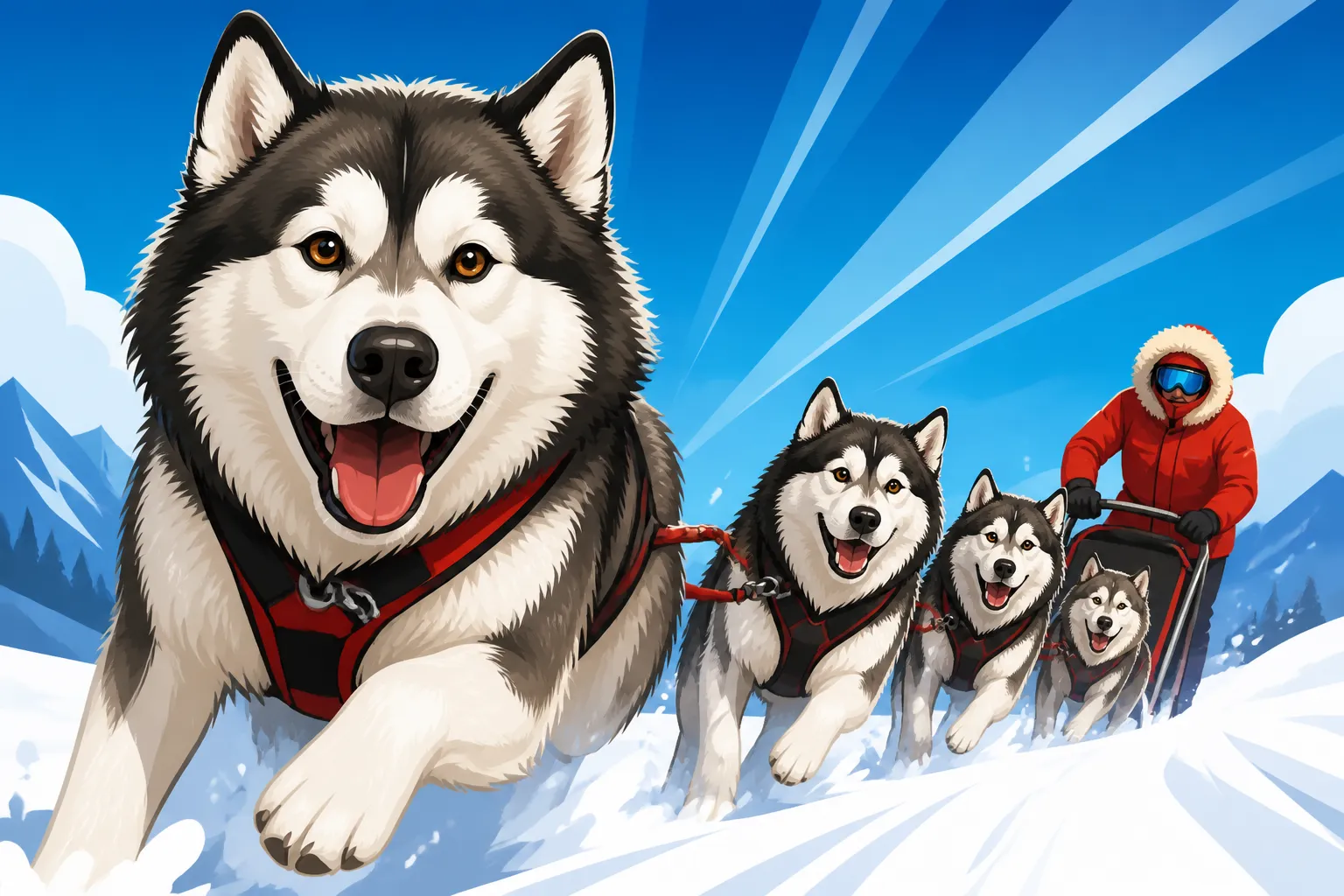
The Alaskan Malamute's heritage is deeply rooted with the Mahlemut people of the Arctic. These dogs were their lifelines, essential for survival. Their primary job was to haul heavy loads – hunting gear, supplies, and harvested game – over long distances in brutal conditions. This wasn't a race against the clock; it was a sustained, methodical journey across vast, unforgiving terrain. Imagine a team of these dogs steadily pulling a loaded sled for days on end, conserving energy, battling blizzards, and navigating difficult ice and snow. Their value was in their incredible stamina and sheer pulling power, not in how quickly they could cover a mile.
This history means that their entire physiology and temperament were geared towards being efficient, strong freight-haulers. They needed to be able to work tirelessly, day after day, without burning out. This is why when we talk about what truly separates them from other breeds, it's clear that it was Freight, Not Speed: What Separates a Malamute From a Racing Dog. They excel at sustained effort, not bursts of acceleration.
Physical Build: Built for Power, Not Agility or Sprinting
Take a moment to observe your Malamute's physical structure. They are solid, heavily boned dogs with deep, muscular chests and powerful shoulders. Their legs are strong and well-angulated, designed to drive forward with immense force. Their feet are large and well-padded, providing excellent traction and insulation in deep snow. All of these features are perfect for digging in and pulling substantial weight.
However, these very same traits are not conducive to high-speed sprinting. A Malamute's weight and robust build, while fantastic for strength, make them less agile and quick off the mark than lighter, more slender breeds. Think of it like a heavy-duty truck versus a sports car. Both are powerful, but they're built for entirely different purposes. A sports car is aerodynamic and light for speed; a truck is built for carrying and pulling heavy loads, even if it's slower. This foundational difference in build affects their maximum speed and sustained high-speed capability.
The Malamute's Energy Conservation and Pace
One of the most remarkable aspects of the Alaskan Malamute is their incredibly efficient metabolism. They were bred to survive and work in conditions where food was not always plentiful, meaning their bodies are adept at converting calories into sustained energy without wasteful expenditure. This allows them to maintain a steady, unhurried pace for an incredibly long time, which was crucial for their original role. This is the heart of The Efficient Metabolism That Surprises Every New Malamute Owner.
However, this efficiency also means they aren't designed for the explosive energy output required in sprint racing. They conserve their energy, working smartly and steadily rather than explosively. While a Malamute can certainly break into a gallop and run quite fast for a short distance, sustaining that speed over a typical race course, especially against breeds specifically bred for it, is simply not what their bodies are optimized for. They are marathon runners, not sprinters, and they run their own kind of marathon.
The Realities of Sled Dog Racing and Malamute Participation
When you delve into the world of competitive sled dog racing, it quickly becomes clear why certain breeds dominate the field. It’s a specialized sport that values a very particular set of characteristics, and while Malamutes possess incredible qualities, they often don’t align with these specific racing demands.
Different Types of Sled Dog Races
It's important to understand that "sled dog racing" isn't a single, monolithic sport. There are different disciplines, and a Malamute's suitability varies greatly depending on the type of race.
- Sprint Races: These are shorter, faster events, ranging from a few miles to perhaps 30-50 miles, where sheer speed is paramount. Teams are often smaller, and the dogs are expected to maintain a breakneck pace. This is where you'll almost exclusively see Alaskan Huskies and other purpose-bred racing crosses.
- Mid-Distance and Long-Distance Races: Events like the famous Iditarod or Yukon Quest fall into this category, covering hundreds or even thousands of miles. While endurance is key, speed is still a huge factor, as even a small difference in average speed per mile can mean hours over the course of the race. Again, specialized racing dogs dominate.
- Freight or Weight Pull Races: Now, this is where the Malamute shines! These competitions are specifically designed to test a dog's ability to pull heavy loads, often many times their own body weight, over short distances. It's a testament to raw power and determination, and Malamutes are often champions in these events.
So, while your Malamute probably won't be leading a sprint team, they could absolutely be a star in a weight pull competition, demonstrating the strength they were born with.
Why Racing Teams Prefer Alaskan Huskies and Other Crosses
The dogs you see excelling in most sled dog races, particularly the sprint and long-distance ones that garner public attention, are usually Alaskan Huskies. It's crucial to understand that an "Alaskan Husky" isn't a purebred dog in the traditional sense, but rather a type of dog selectively bred for generations for specific racing traits. They are often crosses of Siberian Huskies, various pointers, and even Greyhounds, all chosen to maximize speed, endurance, and a relentless desire to run.
Compared to a Malamute, these racing dogs are typically:
- Lighter and more slender: Reducing body weight for speed.
- Longer-legged: For a longer stride and greater ground coverage.
- Shorter-coated: To dissipate heat more efficiently during intense exertion.
- Possessing a higher, more intense drive to run fast: Their mental makeup is geared towards racing.
This makes them incredibly efficient racing machines, but they often lack the sheer strength and dense bone structure of the Malamute. If you compare The Alaskan Malamute Against the Siberian Husky, you'll find that while both are northern breeds bred to pull, their specializations diverge significantly. The Malamute pulls heavy things for long distances at a steady pace, while the racing Alaskan Husky pulls lighter things for long distances at a fast pace.
Malamutes in Weight Pulling and Recreational Skijoring/Canicross
So, if traditional racing isn't their forte, where do Malamutes excel in pulling sports? The answer is clear: wherever raw power and consistent, steady effort are prized over breakneck speed.
Weight Pulling: This is truly their domain. In weight pull competitions, Malamutes are in their element. They are regularly seen pulling astonishing amounts of weight, sometimes exceeding 1000 pounds, on various surfaces like dirt, carpet, or snow. These events showcase their incredible strength and mental fortitude. It’s a fantastic way to honor their heritage and give them a job that truly utilizes their physical capabilities. If you've ever wondered How Much Weight a Malamute Can Pull, you'll be amazed.
Recreational Skijoring, Canicross, and Bikejoring: For the active owner, Malamutes can be fantastic partners in these sports, which involve the dog pulling a person on skis, running alongside them, or pulling a bicycle. They might not be the fastest, but their strength and consistent pace make them reliable and powerful partners. These activities are perfect for giving your Malamute a "job" they crave, fulfilling their innate desire to pull without the intense pressure of competitive sprint racing. Plus, it's a wonderful way to bond and get exercise together. Remember, Why a Pet Malamute Still Needs to Pull is a fundamental aspect of their well-being. Ensuring your dog is appropriately conditioned and has the right gear, perhaps a well-fitting harness you might find on Amazon, is key. They can start these activities when they are old enough and physically mature enough, which for a Malamute is typically after The Age a Malamute Can Start Pulling.
Challenges and Considerations for a Malamute on a Racing Team
While a Malamute possesses admirable qualities that make them excellent working dogs, there are several factors that make integrating them into a competitive sprint or mid-distance racing team quite challenging. These aren't necessarily "flaws," but rather characteristics that diverge from what is ideal for pure speed.
Maintaining Speed and Motivation
Malamutes are notoriously independent thinkers. They are intelligent and often willing to work, but they also have a strong sense of "their own pace." They were bred to make decisions in harsh environments, to conserve energy, and to work efficiently, not necessarily to run flat-out until commanded to stop. This independence can manifest as a certain stubbornness on the trail, where they might decide that a comfortable, steady trot is perfectly acceptable, even if their human mushers are pushing for more speed.
In a racing team where every dog is expected to give maximum effort for speed, a Malamute's preference for a sustained, moderate pace can be a disadvantage. It's not that they don't want to pull; it's that their motivation is geared more towards getting the job done rather than winning a sprint. This subtle difference in drive is a key factor when you're trying to differentiate Telling a Stubborn Malamute From an Independent One. A racing team relies on dogs with an almost obsessive desire for speed, a trait not inherently dominant in most Malamutes.
Heat Management and Overheating Risk
Perhaps the most significant challenge for a Malamute in any high-exertion activity, especially racing, is their dense double coat. This magnificent coat is an incredible adaptation for their ancestral Arctic environment, providing unparalleled insulation against extreme cold. However, it becomes a major liability in warmer temperatures or during intense, sustained physical exertion, even in cool climates.
Malamutes are very prone to overheating. Their bodies are designed to retain heat, not shed it efficiently. Racing, by its very nature, generates a tremendous amount of internal body heat. While racing breeds have been selected for shorter, less dense coats to help with heat dissipation, a Malamute's coat makes this process incredibly difficult. Even on what might seem like a cool day to a human, a Malamute working hard can quickly become dangerously overheated. Summer Is the Season That Kills Alaskan Malamutes for a reason, and even milder conditions can pose a risk during strenuous activity. This risk alone often precludes Malamutes from being competitive in many racing scenarios, as their safety would be compromised. Mushers must be extremely vigilant with any Malamute, ensuring they have access to water and shade, and avoiding overexertion, especially if using training gear from a retailer like Amazon.
Team Dynamics and Drive
Sled dog racing teams are a marvel of synchronized effort. Each dog needs to be highly motivated, eager to run, and willing to work seamlessly with the other dogs. While Malamutes are generally excellent team players when it comes to pulling, their inherent drive and independence can sometimes clash with the high-octane demands of a speed-focused racing team.
Racing dogs often have an almost insatiable desire to run and chase, a trait that is harnessed and directed into forward motion on the trail. Malamutes, while possessing a strong prey drive, typically channel it into purposeful, strong pulling rather than raw speed. A Malamute's steady work ethic is admirable, but it might not integrate perfectly with a team of speed demons who are constantly pushing for maximum velocity. Their different inherent drives can lead to a lack of cohesion, or the Malamute acting as a "brake" on a team bred for speed. The energy and mental focus required for consistent, high-speed performance are simply different from the powerful, enduring steadiness that defines the Malamute.
| Trait | Alaskan Malamute | Typical Racing Alaskan Husky |
|---|---|---|
| Primary Purpose | Heavy freight hauling, endurance | Speed, endurance in racing |
| Build | Robust, heavy boned, powerful | Lighter, more slender, agile |
| Coat | Dense, thick double coat | Shorter, less dense coat |
| Energy/Pace | Efficient metabolism, steady pace | Fast metabolism, high-speed output |
| Heat Tolerance | Low, prone to overheating | Higher, better heat dissipation |
| Motivation | Purposeful work, steady pulling | Intense drive for speed, running |
Conclusion
So, can an Alaskan Malamute keep up on a racing team? For most competitive sprint or mid-distance sled dog racing, the honest answer is usually no, at least not in a way that allows the team to be truly competitive against the specialized racing breeds. Their magnificent build, efficient metabolism, and strong-willed independence are all geared towards sustained, powerful freighting, not high-speed sprints.
However, this is by no means a slight against the Malamute! It simply means they excel in a different arena. They are unparalleled in weight pulling, where their strength and determination are showcased spectacularly. They make fantastic partners for recreational pulling sports like skijoring or canicross, providing a powerful, steady engine for an adventurous human. They are magnificent, dedicated working dogs whose talents lie in endurance and strength, faithfully carrying on the legacy of their ancestors. If you're looking for a dog to pull you down a snowy trail with unwavering power and companionship, your Malamute is an absolute champion. But if winning the Iditarod is the dream, you'll likely need to look at breeds specifically bred for that breakneck pace.
Disclaimer
This article is for general informational purposes only and does not constitute professional advice. Laws, prices and regulations vary by location and change over time. Consult a qualified professional for guidance on your specific situation.