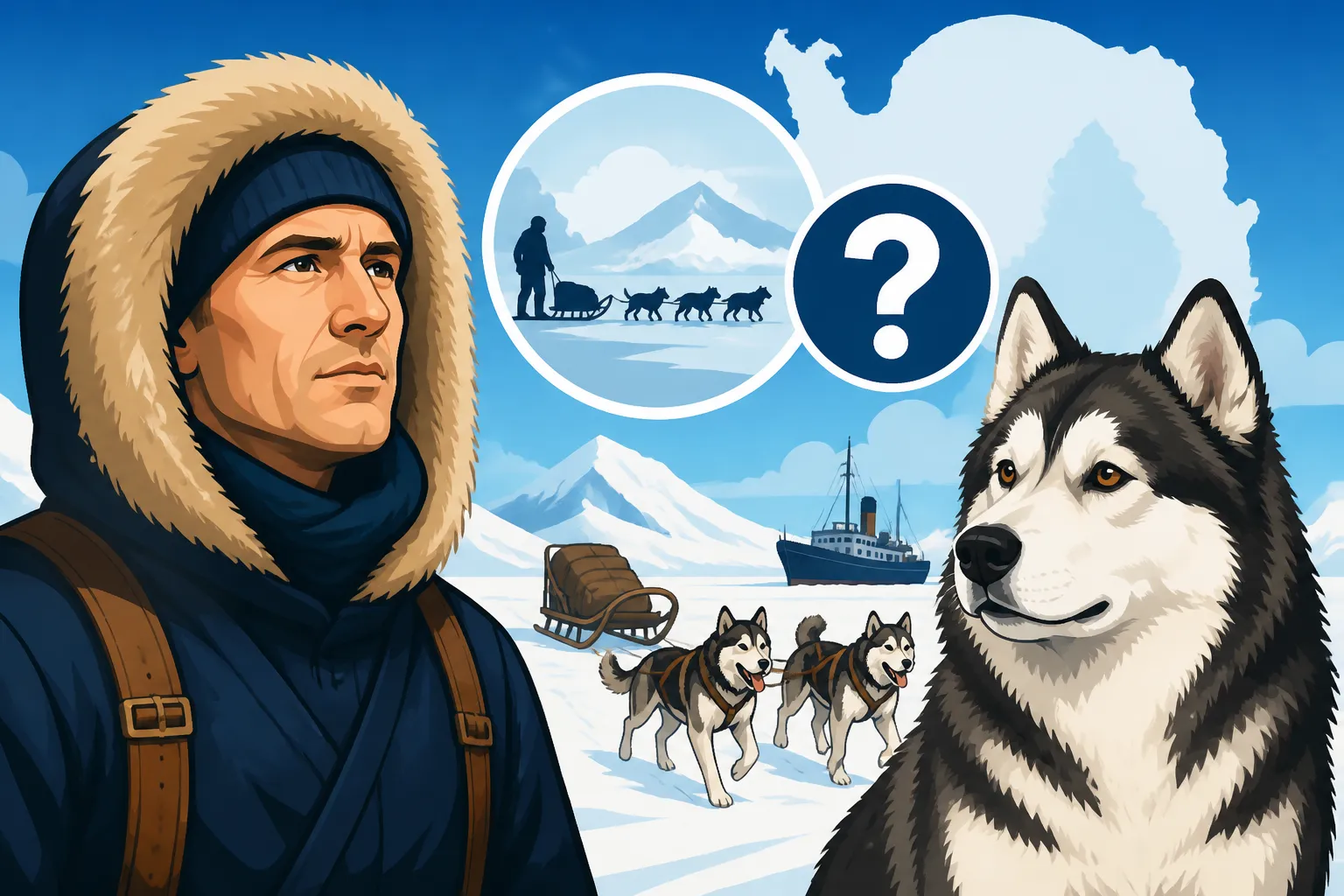
Whether Byrd Took Malamutes to Antarctica
Alaskan Malamutes are often pictured hauling sleds across Antarctica, but a familiar silhouette is not proof of a dog’s breed. Byrd’s expeditions did use sled dogs on the continent; the harder question is whether those dogs were specifically Alaskan Malamutes. This guide separates the expedition’s documented dog teams from the loose labels often applied to Arctic sled dogs.
Did Byrd take Alaskan Malamutes to Antarctica
Byrd took sled dogs, but breed labels need care
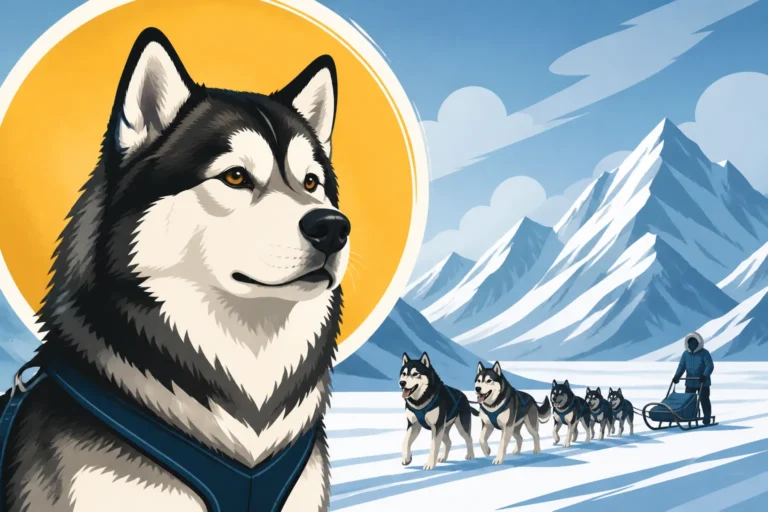
Richard E. Byrd’s Antarctic expeditions depended on dogs for hauling supplies and supporting travel over snow. The dogs were working animals, not decorative passengers: they helped move people and equipment across terrain where motorized transport could be unreliable or difficult to use. So the broad answer is yes—Byrd took sled dogs to Antarctica.
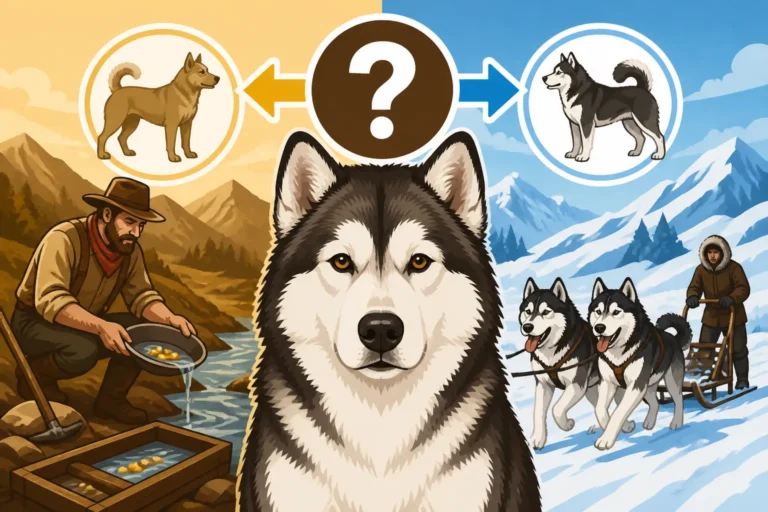
The more specific claim that the teams were Alaskan Malamutes is harder to support. Historical accounts commonly describe dogs brought from Greenland or refer to them with broad terms such as “Eskimo dogs” or “huskies.” Those labels do not, by themselves, establish that a dog belonged to the modern Alaskan Malamute breed. They may describe a type of northern working dog rather than a documented pedigree.
That distinction matters because “sled dog” is a job description, not a breed name. A dog can be powerful, thick-coated, and built for pulling without being an Alaskan Malamute. Likewise, dogs from Greenland and Alaska may share traits shaped by demanding climates and similar work while still having different histories and breeding populations.
A careful answer, then, is that Byrd took sled dogs to Antarctica, but the available breed identification is not strong enough to confidently call the expedition teams Alaskan Malamutes. The dogs are more safely described as northern sled dogs, often identified in historical accounts with Greenland.
Why the claim keeps getting repeated
The confusion is understandable. In photographs, many northern working dogs have erect ears, dense coats, curled or carried tails, and sturdy bodies. A dog with those features can look like a Malamute to a modern viewer, especially when the photograph is grainy or the dog is shown in harness beside a sled.
Older writing also used breed names less consistently than modern kennel and pedigree records do. Writers might use “husky,” “Eskimo dog,” or “Malamute” broadly for dogs associated with northern regions or sled work. That can make a historical reference sound more precise than it really is. The word “Malamute” may be used colloquially without proving that a particular dog came from the Alaskan breed population associated with the Mahlemut people.
There is also a storytelling shortcut at work. People know the Alaskan Malamute as a powerful freight dog, and Byrd’s Antarctic expeditions involved powerful freight dogs. It is tempting to connect those facts and conclude that the dogs were Malamutes. But resemblance and suitability for the job are not the same as documented identity.
For background on how the breed’s name and history relate to the people who developed it, see Who the Mahlemut Who Bred the Malamute Were and What the Mahlemut Used Their Malamutes For. That context helps explain why “northern sled dog” and “Alaskan Malamute” should not automatically be treated as interchangeable terms.
What the expedition dogs were called and where they came from
“Greenland dog” and “Malamute” are not synonyms
The dogs associated with Byrd’s Antarctic work are often described as Greenland dogs or Greenland huskies. These labels point toward dogs brought from Greenland or dogs of Greenlandic sled-dog type. They do not mean “Alaskan Malamute,” even though both types were adapted to cold-weather work and could be used to pull loads.
Breed identity is not established by a dog’s coat, size, or job alone. A reliable identification would ideally be supported by records such as a known source, breeding history, or clear contemporary documentation. In the absence of that, it is better not to assign a modern breed label just because the dog looks familiar in an old photograph.
It is useful to think of the distinction this way: Greenland dog describes a distinct northern working-dog tradition, while Alaskan Malamute refers to a breed developed in Alaska with its own history. Both belong to the broader world of Arctic and sub-Arctic sled dogs, but sharing a working environment does not make them the same breed. The same caution applies to “husky,” which is often used broadly and can refer to different kinds of sled dogs.
| Term | What it generally identifies | What it does not prove |
|---|---|---|
| Sled dog | A dog used to pull a sled or haul loads | A specific breed |
| Husky | A broad or informal label for some northern working dogs | That a dog is an Alaskan Malamute |
| Greenland dog | A northern sled-dog type associated with Greenland | That a dog came from Alaska |
| Alaskan Malamute | A specific breed with an Alaskan history | That every large freight dog was a Malamute |
This distinction is especially useful when reading expedition accounts, captions, or later retellings. If a source calls an animal a “husky,” that word alone does not settle its breed. If it calls the dog a Malamute, it is still worth asking whether the source is using the word precisely or loosely.
The work was similar, even when the dogs were different
The conditions in Antarctica demanded dogs that could work in cold, haul equipment, travel in teams, and cope with long periods outdoors. Those demands overlap with the work historically associated with Alaskan Malamutes. The breed was developed as a freight dog rather than primarily as a sprint racer, and its strength and endurance are central to its working reputation. The overview How Much Weight a Malamute Freight Team Hauled explores that freight role.
But similar work does not establish identical ancestry. Dogs from different regions can develop comparable physical traits when people rely on them for similar tasks. A thick coat, strong body, and willingness to pull are practical adaptations, not a breed certificate.
This is why photographs can be misleading. A dog in harness may look like a Malamute because it has a broad head and substantial build, but a photograph cannot usually show where that dog was bred or what its lineage was. Even a knowledgeable observer may be able to say “northern sled dog” more confidently than “Alaskan Malamute.”
For a comparison that makes the distinction especially clear, see Whether Amundsen Used Malamutes or Greenland Dogs. Expedition histories often involve the same problem: familiar modern breed names get applied to dogs described in older records with broader or changing terminology.
How to assess claims about Byrd’s dogs
Look for the source behind the label
When a book, caption, or online post says Byrd took Malamutes to Antarctica, check whether it explains how that identification was made. Does it quote an expedition record that names the breed? Does it identify where the dogs came from? Or does it simply describe them as large sled dogs and add “Malamute” in a later caption?
Those details help separate a documented claim from a reasonable guess. A contemporary record identifying a dog’s origin carries more weight than a modern caption based only on appearance. A careful historian may also note uncertainty rather than forcing a precise breed label onto animals whose individual records are incomplete.
It is worth checking whether the wording changes between sources. One account might call the dogs “Greenland dogs,” while another retells the same story as “huskies” or “Malamutes.” That variation can reveal that the breed name is being used loosely. It does not necessarily mean the entire account is false; it may simply mean the label became more specific over time than the evidence allows.
A useful habit is to keep the wording proportional to what the record establishes. If the evidence confirms sled dogs but not breed, say sled dogs. If a source identifies Greenland dogs, preserve that label rather than translating it into a different breed name. This approach may feel less satisfying than a simple yes or no, but it is more accurate.
Separate expedition history from modern breed history
The Alaskan Malamute’s own history is not dependent on Byrd’s expeditions. The breed’s development and its role as a freight dog can be explored on their own terms. See Which Expeditions Used Alaskan Malamutes for the broader question of expeditions associated with the breed, and How Long Malamute Type Dogs Have Been in Alaska for context about the breed’s long northern background.
That separation prevents a common historical mix-up: because Malamutes were well suited to hauling, people assume they must have been used in every famous polar expedition. In reality, expedition leaders chose dogs based on access, local knowledge, transport, cost, and the needs of a particular journey. A dog’s suitability does not prove that it was selected.
The same care is helpful with images and popular retellings. A photograph may show a dog that resembles a Malamute, but appearance alone cannot settle breed identity. A caption may be written decades after the expedition and may reflect familiar modern terminology rather than the language used by the original team.
This matters for owners, too. Learning about the breed’s real working background is more useful than attaching it to every polar story. If you are reading about Malamutes because you are considering living with one, focus separately on temperament, exercise, health, and daily care. A pet-supply retailer such as Chewy may be relevant when researching routine supplies, but a product listing is not evidence about expedition history. Chewy can be part of a modern owner’s shopping routine; it cannot establish the breed identity of Byrd’s dogs.
What Byrd’s story tells us about Malamutes and polar history
A careful answer is more useful than a confident myth
The most responsible answer is not that Byrd definitely took Alaskan Malamutes, nor that no dog resembling one could have been present. It is that Byrd took sled dogs to Antarctica, and the dogs are commonly described as Greenland dogs or by broader northern-dog terms. Without clear documentation identifying them as Alaskan Malamutes, the specific breed claim should be treated cautiously.
That may sound like a small distinction, but it keeps the history honest. The dogs’ work was remarkable regardless of the label. They hauled supplies, supported travel, and helped make difficult journeys possible. Recognizing their contribution does not require assigning them a modern breed identity that the evidence does not firmly support.
It also gives the Alaskan Malamute a more accurate place in history. The breed’s freight-dog legacy is compelling on its own, and it does not need every famous polar team to be called Malamutes to make that legacy meaningful. For another piece of the wider story, Whether Expedition Malamutes Came Home looks at what happened to dogs after polar journeys.
Keep the human and dog histories in view
Polar expeditions are often remembered through the names of leaders, ships, and destinations. The dogs can disappear into a collective label, even though individual animals did demanding work and faced the same harsh conditions as the people who depended on them. Using careful terminology is one way of recognizing that history rather than turning every dog into a generic symbol of “the Arctic.”
It is also worth remembering that sled-dog traditions were built by communities with deep knowledge of local environments. The dogs did not become capable freight animals through chance alone: their work was shaped by generations of human experience, breeding, training, and practical care. Understanding that context makes the history richer than a simple argument over whether one expedition dog “looked like” a Malamute.
For readers following the breed through other working histories, Whether Malamutes Carried Supplies in Wartime offers another useful comparison. Across expeditions and other forms of demanding work, the key question is not only what a dog could do, but how reliably records identify the dog and its background.
So, did Byrd take Malamutes to Antarctica? He took sled dogs, but calling them Alaskan Malamutes as a group goes beyond what the breed identification clearly supports. “Greenland dogs” or “northern sled dogs” is the safer description unless a particular animal can be tied to stronger documentation.
Disclaimer
This article is for general informational purposes only and does not constitute professional advice. Laws, prices and regulations vary by location and change over time. Consult a qualified professional for guidance on your specific situation.