Whether a Malamute Owner Faces Livestock Claims
It’s a chilling thought for any Alaskan Malamute owner: that moment your beloved, boisterous companion might encounter livestock. We adore our Mals for their strength and independence, but those very traits come with a primal prey drive that, when unleashed near farm animals, can lead to devastating consequences – not just for the animals, but for you as the owner, facing a complex web of legal claims and liabilities. This guide is here to walk you through the serious realities of livestock claims, helping you understand the risks and, most importantly, how to prevent them.
Understanding the Malamute's Instinctual Drive and Its Legal Ramifications
Owning an Alaskan Malamute means constantly respecting their ancient heritage. These aren't just pets; they're magnificent working dogs bred for centuries to survive and thrive in challenging environments, and that includes a powerful instinct to hunt. When we talk about livestock claims, we're really talking about a collision between deeply ingrained canine instinct and modern legal responsibility.
The Unshakeable Prey Drive of the Alaskan Malamute
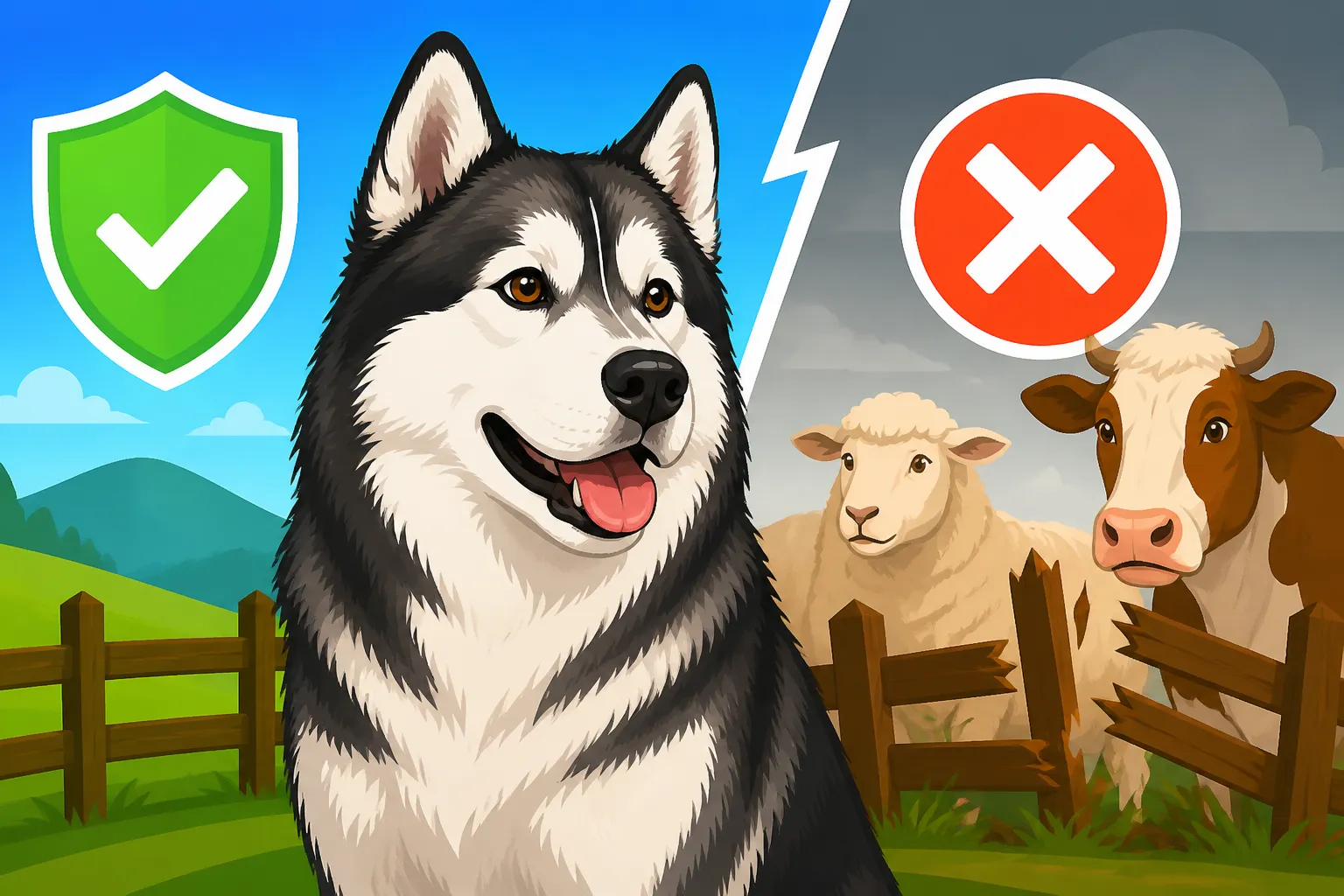
Let's be real: your Malamute has a prey drive, and it’s strong. It’s part of who they are. They were originally developed by the Mahlemut people of Alaska to pull heavy loads and, yes, to hunt, sometimes even in conjunction with hunters to find large game. This means they possess a genetic predisposition to chase, capture, and, unfortunately, kill smaller animals. Even the most well-behaved, thoroughly trained Malamute can have this instinct triggered by the sight or scent of a sheep, goat, chicken, or even a small calf. It’s not about malice; it’s about instinct. You can teach a Malamute many things, but you can’t truly breed out thousands of years of predatory behavior. This is why discussions around A Malamute Was Bred to Hunt Bears and It Has Not Forgotten are so critical, as it highlights the deep-seated nature of these drives.
Many owners mistakenly believe that if their Malamute is friendly with the family cat or a smaller dog, they'll be safe around farm animals. This is a dangerous assumption. A Malamute often learns to differentiate between "family" animals and "prey" animals. A quick dash of a chicken or the bleating of a lamb can flip a switch that even your strongest recall cue might not be able to override. Understanding How Strong a Malamute's Prey Drive Is is not just academic; it's vital for responsible ownership and preventing heartbreak.
Navigating Livestock Depredation Laws
The legal landscape surrounding dogs and livestock is incredibly varied and can be quite harsh. When your Malamute harms or kills livestock, you're not just dealing with the emotional fallout; you're facing real legal consequences that can range from civil penalties to criminal charges. The exact laws depend heavily on where you live – state, county, and even municipal ordinances can differ wildly.
Many jurisdictions operate under "strict liability" laws when it comes to livestock. This means that if your dog harms livestock, you, as the owner, are often held automatically responsible for damages, regardless of whether you took precautions or if your dog had ever shown aggression before. The "one bite" rule that sometimes applies to dog bites on humans often does not apply to livestock. In other areas, "dog-at-large" laws mean that simply having your dog off your property and unsupervised, resulting in harm to livestock, can lead to liability. You could be responsible for the full market value of the animals, veterinary costs for injured animals, and even loss of future income if the animals were breeding stock.
The burden of proof can also shift dramatically. In some places, simply the fact that your dog was involved in an incident with livestock is enough. It’s a very serious situation, and ignorance of these laws is never an excuse. These laws exist to protect farmers and their livelihoods, and they often carry significant weight.
Prevention is Paramount: Safeguarding Against Livestock Encounters
Given the Malamute's natural instincts and the strictness of livestock laws, prevention isn't just a good idea – it's absolutely essential. Proactive measures are the only way to truly protect your dog, your finances, and the peace of mind of your neighbors.
Fortifying Your Perimeter: Beyond a Standard Fence
If you live anywhere near farms, ranches, or even just properties with chickens or other small animals, your fencing isn't just about keeping your Malamute in; it's about keeping other animals out and your Mal from escaping to hunt. A standard 4-foot fence is, frankly, often a suggestion, not a barrier, for a determined Malamute. These dogs are intelligent, powerful, and incredibly adept at finding weaknesses. They're master escape artists, especially if something interesting, like a rabbit or a deer, catches their eye.
You need to think about height, depth, and structural integrity. A 6-foot solid fence is often a minimum, but even that might not be enough. Malamutes are known for their digging prowess, making conversations around Fencing a Yard Against a Malamute That Was Bred to Dig incredibly relevant. You might need to bury fencing mesh or lay concrete footings How Far Down a Malamute Will Dig to prevent tunneling under. Consider double-fencing, where an inner fence creates a buffer zone, making it harder for your dog to reach the outer perimeter or for anything to tempt them from outside. Chain-link fences, while seemingly robust, can be climbed, so a smooth, unclimbable surface might be better. When purchasing supplies, looking at retailers like Chewy for heavy-duty kennel panels, tie-outs, or even specialized digging prevention barriers can be a smart move, ensuring you get materials robust enough for a Malamute.
Leash Discipline and Off-Leash Risks
Let's be clear: a Malamute should almost never be off-leash, especially not in an area where livestock is present or could be. Their recall, even when practiced diligently, is simply not reliable when that primal hunting instinct kicks in. The freedom to chase is a powerful reward in itself, often outweighing any treat or command you can offer. This is a tough truth for many owners, but understanding Why an Alaskan Malamute Will Never Have a Reliable Recall is crucial for their safety and the safety of others.
When walking your Malamute, use a strong, secure harness (not just a collar) that they cannot back out of, and a sturdy leash. Double-leashing, where you use two leashes attached to different points on the harness, can offer an extra layer of security. Always be aware of your surroundings. If you see cattle in a field or chickens roaming nearby, give them a wide berth. Consider muzzle training your Malamute, not because they are aggressive, but as a preventative measure. A well-fitting basket muzzle can allow your dog to pant and drink, but prevents them from biting. Knowing When a Malamute Should Wear a Muzzle can be a game-changer for peace of mind, especially if you must traverse areas near livestock. In addition, a reliable GPS tracking collar can be invaluable if, despite all your efforts, your Malamute does manage to slip away. For insights on this, you might find Whether a Tracking Collar Is Mandatory for a Malamute helpful.
When an Incident Occurs: Immediate Actions and Legal Steps
Even with the best preventative measures, accidents can happen. If your Malamute has an encounter with livestock, your immediate actions are critical. Panic is natural, but clear-headed steps can make a significant difference in the outcome.
The Immediate Aftermath: Prioritizing Safety and Documentation
First and foremost, secure your dog. Get them under control and away from the scene immediately. Use your strong leash and harness, and if necessary, a muzzle. Ensure the safety of any remaining livestock and yourself. Once your dog is secured and removed from the immediate area, the next step is to document everything. Take clear photos and videos of the scene: any injured or deceased animals, damage to fences, and the general surroundings. Note the exact time, date, and location.
Contact the owner of the livestock immediately. Even if the damage seems minor, transparency is key. Avoid making assumptions or offering apologies that could be construed as admissions of guilt without fully understanding the situation. Simply state what happened and that you want to resolve it. Gather contact information from any witnesses. The more objective evidence you have, the better prepared you will be for any subsequent claims. This can be a highly stressful situation, and having a clear record will be invaluable.
Understanding Your Legal Liability and Potential Penalties
Following an incident, you will very likely face a claim for damages. As discussed, many areas hold dog owners strictly liable for harm to livestock. This means you will almost certainly be responsible for the financial losses incurred by the livestock owner. This can include:
- Veterinary bills: For any injured animals that survive.
- Replacement cost: For any animals killed. This can be significant, especially for purebred stock or pregnant animals.
- Loss of income: If, for example, a dairy cow is injured and cannot produce milk, or a breeding animal is lost.
- Property damage: If your dog damaged fences, barns, or other structures in the process.
Beyond civil liability, criminal charges can sometimes be filed, particularly if there's a history of incidents, if your dog was repeatedly at large, or if the court perceives neglect. These charges can carry fines, community service, or, in severe cases, even jail time. Furthermore, and perhaps most devastatingly, courts can order the removal or even euthanasia of dogs found to have caused serious harm to livestock. This is the unthinkable outcome that every Malamute owner dreads, and it underscores the gravity of proper prevention and containment.
Mitigating Financial and Emotional Strain
The financial and emotional toll of a livestock claim can be overwhelming. While preventing an incident is the best strategy, preparing for the possibility and understanding how to manage the aftermath is also crucial.
The Role of Homeowner's and Pet Liability Insurance
This is where planning ahead can truly save you. Many homeowner's or renter's insurance policies offer some form of liability coverage for your dog, but it's absolutely vital to understand the specifics. Some policies have breed-specific exclusions, and Alaskan Malamutes, due to their size and historical working roles, might unfortunately be on such lists. You need to call your insurance provider and explicitly ask about your policy's coverage for dog-related incidents, particularly those involving livestock. Don't assume. Find out if your specific policy covers damages your dog might cause off your property and to animals. Understanding Whether Homeowner Insurance Names the Alaskan Malamute is a critical step for any owner.
If your homeowner's policy has limitations or exclusions, you might consider a separate pet liability policy. Providers like Healthy Paws, while primarily known for veterinary expense coverage, might offer additional liability riders or point you to insurers who specialize in this. These policies are designed to cover the legal costs and damages if your dog injures someone or, in this context, harms livestock. It’s an investment in peace of mind and financial protection against what could be a catastrophic claim. Make sure to clarify exactly what is covered, and any maximum payouts or deductibles involved.
Preparing for the Unthinkable: Financial and Emotional Readiness
Beyond insurance, having an emergency fund specifically for pet-related incidents isn't a bad idea. Litigation and claims can be costly, and legal fees can quickly add up, even if you eventually win. Having readily available funds can give you more options in a difficult situation.
But the costs aren't just financial. The emotional impact of an incident where your dog harms livestock can be profound. There's the guilt, the stress of legal proceedings, and potentially the heartbreak of losing your beloved companion. This emphasizes why every effort toward prevention is worth it. A well-exercised, mentally stimulated Malamute is generally a happier, more content dog, less likely to be bored or driven to find "excitement" outside the yard. Providing appropriate physical activity, mental games, and a balanced diet from reputable brands like Ollie can contribute to overall well-being, potentially reducing the drive to escape out of sheer boredom or unfulfilled energy. Remember, a tired Malamute is a good Malamute, and a healthy dog is often a more stable one. Knowing that you've done everything in your power to prevent such an incident can offer some solace, even in the worst circumstances.
Disclaimer
This article is for general informational purposes only and does not constitute professional advice. Laws, prices and regulations vary by location and change over time. Consult a qualified professional for guidance on your specific situation.